

Quick Overview
A red blood cell count is a blood test that your doctor uses to find out how many red blood cells (RBCs) you have. It’s also known as an erythrocyte count.
- CategoryHematology
- Read time3 min
- UpdatedJun 2025

Table of Contents
A red blood cell count is a blood test that your doctor uses to find out how many red blood cells (RBCs) you have. It’s also known as an erythrocyte count.
The test is important because RBCs contain hemoglobin, which carries oxygen to your body’s tissues. The number of RBCs you have can affect how much oxygen your tissues receive. Your tissues need oxygen to function.
Also Known As: RBC Count, Erythrocyte Count, Red Count, Erythrocytes
Test Panel: Hemoglobin, Red Blood Cells (RBC), HCT, MCV, MCH, MCHC, Platelets Count, White Blood Cells (WBC), DLC, ESR
Key Features
- Size: 6–8 µm (Biconcave disc)
- Shape: No nucleus, central pallor (1/3 of cell)
- Lifespan: 120 days
Microscopy
- Staining: Pink-red with pale center (normal)
- Key Abnormal Forms:
- Spherocytes (no pallor → hereditary spherocytosis)
- Schistocytes (fragmented → DIC)
Clinical Ranges
| Parameter | Men | Women |
|---|---|---|
| RBC Count | 4.5–5.5 | 4.0–5.0 (×10¹²/L) |
| Hemoglobin | 13–17 | 12–15 (g/dL) |
Abnormalities
- Polycythemia (↑): Dehydration, PV
- Anemia (↓): Iron/B12 deficiency, hemolysis
🧪 Lab Correlation: MCV helps classify anemia (microcytic vs. macrocytic).

Why Get Tested:
- This is an indicator of anemia or Polycythemia.
- It is a routine part of CBC.
- This is repeated in patients with repeated bleeding.
When to Get Tested:
Your doctor may order the test if they suspect you have a condition that affects your RBCs, or if you show symptoms of low blood oxygen. These could include:
- If you have a condition such as anemia
- If you have a condition such as polycythemia
- Bluish discoloration of the skin
- Confusion
- Irritability and restlessness
- Irregular breathing
A CBC test will often be part of a routine physical exam. It can be an indicator of your overall health. It may also be performed before a surgery.
Sample Required:
- The blood sample is taken in EDTA.
- It is stable for 24 hours at 23 °C and 48 hours at 4°C.
Normal value:
| Test Name | Male | Female |
| RBC | 4.5 – 6.5 x 10¹² /l | 4.5 – 6.5 x 10¹² /l |
Increased RBC count is seen in:
- Primary Erythrocytosis.
- Polycythemia.
- Erythremia (Erythrocytosis).
- Secondary Erythrocytosis.
- vigorous exercise.
- Hemoconcentration.
- High Altitude.
- Chronic obstructive pulmonary disease (COPD).
- Severe dehydration.
- Thalassemia trait.
- Hemoglobinopathies.
- Congenital heart disease.
- Extra-renal tumors.
- Tobacco use.
Decreased RBC count is seen in:
- Anaemias.
- Drugs that cause aplastic anemia.
- G-6 PD deficiency.
- Immune mechanism.
- Malignancy like Hodgkin’s disease, lymphomas.
- Acute and chronic hemorrhage.
- Autoimmune diseases like SLE, and rheumatoid arthritis.
- Chronic infection like subacute endocarditis.
- Myeloproliferative disorders like leukemia and Myeloma.
- Cirrhosis.
- Dietary deficiency of iron, and vit B12.
- Pregnancy.
| Features | Pronormoblast | Normoblast | Reticulocyte | Mature RBC |
| Cell size µm | 14 to 19 | 12 to 17 | 7 to 10 | 7 to 8 |
| Nuclear shape | round | round | absent | absent |
| Nuclear chromatin | reddish-blue | blue purple | absent | absent |
| Nucleoli | 0 to 2 | absent | absent | absent |
| Cytoplasm | dark or royal blue | pink, moderate | clear, gray-blue | pink |
Complete Blood Count Test Panel
- Red blood cells.
- White blood cells.
- Platelet Count
- Hemoglobin
- Hematocrit (HCT)
- RBC indices.
- Mean corpuscular volume (MCV).
- Mean corpuscular hemoglobin (MCH).
- Mean corpuscular hemoglobin concentration (MCHC)
- Red blood cell distribution width (RDW).
- White cell differential count (DLC) includes.
- Peripheral blood smear study.
Related

What a High ESR Blood Test Actually Says About Your Body’s Hidden Inflammation
Wondering what your ESR level means? Learn about the ESR blood test, normal ranges by age and gender, causes of high and low levels,…
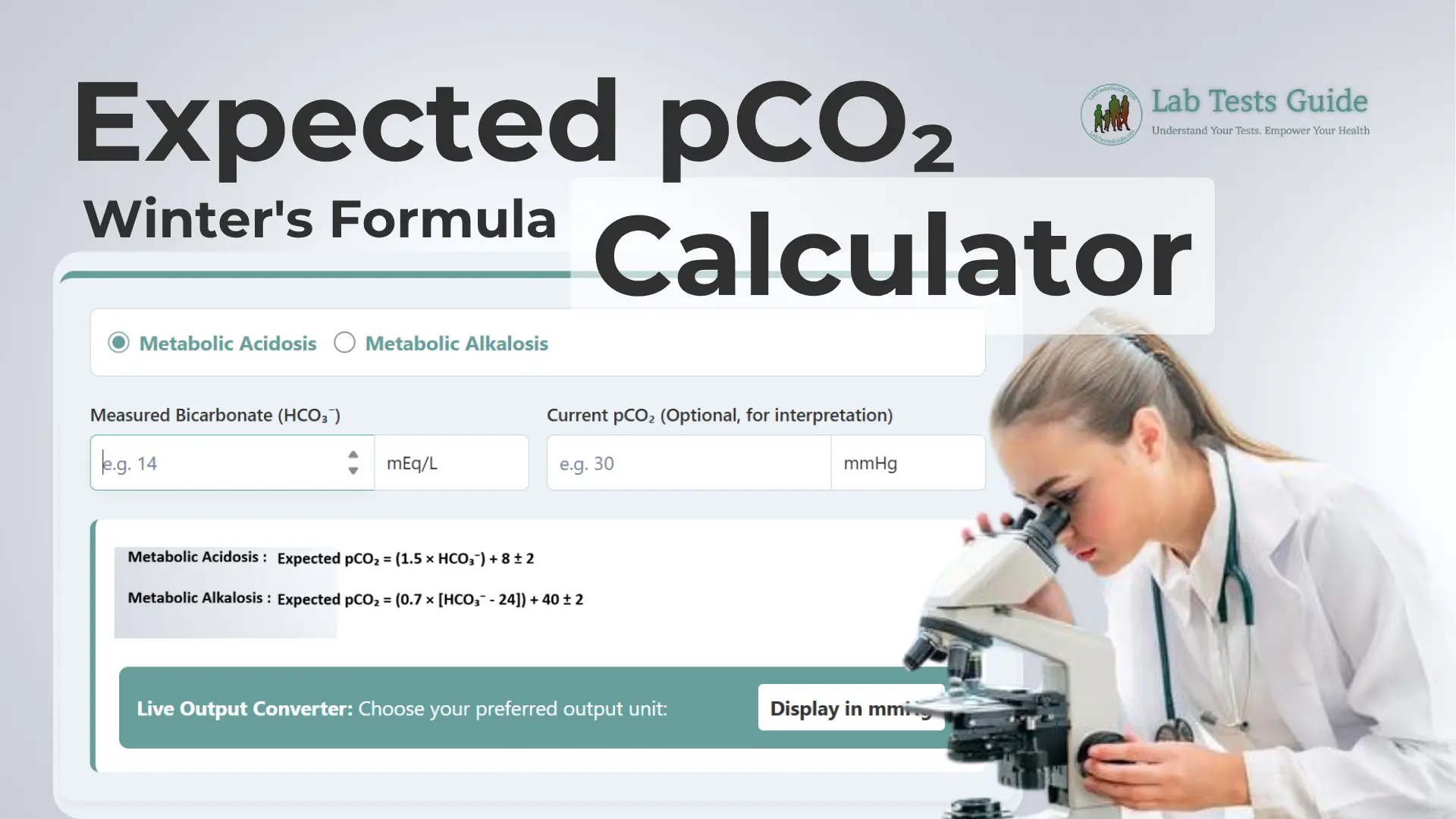
Expected pCO₂ Calculator (Winter’s Formula)
A clinical calculator to determine Expected pCO2 in metabolic acidosis (Winter's Formula) and metabolic alkalosis, with a live unit converter.
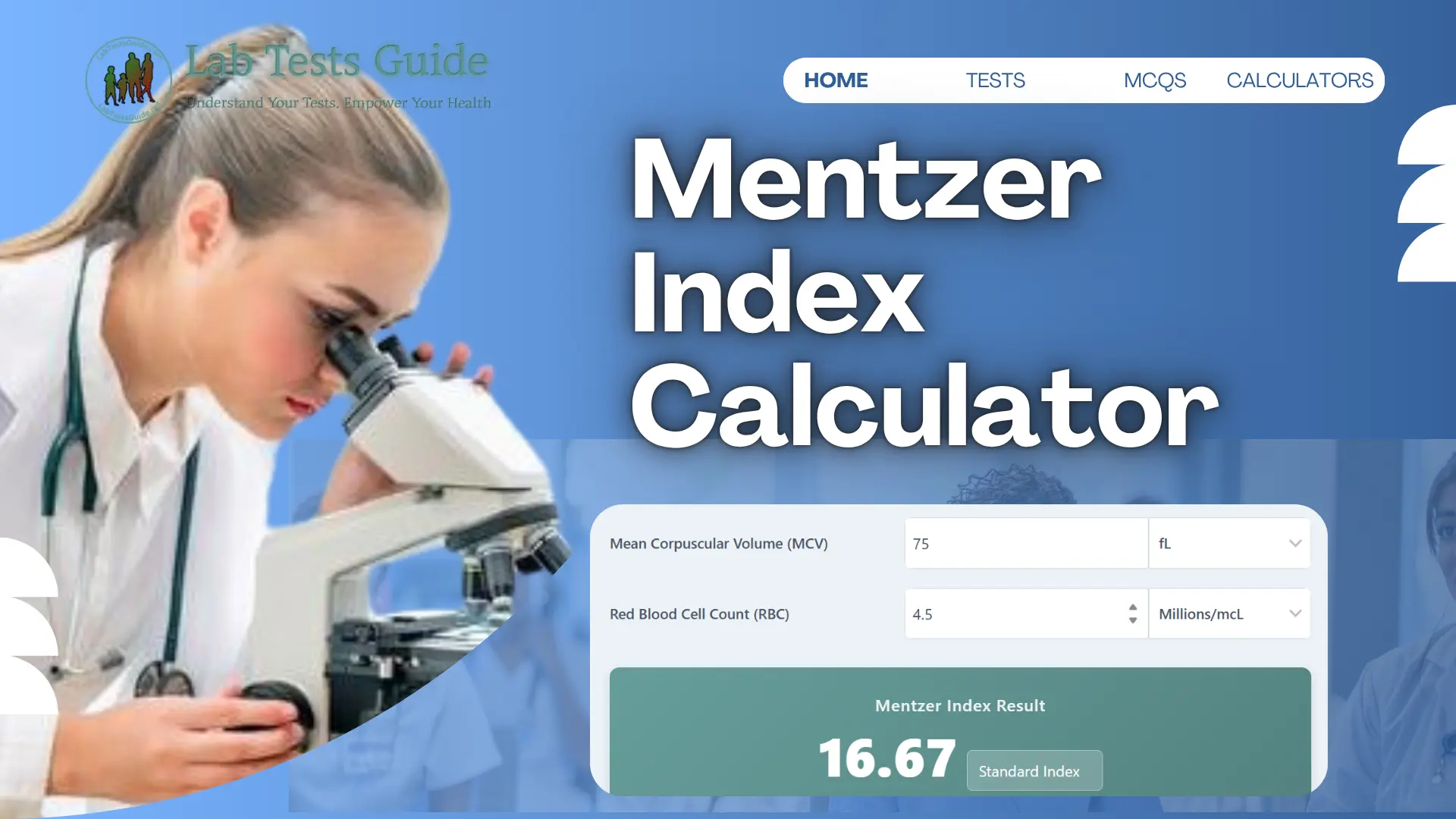
Mentzer Index Calculator
Calculate the Mentzer Index instantly with our free clinical calculator. Input MCV and RBC with live unit conversions to differentiate Iron Deficiency Anemia from…
Discussion 5