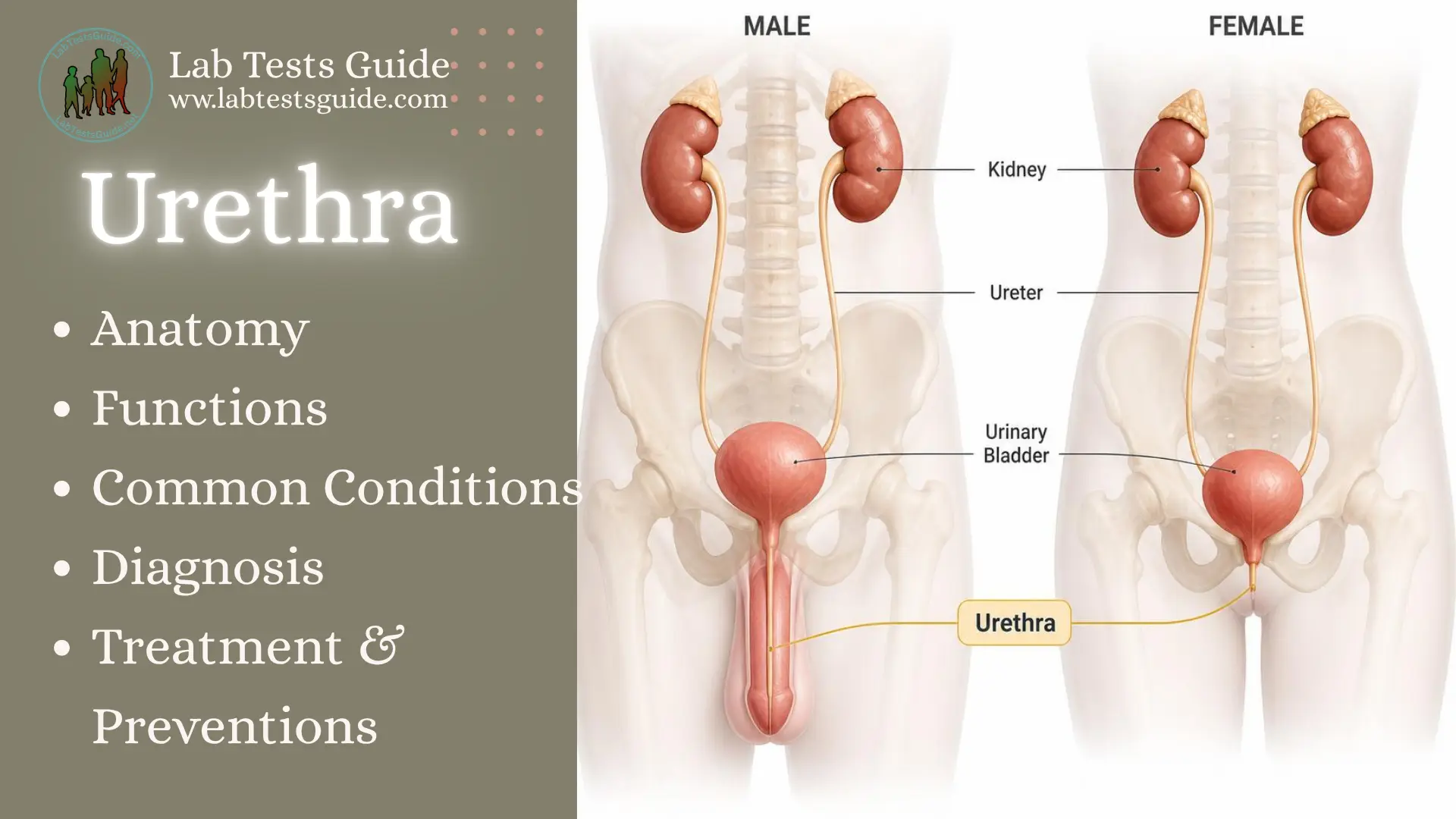
The urethra is a tubular structure that carries urine from the bladder to the outside of the body and, in males, also transports semen. Learn about its anatomy, functions, common problems, symptoms, diagnosis, laboratory tests, treatment, and prevention.
Urethra: Anatomy, Functions, Common Conditions, Diagnosis, Treatment & Preventions
ANATOMY & CLINICAL LABORATORY GUIDE
Urethra: Anatomy, Functions & Common Conditions
The urethra is a tubular structure that carries urine from the urinary bladder to the outside of the body and, in males, also serves as a passageway for semen during ejaculation.
01
Urinary PassageCarries urine from the bladder to the outside of the body.
02
Main RoleProvides the final pathway for urine elimination and, in males, semen transport.
03
Clinical RelevanceUrethral inflammation, infection, narrowing, or obstruction may require clinical assessment and laboratory testing.
Laboratory focus:
This guide provides a concise overview of urethral anatomy, function, common problems, and the laboratory tests that may be relevant when infection, inflammation, or urinary symptoms are suspected.
01
What Is the Urethra?
The urethra is a muscular tube that carries urine from the urinary bladder to the outside of the body. It is the final passageway of the urinary system and plays an essential role in normal urine elimination.
In males, the urethra is longer and also serves as a passageway for semen during ejaculation. In females, the urethra is shorter and is used primarily for the passage of urine.
LocationExtends from the urinary bladder to the external opening of the urinary tract.
Clinical importanceInfection, inflammation, narrowing, or obstruction can cause painful urination, abnormal discharge, or difficulty passing urine.
02
Types and Functions of the Urethra
Female UrethraA short passageway that carries urine from the bladder to the external urethral opening.
Male UrethraA longer passageway that carries urine and also provides a route for semen during ejaculation.
Prostatic UrethraThe portion of the male urethra that passes through the prostate gland.
Spongy UrethraThe longest portion of the male urethra, passing through the penis and ending at the external opening.
What does the urethra do?
The urethra provides the final pathway for urine to leave the body. In males, it also transports semen during ejaculation. Coordinated activity of the bladder, urethral sphincters, and surrounding muscles helps regulate the storage and release of urine.
03
Common Urethral Problems
Urethritis
Inflammation of the urethra that may result from sexually transmitted infections, other infections, or noninfectious irritation.
Urethral Stricture
Narrowing of the urethra caused by scar tissue, which can restrict urine flow and lead to difficulty urinating.
Urinary Tract Infection
Infection involving the urinary tract can cause burning during urination, increased urinary frequency, urgency, or lower abdominal discomfort.
Urethral Injury
Trauma or instrumentation can damage the urethra and may cause pain, bleeding, difficulty urinating, or later scar formation.
Clinical note:
Symptoms such as painful urination, urethral discharge, blood in the urine, difficulty passing urine, or persistent urinary symptoms do not by themselves identify the exact cause. Clinical assessment and appropriate laboratory testing may be needed.
04
Laboratory Tests and Diagnosis
Urethral problems are evaluated using the patient’s symptoms, physical examination, medical history, and appropriate laboratory testing. Testing is particularly important when urethritis, a urinary tract infection, a sexually transmitted infection, or another urinary disorder is suspected.
Urinalysis
May help detect blood, white blood cells, nitrites, bacteria, or other findings associated with urinary tract inflammation or infection.
Urine Culture
Can identify bacteria causing a urinary tract infection and may help guide appropriate antimicrobial treatment when indicated.
STI Testing
Nucleic acid amplification tests may be used to detect infections such as chlamydia and gonorrhea when urethritis or sexually transmitted infection is suspected.
Important:
Imaging and procedures such as urethral evaluation or cystoscopy are not laboratory tests, but they may be used when structural abnormalities, urethral strictures, obstruction, or other causes of persistent urinary symptoms need further evaluation.
05
Urethral Symptoms and When to Seek Care
Painful UrinationBurning, stinging, or discomfort while passing urine may occur with urethral inflammation or urinary infection.
Urethral DischargeAbnormal fluid or discharge from the urethral opening may occur with urethritis or certain sexually transmitted infections.
Difficulty UrinatingWeak urine flow, straining, or difficulty starting urination may occur when the urethra is narrowed or obstructed.
Blood in UrineVisible or microscopic blood may occur with infection, inflammation, injury, stones, or other urinary tract conditions.
When should medical advice be considered?
Seek medical evaluation for persistent or severe pain during urination, urethral discharge, blood in the urine, inability to urinate, fever with urinary symptoms, pelvic or flank pain, or recurrent urinary problems. Prompt assessment is especially important when symptoms are severe, rapidly worsening, or associated with possible infection or urinary obstruction.
06
How Are Urethral Problems Diagnosed?
Urethral problems are usually evaluated using the patient’s symptoms, medical history, physical examination, and appropriate laboratory tests. The specific diagnostic approach depends on whether infection, inflammation, injury, narrowing, or another urinary condition is suspected.
Clinical Examination
A healthcare professional assesses urinary symptoms, urethral discharge, pain, external findings, and other relevant clinical signs.
Laboratory Testing
Urinalysis, urine culture, and targeted testing for sexually transmitted infections may be considered based on the symptoms and suspected cause.
Imaging & Procedures
Specialized imaging or procedures such as urethral evaluation or cystoscopy may be used when obstruction, urethral stricture, injury, or another structural problem is suspected.
Laboratory perspective:
Laboratory results can help identify infection or inflammation, but test findings should always be interpreted together with the patient’s symptoms, medical history, physical examination, and other diagnostic findings.
07
Treatment and Prevention
Common Management
Treatment is directed at the underlying cause, such as infection, inflammation, or urethral narrowing.
Antibiotics may be prescribed when a bacterial urinary or sexually transmitted infection is diagnosed or strongly suspected.
Adequate hydration may support normal urinary function when appropriate for the individual.
Urethral strictures or significant obstruction may require specialist evaluation and procedural treatment.
Prevention & Self-Care
Practice good personal hygiene and avoid unnecessary irritation of the urethral area.
Use barrier protection during sexual activity to reduce the risk of sexually transmitted infections.
Follow prescribed treatment completely and ensure appropriate follow-up when an infection is diagnosed.
Avoid unnecessary urinary catheterization or instrumentation unless medically indicated.
Important:
Treatment depends on the underlying cause. Antibiotics are not appropriate for every urethral or urinary symptom and should be used when clinically indicated. Persistent, severe, recurrent, or obstructive urinary symptoms should be evaluated by a healthcare professional. More Detail about Treatment and Prevention Click Here
08
Key Takeaways & Related Laboratory Tests
The urethra is a tubular structure that carries urine from the bladder to the outside of the body and, in males, also transports semen during ejaculation. Urethral problems are evaluated clinically, while laboratory testing can help identify infection, inflammation, or other causes when clinically indicated.
Main FunctionCarries urine from the urinary bladder to the outside of the body and, in males, also carries semen.
Common ProblemsUrethritis, urinary tract infections, urethral strictures, and urethral injuries can affect normal urethral function.
Laboratory RoleUrinalysis, urine culture, and selected sexually transmitted infection tests may support evaluation when clinically indicated.
Medical Disclaimer:
This article is for general educational and laboratory information only. It does not replace professional medical advice, diagnosis, or treatment. Urethral symptoms and laboratory test results should be interpreted together with symptoms, medical history, physical examination, and clinical findings by a qualified healthcare professional.
References and Sources
Cleveland Clinic. Urethra: Location, Anatomy, Function & Conditions.
Cleveland Clinic
– (accessed on August 24, 2026)
Sam P, Jiang J, Leslie SW, LaGrange CA. Anatomy, Abdomen and Pelvis, Sphincter Urethrae. StatPearls.
NCBI Bookshelf
– (accessed on August 24, 2026)
Centers for Disease Control and Prevention. Urethritis and Cervicitis — STI Treatment Guidelines.
CDC
– (accessed on August 24, 2026)
MedlinePlus. Urine Culture. U.S. National Library of Medicine.
MedlinePlus
– (accessed on August 24, 2026)
Shenot PJ. Urethral Stricture. MSD Manual Professional Edition. Reviewed/Revised December 2025; Modified March 2026.
MSD Manual
– (accessed on August 24, 2026)
World Health Organization. Guidelines for the Management of Symptomatic Sexually Transmitted Infections — Urethral Discharge Syndrome.
World Health Organization
– (accessed on August 24, 2026)
American Urological Association. Urethral Stricture Disease: AUA Guideline. Published 2023; Amended 2023.
American Urological Association
– (accessed on August 24, 2026)
Johns Hopkins Medicine. Urinary Tract Infections.
Johns Hopkins Medicine
– (accessed on August 24, 2026)
📚 This article may have been prepared using trusted medical literature, clinical guidelines, textbooks, and peer-reviewed sources.
The website covers a wide range of lab tests, including blood tests, urine tests, stool tests, and imaging tests such as X-rays and CT scans. It also provides information about different health conditions and diseases, as well as tips for maintaining good health.
It's important to note that while labtestsguide.com may provide valuable information about lab tests and their interpretation, it's always best to consult with a healthcare professional if you have any concerns or questions about your lab results. We can provide personalized guidance and advice based on your individual health status and medical history.