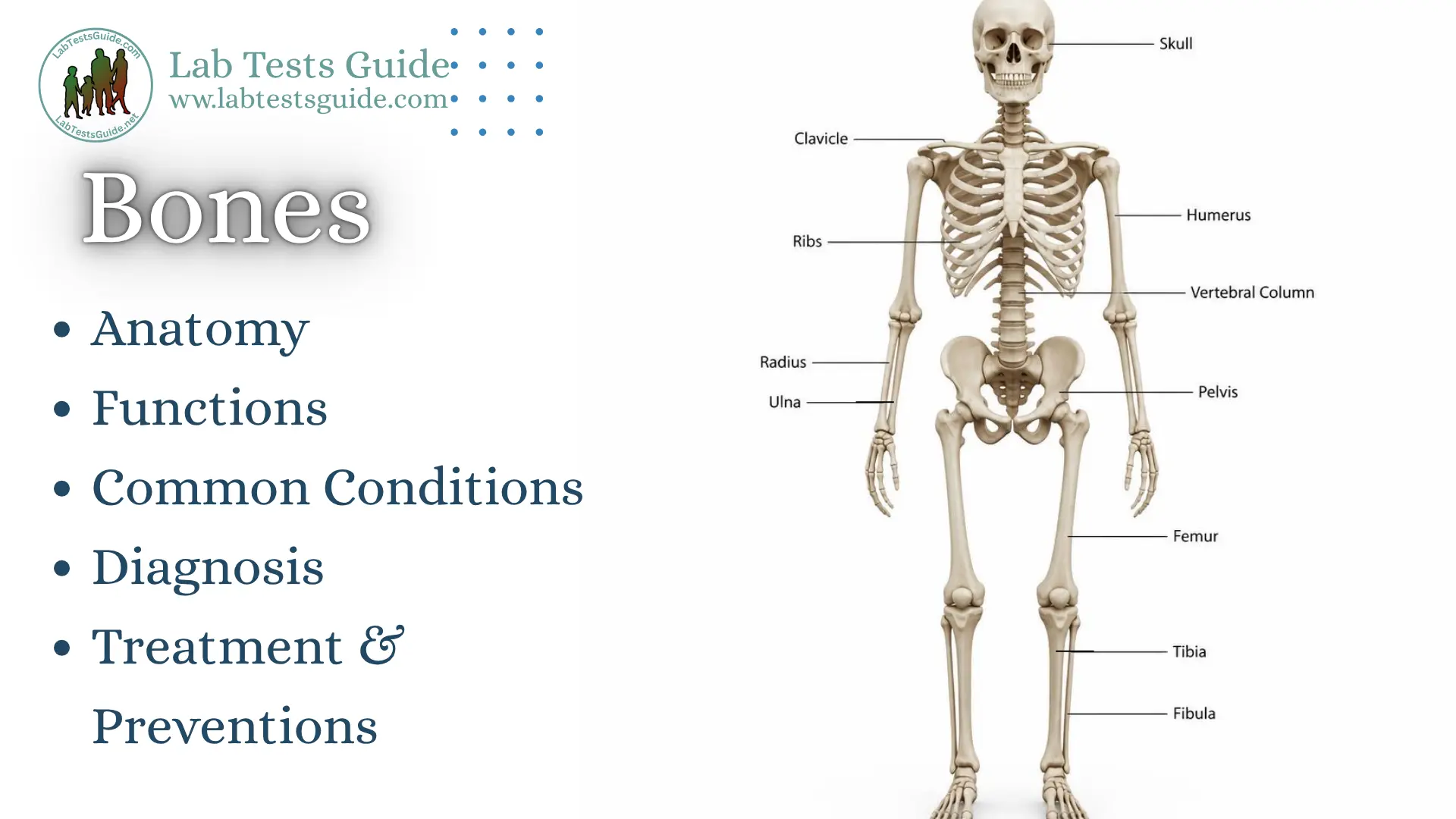
Learn about bones, their anatomy, types, functions, common bone disorders, symptoms, diagnosis, laboratory tests, treatment, and prevention.
ANATOMY & CLINICAL LABORATORY GUIDE
Bones: Anatomy, Functions & Common Conditions
Bones are rigid connective tissues that form the framework of the body, protect vital organs, support movement, store minerals, and provide sites for blood cell production.
01
Major Bone GroupsAxial and appendicular skeleton, including the skull, vertebral column, ribs, pelvis, and limbs.
02
Main RoleProvide structural support, protect organs, enable movement, store minerals, and support blood cell formation.
03
Clinical RelevanceBone disorders, fractures, infections, metabolic diseases, and tumors may require clinical assessment and laboratory testing.
Laboratory focus:
This guide provides a concise overview of bone anatomy, function, common problems, and the laboratory tests that may be relevant when bone disease, infection, injury, or metabolic abnormalities are suspected.
01
What Are Bones?
Bones are strong, living connective tissues that form the structural framework of the body. They are composed mainly of a mineralized matrix containing collagen and minerals such as calcium and phosphate, which provide strength and support.
The human skeleton contains 206 bones in most adults. Bones are organized into the axial skeleton, which includes the skull, vertebral column, and thoracic cage, and the appendicular skeleton, which includes the limbs and the bones connecting them to the axial skeleton.
LocationThroughout the body, forming the skeleton and providing support, protection, and attachment sites for muscles.
Clinical importanceFractures, infections, tumors, osteoporosis, and metabolic bone disorders can affect bone structure, strength, and normal function.
02
Types and Functions of Bones
Long BonesLonger than they are wide and found mainly in the limbs, such as the femur, tibia, and humerus.
Short BonesSmall, cube-shaped bones that provide stability and support, especially in the wrists and ankles.
Flat BonesThin, often curved bones that protect internal organs and provide broad surfaces for muscle attachment.
Irregular BonesBones with complex shapes, including the vertebrae, facial bones, and several skull bones.
What do the bones do?
Bones provide structural support, protect vital organs, enable movement by working with muscles and joints, store minerals such as calcium and phosphate, and contain bone marrow where blood cells are produced. Bone tissue is continuously remodeled throughout life to maintain strength and mineral balance.
03
Common Bone Problems
Fractures
A partial or complete break in a bone, commonly caused by trauma, falls, sports injuries, or weakened bone.
Osteoporosis
A condition in which bones become less dense and more fragile, increasing the risk of fractures.
Osteomyelitis
An infection of bone that can result from bacteria or other microorganisms reaching bone through the bloodstream, nearby tissue, or an injury.
Bone Tumors
Abnormal growths that can develop within bone and may be benign or malignant, requiring clinical evaluation and appropriate imaging or laboratory assessment.
Clinical note:
Symptoms such as bone pain, swelling, tenderness, reduced mobility, or recurrent fractures do not by themselves identify the exact cause. Clinical assessment is important when symptoms are persistent, severe, or associated with injury or other concerning findings.
04
Laboratory Tests and Diagnosis
Bone problems are evaluated using the patient’s symptoms, medical history, physical examination, and appropriate imaging. Laboratory testing is particularly useful when infection, metabolic bone disease, abnormal mineral levels, or another underlying condition is suspected.
CBC
May help assess anemia, infection, or other blood abnormalities when a bone infection or systemic condition is suspected.
Calcium / Phosphate / ALP
These tests may help evaluate mineral balance and bone metabolism when metabolic or nutritional bone disorders are suspected.
Vitamin D
Measurement of vitamin D may be considered when deficiency is suspected or when evaluating certain bone and mineral disorders.
Important:
Imaging such as X-ray, CT, MRI, or bone density scanning is not a laboratory test, but it may be essential for evaluating fractures, bone loss, tumors, structural abnormalities, or other bone conditions.
05
Bone Symptoms and When to Seek Care
Bone PainPersistent or localized pain may occur with injury, infection, inflammation, osteoporosis-related fractures, or other bone conditions.
Swelling or TendernessSwelling, tenderness, or warmth around a bone may occur after injury or with inflammation or infection.
Reduced MobilityPain, stiffness, weakness, or a fracture can interfere with normal movement of an affected limb or joint.
Recurrent FracturesFractures occurring after minor trauma may indicate reduced bone strength and require further evaluation.
When should medical advice be considered?
Seek medical evaluation for severe or persistent bone pain, significant swelling, suspected fracture, inability to use an affected limb, unexplained recurrent fractures, fever with bone pain or swelling, unexplained weight loss, or other concerning symptoms. Prompt assessment is especially important after a significant injury or when infection or another serious bone condition is suspected.
06
How Are Bone Problems Diagnosed?
Bone problems are diagnosed using the patient’s symptoms, medical history, physical examination, and appropriate imaging. Laboratory tests may be used when infection, metabolic bone disease, abnormal mineral levels, or another underlying condition is suspected.
Clinical Examination
A healthcare professional assesses bone pain, tenderness, swelling, deformity, mobility, history of injury, and other clinical findings.
Laboratory Testing
CBC, calcium, phosphate, ALP, vitamin D, inflammatory markers, and other tests may be considered based on the suspected bone condition.
Imaging
X-ray, CT, MRI, or bone density scanning may be used to evaluate fractures, bone loss, tumors, structural abnormalities, or other bone disorders.
Laboratory perspective:
Blood and biochemical tests can support the assessment of infection, inflammation, mineral balance, and bone metabolism, but laboratory results should always be interpreted together with symptoms, physical findings, and appropriate imaging.
07
Treatment and Prevention
Common Management
Fractures may require immobilization, casting, splinting, or other orthopedic treatment depending on their type and severity.
Bone infections may require antimicrobial treatment and, in some cases, surgical management.
Osteoporosis and other metabolic bone disorders may require medicines, nutritional support, and monitoring as clinically indicated.
Persistent or unexplained bone pain may require further clinical assessment and imaging.
Prevention & Bone Health
Maintain adequate calcium and vitamin D intake through a balanced diet and supplementation when recommended.
Regular weight-bearing and muscle-strengthening exercise can help maintain bone strength.
Avoid smoking and limit excessive alcohol consumption to support long-term bone health.
Prevent falls and follow recommended screening or medical advice when risk factors for osteoporosis are present.
Important:
Treatment depends on the underlying bone condition, its severity, and the individual’s clinical circumstances. Suspected fractures, severe bone pain, signs of infection, or unexplained changes in bone strength should be evaluated by a healthcare professional. More Detail about Treatment and Prevention Click Here
08
Key Takeaways & Related Laboratory Tests
Bones are living connective tissues that form the body’s structural framework, protect vital organs, support movement, store minerals, and contain bone marrow for blood cell production. Bone problems are evaluated using clinical findings and imaging, while laboratory testing may be useful when infection, inflammation, mineral imbalance, or metabolic bone disease is suspected.
Main Bone GroupsAxial and appendicular skeleton, including the skull, vertebral column, ribs, pelvis, and limb bones.
Common ProblemsFractures, osteoporosis, osteomyelitis, and bone tumors are among the important conditions affecting bone health.
Laboratory RoleCBC, calcium, phosphate, ALP, vitamin D, and selected inflammatory or other tests may support evaluation when clinically indicated.
Medical Disclaimer:
This article is for general educational and laboratory information only. It does not replace professional medical advice, diagnosis, or treatment. Laboratory tests should be interpreted together with symptoms, medical history, and clinical findings by a qualified healthcare professional.
References and Sources
Cowan PT, Launico MV, Kahai P. Anatomy, Bones. StatPearls [Internet]. Updated April 21, 2024.
NCBI Bookshelf
– (accessed on September 01, 2026)
Anatomy of the Bone. Johns Hopkins Medicine.
Johns Hopkins Medicine
– (accessed on September 01, 2026)
Bones: How Many Do Humans Have, Types, Anatomy & Function. Cleveland Clinic. Updated October 17, 2025.
Cleveland Clinic
– (accessed on September 01, 2026)
Osteoporosis: Diagnosis, Treatment, and Steps to Take. National Institute of Arthritis and Musculoskeletal and Skin Diseases (NIAMS).
NIAMS
– (accessed on September 01, 2026)
Osteomyelitis: Diagnosis and Treatment. Mayo Clinic.
Mayo Clinic
– (accessed on September 01, 2026)
Osteoporosis. NHS.
NHS
– (accessed on September 01, 2026)
Fractures (Broken Bones). American Academy of Orthopaedic Surgeons, OrthoInfo.
OrthoInfo – AAOS
– (accessed on September 01, 2026)
Vitamin D Deficiency and Dependency: Rickets and Osteomalacia. MSD Manual Professional Edition. Reviewed June 2026.
MSD Manual Professional Edition
– (accessed on September 01, 2026)
Calcium, Vitamin D, and Your Bones. MedlinePlus Medical Encyclopedia.
MedlinePlus
– (accessed on September 01, 2026)
Bone Density Scan (DEXA or DXA). RadiologyInfo.org. Reviewed March 11, 2024.
RadiologyInfo.org
– (accessed on September 01, 2026)
Tests for Bone Cancer: How Is Bone Cancer Diagnosed? American Cancer Society.
American Cancer Society
– (accessed on September 01, 2026)
The website covers a wide range of lab tests, including blood tests, urine tests, stool tests, and imaging tests such as X-rays and CT scans. It also provides information about different health conditions and diseases, as well as tips for maintaining good health.
It's important to note that while labtestsguide.com may provide valuable information about lab tests and their interpretation, it's always best to consult with a healthcare professional if you have any concerns or questions about your lab results. We can provide personalized guidance and advice based on your individual health status and medical history.