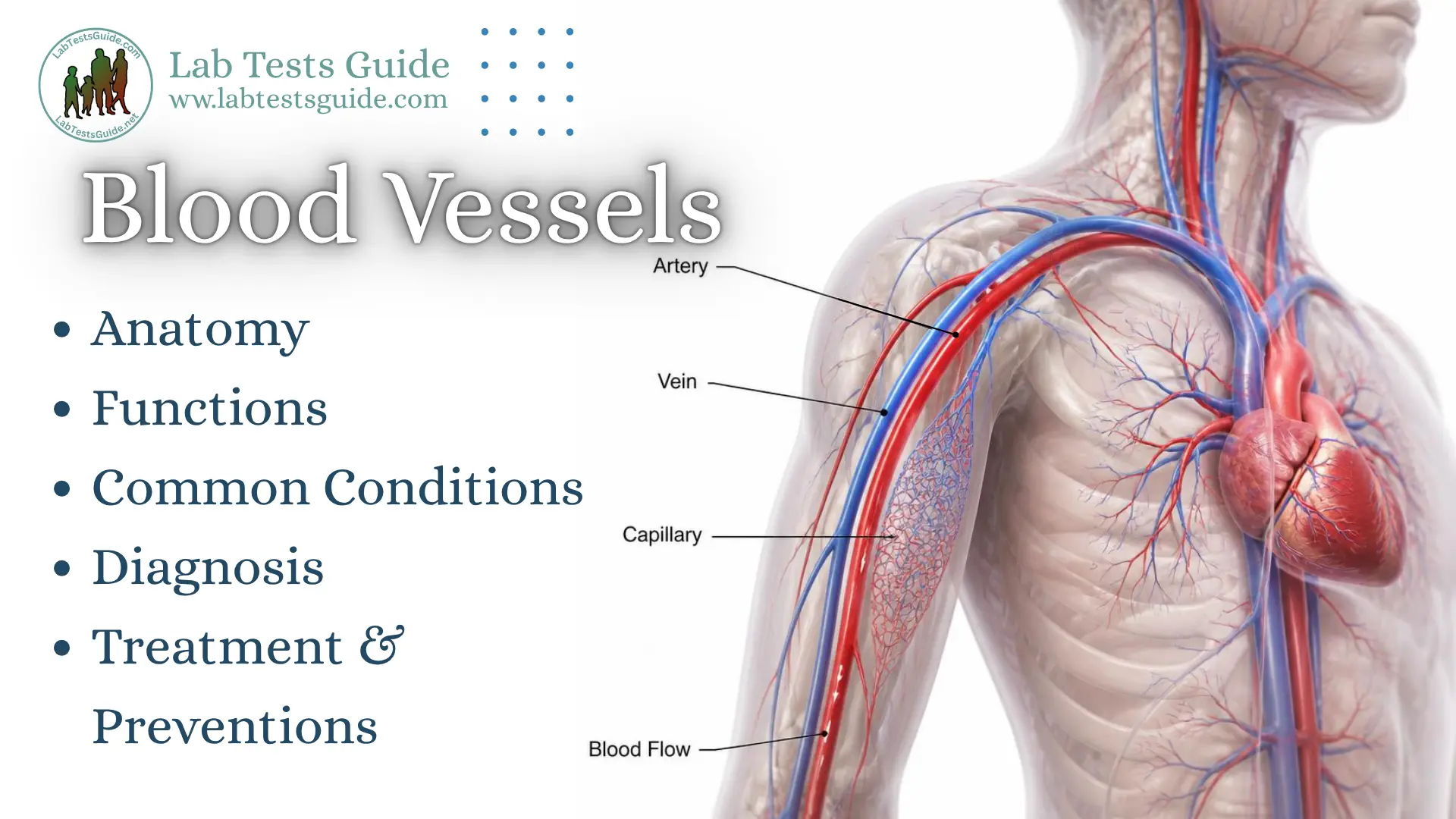
Explore blood vessel anatomy, arteries, veins, capillaries, common vascular problems, symptoms, diagnosis, and related laboratory tests.
ANATOMY & CLINICAL LABORATORY GUIDE
Blood Vessels: Anatomy, Functions & Common Conditions
Blood vessels are tubular structures that transport blood throughout the body, delivering oxygen and nutrients while carrying carbon dioxide and metabolic waste away from tissues.
01
Types of Blood VesselsArteries, veins, and capillaries form the major blood vessel network.
02
Main RoleTransport blood, oxygen, nutrients, hormones, and metabolic waste throughout the body.
03
Clinical RelevanceBlood vessel disorders may affect circulation and require clinical assessment and selected laboratory testing.
Laboratory focus:
This guide provides a concise overview of blood vessel anatomy, function, common problems, and the laboratory tests that may be relevant when vascular disease, inflammation, or impaired circulation is suspected.
01
What Are Blood Vessels?
Blood vessels are tube-like structures that form a network throughout the body and transport blood between the heart and tissues. They are essential for delivering oxygen and nutrients and carrying carbon dioxide and other metabolic waste products away from cells.
The three major types are arteries, veins, and capillaries. Arteries generally carry blood away from the heart, veins return blood toward the heart, and tiny capillaries connect the arterial and venous circulation while allowing the exchange of oxygen, nutrients, fluids, and waste products with tissues.
LocationThroughout the body, forming an extensive network connecting the heart with organs and tissues.
Clinical importanceBlood vessel disorders can impair circulation and may cause problems such as bleeding, thrombosis, ischemia, or abnormal blood pressure.
02
Types and Functions of Blood Vessels
ArteriesCarry blood away from the heart and generally have thick, elastic muscular walls.
VeinsReturn blood toward the heart and often contain valves that help prevent backward blood flow.
CapillariesMicroscopic vessels that connect small arteries and veins and allow exchange between blood and tissues.
Arterioles & VenulesSmall vessels that regulate blood flow into capillary beds and collect blood from capillaries.
What do blood vessels do?
Blood vessels transport blood throughout the body, delivering oxygen, nutrients, hormones, and other substances to tissues while carrying carbon dioxide and metabolic waste away. They also help regulate blood pressure, blood flow, and body temperature.
03
Common Blood Vessel Problems
Atherosclerosis
Buildup of fatty deposits and other substances within artery walls that can narrow blood vessels and reduce blood flow.
Deep Vein Thrombosis
A blood clot that forms in a deep vein, most commonly in the leg, and may impair venous blood flow.
Varicose Veins
Enlarged, twisted veins that commonly develop when weakened valves allow blood to pool within the veins.
Aneurysm
Abnormal widening or bulging of a blood vessel caused by weakening of the vessel wall, which may require clinical evaluation.
Clinical note:
Symptoms such as limb swelling, pain, skin color changes, chest pain, shortness of breath, or unusual bleeding may have different causes. Prompt clinical assessment is important when symptoms are sudden, severe, or concerning.
04
Laboratory Tests and Diagnosis
Blood vessel problems are evaluated using the patient’s symptoms, medical history, physical examination, and appropriate diagnostic testing. Laboratory tests may help identify cardiovascular risk factors, inflammation, blood clotting abnormalities, or conditions that can affect vascular health.
CBC
May help assess red blood cells, white blood cells, and platelets when anemia, infection, inflammation, or bleeding is clinically suspected.
Lipid Profile
Measures cholesterol and triglycerides to help assess cardiovascular risk and the possibility of atherosclerotic vascular disease.
Coagulation Tests
Tests such as PT, INR, and aPTT may be used to evaluate blood clotting when bleeding or thrombotic disorders are suspected.
Important:
Imaging and vascular studies such as Doppler ultrasound, CT angiography, or MR angiography are not laboratory tests, but they may be used to evaluate blood flow, vessel narrowing, blockages, aneurysms, or other structural abnormalities.
05
Blood Vessel Symptoms and When to Seek Care
Swelling or PainSwelling, aching, tenderness, or discomfort may occur when blood flow through a vessel is impaired.
Skin Color ChangesPale, bluish, reddish, or unusually dark skin may occur with changes in circulation.
Cold or Numb ExtremitiesReduced blood flow may cause the hands, feet, fingers, or toes to feel unusually cold or numb.
Visible VeinsEnlarged or prominent veins may occur with venous circulation problems such as varicose veins.
When should medical advice be considered?
Seek medical evaluation for sudden or severe limb swelling or pain, unexplained bleeding, persistent circulation problems, or symptoms suggesting impaired blood flow. Emergency care is important for sudden chest pain, severe shortness of breath, sudden weakness or numbness, or other symptoms of a potentially serious vascular problem.
06
How Are Blood Vessel Problems Diagnosed?
Blood vessel problems are diagnosed using the patient’s symptoms, medical history, physical examination, and appropriate laboratory and diagnostic tests. The choice of testing depends on whether a vascular disorder, blood clot, bleeding problem, inflammation, or impaired circulation is suspected.
Clinical Examination
A healthcare professional assesses pulses, blood pressure, skin temperature and color, swelling, pain, and other signs of abnormal circulation.
Laboratory Testing
CBC, lipid profile, coagulation tests, glucose or HbA1c, and selected inflammatory or other blood tests may be considered based on the suspected condition.
Vascular Imaging
Doppler ultrasound, CT angiography, MR angiography, or other vascular imaging may be used to evaluate blood flow, narrowing, blockage, clots, or structural abnormalities.
Laboratory perspective:
Blood tests can help identify cardiovascular risk factors, inflammation, clotting abnormalities, or other contributing conditions, but laboratory results should always be interpreted together with symptoms, physical findings, and appropriate vascular studies.
07
Treatment and Prevention
Common Management
Treatment depends on the specific blood vessel disorder and its underlying cause.
Medicines may be used to manage blood pressure, cholesterol, blood clotting, or other cardiovascular risk factors when clinically indicated.
Blood clots may require anticoagulant or other specialized treatment under medical supervision.
Significant narrowing, blockage, aneurysms, or other vascular problems may require specialist evaluation or procedures.
Prevention & Self-Care
Maintain regular physical activity and a heart-healthy diet.
Avoid smoking and exposure to tobacco smoke.
Monitor and manage blood pressure, blood glucose, and cholesterol as advised by a healthcare professional.
Maintain a healthy weight and follow recommended treatment for underlying cardiovascular risk factors.
Important:
Treatment depends on the underlying vascular condition. Early management of cardiovascular risk factors can help reduce the risk of blood vessel complications. Sudden or severe symptoms such as chest pain, severe shortness of breath, sudden weakness, or signs of acute circulation problems require prompt medical evaluation. More Detail about Treatment and Prevention Click Here
08
Key Takeaways & Related Laboratory Tests
Blood vessels are a network of arteries, veins, and capillaries that transport blood throughout the body and support the delivery of oxygen and nutrients while removing metabolic waste. Blood vessel problems are assessed clinically, with laboratory testing and vascular imaging used when specific conditions or risk factors are suspected.
Three Main TypesArteries, veins, and capillaries form the major blood vessel network.
Common ProblemsAtherosclerosis, deep vein thrombosis, varicose veins, and aneurysms are among common vascular disorders.
Laboratory RoleCBC, lipid profile, coagulation tests, glucose or HbA1c, and selected inflammatory tests may support evaluation when clinically indicated.
Medical Disclaimer:
This article is for general educational and laboratory information only. It does not replace professional medical advice, diagnosis, or treatment. Laboratory tests should be interpreted together with symptoms, medical history, and clinical findings by a qualified healthcare professional.
References and Sources
Anatomy, Blood Vessels. StatPearls, NCBI Bookshelf.
NCBI Bookshelf
– (accessed on September 01, 2026)
Structure and Function of Blood Vessels. Anatomy and Physiology 2e, OpenStax.
OpenStax
– (accessed on September 01, 2026)
Blood Vessels: Types, Function & Anatomy. Cleveland Clinic. Updated February 12, 2025.
Cleveland Clinic
– (accessed on September 01, 2026)
What Is Atherosclerosis? American Heart Association. Reviewed March 13, 2026.
American Heart Association
– (accessed on September 01, 2026)
Testing and Diagnosis for Venous Thromboembolism (Blood Clots). Centers for Disease Control and Prevention. May 15, 2024.
CDC
– (accessed on September 01, 2026)
Atherosclerosis: Causes and Risk Factors. National Heart, Lung, and Blood Institute, National Institutes of Health.
NHLBI
– (accessed on September 01, 2026)
Aneurysm. MedlinePlus, U.S. National Library of Medicine.
MedlinePlus
– (accessed on September 01, 2026)
Physiology, Vascular. StatPearls / PubMed.
PubMed
– (accessed on September 01, 2026)
📚 This article may have been prepared using trusted medical literature, clinical guidelines, textbooks, and peer-reviewed sources.
The website covers a wide range of lab tests, including blood tests, urine tests, stool tests, and imaging tests such as X-rays and CT scans. It also provides information about different health conditions and diseases, as well as tips for maintaining good health.
It's important to note that while labtestsguide.com may provide valuable information about lab tests and their interpretation, it's always best to consult with a healthcare professional if you have any concerns or questions about your lab results. We can provide personalized guidance and advice based on your individual health status and medical history.