

- CategoryParts of Body
- Read time7 min
- UpdatedSep 2026
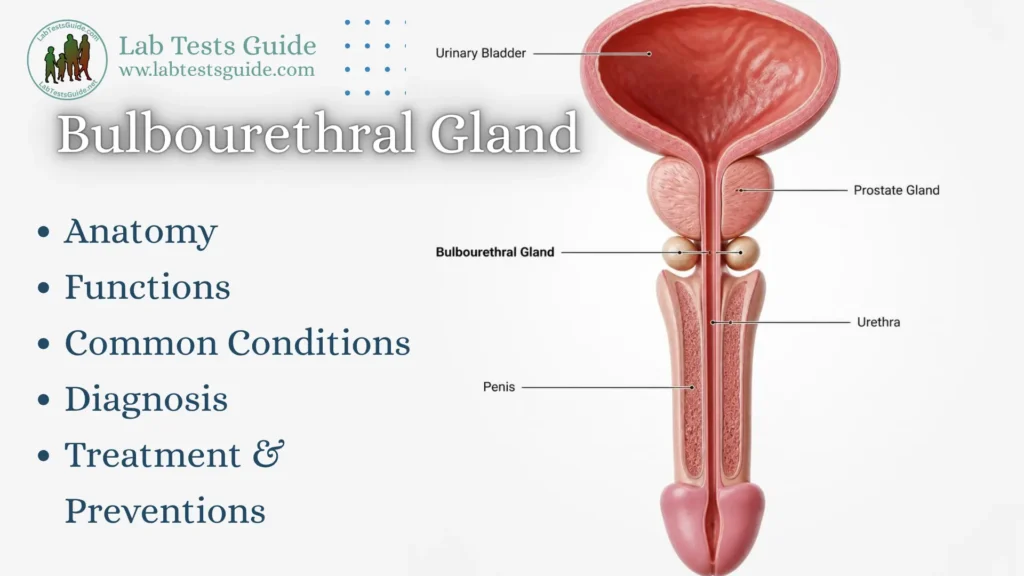
Table of Contents
Bulbourethral Gland: Anatomy, Functions & Common Conditions
The bulbourethral glands are small paired glands in the male reproductive system that produce a lubricating secretion and help prepare the urethra for the passage of semen.
01 What Is the Bulbourethral Gland?
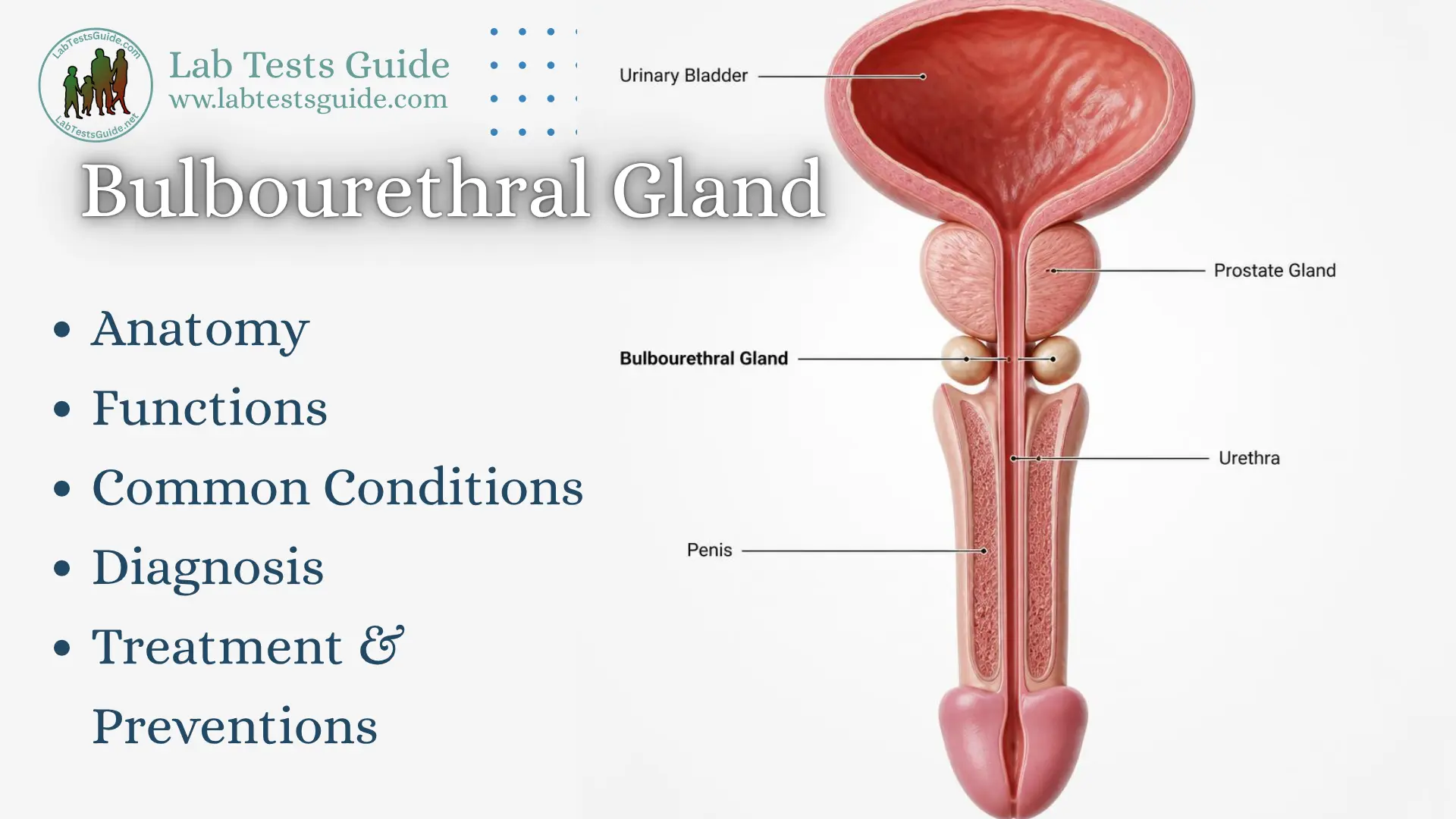
The bulbourethral glands, also called Cowper glands, are small paired glands of the male reproductive system located below the prostate near the base of the penis. Each gland connects to the urethra through a small duct.
The bulbourethral glands produce a clear, slippery secretion that is released into the urethra during sexual arousal. This fluid helps lubricate the urethra and may help neutralize residual acidity from urine, creating a more suitable environment for the passage of sperm.
02 Types and Functions of the Bulbourethral Glands
The bulbourethral glands produce a clear, slippery secretion that lubricates the urethra and may help neutralize residual acidity from urine. This pre-ejaculatory fluid helps prepare the urethra for the passage of semen during ejaculation.
03 Common Bulbourethral Gland Problems
04 Laboratory Tests and Diagnosis
Problems involving the bulbourethral glands are generally evaluated through the patient’s symptoms, medical history, and physical examination. Laboratory testing may be considered when infection, urethritis, prostatitis, sexually transmitted infection, or another underlying condition is suspected.
05 Bulbourethral Gland Symptoms and When to Seek Care
Seek medical evaluation for persistent or severe pelvic or perineal pain, painful urination, unusual urethral discharge, fever, blood in the urine or semen, painful ejaculation, or recurrent urinary and reproductive symptoms. Prompt assessment is especially important when symptoms are accompanied by significant pain, fever, or difficulty urinating.
06 How Are Bulbourethral Gland Problems Diagnosed?
Bulbourethral gland problems are usually evaluated using the patient’s symptoms, medical history, physical examination, and assessment of the urinary and reproductive systems. Laboratory tests may be used when infection, inflammation, or another underlying condition is suspected.
07 Treatment and Prevention
- Treatment depends on the underlying cause and may focus on infection, inflammation, or an associated urinary condition.
- Antibiotics may be prescribed when a bacterial infection is suspected or confirmed and treatment is clinically indicated.
- Appropriate treatment of sexually transmitted infections may be required when an STI is identified.
- Persistent or recurrent symptoms may require specialist evaluation and further investigation.
- Practice safer sex and use appropriate barrier protection to reduce the risk of sexually transmitted infections.
- Maintain good personal hygiene and follow recommended urinary and reproductive health practices.
- Seek timely medical evaluation for persistent urinary symptoms, urethral discharge, or pelvic and perineal pain.
- Complete prescribed antimicrobial treatment as directed by a healthcare professional.
08 Key Takeaways & Related Laboratory Tests
The bulbourethral glands are small paired glands of the male reproductive system that produce a clear lubricating secretion released into the urethra during sexual arousal. Problems involving these glands are generally evaluated clinically, while laboratory testing may help identify infection, inflammation, or sexually transmitted infections when clinically indicated.
Related Laboratory Tests
References and Sources
- Bulbourethral Gland: Anatomy, Histology and Function. Kenhub. Kenhub — Bulbourethral Gland – (accessed on September 04, 2026)
- The Bulbourethral Glands: Structure, Function and Lymphatics. TeachMeAnatomy. TeachMeAnatomy — Bulbourethral Glands – (accessed on September 04, 2026)
- Anatomy, Abdomen and Pelvis: Deep Perineal Space. StatPearls, NCBI Bookshelf. NCBI Bookshelf — Deep Perineal Space – (accessed on September 04, 2026)
- Male Reproductive System: Structure & Function. Cleveland Clinic. Cleveland Clinic — Male Reproductive System – (accessed on September 04, 2026)
- Sexually Transmitted Infections Treatment Guidelines, 2021: Diseases Characterized by Urethritis and Cervicitis. CDC, MMWR. CDC — STI Treatment Guidelines – (accessed on September 04, 2026)
- The Cowper’s Glands: Anatomy and 3D Illustrations. Innerbody Research. Innerbody — Cowper’s Glands – (accessed on September 04, 2026)
- The Function and Anatomy of the Male Reproductive System. Medical News Today. Medical News Today — Male Reproductive System – (accessed on September 04, 2026)
- Anatomy of the Urinary Organs of the Pelvis. Osmosis. Osmosis — Anatomy of the Urinary Organs of the Pelvis – (accessed on September 04, 2026)
Related
Clitoris
Learn about clitoris anatomy, structure, functions, common problems, symptoms, diagnosis, laboratory tests, treatment, and prevention.
Cervix
The cervix is the lower part of the uterus that connects to the vagina and plays important roles in menstruation, pregnancy, childbirth, and reproductive…
Brain
Learn about brain anatomy, major regions, functions, common brain problems, symptoms, diagnosis, laboratory tests, treatment, and prevention.
Discussion 0