

Cervix: Anatomy, Functions & Common Conditions
The cervix is the lower, narrow part of the uterus that connects the uterus to the vagina and plays important roles in menstruation, pregnancy, childbirth, and reproductive health.
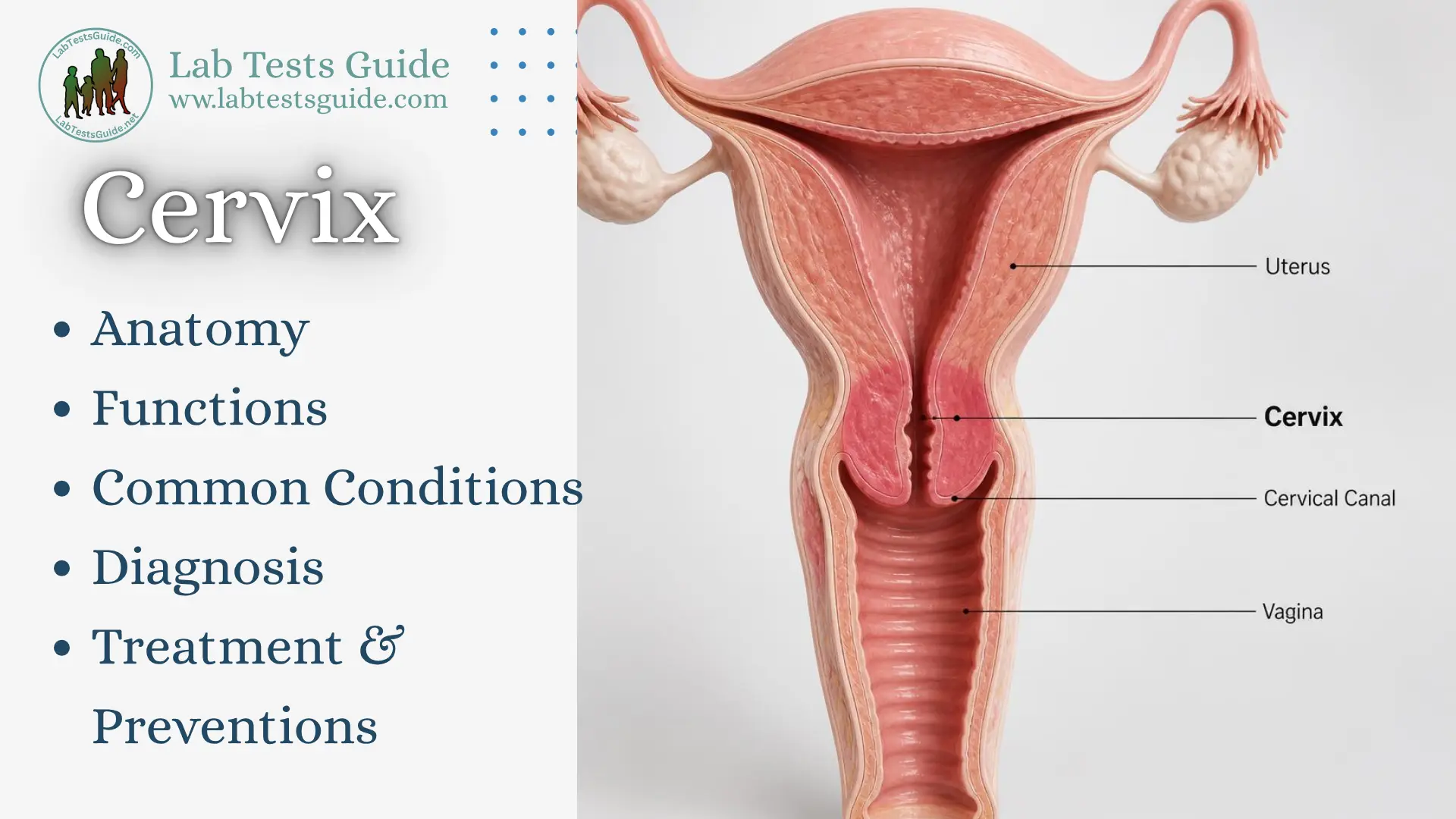
01 What Is the Cervix?
The cervix is the lower, narrow part of the uterus that connects the uterus to the vagina. It forms a passage between the uterus and vagina and plays an important role in menstruation, pregnancy, childbirth, and reproductive health.
The cervix contains an opening called the cervical canal, which allows menstrual blood to pass from the uterus into the vagina. During pregnancy, the cervix helps support the developing pregnancy and normally remains closed until labor, when it gradually dilates to allow childbirth.
02 Types and Functions of the Cervix
The cervix provides a protective barrier between the uterus and vagina, produces cervical mucus that changes during the menstrual cycle, allows menstrual blood to pass, helps sperm enter the reproductive tract during fertile periods, supports pregnancy, and dilates during labor to allow childbirth.
03 Common Cervical Problems
04 Laboratory Tests and Diagnosis
Cervical problems are evaluated using the patient’s symptoms, medical history, pelvic examination, and appropriate screening or laboratory tests. Testing may be used to identify infections, detect abnormal cervical cells, assess human papillomavirus (HPV) infection, or investigate suspected cervical disease.
05 Cervical Symptoms and When to Seek Care
Seek medical evaluation for unexplained or persistent abnormal vaginal bleeding, bleeding after intercourse, unusual vaginal discharge, pelvic pain, or other concerning reproductive symptoms. Regular cervical screening is also important because precancerous cervical changes may develop without noticeable symptoms.
06 How Are Cervical Problems Diagnosed?
Cervical problems are evaluated using the patient’s symptoms, medical history, pelvic examination, and appropriate cervical screening or laboratory tests. Testing may help identify infections, detect abnormal cervical cells, and assess for human papillomavirus (HPV) or other cervical conditions.
07 Treatment and Prevention
- Treatment depends on the underlying cause, such as infection, inflammation, abnormal cervical cells, or other cervical conditions.
- Appropriate antibiotics or other antimicrobial treatment may be prescribed when a bacterial or sexually transmitted infection is identified or strongly suspected.
- Abnormal cervical screening results may require repeat testing, colposcopy, or treatment depending on the findings and clinical risk.
- Persistent or concerning cervical problems may require evaluation by a gynecologist or other qualified healthcare professional.
- Follow recommended cervical cancer screening schedules appropriate for age and individual risk.
- HPV vaccination can help prevent infection with HPV types associated with cervical cancer and other HPV-related diseases.
- Practice safer sex and use barrier protection to reduce the risk of sexually transmitted infections.
- Avoid tobacco use and follow healthcare recommendations for managing reproductive or cervical health concerns.
08 Key Takeaways & Related Laboratory Tests
The cervix is the lower part of the uterus that connects to the vagina and plays important roles in menstruation, pregnancy, childbirth, and reproductive health. Cervical problems may be evaluated through clinical examination, cervical screening, laboratory testing, and additional diagnostic procedures when indicated.
Related Laboratory Tests
References and Sources
- Cleveland Clinic. Cervix: Anatomy, Function, Changes & Conditions. Updated February 03, 2026. Cleveland Clinic – (accessed on September 04, 2026)
- National Cancer Institute (NCI). Cervical Cancer Screening. Information on HPV testing, Pap testing, cervical cytology, and screening. National Cancer Institute – (accessed on September 04, 2026)
- Centers for Disease Control and Prevention (CDC). Sexually Transmitted Infections Treatment Guidelines: Cervicitis. Guidance on causes, diagnostic considerations, and testing for chlamydia and gonorrhea. CDC STI Treatment Guidelines – (accessed on September 04, 2026)
- MedlinePlus. Cervix Disorders. Overview of cervical disorders, symptoms, diagnosis, and related examinations. MedlinePlus – (accessed on September 04, 2026)
- World Health Organization (WHO). Screening for Cervical Cancer. Information on cervical cancer screening, precancerous lesions, HPV vaccination, and prevention. World Health Organization – (accessed on September 04, 2026)
- American College of Obstetricians and Gynecologists (ACOG). Screening for Cervical Cancer. 2026 Committee Statement No. 28, including updated cervical cancer screening recommendations. American College of Obstetricians and Gynecologists – (accessed on September 04, 2026)
- Mayo Clinic. Cervical Dysplasia: Is It Cancer? Information on cervical dysplasia, HPV, Pap testing, colposcopy, and biopsy. Mayo Clinic – (accessed on September 04, 2026)
- National Center for Biotechnology Information (NCBI) Bookshelf. Physiology, Cervical Dilation. Information on cervical structure, pregnancy, effacement, and dilation during labor. NCBI Bookshelf – (accessed on September 04, 2026)
- PubMed. Danforth DN. The Morphology of the Human Cervix. Obstetrical & Gynecological Survey. 1983;38(1):7–13. DOI:10.1097/00003081-198303000-00005. PubMed – (accessed on September 04, 2026)
