

Urethral Sphincter: Anatomy, Functions, Problems & Tests
Urethral Sphincter: Anatomy, Functions & Common Conditions
The urethral sphincter is a group of muscles that helps control the passage of urine through the urethra, contributing to urinary continence and normal bladder emptying.
01 What Is the Urethral Sphincter?
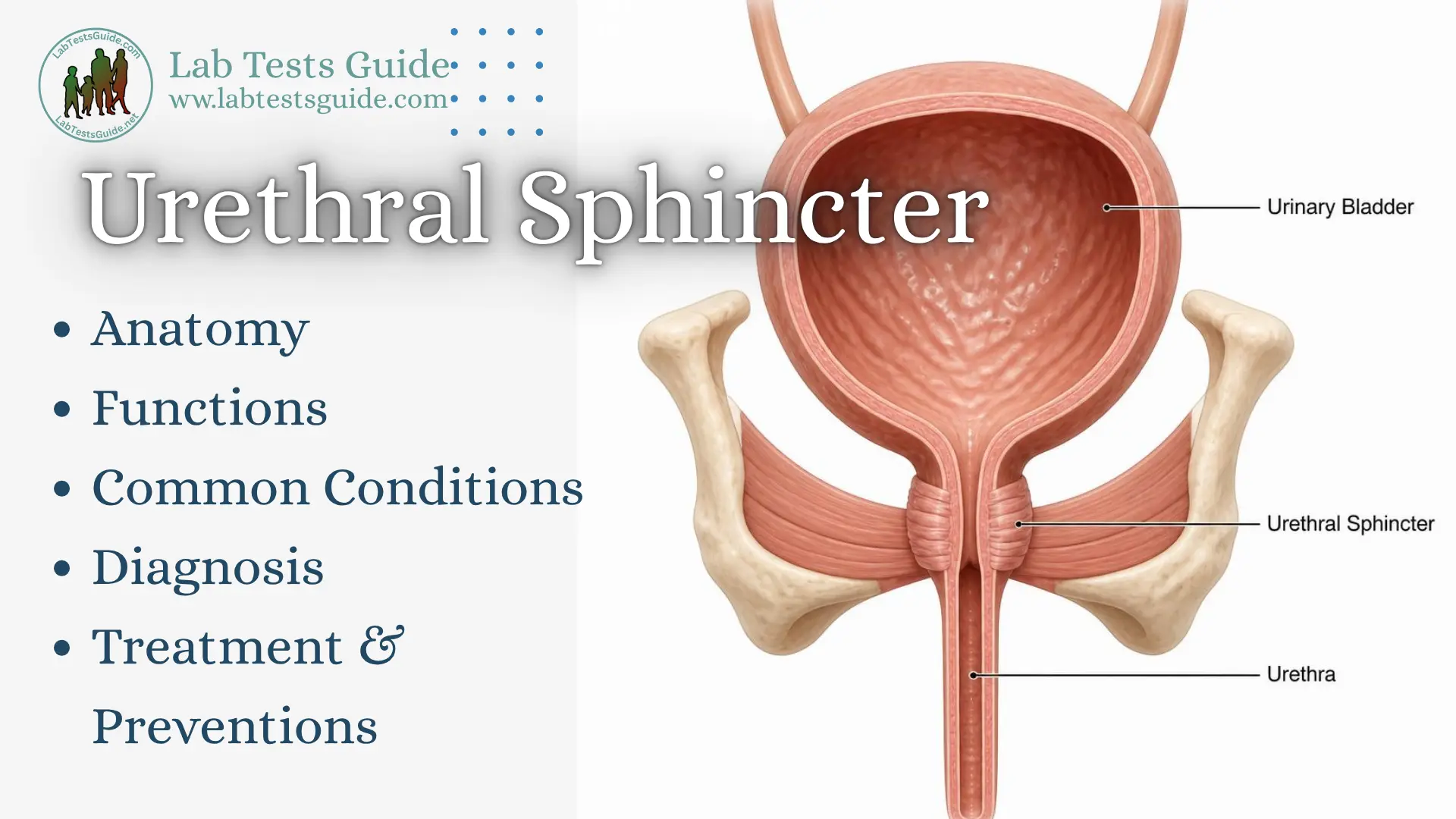
The urethral sphincter is a group of muscles that surrounds the urethra and helps control the passage of urine from the bladder to the outside of the body. It plays an important role in maintaining urinary continence and coordinating normal urination.
The sphincter mechanism includes the internal urethral sphincter and external urethral sphincter. Their structure and control differ between males and females, but together they help regulate urine flow and prevent involuntary leakage.
02 Types and Functions of the Urethral Sphincter
The urethral sphincter helps maintain urinary continence by keeping the urethra closed when urination is not appropriate. During normal voiding, sphincter relaxation is coordinated with bladder contraction to allow urine to pass through the urethra.
03 Common Urethral Sphincter Problems
04 Laboratory Tests and Diagnosis
Urethral sphincter problems are usually evaluated through the patient’s symptoms, medical history, physical examination, and assessment of bladder function. Laboratory testing may be used to identify urinary infection or other conditions that can contribute to urinary symptoms.
05 Urethral Sphincter Symptoms and When to Seek Care
Seek medical evaluation for persistent or worsening urinary leakage, difficulty passing urine, inability to urinate, blood in the urine, painful urination, recurrent urinary symptoms, fever with urinary symptoms, severe lower abdominal or pelvic pain, or other concerning changes in bladder function. Prompt assessment is especially important when there is sudden inability to pass urine or severe pain.
06 How Are Urethral Sphincter Problems Diagnosed?
Urethral sphincter problems are usually evaluated using the patient’s urinary symptoms, medical history, physical examination, and assessment of bladder function. Laboratory tests can help identify infections or other conditions that may contribute to urinary symptoms.
07 Treatment and Prevention
- Pelvic floor muscle training may help strengthen the muscles that support urinary continence.
- Bladder training and scheduled voiding may help improve bladder control when appropriate.
- Medications may be recommended when an underlying bladder or urinary condition contributes to symptoms.
- Persistent or significant sphincter dysfunction may require specialist evaluation and, in selected cases, procedures or surgery.
- Maintain healthy fluid intake and avoid routinely holding urine for prolonged periods.
- Perform pelvic floor exercises correctly when recommended by a healthcare professional.
- Manage constipation and maintain a healthy body weight to reduce pressure on the pelvic floor.
- Address recurrent urinary infections and other underlying urinary conditions with appropriate medical care.
08 Key Takeaways & Related Laboratory Tests
The urethral sphincter is a group of muscles that helps control urine flow and maintain urinary continence. Urethral sphincter problems are generally evaluated through symptoms, physical examination, and bladder function assessment, while laboratory testing may help identify infection or other underlying conditions contributing to urinary symptoms.
Related Laboratory Tests
References and Sources
- Sam P, Jiang J, Leslie SW, LaGrange CA. Anatomy, Abdomen and Pelvis, Sphincter Urethrae. StatPearls. Updated June 4, 2023. NCBI Bookshelf – (accessed on August 24, 2026)
- Cleveland Clinic. Urethra: Location, Anatomy, Function & Conditions. Cleveland Clinic – (accessed on August 24, 2026)
- National Institute of Diabetes and Digestive and Kidney Diseases (NIDDK). The Urinary Tract & How It Works. NIDDK – (accessed on August 24, 2026)
- National Institute for Health and Care Excellence (NICE). Urinary Incontinence in Women: Supervised Pelvic Floor Muscle Training. NICE – (accessed on August 24, 2026)
- American Urological Association (AUA) and Society of Urodynamics, Female Pelvic Medicine & Urogenital Reconstruction (SUFU). Adult Urodynamics: AUA/SUFU Guideline. American Urological Association – (accessed on August 24, 2026)
- MedlinePlus. Urinary Incontinence: Diagnosis, Tests, and Treatment. MedlinePlus – (accessed on August 24, 2026)
- Merck Manual Professional Edition. Urinary Incontinence in Adults: Evaluation and Testing. Merck Manual Professional Edition – (accessed on August 24, 2026)
- NHS. Urinary Incontinence: Non-surgical Treatment, Pelvic Floor Muscle Training, and Bladder Training. NHS – (accessed on August 24, 2026)
