

Spleen: Anatomy, Functions, Common Problems & Laboratory Tests
Spleen: Anatomy, Functions & Common Conditions
The spleen is an important lymphoid organ in the upper left abdomen that helps filter blood, remove aged blood cells, support immune responses, and contribute to normal blood and immune system function.
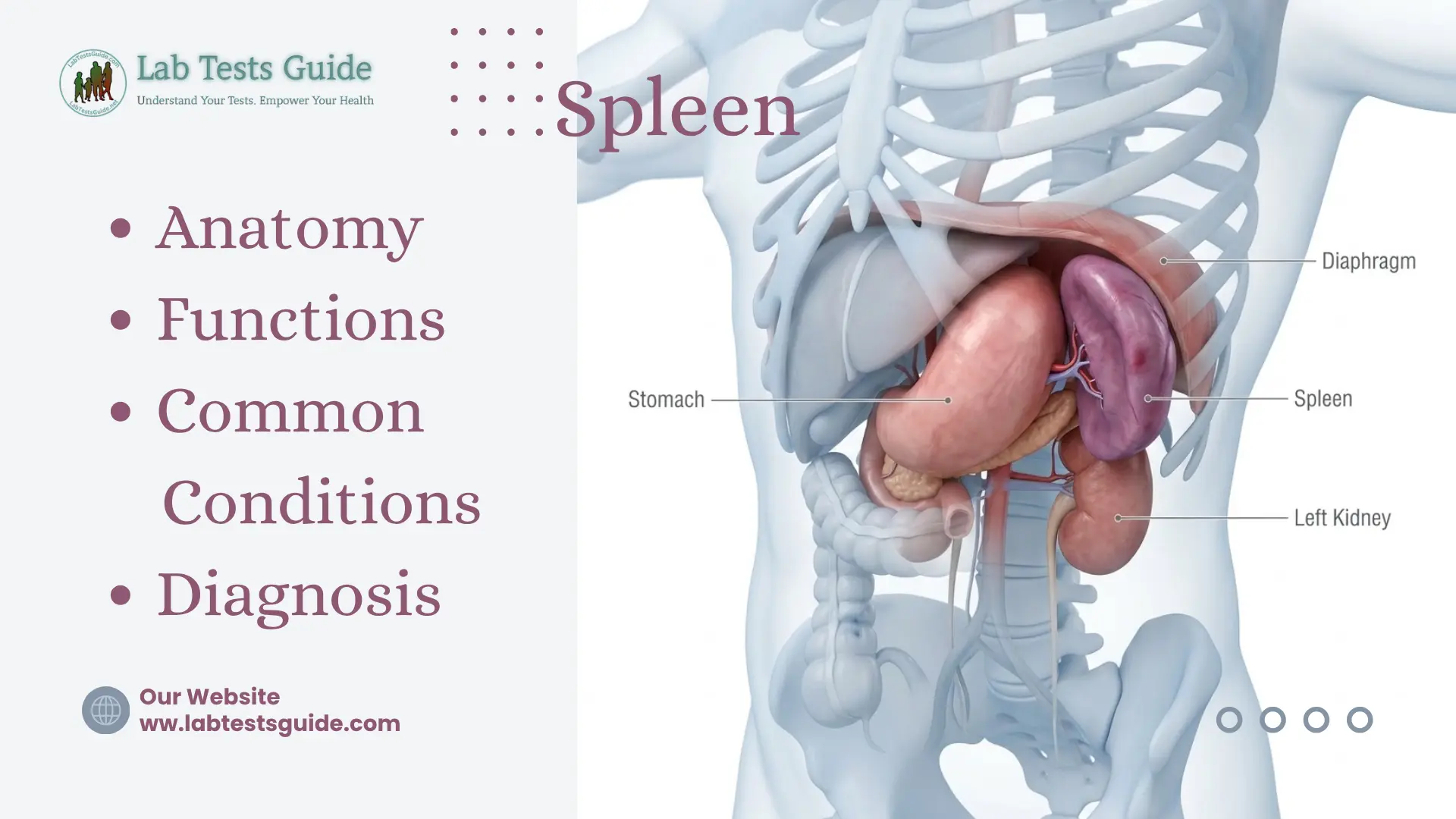
01 What Is the Spleen?
The spleen is a soft, vascular lymphoid organ located in the upper left side of the abdomen, beneath the diaphragm and near the stomach. It is an important part of the immune and blood-filtering systems.
The spleen contains specialized areas called red pulp and white pulp. The red pulp helps remove aged or damaged blood cells from circulation, while the white pulp contributes to immune surveillance and responses to certain microorganisms.
02 Parts and Functions of the Spleen
The spleen filters circulating blood, removes old or damaged blood cells, stores and processes certain blood components, and supports immune defense against blood-borne microorganisms. It also contributes to the body’s response to infections and other immune challenges.
03 Common Spleen Problems
04 Laboratory Tests and Diagnosis
Evaluation of spleen disorders may involve a combination of medical history, physical examination, laboratory testing, and imaging. Laboratory tests can help identify abnormalities in blood cells, inflammation, infection, or underlying conditions that may affect splenic function.
05 Spleen Symptoms and When to Seek Care
Seek medical evaluation for unexplained or persistent left upper abdominal pain, an enlarged spleen, unexplained abnormal blood counts, recurrent infections, persistent fever, or significant fatigue. Sudden severe abdominal pain, especially after an injury, requires urgent medical assessment because splenic rupture can cause potentially life-threatening internal bleeding. Read More medical advice
06 How Are Spleen Problems Diagnosed?
Spleen problems are evaluated using the patient’s symptoms, medical history, physical examination, blood tests, and imaging when appropriate. Laboratory testing can help identify blood cell abnormalities, infection, inflammation, or underlying disorders associated with splenic enlargement or dysfunction.
07 Treatment and Prevention
- Treatment depends on the underlying cause of the spleen disorder and may involve management of the associated condition.
- Blood count abnormalities may require monitoring and treatment based on their cause and severity.
- Splenic injury or rupture requires urgent medical assessment and may require surgical or other emergency management.
- Significant or persistent splenic enlargement may require specialist evaluation and investigation of the underlying cause.
- Follow recommended vaccinations and preventive healthcare advice when splenic function is reduced or absent.
- Avoid activities with a high risk of abdominal trauma when the spleen is significantly enlarged, as advised by a healthcare professional.
- Seek appropriate medical care for persistent fever, unexplained infections, or symptoms associated with blood abnormalities.
- Manage underlying infections, liver disease, blood disorders, or other conditions according to medical advice.
08 Key Takeaways & Related Laboratory Tests
The spleen is an important lymphoid organ that filters blood, removes aged or damaged blood cells, and supports immune function. Evaluation of spleen disorders may involve blood tests and imaging, particularly when splenomegaly, abnormal blood counts, infection, injury, or impaired splenic function is suspected.
