
Liver Function Test (LFT) Purpose, Procedure, Principle, Result Interpretation and Normal Values
Definition: A Liver Function Test (LFT) is a group of blood tests used to assess liver health, detect liver injury, and evaluate how well the liver is functioning.
Purpose: LFTs help screen for liver disorders, investigate abnormal liver symptoms or results, assess the severity of liver disease, and monitor treatment or ongoing liver conditions.
| Other Names | Liver Panel, Hepatic Function Panel, Liver Profile |
| Test Technique | Automated spectrophotometry and enzymatic/colorimetric assays |
| Test Type | Blood Test |
| Turnaround time (TAT) | Same day – 1 Day |
| Test Cost ($) | $20 – $100 |
| Fasting Required | Usually Not required |
| Medications | Continue prescribed medicines unless your healthcare provider advises otherwise; report all medications and supplements. |
| Allowed/Avoid | Normal diet is generally allowed; avoid alcohol before testing when advised by your healthcare provider. |
| Other Preparation | Follow any fasting or preparation instructions provided by the laboratory, especially when LFTs are ordered with other tests. |
- Required Sample: 2-5 mL Serum
- Specimen Container: Serum separator tube (SST) or plain red-top tube
- Alternative Specimen(s): Plasma may be accepted depending on the laboratory analyzer and assay requirements
- Sample Stability:
• Room Temp (20-25°C): Up to 8 Hours
• Refrigerated (2-8°C): Up to 7 Days
• Frozen (-20°C and Below): Longer-term storage according to individual assay requirements - Transport: Promptly transport separated serum or plasma according to laboratory requirements; use temperature-controlled transport when required.
- Mislabeling Or Unlabeled sample: Patient identification error
- Wrong collection tube: Incorrect tube or additive may interfere with testing
- Insufficient volume (QNS): Not enough sample to perform the required panel
- Hemolyzed sample: Significant hemolysis may interfere with several liver-related assays
- Lipemic / Icteric sample: Severe lipemia or marked icterus may interfere with some analytical methods
- Delayed transport: Prolonged delay or improper storage may affect sample integrity
- Alanine Aminotransferase (ALT)
- Aspartate Aminotransferase (AST)
- Alkaline Phosphatase (ALP)
- Total and Direct Bilirubin
- Albumin and Total Protein
| ALT | 7 – 56 U/L |
| AST | 10 – 40 U/L |
| ALP | 44 – 147 U/L |
| Total Bilirubin | 0.1 – 1.2 mg/dL |
| Albumin | 3.5 – 5.0 g/dL |
Quick Facts
Introduction
What is Liver Function Test (LFT)?
Liver Function Test (LFT) is a group of blood tests that measures liver enzymes, bilirubin, and proteins in the blood. This test helps assess liver health and detects:
- Liver cell injury — Assessed mainly through ALT and AST levels
- Bile flow abnormalities — Evaluated using ALP and bilirubin levels
- Liver synthetic function — Assessed using albumin and other related markers
What is this test used for?
LFT is utilized for screening, diagnosis, monitoring, and evaluation of liver and biliary conditions:
- Screening: Routine evaluation of liver health and assessment of liver-related risk factors
- Diagnosis: Hepatitis, fatty liver disease, bile duct disorders
- Monitoring: Liver disease progression and response to treatment
- Medication safety: Monitoring for possible liver injury caused by certain medicines
Why do I need this test?
Your healthcare provider may order an LFT if you experience:
- Symptoms: jaundice, dark urine, abdominal pain, fatigue, or unexplained nausea
- Risk factors: alcohol use, liver disease risk, obesity, or exposure to viral hepatitis
- Medication monitoring: Monitoring medicines that may affect liver function or cause liver injury
- Routine screening: Evaluation during health check-ups or when previous liver tests are abnormal
What happens during the test?
LFT follows a standard blood collection and laboratory analysis procedure:
- Preparation: Fasting is usually not required unless other tests ordered with LFT require it.
- Collection: A small amount of blood is collected from a vein by a healthcare professional.
- Processing: Blood is placed in a serum separator or appropriate blood collection tube and sent to the laboratory.
- Analysis: Liver enzymes, bilirubin, proteins, and other components are measured using automated laboratory methods.
- Results: Results are commonly available within the same day to 1 day, depending on the laboratory.
Will I need to do anything to prepare?
Fasting is usually not required for an LFT alone. Follow these guidelines:
- Fasting: Not Required unless your healthcare provider or laboratory gives different instructions.
- Avoid: Avoid alcohol before testing when specifically advised, as alcohol may affect some liver-related results.
- Medications: Inform your clinician about current medications, vitamins, and supplements because some may affect liver test results.
- Hydration: Drink adequate water before blood collection unless instructed otherwise.
- Clothing: Wear clothing that allows easy access to the arm for blood collection.
Are there any risks to the test?
LFT is a safe, routine blood test with minimal potential risks:
- Mild discomfort: Brief stinging or discomfort when the needle enters the vein.
- Minor bruising: Mild bruising or tenderness may occur around the collection site.
- Lightheadedness: Some people may experience temporary dizziness during or after blood collection.
- Bleeding: Prolonged bleeding may occur in people taking blood-thinning medicines or with certain bleeding disorders.
- Infection: Infection at the needle site is extremely rare when proper sterile technique is used.
Note: Serious complications are extremely rare. Tell the healthcare professional if you have a bleeding disorder or a history of fainting during blood collection.
What do the results mean?
LFT results are interpreted as a pattern rather than from a single value alone. Abnormal results may indicate liver cell injury, impaired bile flow, or changes in liver protein production:
⚠️ Important: Abnormal LFT results do not by themselves establish a diagnosis. Results should be interpreted by a licensed healthcare provider in context with your medical history, symptoms, and other laboratory and imaging findings.
Test Components
Alanine Aminotransferase (ALT)
ALT is an enzyme found mainly in liver cells and is a sensitive marker of hepatocellular injury.
Aspartate Aminotransferase (AST)
AST is an enzyme found in the liver, heart, skeletal muscle, and other tissues that may increase with liver or tissue injury.
Alkaline Phosphatase (ALP)
ALP is an enzyme found in the liver, bile ducts, bone, and other tissues and is useful for evaluating cholestatic patterns.
Gamma-Glutamyl Transferase (GGT)
GGT is an enzyme associated with the liver and biliary tract and can help evaluate cholestasis and the source of an elevated ALP.
Total Bilirubin (TBIL)
Total bilirubin measures the combined amount of unconjugated and conjugated bilirubin circulating in the blood.
Direct Bilirubin (DBIL)
Direct bilirubin primarily represents conjugated bilirubin and helps assess bilirubin excretion and bile flow.
Indirect Bilirubin
Indirect bilirubin is calculated from total and direct bilirubin and mainly represents unconjugated bilirubin.
Albumin (ALB)
Albumin is the major protein produced by the liver and provides information about hepatic synthetic function and overall protein status.
Total Protein (TP)
Total protein measures the combined concentration of albumin and globulins in the blood and can provide information about protein balance.
Globulin
Globulin represents a group of blood proteins involved in immune function and other processes and is commonly estimated from total protein and albumin.
Albumin/Globulin Ratio (A/G Ratio)
The A/G ratio compares albumin with globulin concentrations and may help provide additional context for abnormal protein results.
Specimen Requirements & Patient Preparation
- Sample Type: Serum is preferred; plasma may be accepted depending on the laboratory method.
- Container: Serum separator tube (SST) or red-top tube.
- Minimum Volume: Approximately 2–5 mL of blood, depending on the laboratory and tests ordered.
- Order of Draw: Follow the laboratory’s standard venipuncture order of draw to prevent additive carryover.
- Transport Condition: Transport promptly to the laboratory at controlled room temperature according to laboratory requirements.
- Room Temperature: Serum should generally be separated from cells as soon as practical; stability varies by individual analyte.
- Refrigerated (2–8°C): Separated serum is generally more stable for short-term storage, with limits depending on the specific test component.
- Processing: Allow serum to clot when required, then centrifuge according to the laboratory’s validated procedure. Avoid repeated freeze-thaw cycles.
- Fasting Status: Usually not required for an LFT alone; fasting may be requested when other tests are ordered at the same time.
- Physical Activity: Avoid unusually strenuous exercise before collection when possible, as intense activity may affect some enzyme results.
- Dietary Factors: Follow normal dietary instructions unless your healthcare provider or laboratory recommends fasting or another specific preparation.
- Medications: Document all prescribed medicines, over-the-counter drugs, vitamins, and supplements because some may affect liver enzyme or bilirubin results.
- Pediatric / Geriatric: Use an appropriate collection device and blood volume based on the patient’s age, size, and laboratory requirements.
- Clinical Considerations: Record relevant history such as liver disease, alcohol exposure, recent illness, and medications when interpreting abnormal results.
Liver Function Test (LFT) Normal Values Evidence-based reference ranges
| ALT (SGPT) | 7 – 56 U/L 0.12 – 0.95 µkat/L |
| AST (SGOT) | 8 – 48 U/L 0.14 – 0.80 µkat/L |
| ALP | 40 – 129 U/L 0.67 – 2.15 µkat/L |
| Total Bilirubin | 0.1 – 1.2 mg/dL 1.7 – 20.5 µmol/L |
| Direct Bilirubin | 0.0 – 0.3 mg/dL 0.0 – 5.1 µmol/L |
| Albumin | 3.5 – 5.0 g/dL 35 – 50 g/L |
| Total Protein | 6.0 – 8.3 g/dL 60 – 83 g/L |
| GGT | 9 – 48 U/L 0.15 – 0.80 µkat/L |
| Prothrombin Time (PT) | 11.0 – 13.5 sec 11.0 – 13.5 sec |
| ALT (SGPT) | 7 – 55 U/L 0.12 – 0.92 µkat/L |
| AST (SGOT) | 8 – 48 U/L 0.14 – 0.80 µkat/L |
| ALP | 40 – 129 U/L 0.67 – 2.15 µkat/L |
| Total Bilirubin | 0.1 – 1.2 mg/dL 1.7 – 20.5 µmol/L |
| Direct Bilirubin | 0.0 – 0.3 mg/dL 0.0 – 5.1 µmol/L |
| Albumin | 3.5 – 5.0 g/dL 35 – 50 g/L |
| Total Protein | 6.3 – 7.9 g/dL 63 – 79 g/L |
| GGT | 8 – 61 U/L 0.13 – 1.02 µkat/L |
| Prothrombin Time (PT) | 11.0 – 13.5 sec 11.0 – 13.5 sec |
| ALT (SGPT) | 10 – 50 U/L 0.17 – 0.83 µkat/L |
| AST (SGOT) | 10 – 40 U/L 0.17 – 0.67 µkat/L |
| ALP | 30 – 130 U/L 0.50 – 2.17 µkat/L |
| Total Bilirubin | 0.2 – 1.2 mg/dL 3 – 21 µmol/L |
| Direct Bilirubin | 0.0 – 0.3 mg/dL 0.0 – 5.0 µmol/L |
| Albumin | 3.5 – 5.0 g/dL 35 – 50 g/L |
| Total Protein | 6.0 – 8.0 g/dL 60 – 80 g/L |
| GGT | 10 – 60 U/L 0.17 – 1.00 µkat/L |
| Prothrombin Time (PT) | 10.0 – 14.0 sec 10.0 – 14.0 sec |
| ALT (SGPT) | 7 – 56 U/L 0.12 – 0.95 µkat/L |
| AST (SGOT) | 5 – 40 U/L 0.08 – 0.67 µkat/L |
| ALP | 44 – 147 U/L 0.73 – 2.45 µkat/L |
| Total Bilirubin | 0.3 – 1.2 mg/dL 5.1 – 20.5 µmol/L |
| Direct Bilirubin | 0.1 – 0.3 mg/dL 1.7 – 5.1 µmol/L |
| Albumin | 3.4 – 5.4 g/dL 34 – 54 g/L |
| Total Protein | 6.0 – 8.3 g/dL 60 – 83 g/L |
| GGT | 9 – 48 U/L 0.15 – 0.80 µkat/L |
| Prothrombin Time (PT) | 11.0 – 13.5 sec 11.0 – 13.5 sec |
Interpretation of Results: Liver Function Test (LFT)
LFT interpretation integrates liver enzyme, bilirubin, and protein results with patient history, symptoms, examination, and other laboratory findings. Reference ranges are laboratory-specific and should be interpreted using the range reported with the result.
-
↑ ALT / AST: Hepatocellular injury
— May occur with viral hepatitis, fatty liver disease, medication-related injury, or other liver insults.↔ Correlate with: Hepatitis testing, medication history, ultrasound, and clinical symptoms.
-
↑ ALP / GGT: Cholestatic or biliary pattern
— May occur with bile duct obstruction, cholestasis, or other hepatobiliary disorders.↔ Correlate with: Bilirubin, abdominal imaging, and other biliary investigations.
-
↓ Albumin: Reduced protein level
— May occur with chronic liver disease, malnutrition, inflammation, kidney disease, or protein loss.↔ Correlate with: Nutritional status, renal function, urine protein, and clinical history.
-
↓ Total Protein: Reduced serum protein
— May be associated with inadequate protein intake, impaired synthesis, protein loss, or other systemic conditions.↔ Correlate with: Albumin, globulin, nutritional assessment, and kidney evaluation.
- Markedly abnormal liver results — Severe or rapidly changing abnormalities may require urgent clinical assessment, particularly when accompanied by jaundice, confusion, bleeding, or severe abdominal symptoms.
- Severe bilirubin elevation — Significant hyperbilirubinemia may require prompt evaluation for hepatocellular injury, hemolysis, or biliary obstruction.
-
All parameters within range:
Generally consistent with normal liver-related laboratory findings
— No biochemical abnormality is identified by the tested parameters.↔ Correlate with: Symptoms, medical history, physical examination, and clinical indication for testing.
-
Isolated mild variation: A small abnormality may be temporary or nonspecific
— Results can vary with medications, recent illness, exercise, and other factors.↔ Correlate with: Previous results and repeat testing when clinically appropriate.
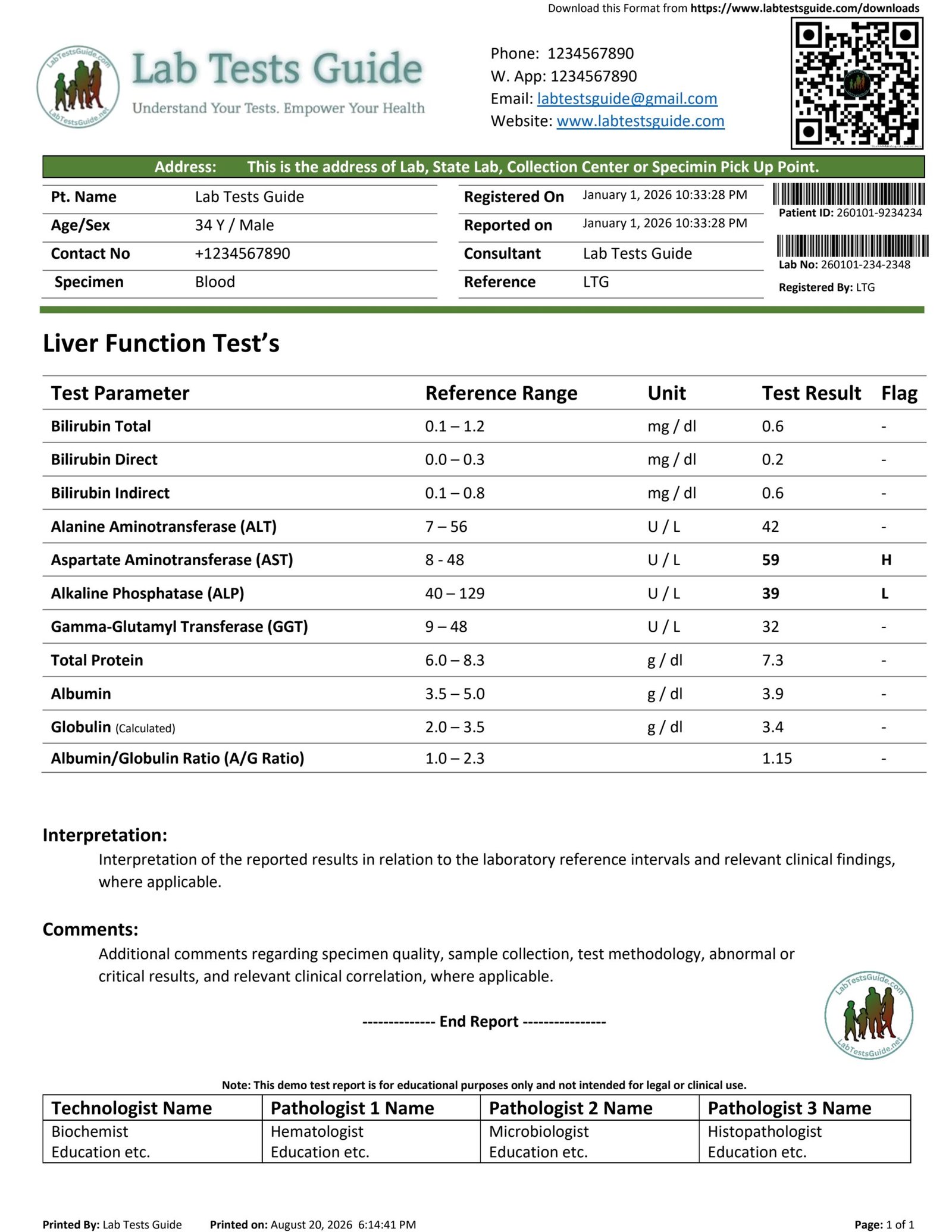
📥 Download LFT Test Lab Report Formats
Get the demo report format for Liver Panel in your preferred format. These templates are fully editable and professional.
How to Download?
| File Description | Actions |
|---|---|
LFT Test Report Format (PNG) | |
LFT Test Report Format (MS Word) | |
LFT Test Report Format (MS Excel) | |
LFT Test Report Format (PDF) | |
ABC File Download | |
Purchase ABC Book |
Liver Function Test Correlation Matrix
LFT + Liver Enzymes
LFT + Bilirubin Profile
LFT + Liver Synthetic Function
LFT + Metabolic & Systemic Evaluation
Frequently Asked Questions
Common questions about Liver Function Tests (LFTs) from patients, students, and healthcare professionals. Click on any question to expand the answer.
A Liver Function Test (LFT) is a group of blood tests used to evaluate liver-related enzymes, proteins, and substances processed or produced by the liver. An LFT commonly includes ALT, AST, ALP, GGT, total bilirubin, direct bilirubin, albumin, and total protein. It may be ordered to investigate symptoms such as jaundice, abdominal discomfort, fatigue, dark urine, or unexplained itching, or to monitor known liver disease and treatment.
Fasting is not always required for an LFT. Requirements depend on the laboratory and whether other tests are being performed at the same time. If your LFT is ordered together with tests that require fasting, such as certain lipid or glucose tests, your healthcare provider may recommend fasting. Follow the specific preparation instructions provided by your laboratory or healthcare professional.
ALT and AST are enzymes that can increase when liver cells are injured. ALT is generally more closely associated with liver injury, while AST can also increase with injury to muscles and other tissues. Elevated results may occur with conditions such as viral hepatitis, fatty liver disease, alcohol-related liver injury, medication effects, or other causes. The degree and pattern of elevation should be interpreted together with the other LFT results and clinical findings.
High bilirubin levels are called hyperbilirubinemia. Increased bilirubin may occur when red blood cells are broken down excessively, when the liver cannot adequately process bilirubin, or when bile flow is impaired. Depending on the cause, elevated bilirubin may be associated with jaundice, dark urine, pale stools, or yellowing of the skin and eyes. Total and direct bilirubin results are interpreted together with other LFT parameters and clinical findings.
Yes. Some prescription medicines, over-the-counter drugs, herbal products, and dietary supplements can affect liver-related blood tests. Certain medications may increase ALT, AST, ALP, or bilirubin, while others may have little or no measurable effect. Do not stop prescribed medication without medical advice. Tell your healthcare provider about all medicines and supplements you are taking so the results can be interpreted appropriately.
LFT results are commonly available within a few hours to one day in many routine laboratories, although turnaround time varies by laboratory, location, and the specific tests requested. Specialized testing or additional investigations may take longer. Your laboratory can provide the expected reporting time for your sample.
Yes. Alcohol consumption can affect several liver-related laboratory results, particularly with repeated or heavy alcohol use. It may contribute to elevations in AST, ALT, and GGT and can affect liver function over time. The effect depends on the amount and pattern of alcohol use and the individual’s underlying health. Tell your healthcare provider about alcohol consumption when discussing abnormal LFT results.
A typical LFT panel may include several enzymes, proteins, and bilirubin measurements:
- ALT: Alanine aminotransferase, a marker of hepatocellular injury
- AST: Aspartate aminotransferase, which can increase with liver or muscle injury
- ALP: Alkaline phosphatase, associated with cholestasis as well as bone and other tissues
- GGT: Gamma-glutamyl transferase, useful in evaluating hepatobiliary enzyme abnormalities
- Total and direct bilirubin: Reflect bilirubin production, processing, and excretion
- Albumin: A major protein synthesized by the liver
- Total protein: Includes albumin and globulins
The exact combination of tests varies between laboratories and clinical situations.
ALT and AST are aminotransferase enzymes released into the blood when cells are injured. ALT is more concentrated in the liver and is therefore generally more liver-specific than AST. AST is also present in skeletal muscle, cardiac muscle, and other tissues. The AST-to-ALT relationship may provide additional clinical information, but it should not be interpreted alone and must be considered with the patient’s history and other laboratory findings.
LFT abnormalities are often classified according to the predominant pattern of enzyme elevation:
- Hepatocellular pattern: Aminotransferases such as ALT and AST are disproportionately elevated compared with ALP.
- Cholestatic pattern: ALP and often GGT are disproportionately elevated compared with ALT and AST.
- Mixed pattern: Both aminotransferases and cholestatic enzymes are significantly elevated.
Pattern recognition helps guide further investigation but does not by itself establish a specific diagnosis.
Total bilirubin represents the overall bilirubin concentration in the blood, while direct bilirubin primarily represents conjugated bilirubin. Indirect bilirubin is generally estimated from the difference between total and direct bilirubin when appropriate. The pattern of bilirubin elevation can help distinguish problems involving bilirubin production, hepatic processing, or bile excretion.
Alkaline phosphatase (ALP) is present in several tissues, especially the liver, bile ducts, and bone. Therefore, an elevated ALP does not automatically indicate liver disease. Physiological increases can also occur during periods of bone growth, and pathological elevations may occur with certain bone disorders. GGT or other clinical findings can help determine whether an elevated ALP is more likely to have a hepatobiliary origin.
Albumin is the major protein synthesized by the liver. A low albumin concentration can occur with reduced hepatic synthetic capacity, but it is not specific for liver disease. Low albumin may also result from malnutrition, inflammation, kidney disease with protein loss, gastrointestinal protein loss, or other conditions. Because albumin has a relatively long half-life, it generally reflects longer-term changes rather than acute liver cell injury.
Reference ranges vary between laboratories because they may use different analytical methods, instruments, populations, and reference interval procedures. Age, sex, pregnancy, and other biological factors can also influence some results. A value outside the laboratory’s reference interval does not automatically indicate disease, while a result within the range does not always exclude disease. Always interpret LFT results using the reference interval printed on the laboratory report and the clinical context.
A hepatocellular pattern is characterized by aminotransferase elevations, particularly ALT and AST, that are disproportionately greater than the increase in ALP. The pattern should be assessed using the degree of elevation relative to each laboratory’s upper limit of normal. Causes include viral hepatitis, metabolic dysfunction-associated steatotic liver disease, alcohol-related liver injury, autoimmune disease, ischemic injury, and drug-induced liver injury. Further interpretation requires clinical history and additional testing.
A cholestatic pattern is characterized by a disproportionate elevation of alkaline phosphatase (ALP), often accompanied by an increase in GGT and sometimes direct bilirubin. Potential causes include intrahepatic cholestasis, biliary obstruction, cholangitis, medication-related cholestasis, and other hepatobiliary disorders. When ALP is elevated, GGT or another appropriate test may help determine whether the source is hepatobiliary rather than bone.
Hyperbilirubinemia can result from several mechanisms:
- Increased bilirubin production: Hemolysis and other causes of increased red blood cell breakdown
- Impaired hepatic uptake or conjugation: Certain inherited disorders and other hepatic conditions
- Hepatocellular dysfunction: Hepatitis and other liver disorders
- Impaired bile excretion: Cholestasis or biliary obstruction
The relative proportions of direct and indirect bilirubin, together with ALT, AST, ALP, GGT, and clinical findings, help determine the likely mechanism.
The R-value (R ratio) compares the patient’s ALT and ALP elevations relative to their respective upper limits of normal. It is commonly used to classify suspected drug-induced liver injury patterns. An R-value of approximately 5 or greater suggests a hepatocellular pattern, approximately 2 or less suggests a cholestatic pattern, and values between these ranges suggest a mixed pattern. The R-value should be interpreted with clinical history, timing, medication exposure, and other laboratory findings.
Several pre-analytical factors can influence liver-related laboratory results:
- Hemolysis: Can interfere with or increase measurement of certain analytes, including AST and other intracellular constituents
- Sample handling: Delayed separation or inappropriate storage may affect some measurements
- Fasting status: May influence selected biochemical measurements depending on the test panel
- Exercise: Strenuous exercise can increase AST and other enzymes associated with muscle injury
- Medications and supplements: May produce genuine biological changes in liver-related results
Modern clinical chemistry analyzers commonly use automated spectrophotometric and enzymatic methods for LFT parameters. Depending on the analyte and analyzer, methods may include kinetic enzyme assays for ALT, AST, ALP, and GGT; diazo or other colorimetric methods for bilirubin; and dye-binding or immunochemical methods for proteins such as albumin. Laboratories validate and monitor these methods using appropriate calibration, internal quality control, and external quality assessment procedures.
Significantly abnormal LFT results should be evaluated according to the pattern, magnitude, symptoms, previous results, and clinical context. Assessment may include review of medications and supplements, alcohol exposure, viral hepatitis risk, metabolic risk factors, and other relevant history. Depending on the findings, clinicians may request repeat testing, additional laboratory studies, imaging, or specialist assessment. Extremely abnormal results accompanied by symptoms such as jaundice, confusion, severe abdominal pain, bleeding, or marked illness require prompt medical evaluation.
Quality assurance for LFT testing includes calibration verification, internal quality control, reagent monitoring, instrument maintenance, analytical performance verification, and external quality assessment. Laboratories should monitor precision and accuracy for relevant analytes and investigate control failures before reporting patient results. Pre-analytical specimen quality, reagent lot changes, calibration status, and analyzer performance should also be monitored according to the laboratory’s quality management system.
References and Sources
- Liver Function Tests: MedlinePlus Medical Test – MedlinePlus – (accessed on August 17, 2026)
- Liver Function Tests: Types, Purpose & Results Interpretation – Cleveland Clinic – (accessed on August 17, 2026)
- Liver function tests (LFTs) are blood tests to check your liver health – healthdirect – (accessed on August 17, 2026)
- Liver function tests – Mayo Clinic – (accessed on August 17, 2026)
- Liver Function Test (LFT): Price & Normal Range – Nayab Labs and Diagnostic Centre – Nayab Labs and Diagnostic Centre – (accessed on August 17, 2026)
- Liver Function Tests – StatPearls – NCBI Bookshelf – (accessed on August 17, 2026)

Thanks