

Bladder: Anatomy, Functions & Common Conditions
The bladder is a hollow muscular organ in the pelvis that stores urine and contracts to help eliminate urine from the body through the urethra.
01 What Is the Bladder?
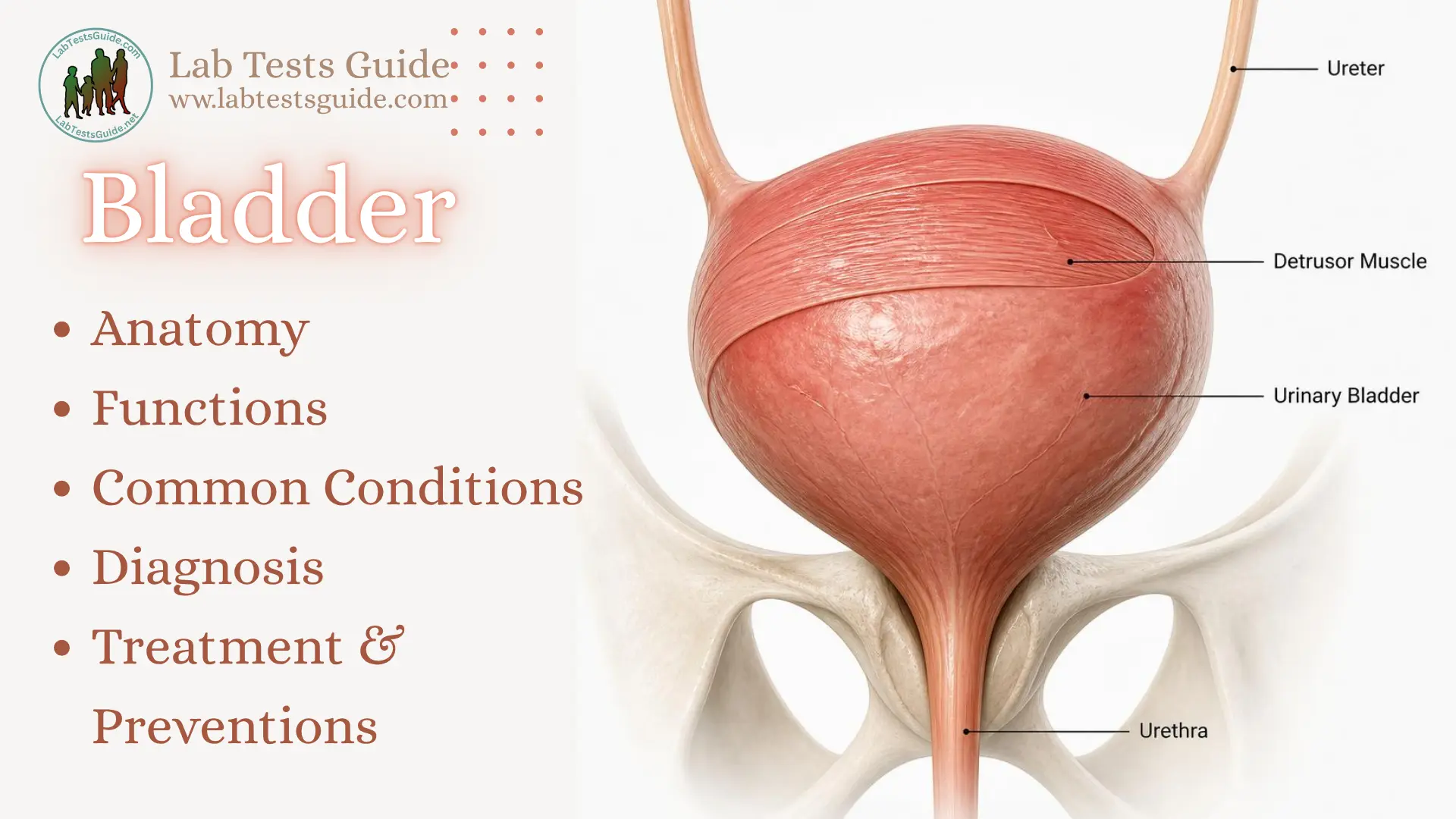
The bladder is a hollow, muscular organ located in the pelvis that temporarily stores urine produced by the kidneys. It is part of the urinary system and connects to the urethra, through which urine leaves the body.
The bladder wall contains the detrusor muscle, which relaxes as the bladder fills and contracts during urination. Its inner lining, called the urothelium, allows the bladder to expand while helping protect the underlying tissues from urine.
02 Parts and Functions of the Bladder
The bladder temporarily stores urine received from the kidneys and contracts during urination to move urine through the urethra. Normal bladder function depends on coordinated activity between the bladder muscle, urinary sphincters, nerves, and brain.
03 Common Bladder Problems
04 Laboratory Tests and Diagnosis
Many common bladder problems are evaluated using the patient’s symptoms, medical history, physical examination, and urine testing. Laboratory testing is particularly useful when a urinary tract infection, blood in the urine, inflammation, kidney involvement, or another urinary condition is suspected.
05 Bladder Symptoms and When to Seek Care
Seek medical evaluation for blood in the urine, severe or persistent urinary pain, inability to urinate, recurrent urinary symptoms, fever or chills with urinary symptoms, pain in the back or side, or other concerning changes in urination. Prompt assessment may help identify infection, obstruction, stones, or other bladder and urinary tract problems.
06 How Are Bladder Problems Diagnosed?
Bladder problems are usually evaluated using the patient’s symptoms, medical history, physical examination, and appropriate urine or blood tests. The specific diagnostic approach depends on the symptoms and the suspected underlying condition.
07 Treatment and Prevention
- Treatment depends on the underlying bladder condition and may include medicines or other targeted therapies.
- Bacterial urinary tract infections are generally treated with antibiotics when clinically indicated.
- Bladder stones or urinary obstruction may require specific medical or procedural treatment.
- Persistent, recurrent, or unexplained urinary symptoms may require specialist evaluation.
- Maintain adequate fluid intake unless a healthcare professional has advised fluid restriction.
- Do not routinely delay urination for prolonged periods when you need to empty your bladder.
- Maintain good personal hygiene and follow appropriate measures to reduce the risk of urinary infections.
- Seek medical evaluation for recurrent urinary symptoms rather than repeatedly self-treating them.
08 Key Takeaways & Related Laboratory Tests
The bladder is a hollow muscular organ that stores urine and contracts during urination to help eliminate urine through the urethra. Bladder problems are evaluated using symptoms, clinical examination, urine testing, and selected imaging or procedures when necessary. Laboratory testing is particularly useful when infection, blood in the urine, inflammation, or other urinary abnormalities are suspected.
Related Laboratory Tests
References and Sources
- National Institute of Diabetes and Digestive and Kidney Diseases (NIDDK). The Urinary Tract & How It Works. NIDDK – (accessed on September 01, 2026)
- Cleveland Clinic. Bladder: Anatomy, Location, Function & Related Conditions. Cleveland Clinic – (accessed on September 01, 2026)
- MedlinePlus, U.S. National Library of Medicine. Urinalysis. MedlinePlus – (accessed on September 01, 2026)
- MedlinePlus, U.S. National Library of Medicine. Urine Culture. MedlinePlus Medical Encyclopedia – (accessed on September 01, 2026)
- Merck Manual Professional Edition. Bacterial Urinary Tract Infections. Merck Manual Professional Edition – (accessed on September 01, 2026)
- Mayo Clinic. Urinary Tract Infection (UTI): Symptoms and Causes. Mayo Clinic – (accessed on September 01, 2026)
- National Cancer Institute (NCI). Bladder Cancer Symptoms. National Cancer Institute – (accessed on September 01, 2026)
- National Health Service (NHS). Urinary Tract Infections (UTIs). NHS – (accessed on September 01, 2026)
- European Association of Urology (EAU). EAU Guidelines on Urolithiasis — Bladder Stones. European Association of Urology – (accessed on September 01, 2026)
- RadiologyInfo.org. Renal Ultrasound. RadiologyInfo – (accessed on September 01, 2026)
