

Non-invasive body-contouring treatments have become increasingly popular among people who want to address localized areas of the body without undergoing surgery. Among the technologies used in aesthetic settings are ultrasound-based treatments, including ultrasonic cavitation.
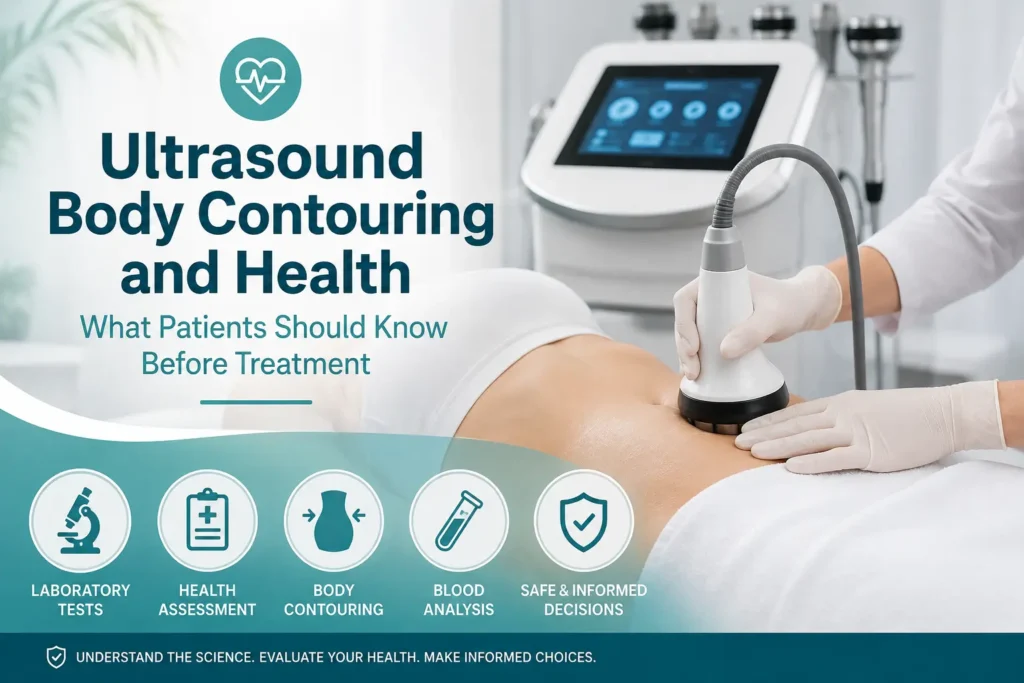
However, an important point is sometimes overlooked: an aesthetic treatment is not a substitute for evaluating a person’s overall health. Understanding medical history, medications, existing conditions, and, when clinically appropriate, laboratory test results can help healthcare professionals determine whether a particular treatment is suitable.
This article explains the basic science behind ultrasound technology, how aesthetic cavitation differs from diagnostic ultrasound, and why health assessment can matter when considering body-contouring procedures.
What Is Ultrasonic Cavitation?
Ultrasonic cavitation is an aesthetic body-contouring technique that uses ultrasound energy applied to targeted areas of the body. It is intended for cosmetic purposes rather than for diagnosing disease.
The technology should not be confused with diagnostic medical ultrasound. Diagnostic ultrasound uses sound waves to create images of internal structures and can help healthcare professionals evaluate organs, tissues, blood flow, and certain medical conditions.
Aesthetic ultrasound devices, on the other hand, are designed for specific cosmetic applications. Some professional systems combine ultrasound cavitation with technologies such as radiofrequency, vacuum therapy, or other body-contouring functions.
People researching professional cavitation machines should therefore pay attention to the device’s intended use, operating instructions, practitioner training requirements, and applicable local regulations rather than assuming that all ultrasound devices work in the same way.
Diagnostic Ultrasound and Aesthetic Cavitation Are Not the Same
The word “ultrasound” can refer to several different technologies, which is why patients and consumers should understand the distinction.
Diagnostic ultrasound
Diagnostic ultrasound is primarily an imaging technology. A trained sonographer or healthcare professional uses a transducer to send sound waves into the body and interpret the returning signals to produce images.
Depending on the clinical situation, ultrasound may be used to examine areas such as the abdomen, pelvis, breast, thyroid, joints, or blood vessels. It can also be used to help guide procedures such as biopsies.
Aesthetic ultrasound
Aesthetic ultrasound is used for cosmetic purposes, including certain body-contouring applications. The treatment objectives, device specifications, energy levels, and clinical protocols can differ substantially from diagnostic imaging.
Some medical ultrasound technologies are also used therapeutically. For example, focused ultrasound can deliver concentrated energy to specific tissues for selected medical or cosmetic applications.
Because these technologies have different purposes, information about diagnostic ultrasound should not automatically be applied to an aesthetic cavitation treatment.
Why Overall Health Still Matters
A person considering an aesthetic treatment may have underlying health conditions that are not visible from their appearance alone.
For example, changes in body size or weight can occur for many reasons. Lifestyle factors are important, but certain medical conditions, medications, hormonal disorders, and metabolic problems can also influence body composition.
This is where a proper health assessment becomes valuable.
A healthcare professional may review:
- Medical history and current symptoms
- Current medications and supplements
- Previous surgeries or procedures
- Existing liver, kidney, cardiovascular, or metabolic conditions
- Pregnancy status when relevant
- Skin or tissue conditions affecting the treatment area
- Previous reactions to similar treatments
- Relevant laboratory results when clinically indicated
The exact evaluation should depend on the individual rather than following a universal list of blood tests for every person.
Can Blood Tests Be Useful Before a Body-Contouring Treatment?
There is no single laboratory panel that every person needs before an aesthetic body-contouring procedure.
Laboratory testing should be based on clinical circumstances and the judgment of an appropriate healthcare professional. Testing a healthy person simply because they are receiving a cosmetic treatment may not always be necessary.
However, blood tests can be useful when there is a medical reason to investigate a person’s health.
For example, a healthcare professional may consider tests related to:
Liver health
Liver function tests may be ordered when there are symptoms, risk factors, medications, or other clinical reasons to evaluate liver health.
Common laboratory parameters may include alanine aminotransferase (ALT), aspartate aminotransferase (AST), alkaline phosphatase (ALP), bilirubin, albumin, and total protein.
These tests can provide information about liver-related processes, but abnormal results require appropriate clinical interpretation rather than being used as a simple “clearance” for an aesthetic procedure.
Kidney health
Kidney-related laboratory testing may be appropriate when a person has known kidney disease, relevant symptoms, certain risk factors, or uses medications that require monitoring.
Common measurements include serum creatinine and estimated glomerular filtration rate (eGFR). Other tests may be considered depending on the clinical situation.
Glucose and metabolic health
Blood glucose or HbA1c testing may be appropriate for people being evaluated for diabetes or abnormal glucose metabolism.
This is particularly relevant when a person’s weight or body composition is changing alongside other symptoms or metabolic risk factors.
Lipid profile
A lipid panel can measure blood lipids such as total cholesterol, LDL cholesterol, HDL cholesterol, and triglycerides.
A lipid profile does not determine whether someone is suitable for an aesthetic treatment, but it can be part of a broader cardiovascular and metabolic health assessment when clinically indicated.
Body Contouring Is Not the Same as Weight-Loss Treatment
One of the most important distinctions for consumers is the difference between body contouring and weight management.
A cosmetic body-contouring procedure should not automatically be described as a treatment for obesity, diabetes, fatty liver disease, or another medical condition.
Someone with unexplained weight gain, rapid weight loss, persistent fatigue, swelling, abnormal blood glucose, or other concerning symptoms should discuss those symptoms with a healthcare professional rather than relying on a cosmetic procedure.
The appropriate response to an underlying medical problem is medical assessment and treatment.
What Should Consumers Look for in a Professional Treatment?
Anyone considering an ultrasound-based aesthetic treatment should focus on safety and professional practice rather than simply choosing a device based on its advertised frequency or number of functions.
Important considerations include:
1. Intended use
Check what the device is designed and marketed to do. A device intended for cosmetic body contouring should not be represented as a diagnostic or disease-treatment device without appropriate evidence and regulatory authorization.
2. Practitioner training
The person operating the equipment should understand the device, treatment protocol, contraindications, and potential risks.
3. Manufacturer instructions
Professional devices should be used according to their instructions and applicable regulatory requirements.
4. Patient assessment
A proper consultation should consider medical history, current medications, relevant conditions, and the treatment area.
5. Realistic expectations
Body contouring should not be presented as a replacement for a balanced diet, physical activity, medical weight management, or treatment of an underlying health condition.
Why Laboratory Results Need Clinical Context
An abnormal laboratory result should never be interpreted in isolation.
For example, an elevated ALT does not automatically mean that a person has a specific liver disease. Similarly, a reduced eGFR requires interpretation alongside factors such as age, creatinine concentration, medical history, and previous results.
This principle is important when discussing aesthetic procedures because laboratory testing should be used to answer a clinical question—not simply to create the impression that a procedure has been medically approved for an individual.
A healthcare professional can determine whether testing is appropriate and how the results should influence the patient’s care.
Questions to Ask Before an Ultrasound Body-Contouring Treatment
Before starting treatment, consumers may want to ask the provider:
- What is the exact purpose of this treatment?
- What type of ultrasound technology does the device use?
- Is the treatment intended for cosmetic body contouring?
- Who is qualified to operate the equipment?
- What medical conditions could affect treatment suitability?
- Should I disclose my medications or supplements?
- Do I need a medical assessment before treatment?
- Are any laboratory tests clinically appropriate in my situation?
- What results should I realistically expect?
- What are the potential side effects or risks?
- What aftercare is recommended?
These questions can help consumers distinguish a professional treatment setting from a purely sales-focused approach.
The Bottom Line
Ultrasound technology has applications across modern healthcare, from diagnostic imaging to selected therapeutic and aesthetic procedures. However, diagnostic ultrasound, therapeutic ultrasound, and aesthetic cavitation should not be treated as interchangeable technologies.
For people considering body-contouring treatments, the most sensible approach is to look beyond the machine itself. A qualified practitioner should consider the individual’s medical history, treatment goals, medications, existing conditions, and any clinically relevant laboratory findings.
Laboratory tests can be valuable tools when there is a genuine medical reason to perform them, but they should not be treated as a universal checklist for cosmetic treatment.
Ultimately, safe aesthetic care starts with appropriate patient assessment, realistic expectations, trained professionals, and responsible use of equipment.
Medical disclaimer: This article is for general educational purposes and does not replace individualized medical advice. Anyone with a medical condition, concerning symptoms, or questions about the safety of an aesthetic procedure should consult an appropriately qualified healthcare professional.
References
- Mayo Clinic. Ultrasound: Overview and Uses.
- Mayo Clinic Healthcare. Ultrasound Scan.
- U.S. Food and Drug Administration. Ultrasound and ultrasonic medical-device documentation.
- Google Search Central. Creating Helpful, Reliable, People-First Content.
