

Thyroid Gland: Anatomy, Functions & Common Conditions
Thyroid Gland: Anatomy, Functions & Common Conditions
The thyroid gland is a butterfly-shaped endocrine gland in the front of the neck that produces hormones that regulate metabolism, energy use, growth, and many essential body functions.
01 What Is the Thyroid Gland?
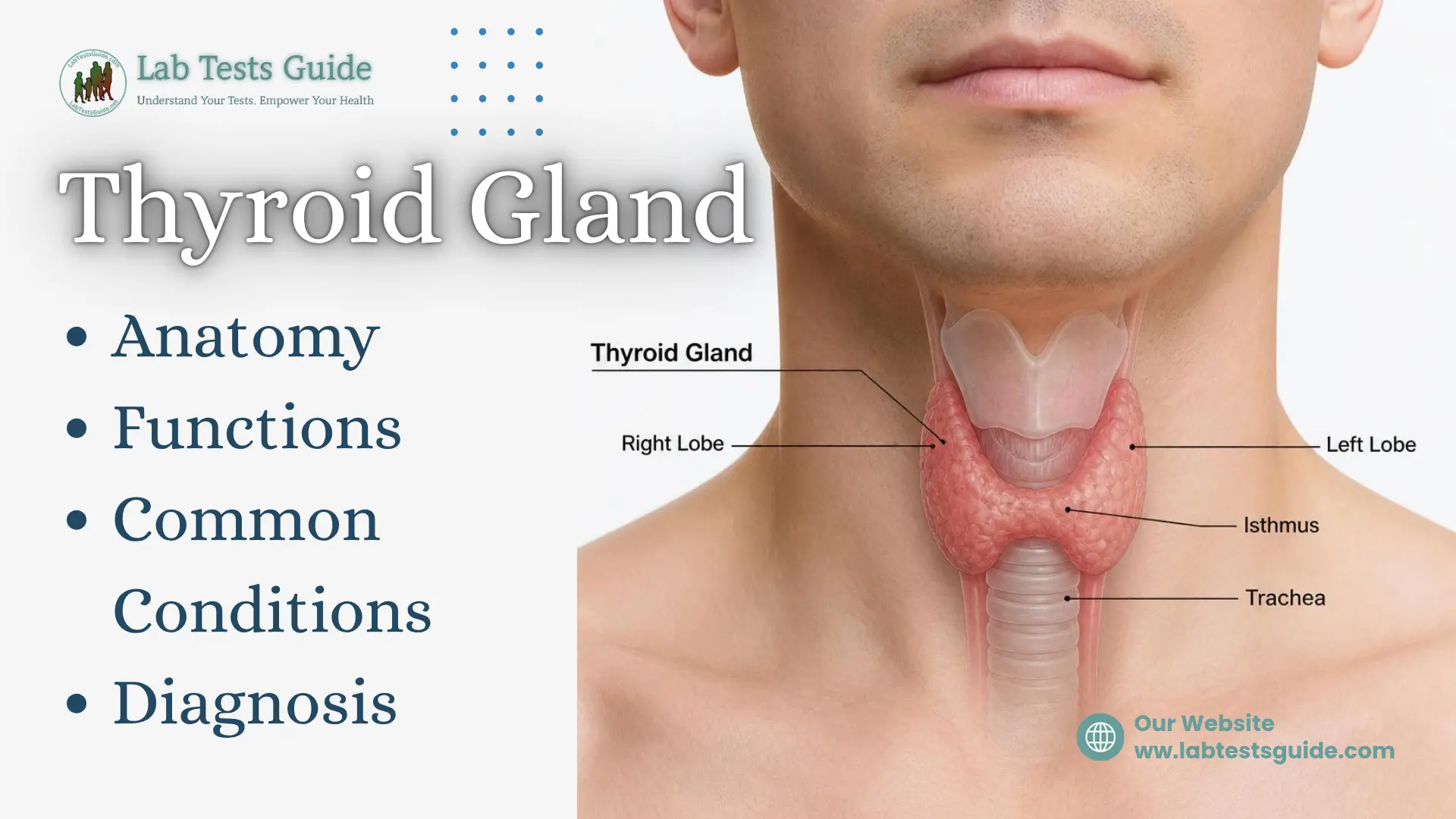
The thyroid gland is a butterfly-shaped endocrine gland located at the front of the neck, just below the larynx and in front of the trachea. It produces hormones that help regulate metabolism, energy use, body temperature, and many essential body functions.
The thyroid consists of two main lobes connected by a narrow band of tissue called the isthmus. Thyroid cells use iodine to produce the hormones thyroxine (T4) and triiodothyronine (T3), which are regulated primarily through the hypothalamic-pituitary-thyroid axis.
02 Parts and Functions of the Thyroid Gland
The thyroid gland produces the hormones thyroxine (T4) and triiodothyronine (T3), which help regulate metabolism, energy expenditure, body temperature, heart rate, and normal growth and development. Thyroid activity is mainly controlled by thyroid-stimulating hormone (TSH) from the pituitary gland.
03 Common Thyroid Problems
04 Laboratory Tests and Diagnosis
Thyroid disorders are commonly evaluated using blood tests that measure thyroid-stimulating hormone (TSH) and thyroid hormones. Additional laboratory testing may be recommended when autoimmune thyroid disease, thyroid inflammation, or another underlying thyroid condition is suspected.
05 Thyroid Symptoms and When to Seek Care
Seek medical evaluation for persistent or unexplained thyroid-related symptoms, a new or enlarging neck lump, difficulty swallowing or breathing, significant changes in heart rate, or unexplained weight changes. Prompt medical attention is important for severe symptoms such as marked difficulty breathing, chest pain, or a very rapid or irregular heartbeat. read more about Experd Medical Advice.
06 How Are Thyroid Problems Diagnosed?
Thyroid disorders are usually evaluated using the patient’s symptoms, medical history, physical examination, and laboratory testing. Thyroid function tests, particularly TSH and free T4, are commonly used to determine whether the thyroid is functioning normally.
07 Treatment and Prevention
- Hypothyroidism is commonly treated with thyroid hormone replacement such as levothyroxine when clinically indicated.
- Hyperthyroidism may be managed with medicines, radioactive iodine, or surgery depending on the underlying cause and clinical situation.
- Thyroid nodules may require monitoring, ultrasound evaluation, or fine-needle aspiration when clinically indicated.
- Thyroid disorders should be monitored with appropriate follow-up and laboratory testing as recommended by a healthcare professional.
- Maintain an adequate but not excessive intake of iodine through a balanced diet.
- Take prescribed thyroid medicines consistently and follow the recommended dosing instructions.
- Avoid taking high-dose iodine or thyroid supplements unless specifically recommended by a healthcare professional.
- Attend recommended thyroid blood tests and follow-up appointments to monitor treatment and hormone levels.
08 Key Takeaways & Related Laboratory Tests
The thyroid gland is an endocrine organ that produces hormones essential for regulating metabolism, energy use, body temperature, and other important body functions. Thyroid disorders are commonly evaluated with blood tests, while imaging and additional investigations may be used when structural abnormalities or specific thyroid conditions are suspected.
Related Laboratory Tests
References and Sources
- National Institute of Diabetes and Digestive and Kidney Diseases (NIDDK). Thyroid Tests. National Institutes of Health (NIH). NIDDK Thyroid Tests – (accessed on August 24, 2026)
- National Institute of Diabetes and Digestive and Kidney Diseases (NIDDK). Hypothyroidism (Underactive Thyroid). National Institutes of Health (NIH). NIDDK Hypothyroidism – (accessed on August 24, 2026)
- National Institute of Diabetes and Digestive and Kidney Diseases (NIDDK). Hyperthyroidism (Overactive Thyroid). National Institutes of Health (NIH). NIDDK Hyperthyroidism – (accessed on August 24, 2026)
- National Institute of Diabetes and Digestive and Kidney Diseases (NIDDK). Hashimoto’s Disease. National Institutes of Health (NIH). NIDDK Hashimoto’s Disease – (accessed on August 24, 2026)
- National Institute of Diabetes and Digestive and Kidney Diseases (NIDDK). Graves’ Disease. National Institutes of Health (NIH). NIDDK Graves’ Disease – (accessed on August 24, 2026)
- American Thyroid Association. Thyroid Function Tests. American Thyroid Association — Thyroid Function Tests – (accessed on August 24, 2026)
- Kant R, Davis A, Verma V. Thyroid Nodules: Advances in Evaluation and Management. American Family Physician. 2020;102(5):298–304. American Family Physician – (accessed on August 24, 2026)
- Kant R, Davis A, Verma V. Thyroid Nodules: Advances in Evaluation and Management. American Family Physician. 2020;102(5):298–304. Full-Text PDF – (accessed on August 24, 2026)
