Article

Sperm Duct (Vas Deferens)

Editorial StaffUpdated 6 min read

Quick Overview

The sperm duct, also called the vas deferens, is a muscular tube that transports mature sperm from the epididymis toward the ejaculatory ducts during ejaculation.
  • CategoryParts of Body
  • Read time6 min
  • UpdatedAug 2026
Sperm Duct
Table of Contents

Sperm Duct (Vas Deferens): Anatomy, Functions, Problems & Tests

ANATOMY & CLINICAL LABORATORY GUIDE

Sperm Duct: Anatomy, Functions & Common Conditions

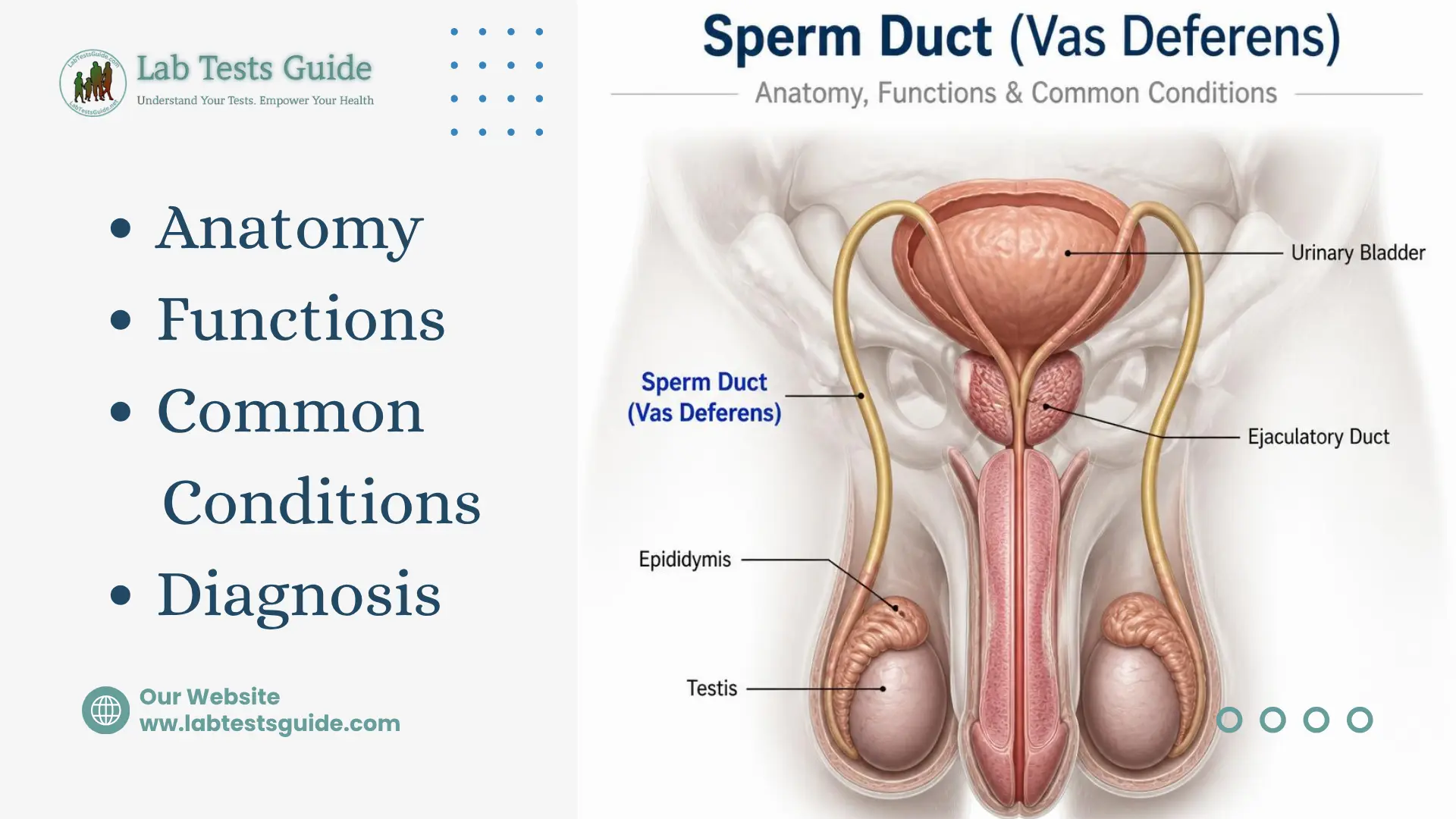
The sperm duct, also called the vas deferens, is a muscular tube that transports mature sperm from the epididymis toward the ejaculatory ducts during ejaculation.

Sperm duct (vas deferens) anatomy showing sperm transport from the epididymis
01
Vas Deferens A paired muscular tube that carries sperm from the epididymis toward the ejaculatory ducts.
02
Main Role Transports and propels mature sperm during the process of ejaculation.
03
Clinical Relevance Blockage or absence of the sperm ducts may affect sperm transport and male fertility.
Laboratory focus: This guide provides a concise overview of sperm duct anatomy, function, common problems, and laboratory tests that may be relevant when investigating male reproductive health and fertility.

01 What Is the Sperm Duct?

The sperm duct, also called the vas deferens, is a pair of long, muscular tubes that form an important part of the male reproductive system. Each sperm duct carries mature sperm from the epididymis toward the ejaculatory ducts.

The sperm ducts travel upward from the testes through the spermatic cords and into the pelvic cavity. Their muscular walls contract during ejaculation to help propel sperm forward, where it combines with fluids from other reproductive glands to form semen.

Location Extends from the epididymis through the spermatic cord and into the pelvic cavity toward the ejaculatory ducts.
Clinical importance Blockage, injury, or congenital absence of the sperm ducts can interfere with sperm transport and contribute to male infertility.

02 Parts and Functions of the Sperm Duct

Epididymal Connection The sperm duct begins at the tail of the epididymis, where mature sperm enter for transport.
Scrotal & Inguinal Portion Passes upward within the spermatic cord and through the inguinal canal toward the pelvic cavity.
Pelvic Portion Travels through the pelvis and passes behind the urinary bladder toward the seminal vesicle.
Ampulla The enlarged terminal portion joins the duct of the seminal vesicle to form the ejaculatory duct.
What does the sperm duct do?

The sperm duct transports mature sperm from the epididymis toward the ejaculatory duct. During ejaculation, contractions of its muscular wall help propel sperm forward so they can mix with seminal fluid and eventually pass through the urethra.

03 Common Sperm Duct Problems

Vas Deferens Obstruction A blockage in the sperm duct can prevent sperm from reaching the ejaculatory ducts and may contribute to infertility.
Congenital Absence Some males are born with one or both sperm ducts absent, which can result in reduced or absent sperm in the ejaculate.
Vasectomy A surgical procedure that cuts or blocks the sperm ducts to prevent sperm from entering the semen during ejaculation.
Injury or Scarring Previous surgery, trauma, or inflammation may damage or scar the sperm duct and interfere with normal sperm transport.
Clinical note: Problems involving the sperm ducts may not cause obvious symptoms. When male infertility or absent sperm in the ejaculate is suspected, clinical assessment and investigations such as semen analysis may help identify possible sperm transport abnormalities.

04 Laboratory Tests and Diagnosis

Problems involving the sperm duct are usually evaluated as part of a broader assessment of male reproductive health, particularly when infertility or absent sperm in the ejaculate is suspected. Laboratory testing can help assess sperm production and identify abnormalities that may suggest a problem with sperm transport.

Semen Analysis Evaluates sperm concentration, motility, morphology, and other semen characteristics. Very low or absent sperm may require further evaluation for a possible obstruction.
Hormonal Testing Tests such as FSH, LH, and testosterone may help distinguish problems with sperm production from possible reproductive tract obstruction.
Genetic Testing Selected genetic tests may be considered when congenital absence of the vas deferens or other inherited causes of male infertility are suspected.
Important: Imaging and specialized procedures are not laboratory tests, but ultrasound, reproductive tract imaging, or other specialist investigations may be used when obstruction or structural abnormalities of the sperm ducts need further evaluation.

05 Sperm Duct Problems and When to Seek Care

Infertility Difficulty achieving pregnancy may occur when sperm transport through the reproductive tract is impaired.
Absent Sperm in Semen Complete blockage or absence of the sperm ducts may result in azoospermia, meaning no sperm are detected in the ejaculate.
Low Sperm Count Partial obstruction of the sperm ducts may contribute to a reduced number of sperm reaching the ejaculate.
Scrotal or Pelvic Discomfort Pain or discomfort may occur with some reproductive tract conditions, although sperm duct obstruction itself may cause no noticeable symptoms.
When should medical advice be considered?

Seek medical evaluation when infertility persists, semen analysis repeatedly shows absent or very low sperm counts, or there is unexplained testicular, scrotal, or pelvic pain. Further assessment may be recommended to determine whether sperm production or sperm transport is affected. Medical advice

06 How Are Sperm Duct Problems Diagnosed?

Sperm duct problems are usually evaluated as part of a male fertility assessment. The evaluation may include medical history, physical examination, semen analysis, and selected laboratory or imaging tests to determine whether the problem involves sperm production, sperm transport, or another part of the reproductive system.

Clinical Examination A healthcare professional assesses the testes, epididymis, spermatic cords, and other reproductive structures for abnormalities that may suggest impaired sperm transport.
Laboratory Testing Semen analysis is a key investigation, while hormonal and selected genetic tests may be considered when azoospermia, infertility, or congenital absence of the vas deferens is suspected.
Imaging & Specialized Evaluation Ultrasound and other specialized investigations may be used when structural abnormalities, obstruction, or other causes of impaired sperm transport need further evaluation.
Laboratory perspective: Semen analysis provides important information about sperm concentration, motility, and morphology, but results should be interpreted together with the clinical history, physical examination, and other relevant investigations.

07 Treatment and Management

Common Management
  • Management depends on whether the problem involves obstruction, congenital absence, infection, injury, or another reproductive condition.
  • Underlying causes of male infertility should be evaluated and treated when possible.
  • Obstructive conditions may sometimes be treated with microsurgical procedures when clinically appropriate.
  • Assisted reproductive techniques may be considered when normal sperm transport cannot be restored.
Prevention & Reproductive Care
  • Protect the genital area from significant trauma and seek appropriate care after reproductive tract injuries.
  • Follow medical advice after procedures involving the reproductive tract.
  • Discuss fertility preservation with a healthcare professional before treatments or procedures that may affect fertility.
  • Seek evaluation when infertility or persistent reproductive symptoms are present.
Important: Treatment depends on the underlying cause and the individual’s fertility goals. Sperm duct obstruction or congenital absence may require specialist evaluation, and treatment options can include surgical reconstruction or assisted reproductive techniques when appropriate. More Detail about Treatment and Management Click Here

08 Key Takeaways & Related Laboratory Tests

The sperm duct, or vas deferens, is a muscular tube that transports mature sperm from the epididymis toward the ejaculatory ducts. Problems such as obstruction or congenital absence may interfere with sperm transport and contribute to male infertility. Laboratory testing, particularly semen analysis, plays an important role in evaluating suspected reproductive abnormalities.

Paired Reproductive Ducts Two sperm ducts transport mature sperm from the epididymides toward the ejaculatory ducts.
Common Problem Obstruction or congenital absence of the vas deferens can impair sperm transport and may cause azoospermia or infertility.
Laboratory Role Semen analysis is the primary laboratory investigation, while hormonal and selected genetic tests may support further evaluation when clinically indicated.
Medical Disclaimer: This article is for general educational and laboratory information about the sperm duct and male reproductive health only. It does not replace professional medical advice, diagnosis, or treatment. Laboratory tests should be interpreted together with symptoms, medical history, physical examination, and clinical findings by a qualified healthcare professional.

📚 This article may have been prepared using trusted medical literature, clinical guidelines, textbooks, and peer-reviewed sources.
View Possible References Used →

Discussion 0

Join the discussion

Join our community

Get fresh content from Lab Tests Guide