Join Community Our Team

Article

Throat

Editorial StaffUpdated 6 min read1view

Quick Overview

The throat is a muscular passage connecting the nose and mouth with the esophagus and larynx, helping with breathing, swallowing, speech, and the movement of food and air.
  • CategoryParts of Body
  • Read time6 min
  • UpdatedAug 2026
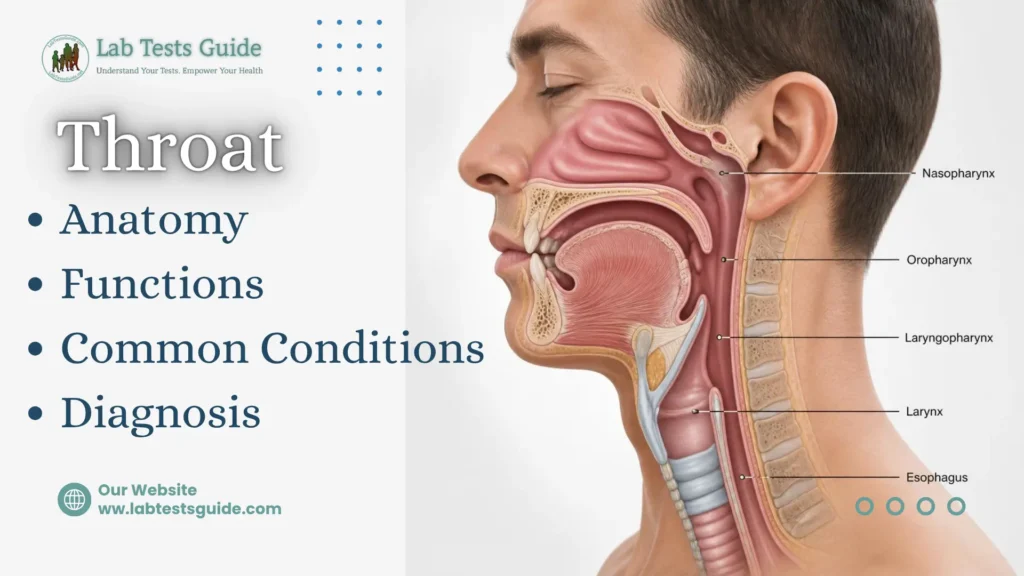
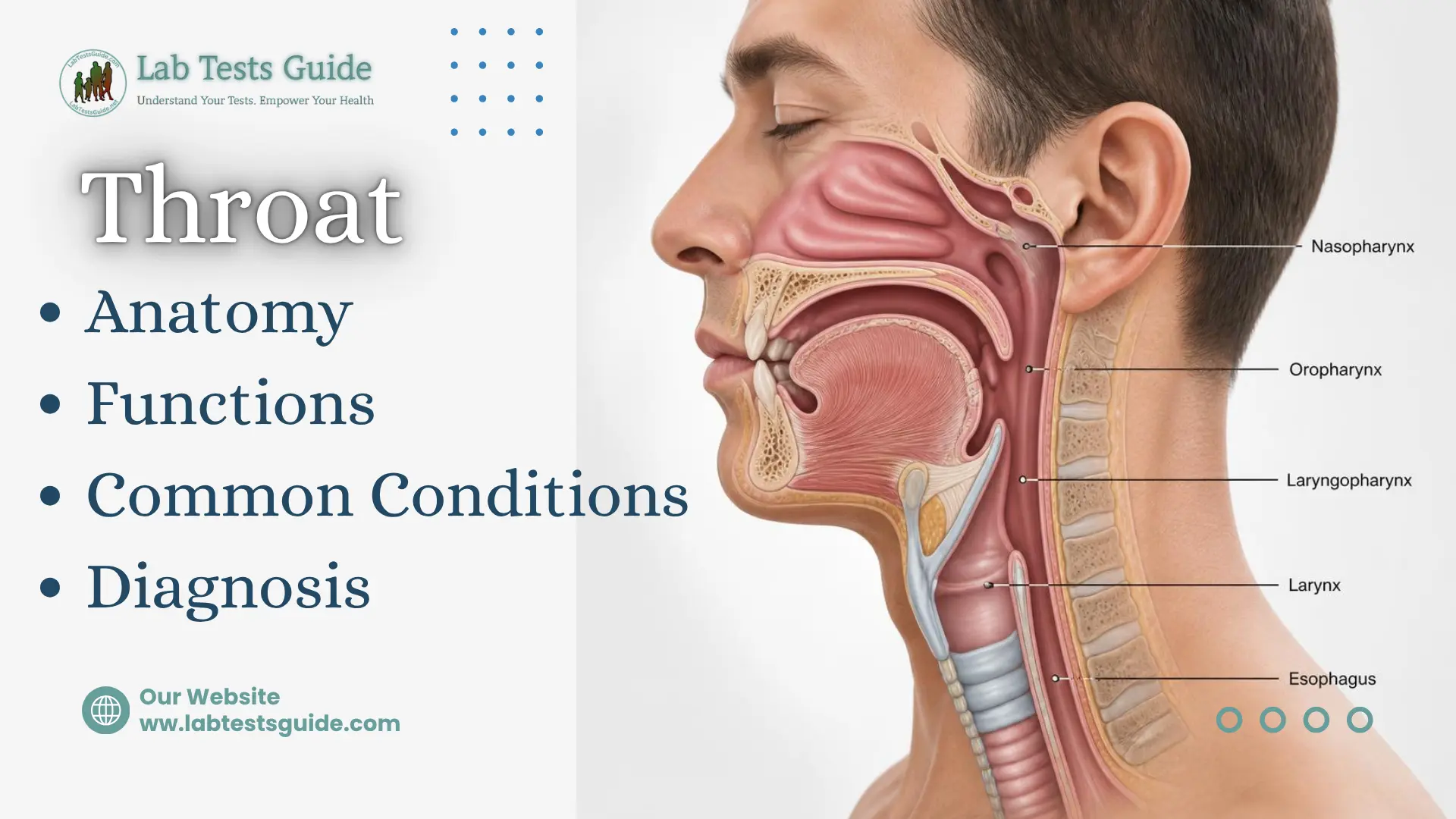
Anatomy of the human throat showing the pharynx, larynx, and esophagus
Table of Contents

Throat: Anatomy, Functions, Common Problems & Tests

ANATOMY & CLINICAL LABORATORY GUIDE

Throat: Anatomy, Functions & Common Conditions

The throat is a muscular passage connecting the nose and mouth with the esophagus and larynx, helping with breathing, swallowing, speech, and the movement of food and air.

Anatomy of the human throat showing the pharynx, larynx, and esophagus
01
Pharynx Nasopharynx, oropharynx, and laryngopharynx.
02
Main Role Helps conduct air and food, supports swallowing, and contributes to speech.
03
Clinical Relevance Throat inflammation and infection may require clinical assessment and selected laboratory testing.
Laboratory focus: This guide provides a concise overview of throat anatomy, function, common problems, and the laboratory tests that may be relevant when infection or inflammation is suspected.

01 What Is the Throat?

The throat, also called the pharynx, is a muscular passage located behind the nose and mouth. It connects the upper respiratory and digestive pathways and helps direct air toward the larynx and food toward the esophagus.

The throat is divided into three main regions: the nasopharynx, oropharynx, and laryngopharynx. These areas work together during breathing, swallowing, and speech, while structures such as the tonsils and epiglottis contribute to protection and normal function.

Location Behind the nose and mouth, extending from the base of the skull toward the esophagus and larynx.
Clinical importance Inflammation or infection can cause sore throat, difficulty swallowing, swelling, pain, and abnormal throat secretions.

02 Parts and Functions of the Throat

Nasopharynx The upper part of the throat located behind the nasal cavity and mainly involved in the passage of air.
Oropharynx The middle part located behind the mouth, serving as a shared passage for air and food.
Laryngopharynx The lower part of the throat that directs food toward the esophagus and air toward the larynx.
Tonsils Lymphoid tissues in the throat that contribute to immune defense by helping detect inhaled or swallowed microorganisms.
What does the throat do?

The throat helps conduct air and food, supports swallowing, contributes to speech and voice production, and provides an important part of the body’s defense against inhaled or swallowed microorganisms.

03 Common Throat Problems

Pharyngitis Inflammation of the throat, commonly caused by viral infections and sometimes by bacterial infections such as group A Streptococcus.
Tonsillitis Inflammation or infection of the tonsils that may cause sore throat, difficulty swallowing, fever, and swollen tonsils.
Strep Throat A bacterial throat infection caused by group A Streptococcus that can cause sudden sore throat, fever, painful swallowing, and swollen lymph nodes.
Laryngitis Inflammation of the larynx that can cause hoarseness, voice changes, throat irritation, and sometimes temporary loss of voice.
Clinical note: Symptoms such as sore throat, difficulty swallowing, fever, swollen tonsils, or voice changes do not by themselves identify the exact cause. Clinical assessment is important when symptoms are persistent, severe, or recurrent.

04 Laboratory Tests and Diagnosis

Most uncomplicated throat problems are diagnosed from the patient’s symptoms and clinical examination. Laboratory testing may be used when a bacterial infection, significant inflammation, recurrent disease, or another underlying condition is suspected.

Rapid Strep Test A rapid antigen test may help detect group A Streptococcus in patients with suspected streptococcal pharyngitis.
Throat Culture A throat swab culture can identify group A Streptococcus and may be used when further confirmation is clinically appropriate.
CBC May help assess white blood cell changes associated with infection or inflammation when clinically indicated.
Important: Additional testing may be considered when symptoms are severe, persistent, recurrent, or associated with unusual findings. The choice of testing depends on the clinical presentation and suspected cause.

05 Throat Symptoms and When to Seek Care

Sore Throat Throat pain or irritation that may occur with infections, inflammation, allergies, or other conditions.
Difficulty Swallowing Pain or difficulty when swallowing food, liquids, or saliva may occur with throat inflammation or infection.
Swollen Tonsils Enlarged or inflamed tonsils may occur with tonsillitis and other throat infections.
Hoarseness A change in voice quality may occur when inflammation affects the larynx and surrounding structures.
When should medical advice be considered?

Seek medical evaluation for severe or persistent throat symptoms, difficulty breathing or swallowing, inability to swallow saliva, significant swelling, high fever, recurrent infections, severe dehydration, or symptoms that rapidly worsen. Prompt medical attention is especially important when breathing or swallowing becomes difficult. More medical advice

06 How Are Throat Problems Diagnosed?

Throat problems are usually diagnosed from the patient’s symptoms, medical history, and examination of the throat, tonsils, and surrounding areas. Laboratory tests may be used when a specific infection or other underlying condition needs to be identified.

Clinical Examination A healthcare professional assesses throat redness, swelling, tonsils, lymph nodes, swallowing difficulty, and other clinical findings.
Laboratory Testing Rapid strep testing, throat culture, CBC, or other tests may be considered when a bacterial infection or significant inflammation is suspected.
Additional Evaluation Further examination, imaging, or specialist assessment may be considered for persistent, recurrent, severe, or structurally related throat problems.
Laboratory perspective: Laboratory tests can help identify specific infections or support the assessment of inflammation, but results should always be interpreted together with symptoms and clinical findings.

07 Treatment and Prevention

Common Management
  • Rest, adequate fluids, and soothing measures may help relieve throat discomfort.
  • Symptom-relieving medicines may be recommended when appropriate.
  • Antibiotics are used when a bacterial infection is suspected or confirmed and treatment is clinically indicated.
  • Persistent or recurrent throat problems may require further medical or specialist evaluation.
Prevention & Self-Care
  • Maintain good hand hygiene to reduce the spread of respiratory infections.
  • Avoid close contact with people who have contagious throat infections when possible.
  • Avoid cigarette smoke and other throat irritants.
  • Maintain adequate hydration and manage allergies or other underlying conditions as advised by a healthcare professional.
Important: Treatment depends on the underlying cause. Many sore throats are caused by viral infections and improve without antibiotics. Antibiotics do not treat viral infections. Persistent, severe, or recurrent symptoms should be evaluated by a healthcare professional. More Detail about Treatment and Prevention Click Here

08 Key Takeaways & Related Laboratory Tests

The throat is a muscular passage that connects the nose and mouth with the larynx and esophagus and plays important roles in breathing, swallowing, and speech. Most uncomplicated throat problems are diagnosed clinically, while laboratory testing may be useful when a specific infection or other underlying condition is suspected.

Three Main Regions Nasopharynx, oropharynx, and laryngopharynx make up the main regions of the pharynx.
Common Problems Pharyngitis, tonsillitis, strep throat, and laryngitis are common throat-related conditions.
Laboratory Role Rapid strep testing, throat culture, CBC, and selected tests may support evaluation when clinically indicated.
Medical Disclaimer: This article is for general educational and laboratory information only. It does not replace professional medical advice, diagnosis, or treatment. Laboratory tests should be interpreted together with symptoms, medical history, and clinical findings by a qualified healthcare professional.

📚 This article may have been prepared using trusted medical literature, clinical guidelines, textbooks, and peer-reviewed sources.
View Possible References Used →

Discussion 0

Join the discussion

Join our community

Get fresh content from Lab Tests Guide