
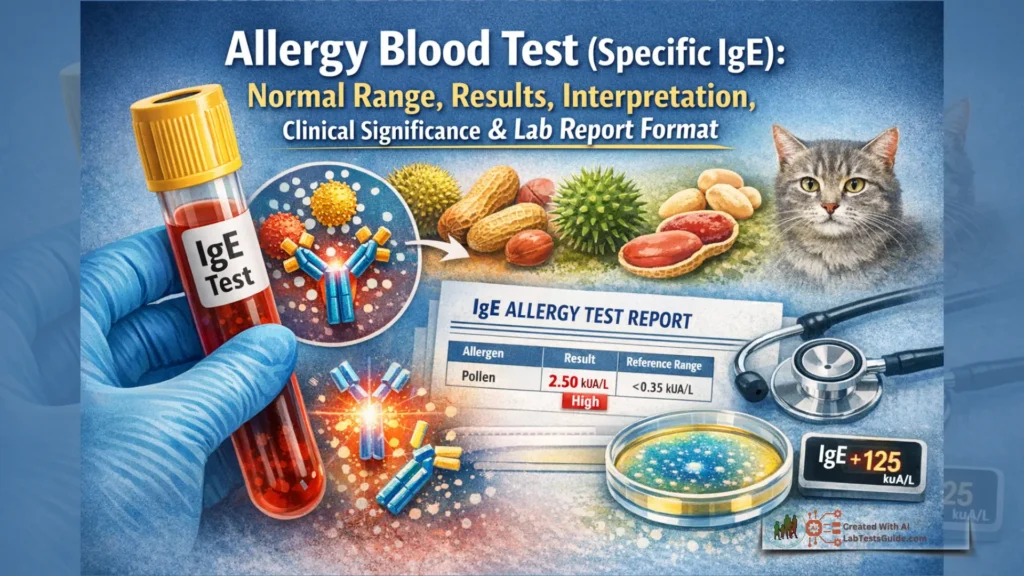
Allergy Blood Test (Specific IgE): Normal Range, Results, Interpretation, Clinical Significance & Lab Report Format
An allergy blood test, often called a specific IgE (immunoglobulin E) test, measures the allergy-causing antibodies in your blood to identify triggers such as pollen, food, or pet dander, helping doctors diagnose allergies by detecting your immune system’s reaction (IgE production) to specific substances, even if you are taking allergy medication.
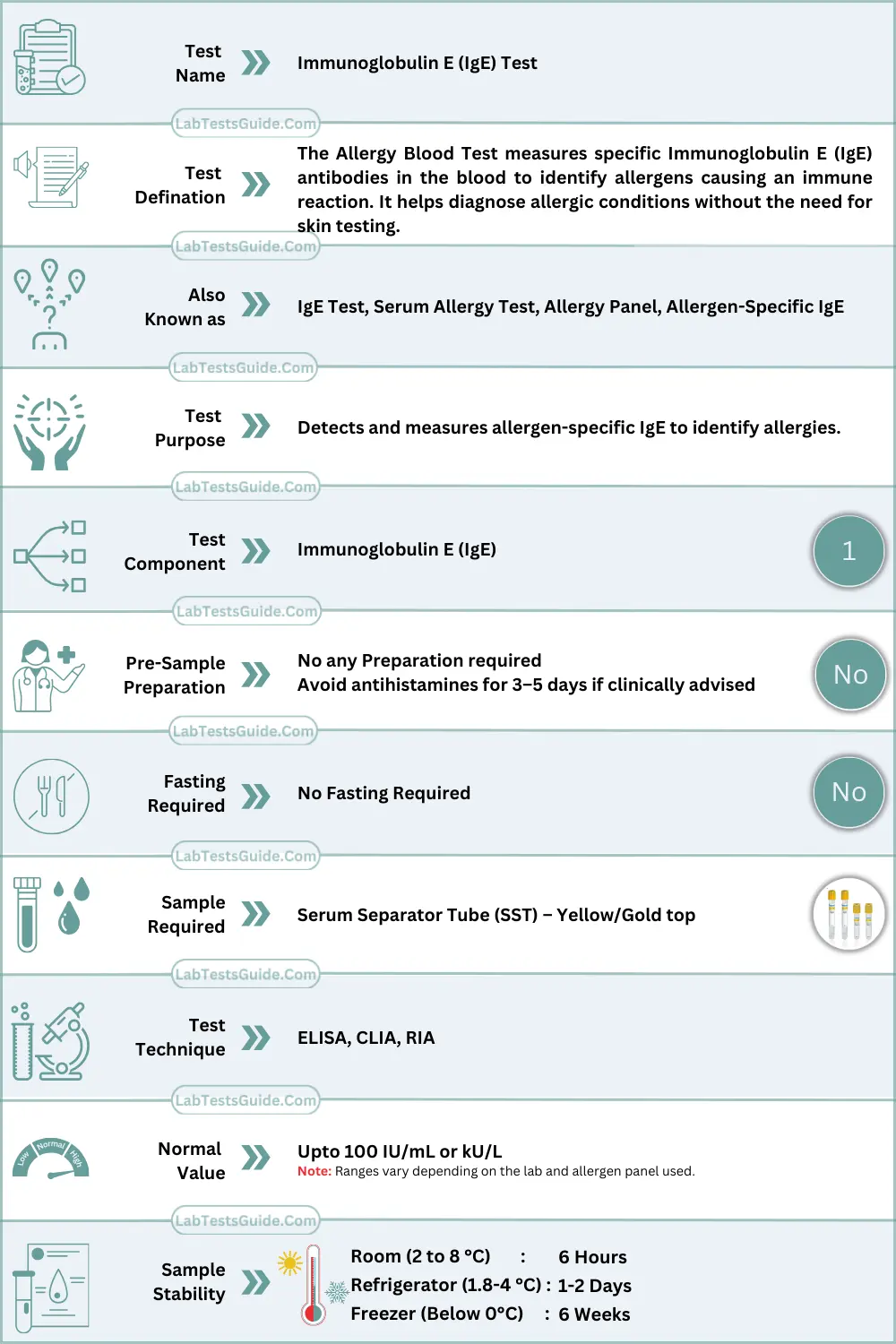
Immunoglobulin E (IgE) Test Quick Facts:
What is Allergy Blood Test ?
The Allergy Blood Test measures specific Immunoglobulin E (IgE) antibodies in the blood to identify allergens causing an immune reaction. It helps diagnose allergic conditions without the need for skin testing.
Why is Allergy Blood Test Done ? (Indications)
For Patients / General Use
- Frequent sneezing, runny nose, or itchy eyes
- Asthma or wheezing episodes
- Hives, eczema, or skin rashes
- Reactions to certain foods, medications, or insect stings
- Monitoring allergy treatment effectiveness
For Doctors / Clinical Use
- Confirm IgE-mediated allergies when skin testing is not feasible
- Guide immunotherapy decisions
- Evaluate anaphylaxis risk
- Identify triggers for chronic urticaria or asthma
- Assess occupational or environmental allergen exposures
How the Allergy Blood Test Works (Principle / Methodology)
The test detects specific IgE antibodies in the serum. Patient serum is exposed to known allergens immobilized on a solid phase. If IgE antibodies are present, they bind to the allergen. Detection is performed using:
- ELISA (Enzyme-Linked Immunosorbent Assay) – color change indicates antibody level
- Chemiluminescent Immunoassay (CLIA) – light emission proportional to IgE concentration
The intensity of the signal correlates with allergen-specific IgE concentration.
Allergy Blood Test Specimen Requirements & Collection
- Specimen type: Serum
- Tube type: SST – Yellow/Gold top
- Volume: 2–5 mL
- Patient preparation: No fasting required; avoid antihistamines for 3–5 days if clinically advised
- Collection steps:
- Perform venipuncture using standard aseptic technique
- Collect blood into SST tube
- Allow clotting (15–30 min), then centrifuge to separate serum
- Transport & storage:
- Store serum at 2–8°C if testing within 48 hours
- For longer storage, freeze at −20°C
- Avoid repeated freeze-thaw cycles
Allergy Blood Test Reference Ranges
Source 1:
| Population | Reference Range | Units | Notes |
|---|---|---|---|
| Adults | <0.35 kUA/L | kUA/L | Negative IgE |
| Children | <0.35 kUA/L | kUA/L | Age-specific variations exist |
| Pregnant women | <0.35 kUA/L | kUA/L | May slightly fluctuate |
Source 2:
| Age Group | Typical Normal Range (IU/mL or kU/L) |
| Newborns (0–1 year) | 0 – 15 |
| Children (1–5 years) | 0 – 60 |
| Children (6–9 years) | 0 – 90 |
| Children (10–15 years) | 0 – 200 |
| Adults & Teens (16+ years) | 0 – 100 |
Note: Ranges vary depending on the lab and allergen panel used.
Allergy Blood Test Interpretation of Results
High Levels (Causes & Clinical Significance)
Causes:
- Allergic rhinitis
- Asthma
- Food or drug allergies
- Atopic dermatitis
Differential diagnoses:
- Parasitic infections
- Hyper-IgE syndromes
Clinical relevance:
High IgE indicates sensitization to allergens, supporting allergy diagnosis and guiding therapy.
Low Levels (Causes & Clinical Significance)
Causes:
- No allergen exposure
- Immunodeficiency disorders
Differential diagnoses:
- Rare IgE deficiency
- Immunosuppressive therapy
Clinical relevance:
Low IgE typically rules out IgE-mediated allergic reactions.
🧠 AI-Powered Test Result Interpretation:
Understand your Immunoglobulin E (IgE) Test Results
AI-powered Lab Test Results Meaning tool 🤖
Allergy Blood Test Interfering Factors / Pre-Analytical Errors
- Hemolysis: May cause assay interference
- Lipemia: Can affect optical readings in ELISA
- Icterus: Slight interference possible
- Medications: Antihistamines, steroids, immunosuppressants
- Sample handling: Delayed centrifugation may degrade IgE
- Biological variations: Seasonal allergen exposure
Allergy Blood Test Critical Values / PANIC Values
- Critical IgE level: >100 kUA/L or IU/ml for specific allergens may indicate high risk of severe allergic reaction
Follow institution policy for urgent reporting
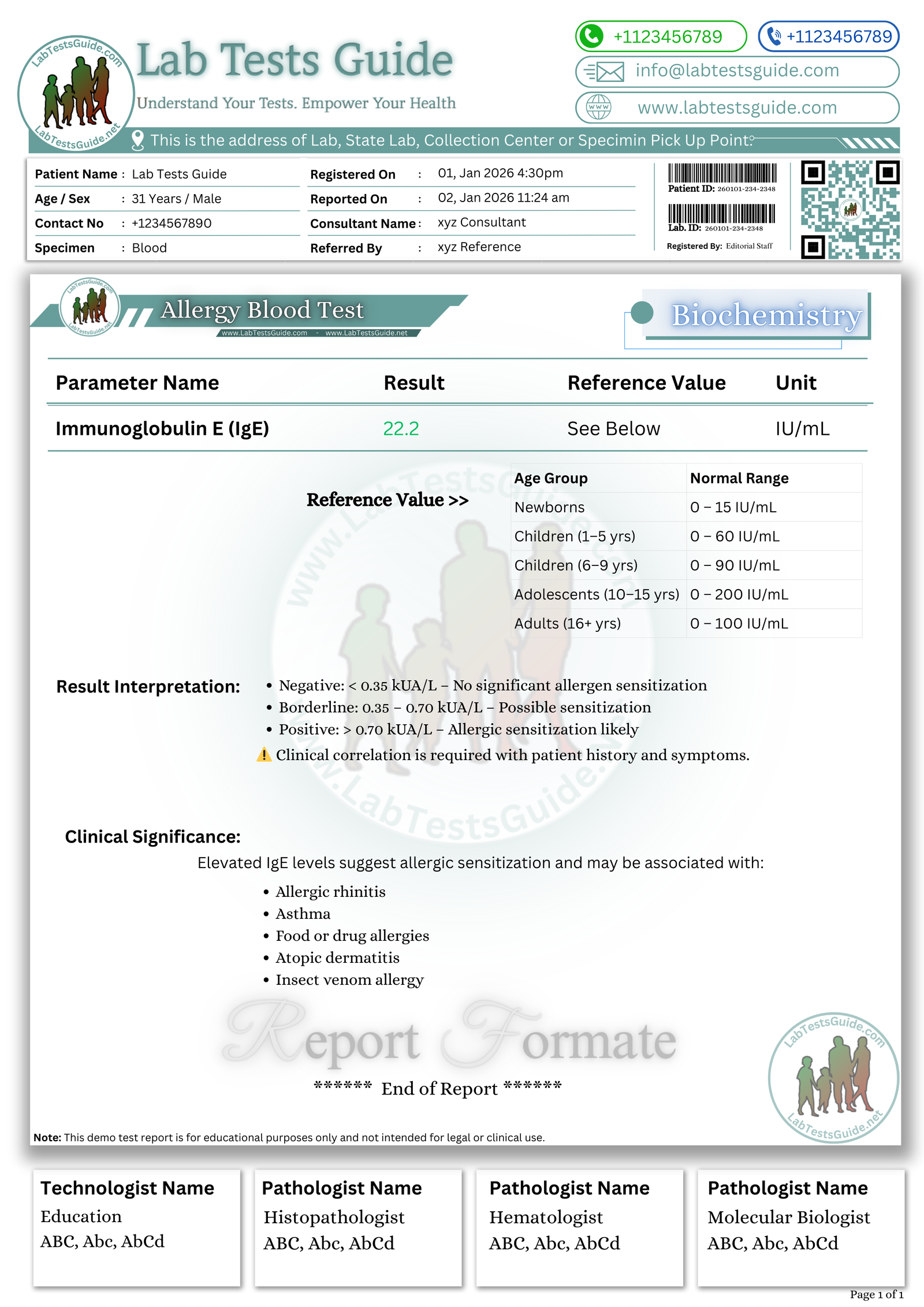
📥 Download Allergy Blood Test or IgE Test Lab Report Format
Get the demo report format for Allergy Blood Test or IgE Test in your preferred format. These templates are fully editable and professional.
| File Description | Format |
|---|---|
Immunoglobulin E (IgE) Test Report Format (Image) | .PNG ⬇️ |
Immunoglobulin E (IgE) Test Report Format (MS Word) | .DOCX ⬇️ |
Immunoglobulin E (IgE) Test Report Format (MS Excel) | .XLSX ⬇️ |
Immunoglobulin E (IgE) Test Report Format (PDF) | .PDF ⬇️ |
Allergy Blood Test Nursing / Phlebotomy Notes:
- Tube color: SST – Yellow/Gold top
- Labeling: Include patient name, DOB, date, time
- Transport: Keep serum refrigerated (2–8°C)
- Precautions: Avoid hemolysis; centrifuge promptly
Lab Student Key Points
- Measures allergen-specific IgE antibodies
- Immunoassays like ELISA/CLIA used
- No fasting required
- Avoid hemolysis and lipemia
- Reference ranges differ by allergen
🧠 AI-Powered Test Result Analysis:
Understand your Immunoglobulin E (IgE) Test Results
AI-powered Lab Test Results Meaning tool 🤖