

Quick Overview
The best electric wheelchair is the one fitted to its user and tested in the places that matter to them. Use listings to identify options, then arrange individual assessment
- CategoryGuest Posts
- Read time7 min
- UpdatedSep 2026

Table of Contents
An electric wheelchair can make everyday journeys easier when it fits both the person and the places they need to go. A photograph of a folding frame or a long list of features cannot show whether the seat supports someone comfortably, the controls are easy to use or the chair will pass through their doorway. A good choice starts with an individual assessment and a chance to try the actual model. It also includes a plan for charging, transport and repairs. This guide explains the questions to ask before buying a powered chair, so the decision reflects daily needs rather than the most appealing claim in an advert.
This is general purchasing information, not a clinical assessment. A trained wheelchair professional or relevant healthcare practitioner should assess fit, posture and safe use for the intended user, especially when support needs are complex or changing.
Begin with the person’s routine
Write down where the chair will be used most: inside a home, along outdoor paths, at work, in a clinic or across several settings. Note the distances, surfaces and obstacles in a normal day. A chair that turns neatly in a room may be less comfortable on rough ground, while a larger outdoor model can be hard to store or manoeuvre indoors. Let real journeys guide the choice.
Include the user in every decision wherever possible. Ask what feels comfortable, which activities matter most and whether they will operate the controls independently or need assistance. If a caregiver helps with transfers or transport, their practical needs matter too. The goal is a chair that supports participation in daily life, not merely one that can move across a showroom floor.
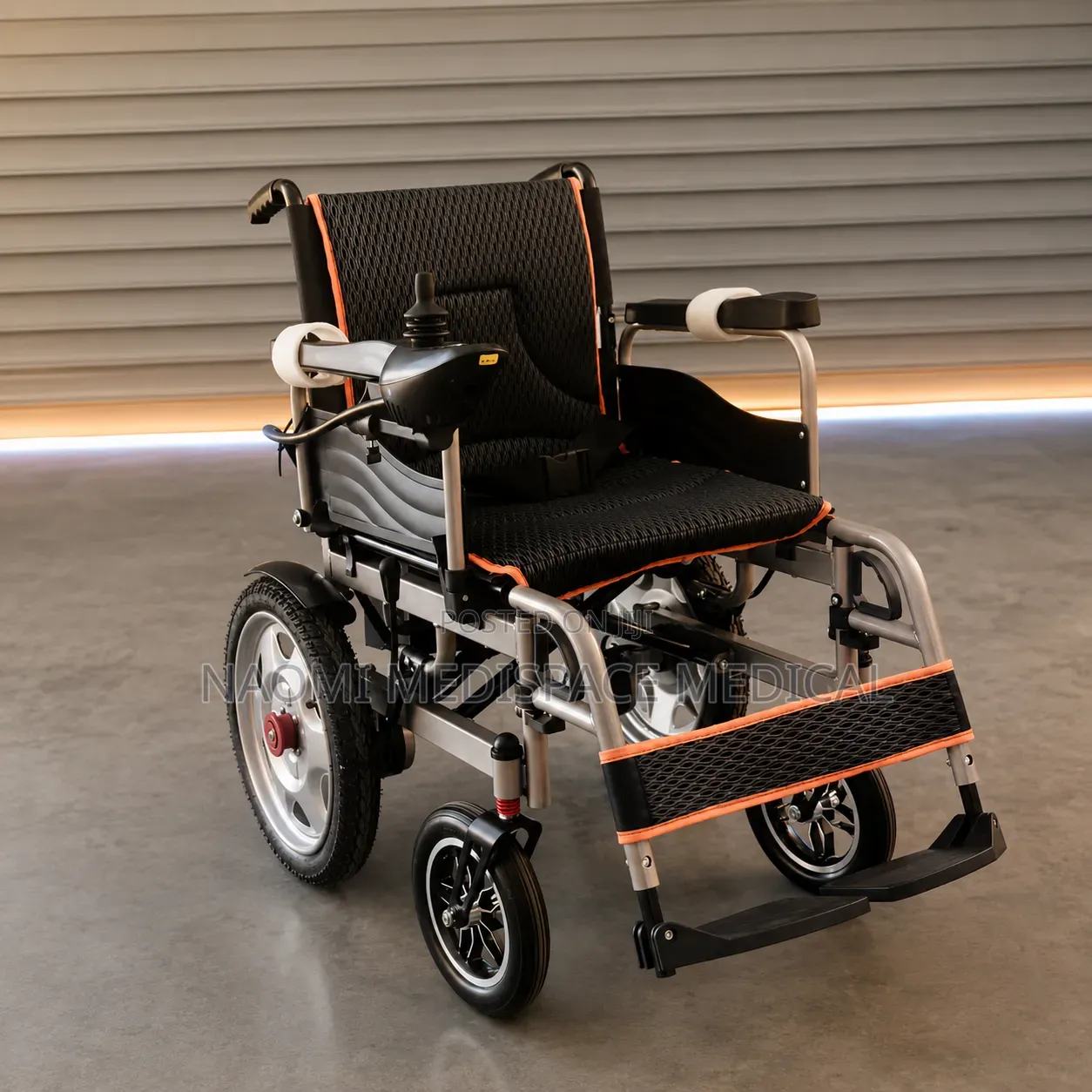
Browsing Electric Wheelchairs listings can help you compare folding, standard and more specialised powered chairs. Check that each advert offers a complete wheelchair rather than a battery or other spare part. Use the photographs to prepare questions, then request a demonstration and fitting for the exact model being sold.
Arrange a proper fit assessment
Seat width and depth, back support, footrest position and arm support all affect comfort and posture. Measurements should be taken for the intended user, not guessed from their clothing size or a previous chair. A seat that is too narrow can press on the body, while one that is too wide may make it hard to stay well positioned. A trained professional can assess these issues and recommend adjustments or a different chair.
Consider how long the person will sit in the chair and whether their needs may change. A cushion, head support or positioning feature should be selected for the individual rather than added because it looks useful. Check how easily the user can reach controls, transfer in and out, and remain comfortable during a realistic trial. If discomfort appears, treat it as a reason to reassess the fit, not something to endure.
Measure the spaces it must navigate
Measure the narrowest doorways and the turning space in rooms the user needs to enter. Check lifts, corridors, bathroom access and the place where the chair will be parked. The chair’s overall dimensions, including footrests and any rear attachments, matter more than the seat width alone. Ask the seller for measurements of the actual configuration and compare them with your home or workplace.
Outdoor routes deserve a separate look. Consider uneven paving, ramps, kerbs and areas that may become wet. Avoid assuming that a claim of “all terrain” means the chair can safely handle every path. Ask about the surfaces the manufacturer approves and try the model on representative ground where this can be done safely. A route that works in dry conditions may still require another plan during rain.
Try the controls and stopping response
Joystick position, sensitivity and the way the chair turns should suit the user’s movement and confidence. A demonstration should include starting, stopping, turning in a confined space and approaching a doorway. Begin at a gentle setting with an experienced person present. If the user has limited hand movement or needs an alternative control, ask a specialist to assess which options are compatible with the exact chair.
Learn what happens when power is switched off, how the brakes behave and how an attendant can move the chair if necessary. The user and any caregiver should be trained in the controls before relying on the chair for daily travel. A short ride in a seller’s shop is only a first check; it does not replace practice in the places where the chair will be used.
Understand battery and charging needs
Ask what battery is fitted, whether it is new or used, how it is charged and how replacement is arranged. Advertised travel range depends on conditions such as terrain, load and battery health, so do not treat one headline figure as a guarantee for every journey. Discuss a realistic daily route with the supplier and plan for a reserve rather than expecting the chair to run until the battery is empty.
Check that the charger supplied is the correct one for the chair and that the charging instructions are available. Choose a safe, accessible place to charge it according to the manufacturer’s guidance. If the chair will be transported by air or another carrier, confirm its current battery rules with that carrier before travelling. A folding chair is not automatically easy to travel with if the battery and lifting weight do not suit the trip.
Think about transport and storage
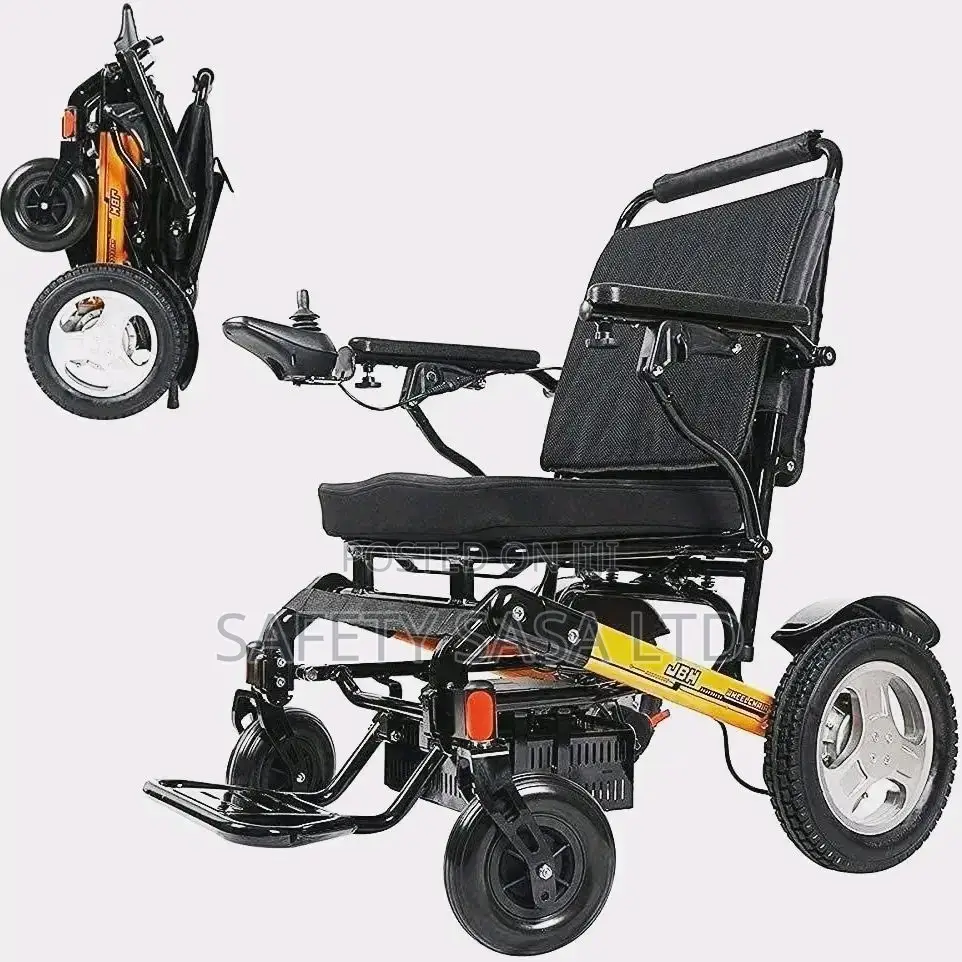
If the chair must go into a car, check the folded or dismantled size and the weight of each part that someone will lift. Watch a full folding and reassembly demonstration rather than relying on a photograph of the folded chair. Ask whether the controls, footrests or battery must be removed and where those parts will be stored during travel. The process should be manageable for the people who will perform it regularly.
Check safety features in context
Ask how the chair handles slopes, obstacles and emergency stopping within the limits stated by its manufacturer. Inspect tyres, castors, brakes, lights and any belt or support fitted to the chair. A belt’s purpose and suitability should be discussed with the professional assessing the user; it should not be assumed to replace correct seating or safe driving. Keep hands and clothing clear of moving parts during adjustment and use.
Children require particular care because fit and skills can change as they grow. A chair advertised for a child needs individual assessment, appropriate supervision and a plan for follow-up. For any user, practise in a safe area before navigating crowds or uneven paths. Do not try a steep ramp or difficult obstacle simply because an advert claims the chair can climb it.
Inspect the exact chair and support offer
Check the model name, serial information, condition and all included parts. On a used chair, look for frame damage, worn tyres, loose fittings, battery problems and inconsistent control response. Ask about its service history and whether it has been modified. Have a competent technician inspect a used or refurbished chair if possible, especially when the battery or electronic controls are uncertain.
Find out who will provide adjustments, training and repairs after delivery. Ask whether replacement batteries, tyres and control parts can be obtained locally, and get the warranty terms in writing. A chair that is comfortable during one demonstration may still need fine tuning after real use. Follow-up support should be part of the buying decision rather than an afterthought.
Take time for a realistic trial
During a trial, allow the user enough time to settle into the seat, steer, stop and try ordinary tasks. Check doorways, a table, a transfer and a route similar to those used daily. Note any pressure, awkward reach or difficulty turning. Share those observations with the trained assessor and supplier. A successful trial is not just whether the chair moves; it is whether the user can do what matters comfortably and safely.
Before accepting delivery, confirm the configuration, accessories, charger, manual and agreed adjustments. Keep records of training and service contacts. If the supplied chair differs from the one tried, ask for another fitting and demonstration. The person using it should have a clear way to get help if a problem appears after the first few outings.
A practical buying checklist
- Assessment: Has a trained professional considered the user’s fit, posture and abilities?
- Environment: Will the chair fit doorways and manage the intended routes?
- Controls: Can the user start, steer and stop confidently after training?
- Battery: Are charging, realistic range and replacement support clear?
- Transport: Can the people involved fold, lift or secure the chair as needed?
- Aftercare: Are adjustments, maintenance and repairs available?
The bottom line
The best electric wheelchair is the one fitted to its user and tested in the places that matter to them. Use listings to identify options, then arrange individual assessment, a practical trial and training before relying on a chair. Confirm its battery, transport needs and service support as carefully as its seating. A considered choice can support daily independence while reducing avoidable discomfort and uncertainty.
Related

FDA-cleared LED masks: how to check the clearance yourself, step by step
Learn how to verify FDA clearance for LED face masks using the official 510(k) database. Understand clearance numbers, device models, regulatory classifications, and how…

Urinalysis vs. Urine Culture: What Each Test Shows in a Suspected UTI
When a urinary tract infection is suspected, two laboratory tests are commonly ordered: the urinalysis and the urine culture. They are frequently confused, yet…

From Raw Material to Finished Capsule: Where Testing Fits In
Supplement capsules may look simple, but their production involves several quality checks. From receiving raw ingredients to packaging finished capsules, manufacturers need to verify…
Discussion 0