

Quick Overview
Your personal health profile gives doctors important context for making safer decisions about testing, medications, prevention, and ongoing care. Accurate medical records help healthcare teams understand the fuller picture.
- CategoryGuest Posts
- Read time7 min
- UpdatedOct 2026
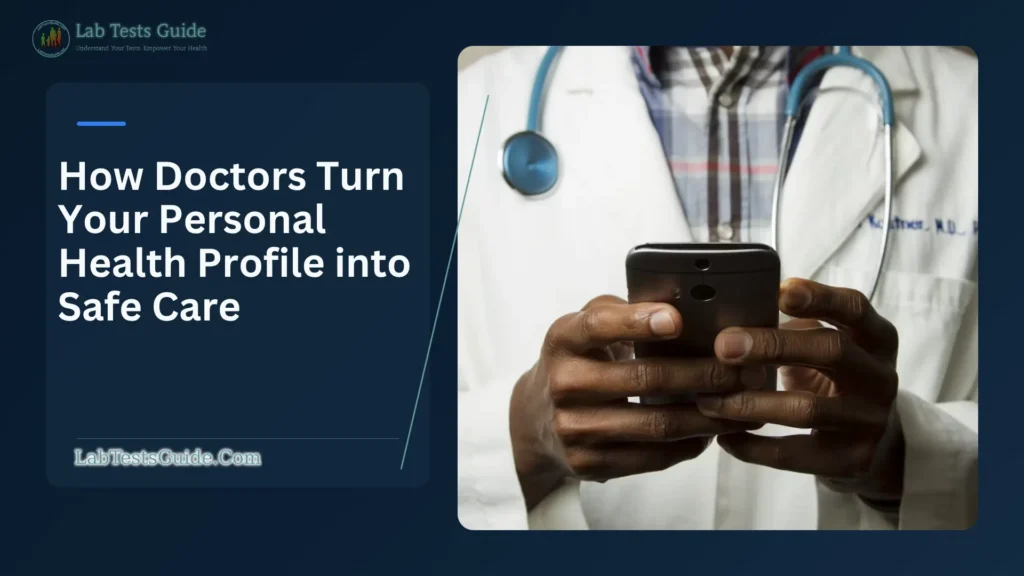
Table of Contents
Your health is more than a collection of symptoms written inside your medical record. Doctors can use your personal health profile to understand patterns and make safer decisions.
Modern digital health infrastructure allows healthcare providers to aggregate complex patient histories into a single, cohesive view. According to data from the CDC National Center for Health Statistics, 95% of office-based physicians in the US use an electronic health record (EHR) system. Furthermore, 83.6% of these physicians relied on certified EHR systems to manage comprehensive medical profiles.
Your medical profile may include your medical history, medications, allergies, lifestyle habits, family history, and test results. When these details come together, they provide context that individual symptoms cannot always provide. That context helps your healthcare team understand what your body needs and can also help them avoid decisions that could create unnecessary risks.
Here are a few ways doctors use your personal health information to make care safer and more personalized.
Build a Clearer Picture of Your Health History
Your previous health experiences can tell doctors plenty about what might happen next. Tracking long-term diagnostic trends helps physicians detect subtle health risks that isolated exams might overlook. A lot of these predictions today are being handled by healthcare AI tools.
Analysis released in an ASTP/ONC Health IT Data Brief indicates that 71% of US hospitals utilized predictive AI integrated into EHR systems to evaluate patient trajectories in 2024. Furthermore, 82% of these hospitals formally evaluated their models for analytical accuracy.
A past diagnosis can influence which tests your doctor recommends today. Previous procedures can also affect how certain treatments should be approached. Your family history may reveal risks that are not immediately visible.
Doctors can consider these details alongside your current symptoms and examination findings. This broader picture helps them avoid treating one problem without considering another.
Your health profile can also reveal patterns that become easier to notice over time. For example, repeated test results may show changes that deserve closer attention. Previous reactions to treatments can also influence decisions about future care. Even seemingly minor details can matter when several pieces of information connect.
Keeping your medical records accurate therefore gives doctors more useful information. Updating your medications, allergies, diagnoses, and other details can make consultations safer.
Make Medication Choices With More Context
Choosing medication is rarely as simple as identifying a condition and selecting one treatment. Doctors need to consider allergies, existing medications, kidney function, age, and other personal factors.
Previous side effects can also influence whether a particular medicine remains appropriate. Your complete health profile gives doctors important information before prescribing something new. This information can help reduce avoidable medication interactions and other preventable problems.
Technology has made this process increasingly connected across healthcare settings. Pharmacy informatics, in particular, uses technology and health information to support safer medication-related decisions. An informatics pharmacist can examine patient data involving dosages, side effects, interactions, and contraindications.
Pharmacy technology can improve communication between pharmacies, patients, and healthcare providers. According to the University of Findlay, these systems can help reduce prescription errors and improve medication-related care.
Besides, standardized clinical incident reporting helps identify where errors occur during the prescribing and administration stages.
An analytical report by the AHRQ Network of Patient Safety Databases revealed that medication events represented 25% of all hospital patient safety events. Among these recorded events, 36% originated during the administration stage, and 27% originated during the prescribing stage.
Your data, combined with the technology deployed by healthcare organizations and professionals, helps make such reporting more effective.
Choose Tests Based on Your Individual Risk
Medical testing works better when doctors understand your personal circumstances beforehand. Your age, family history, previous diagnoses, and symptoms can influence which tests make sense.
Doctors can use these details when deciding whether additional investigation is necessary. This approach can prevent unnecessary testing while still identifying important health concerns. It also gives doctors useful context when interpreting the results that come back.
The same test result can sometimes mean different things for different people. Your existing health conditions may affect how doctors understand those findings. Certain medications can also influence laboratory results or physical measurements.
By reviewing your broader health profile, doctors can interpret information with greater context. That can make follow-up decisions more targeted and potentially safer. It also gives you a clearer explanation of why particular tests were recommended.
Support Prevention Before Problems Become Serious
Your health profile can help doctors identify areas where prevention deserves greater attention. Preventive care is important, but it is not identical for everyone because individual risks can vary considerably. Family history, lifestyle factors, previous conditions, and age can all influence recommendations.
Doctors can use this information when discussing screenings, vaccinations, and other preventive measures. This makes prevention more relevant to your actual circumstances and potential risks.
Personalized prevention can also make healthcare conversations more practical and easier to follow. Instead of receiving generic advice, you can discuss changes that fit your situation.
Your doctor might recommend monitoring a particular measurement more regularly. They may also suggest lifestyle adjustments based on your existing health concerns. These conversations can help you understand why certain preventive steps matter. More importantly, they can encourage earlier action before manageable concerns become larger problems.
Coordinate Care When Several Providers Are Involved
Healthcare can become complicated when you see several doctors for different concerns. Each provider may have information that another member of your healthcare team needs.
Your personal health profile can help connect those separate pieces of information. Shared records can give providers a more consistent understanding of your medications and diagnoses. This reduces the possibility of important information becoming isolated between different healthcare settings.
Better coordination becomes especially useful when treatments overlap, or conditions affect one another. One doctor may identify information that changes how another provider approaches treatment.
Electronic health records can make relevant information easier for authorized healthcare professionals to access. This creates a more connected picture of your care across different appointments. You can also help by telling providers about recent diagnoses, treatments, and medication changes. Keeping everyone informed gives your healthcare team stronger information for making decisions.
FAQs
How do electronic health records help keep patient care safe across different specialists?
Electronic health records give authorized specialists access to relevant diagnoses, medications, allergies, test results, and treatment history. This shared information can reduce duplicate testing, medication conflicts, and communication gaps between providers. Accurate, updated records also help specialists make decisions using a more complete picture of the patient’s care.
Why do doctors ask about my family medical history before prescribing treatments?
Family medical history can reveal inherited risks or conditions that may affect medication choices and treatment decisions. Doctors may consider relatives’ conditions, ages at diagnosis, and known genetic disorders when evaluating potential risks. This information can help them choose appropriate treatments and determine whether additional monitoring or testing is needed.
How does personal health profiling reduce the risk of hospital errors?
Personal health profiles organize important information such as medical history, medications, allergies, test results, and risk factors. Giving clinicians access to accurate information can reduce communication gaps and prevent avoidable mistakes. This is especially useful when patients receive care from multiple providers or during transitions between hospitals and healthcare settings.
Key Statistics on Digital Health Records, Predictive AI, and Medication Safety
| US office-based physicians using an electronic health record (EHR) system | 95% |
| US office-based physicians using certified EHR systems | 83.6% |
| US hospitals using predictive AI integrated into EHR systems in 2024 | 71% |
| US hospitals that formally evaluated predictive AI models for analytical accuracy in 2024 | 82% |
| Medication events as a share of all hospital patient safety events | 25% |
| Medication events originating during the administration stage | 36% |
| Medication events originating during the prescribing stage | 27% |
Your personal health profile gives doctors something more useful than isolated medical facts. It provides context that can shape testing, treatment, prevention, and coordination.
When doctors understand your history, they can consider decisions within your individual circumstances. That does not mean technology or records replace professional judgment. Instead, accurate information gives healthcare professionals stronger material for applying that judgment.
You also play an important role in making your health profile useful. Tell your providers about medication changes, allergies, previous reactions, and important health developments. Ask questions whenever you do not understand why a treatment or test was recommended. Correct outdated information whenever you notice something missing or inaccurate.
These simple steps can help your healthcare team work with better information. Ultimately, safer care begins when your doctors can see the fuller picture.
Related
FDA-cleared LED masks: how to check the clearance yourself, step by step
Learn how to verify FDA clearance for LED face masks using the official 510(k) database. Understand clearance numbers, device models, regulatory classifications, and how…

Urinalysis vs. Urine Culture: What Each Test Shows in a Suspected UTI
When a urinary tract infection is suspected, two laboratory tests are commonly ordered: the urinalysis and the urine culture. They are frequently confused, yet…

From Raw Material to Finished Capsule: Where Testing Fits In
Supplement capsules may look simple, but their production involves several quality checks. From receiving raw ingredients to packaging finished capsules, manufacturers need to verify…
Discussion 0