

Ankle pain
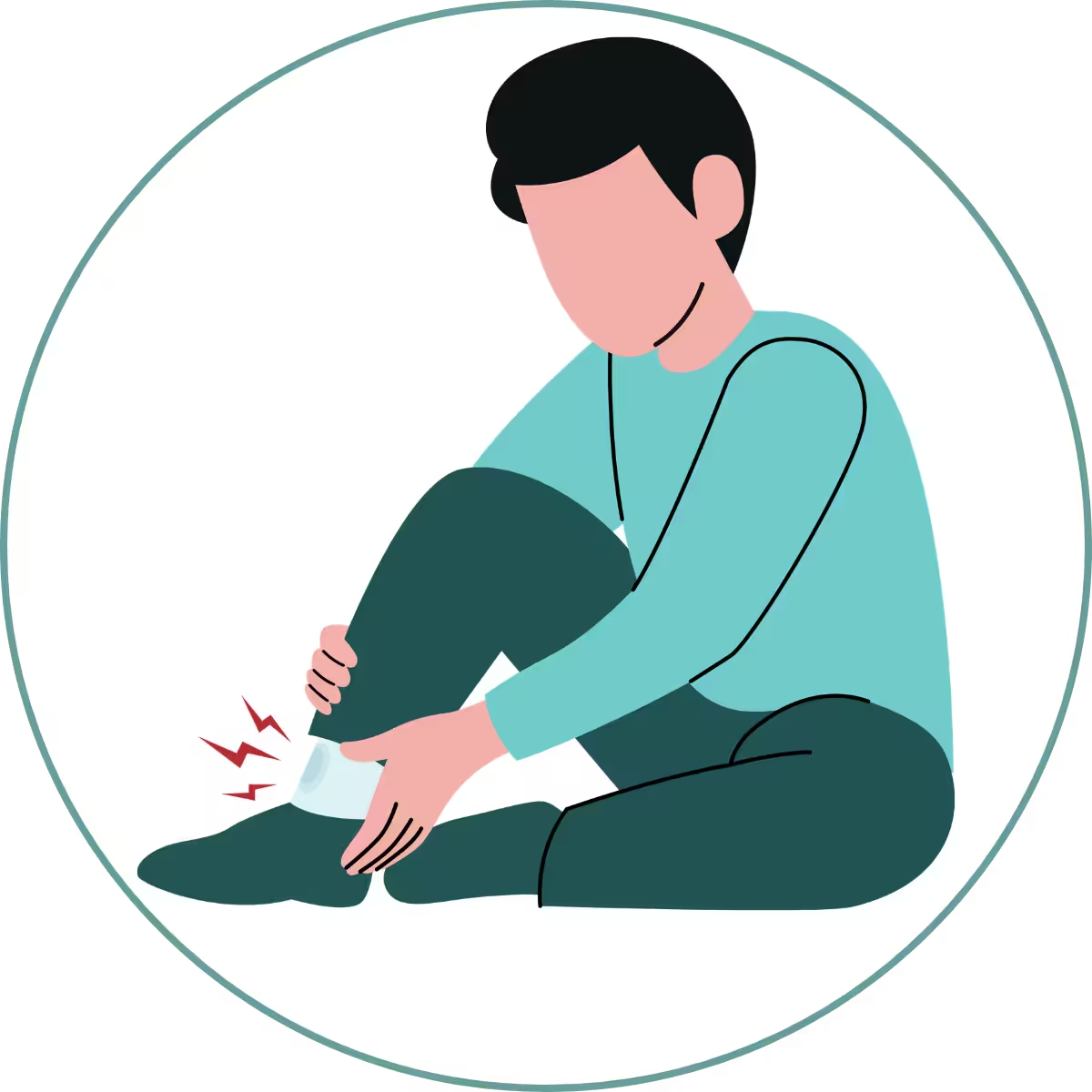
Ankle pain is often caused by sprains, fractures, or arthritis. While many injuries heal with rest, severe pain, deformity, or inability to bear weight requires immediate medical attention.
🚨 Go to A&E if
Ankle pain with any of these:
- Unable to bear weight (even a few steps)
- Obvious deformity or bone protruding
- Severe swelling or bruising
- Numbness or inability to move ankle/foot
- Open wound or possible fracture
- Signs of infection: fever, heat, redness spreading
📞 See a GP or physio if
Make an appointment for:
- Mild pain but persistent >1 week
- Recurrent ankle instability / giving way
- Stiffness, clicking, or catching sensation
- Gradual onset pain (no injury) – possible arthritis or tendonitis
- Swelling that comes and goes
Common Symptoms & Possible Causes
| Symptom / mechanism | Possible condition |
|---|---|
| Inversion injury (foot turns in) + immediate swelling | Lateral ankle sprain (anterior talofibular ligament) |
| Eversion injury (foot turns out) + medial pain | Medial ligament sprain (deltoid) or high ankle sprain |
| Unable to bear weight + bony tenderness | Ankle fracture (e.g. lateral malleolus) |
| Pain at back of ankle, especially pushing off | Achilles tendonitis or tendinopathy |
| Chronic pain, stiffness, swelling | Osteoarthritis or post‑traumatic arthritis |
Causes by category
Ankle sprain: stretched or torn ligaments (most common).
Fracture: break in tibia, fibula, or talus.
Tendon rupture: e.g. Achilles tendon rupture – sudden pop, unable to stand on toes.
Achilles tendinopathy: degeneration from repetitive strain.
Posterior tibial tendonitis: pain along inner ankle – can lead to flatfoot.
Peroneal tendonitis: pain on outer ankle.
Osteoarthritis: cartilage wear, often post‑injury.
Gout: sudden, intense pain, redness, swelling (often first MTP but can affect ankle).
Rheumatoid arthritis: symmetrical joint inflammation.
Septic arthritis: infection in joint – emergency, fever, hot joint.
Ankle impingement: bony or soft tissue pinch (common in athletes).
Diagnostic procedures
Ottawa Ankle Rules
Clinical decision tool to determine if X‑ray is needed.
X‑ray (radiograph)
Detects fractures, joint alignment.
MRI
Assesses ligaments, tendons, cartilage, occult fractures.
CT scan
Detailed bony anatomy for complex fractures.
Ultrasound
Dynamic evaluation of tendons (Achilles, peroneals).
Arthrocentesis
Joint fluid analysis if infection or gout suspected.
