

Swollen Ankles
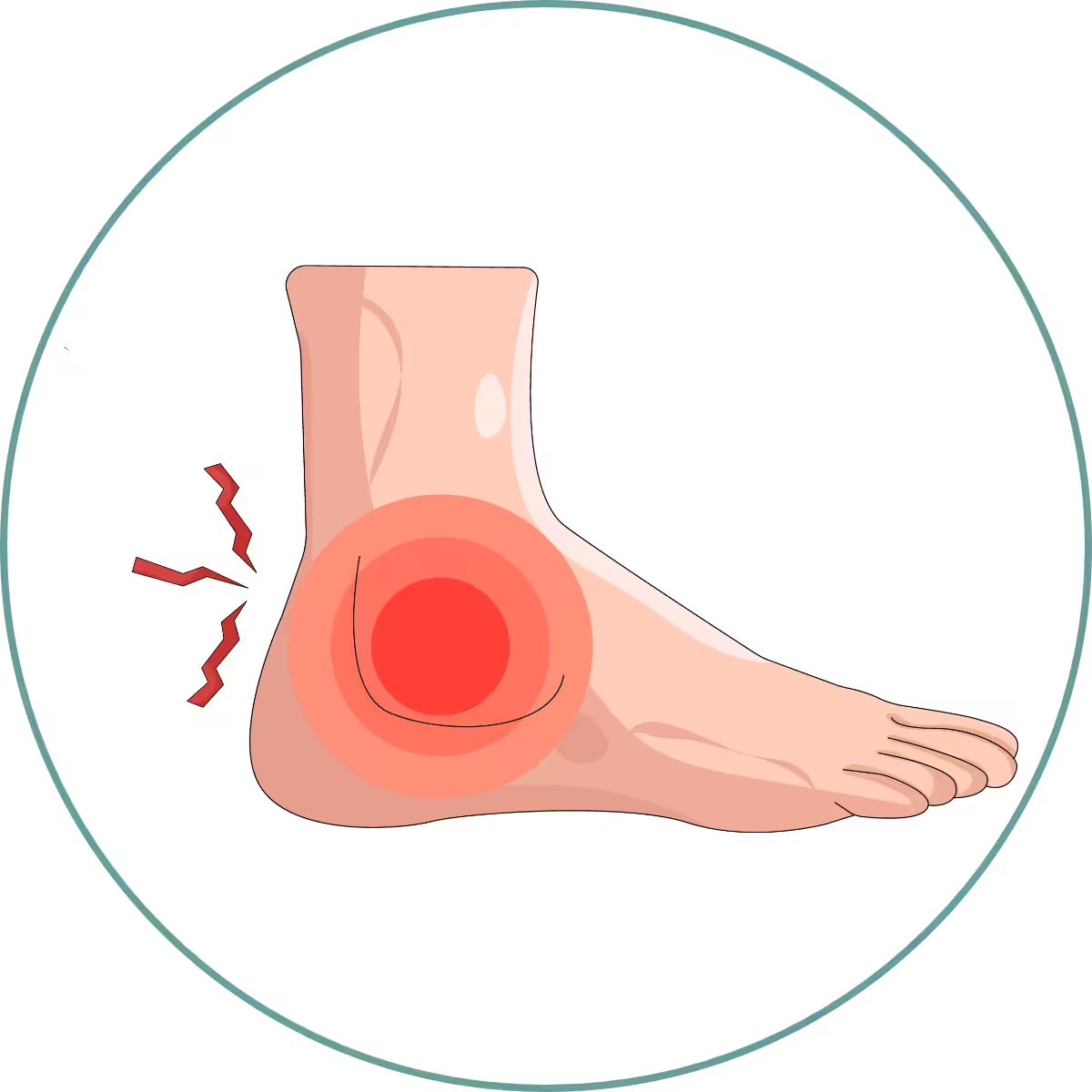
Ankle swelling (oedema) can result from injury, fluid retention, or underlying conditions like heart failure, kidney disease, or venous insufficiency. Sudden painful swelling requires urgent assessment.
🚨 Seek emergency care if
Swollen ankles with any of these:
- Sudden painful swelling in one leg (possible DVT)
- Shortness of breath, chest pain (possible heart failure or pulmonary embolism)
- Swelling after recent surgery or immobility
- Red, hot, tender skin – possible cellulitis or infection
- Swelling that came on very rapidly
📞 See a GP within days if
Make appointment for:
- Both ankles swollen (especially if pitting oedema)
- Gradual onset, worse at end of day
- Known history of heart, kidney, or liver disease
- Swelling with weight gain, fatigue
- Mild swelling during pregnancy
- Swelling associated with new medication
Symptoms & associated conditions
| Presentation | Possible cause |
|---|---|
| Sudden, painful swelling in one calf/ankle | Deep vein thrombosis (DVT) |
| Both ankles swollen, pitting, worse evening | Venous insufficiency or heart failure |
| Swelling + shortness of breath, orthopnoea | Congestive heart failure |
| Red, hot, tender swelling, fever | Cellulitis or infection |
| Swelling after recent injury | Sprain, fracture, or haematoma |
| Swelling with foamy urine, periorbital oedema | Nephrotic syndrome / kidney disease |
Causes by category
Heart failure: reduced pumping causes fluid accumulation (bilateral oedema).
Chronic kidney disease: fluid retention due to impaired filtration.
Liver cirrhosis: low albumin and portal hypertension cause leg swelling.
Venous insufficiency: damaged valves lead to pooling in lower legs.
Lymphoedema: lymphatic obstruction (primary or secondary).
Deep vein thrombosis (DVT): blood clot obstructs venous return – unilateral painful swelling.
Cellulitis: bacterial skin infection – red, hot, swollen.
Ruptured Baker’s cyst: calf swelling mimicking DVT.
Calcium channel blockers: (amlodipine, nifedipine) common cause of ankle oedema.
NSAIDs: can cause fluid retention.
Pregnancy: physiological oedema (usually mild).
Obesity: increased venous pressure.
Prolonged standing: gravity‑dependent oedema.
Diagnostic procedures
D‑dimer
Blood test to screen for DVT/PE (if low probability).
Venous duplex ultrasound
Gold standard for DVT diagnosis.
Echocardiogram
Assesses heart function if heart failure suspected.
Blood tests
BNP (heart failure), creatinine (kidney), LFTs (liver), albumin.
Urinalysis
Checks for protein loss (kidney disease).
Chest X‑ray
May show pulmonary oedema in heart failure.
