

Amnesia
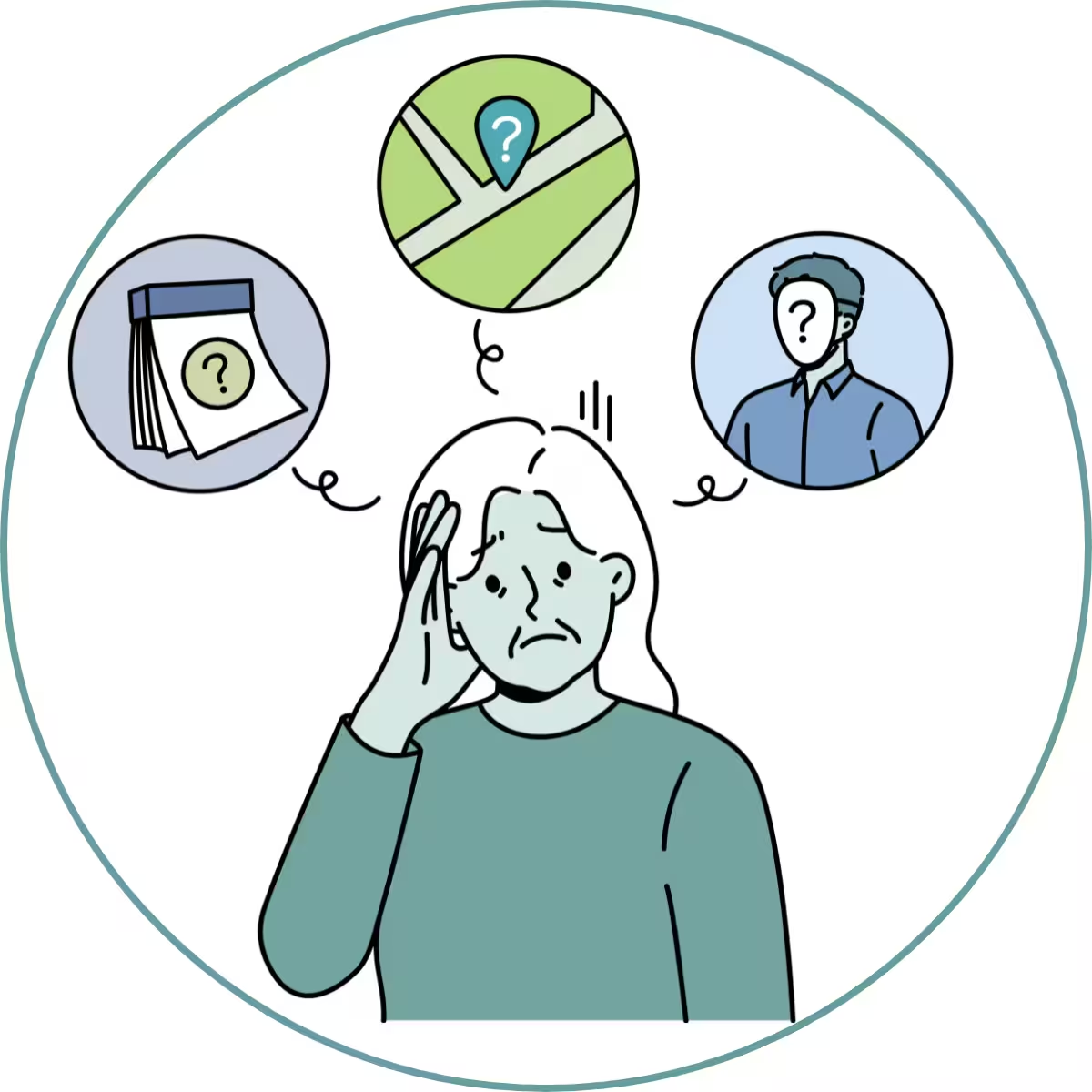
Amnesia refers to partial or total memory loss. It may result from head injury, stroke, encephalitis, or severe psychological stress. While some causes are temporary, others require urgent neurological assessment.
🚨 Immediate neurological assessment
Seek emergency care if amnesia occurs with:
- Sudden onset after head trauma
- Confusion, slurred speech, or weakness (possible stroke)
- Severe headache, vomiting, or seizure
- Inability to recognise family or surroundings
- Loss of consciousness (even brief)
📞 Refer to neurology / memory clinic
Arrange appointment if:
- Gradual memory loss over weeks/months
- Forgetting recent events but recalling old memories
- Family history of dementia or Alzheimer’s
- Memory problems affecting daily life
- Mood changes or depression
Types of amnesia & associated conditions
| Memory pattern | Possible cause / condition |
|---|---|
| Inability to form new memories after an event | Anterograde amnesia (often due to hippocampal damage) |
| Loss of memories before a specific event | Retrograde amnesia (trauma, stroke, encephalitis) |
| Temporary memory loss, often after stress | Transient global amnesia (usually resolves in 24h) |
| Gradual loss of recent memory, then remote | Alzheimer’s disease / dementia |
| Memory gaps for traumatic events only | Dissociative amnesia (psychogenic) |
Causes by category
Stroke: interruption of blood flow to memory centres.
Traumatic brain injury: concussion, contusion, diffuse axonal injury.
Encephalitis: brain inflammation (viral / autoimmune).
Hypoxia: prolonged lack of oxygen (e.g. cardiac arrest).
Alzheimer’s disease: most common dementia.
Frontotemporal dementia: behaviour and language variants.
Korsakoff syndrome: severe thiamine deficiency (often alcohol‑related).
Vitamin B12 deficiency: can cause reversible memory impairment.
Dissociative amnesia: linked to severe stress / trauma.
Electroconvulsive therapy: temporary side effect.
Medications: benzodiazepines, certain anaesthetics.
Transient global amnesia: transient, benign, unclear cause.
Diagnostic procedures
MRI brain
Detects structural lesions, hippocampal atrophy, white matter changes.
CT head
Rapid assessment for haemorrhage, mass, or stroke.
Neuropsychological testing
Detailed assessment of memory, attention, executive function.
EEG
Rules out non‑convulsive seizures or encephalopathy.
Blood tests
B12, thyroid, infection, autoimmune screen.
Lumbar puncture
If encephalitis or carcinomatous meningitis suspected.
