

Quick Overview
Paracetamol, also known as acetaminophen, is a medicine used to treat pain and fever. It is usually used for mild to moderate pain relief. The evidence is conflicting about its use to relieve fever in children.
- CategoryLaboratory Tests
- Read time2 min
- UpdatedJul 2024
Table of Contents
Paracetamol, also known as acetaminophen, is a medicine used to treat pain and fever. It is usually used for mild to moderate pain relief. The evidence is conflicting about its use to relieve fever in children. It is often sold in combination with other medications, as in many cold medications.
| Also Known as | Acetaminophen, Tylenol, Paracetamol, N-acetyl-p-aminophenol |
| Test Purpose | To determine if an overdose has occurred and if an antidote is required To determine risk of liver damage and to help monitor the outcome of antidote treatment |
| Test Preparations | No need any preparations |
| Test Components | Acetaminophen |
| Specimen | 2 ML (1.5 ML Min.) Serum From 1 SST. Ship Refrigerated Or Frozen. |
| Stability Room | 2 Hrs |
| Stability Refrigerated | 24 Hrs |
| Stability Frozen | 1 Week |
| Method | Spectrophotometry |
| Download Report |

- Most people think of Tylenol as the safest pain reliever.
- It is used for headache, joint pain (arthritis), and fever.
- But its excessive use or overdose can lead to poisoning and side effects.
- In healthy people, the overdose is greater than 150 mg / kg of body weight.
- Tylenol basically causes liver damage.
- Its poisoning effects are phased.
Normal Values:
The toxic level is> 5.0 micrograms / ml when the patient is at high risk.
Phase 1
There will be mild nausea and abdominal discomfort.
This phase is self-limited and the patient may feel better after a few hours.
Phase 2
There can be side effects after 24 hours and the patient can develop liver damage.
There is progressive necrosis or injury of liver cells.
Phase 3:
Ultimately, there will be fulminant hepatitis leading to liver failure.
Phase 4:
This is the healing stage and resolution begins and can lead to a full recovery.
Other possibilities are that there is no recovery and the patient may need a liver transplant.
The last possibility is death.
Keywords: Acetamidophenol, Acetaminophen, Acetominophen, Hydroxyacetanilide, p-Acetamidophenol, p-Hydroxyacetanilide, Paracetamol, N-Acetyl-p-aminophenol, Acetamide, N-(4-hydroxyphenyl)-, N-(4-Hydroxyphenyl)acetanilide, PARACETAMOL, 4-Hydroxyacetanilide, N-(4-Hydroxyphenyl)acetamide, acetaminophen, ACETAMINOPHEN, 4-hydroxyacetanilide, acetaminophen (medication), analgesics acetaminophen, APAP, Paracetamol – chemical, Acetaminophen [Chemical/Ingredient], paracetamol, Paracetamol (substance), Paracetamol – chemical (substance), Paracetamol product, Acetaminophen (product), Acetaminophen (substance), Acetaminophen product, ACMP
Related
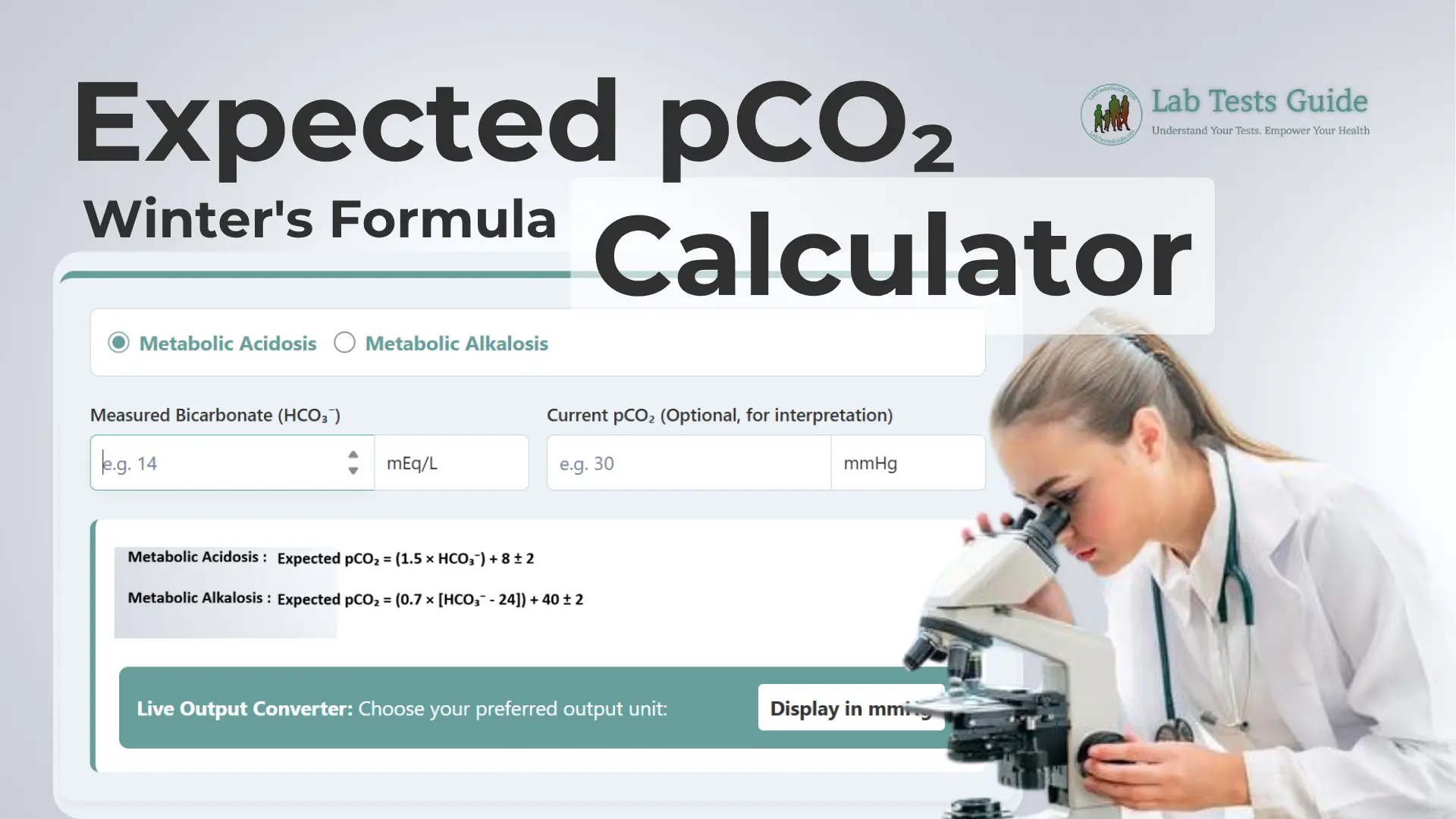
Expected pCO₂ Calculator (Winter’s Formula)
A clinical calculator to determine Expected pCO2 in metabolic acidosis (Winter's Formula) and metabolic alkalosis, with a live unit converter.
CEA Test
Learn about the CEA (Carcinoembryonic Antigen) test. Explore its clinical significance in cancer monitoring, normal reference ranges for smokers and non-smokers, and sample collection…
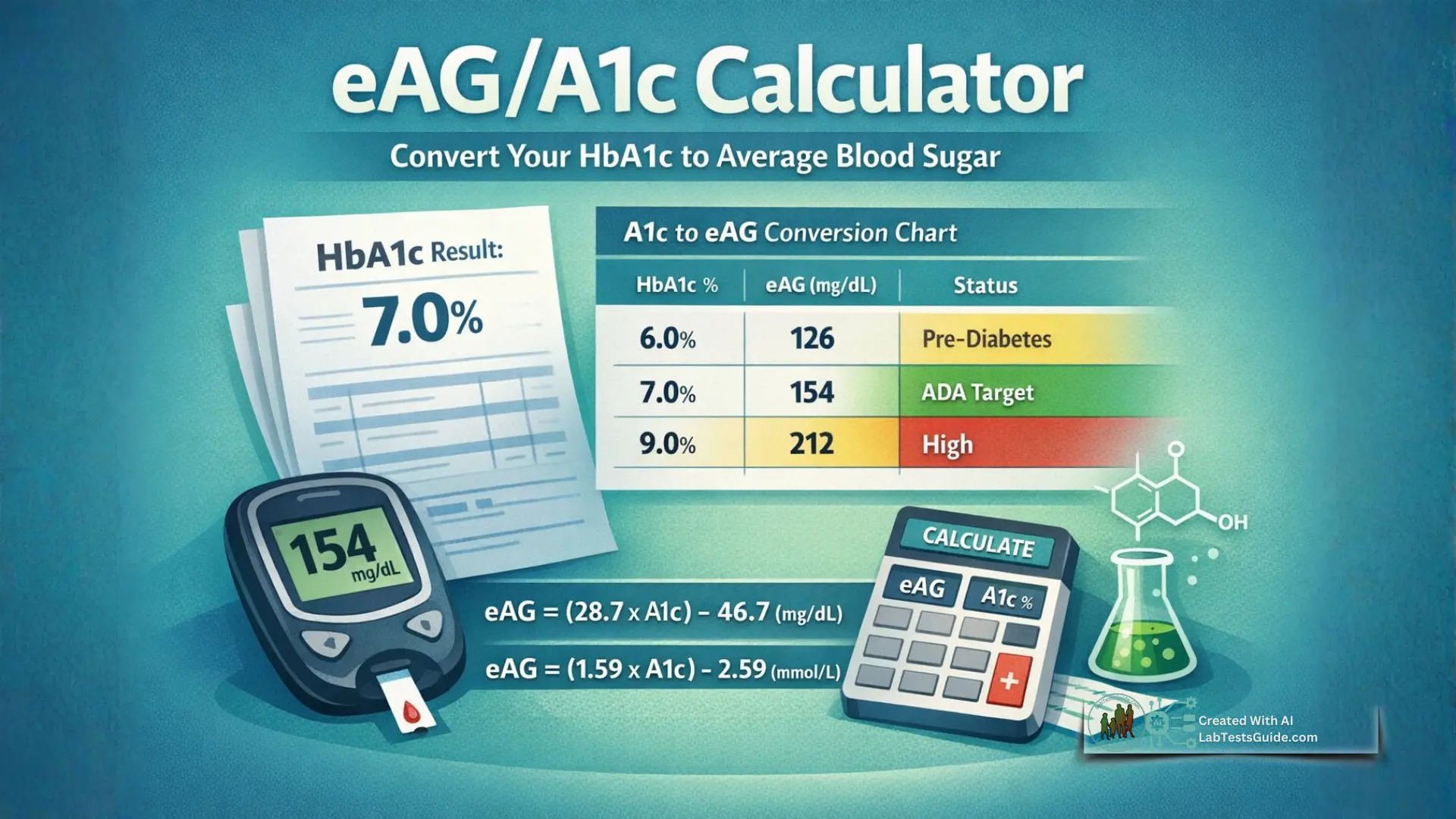
eAG/A1c Calculator: How to Convert Your HbA1c to Average Blood Sugar
Easily convert your HbA1c percentage to Estimated Average Glucose (eAG) with our eAG/A1c Calculator. Learn the formula, view the conversion chart, and manage your…
Discussion 0