Article
Urine Appearance
Urine appearance refers to the visual characteristics of urine, such as its color, clarity, and presence of sediments or particles. The appearance of urine…

Browse
Urine appearance refers to the visual characteristics of urine, such as its color, clarity, and presence of sediments or particles. The appearance of urine…
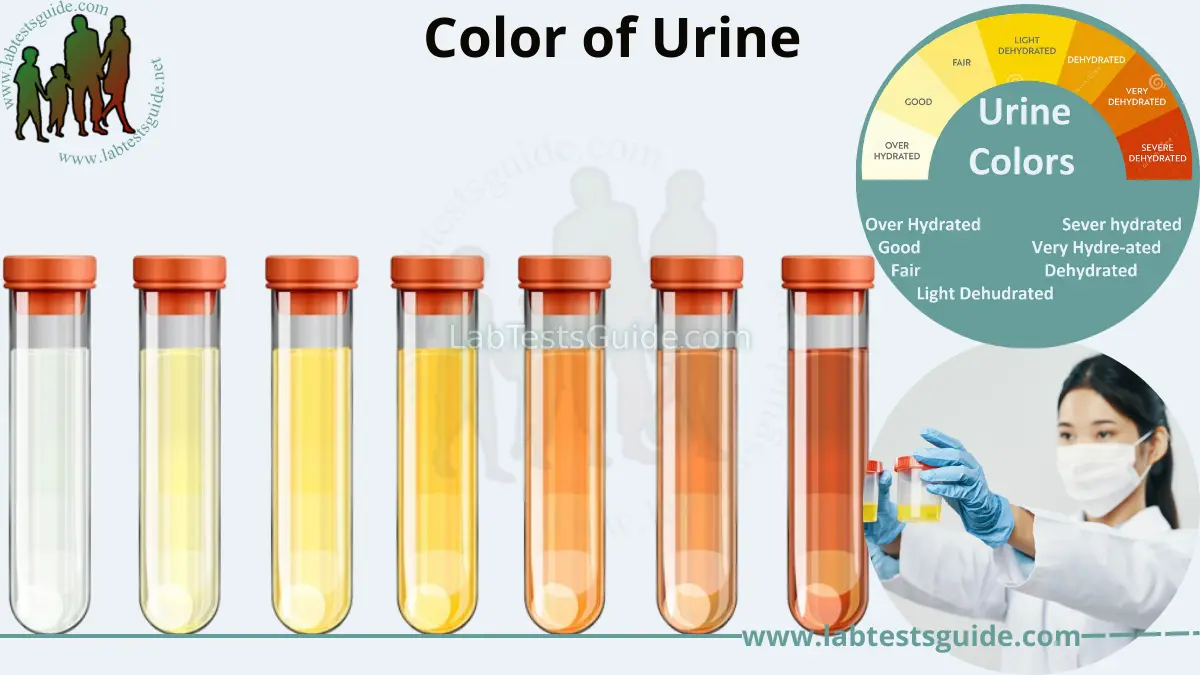
Urine color can provide important clues about an individual's health and hydration status. Normal urine color ranges from pale yellow to amber or honey-colored,…
The presence of Pus Cells in Urine, also known as leukocytes, can indicate an underlying medical condition. Normally, urine does not contain any white…
The presence of white blood cells in urine, also known as leukocytes, can indicate an underlying medical condition. Normally, urine does not contain any…
The presence of RBCs in urine, known as hematuria, can be caused by a variety of factors including urinary tract infections, kidney stones, and…
Urinary casts are cylindrical structures formed by the precipitation and aggregation of substances within the tubules of the kidneys. These structures can be classified…
Urine Crystals are solid structures formed by minerals present in the urine. These minerals include calcium oxalate, uric acid, struvite, and cystine.
urine Microscopic examination is a laboratory test used to examine the physical, chemical, and microscopic characteristics of urine. The test helps to detect any…
Urine chemical examination is a laboratory test that analyzes the composition of urine to detect any abnormalities or underlying medical conditions. It involves measuring…
Urine Dipstick Tests are a group of laboratory tests that analyze the chemical composition of a person's urine. Urine is a waste product produced…
Urine physical properties refer to the observable characteristics of urine that can be measured or assessed, such as color, odor, transparency, pH level, specific…
A urine analysis test is a medical test that examines a sample of a person's urine to evaluate their overall health. The test can…
Urinalysis is a diagnostic test that examines a person's urine sample to detect and identify various substances such as glucose, protein, red blood cells,…
The VMA Test (Vanillylmandelic Acid test) is a laboratory test that measures the levels of VMA in a person's urine. VMA is a metabolite…
The Vanillylmandelic Acid (VMA) test is a laboratory test that measures the levels of VMA in a person's urine. VMA is a metabolite of…
Urinary Protein Electrophoresis (UPEP) is a laboratory test that is used to separate and analyze the different types of proteins present in the urine.
Microalbuminuria is a condition where small amounts of the protein albumin are found in the urine. A microalbuminuria test is a urine test that…
The Urine Protein to Creatinine Ratio (UPCR) is a laboratory test that measures the amount of protein in a urine sample relative to the…
The 5-hydroxyindoleacetic acid (5-HIAA) test is a diagnostic tool used to detect the presence of carcinoid tumors, which are tumors that produce serotonin. The…
The 24 hour 5-HIAA test is a diagnostic tool used to detect the presence of carcinoid tumors, which are tumors that produce serotonin.
The 24-hour urine 5-hydroxyindoleacetic acid (5-HIAA) test is a diagnostic tool used to measure the levels of 5-HIAA in the urine. 5-HIAA is a…
The serotonin metabolite test is also known as the 24-hour urine 5-hydroxyindoleacetic acid (5-HIAA) test. This diagnostic tool is used to detect the presence…
The 5-HIAA Test (24-hour urine 5-hydroxyindoleacetic acid Test) is a diagnostic tool used to measure the levels of 5-HIAA in the urine. 5-HIAA is…
The 24 hour urine 5-hydroxyindoleacetic acid (5-HIAA) test is a diagnostic tool used to measure the levels of 5-HIAA in the urine. 5-HIAA is…
Get fresh content from Lab Tests Guide