Article
Bicarbonate (HCO3)
This test measures the amount of bicarbonate, a form of carbon dioxide, in your blood. Bicarbonate, also known as HCO3, is a byproduct of…

Browse
This test measures the amount of bicarbonate, a form of carbon dioxide, in your blood. Bicarbonate, also known as HCO3, is a byproduct of…
It is defined as the amount of acid required to restore a litre of blood to its normal pH at a PaCO2 of 40…
The partial pressure of carbon dioxide (PCO2) is the measure of carbon dioxide within arterial or venous blood. It often serves as a marker…
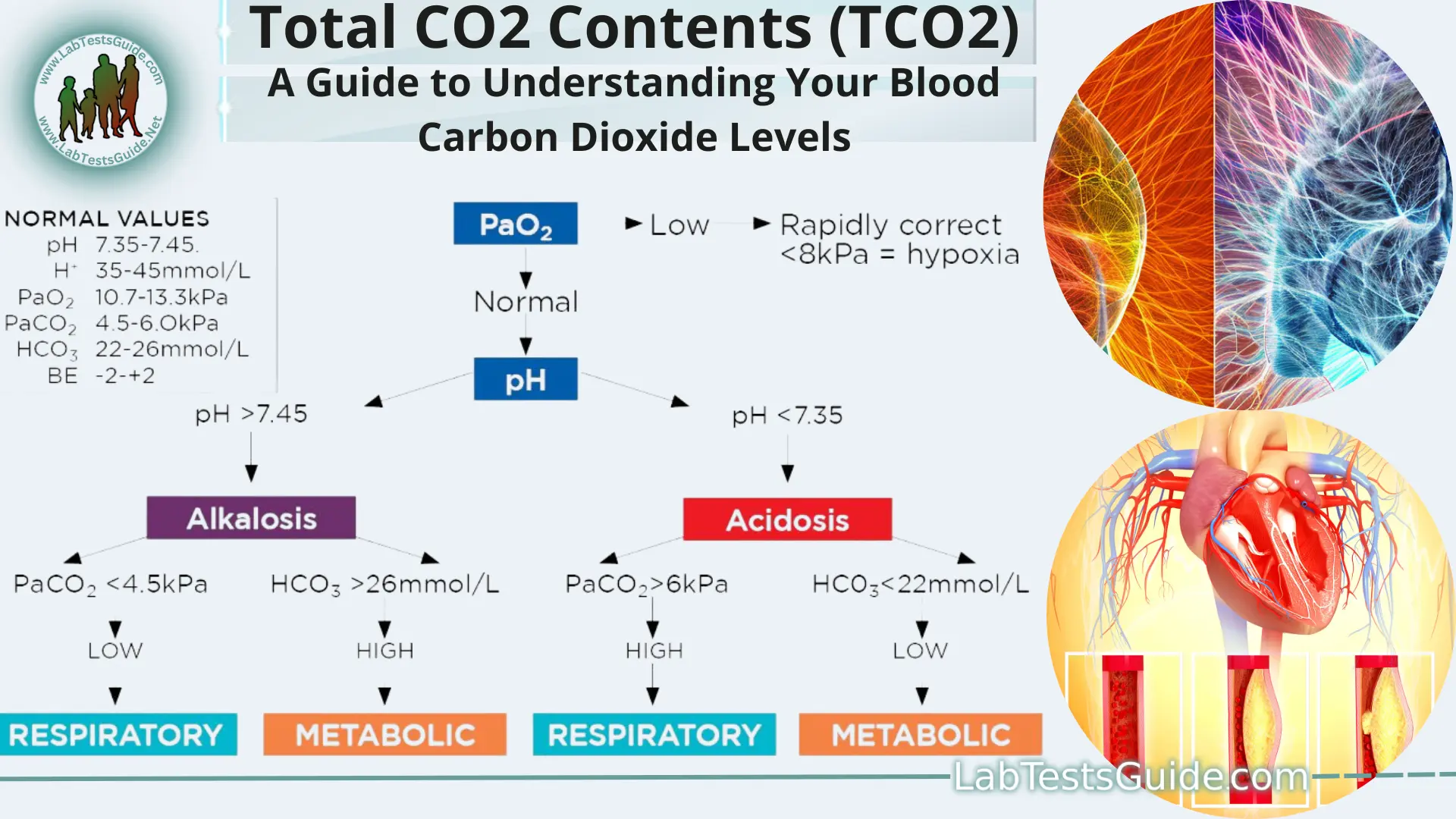
Total carbon dioxide content (TCO2) measurement is the sum of the bicarbonate, carbonic acid, and dissolved carbon dioxide (CO2) in plasma, serum or whole…
Standard bicarbonate is the concentration of bicarbonate in the plasma from blood which is equilibrated with a normal PaCO2 (40 mmHg) and a normal…
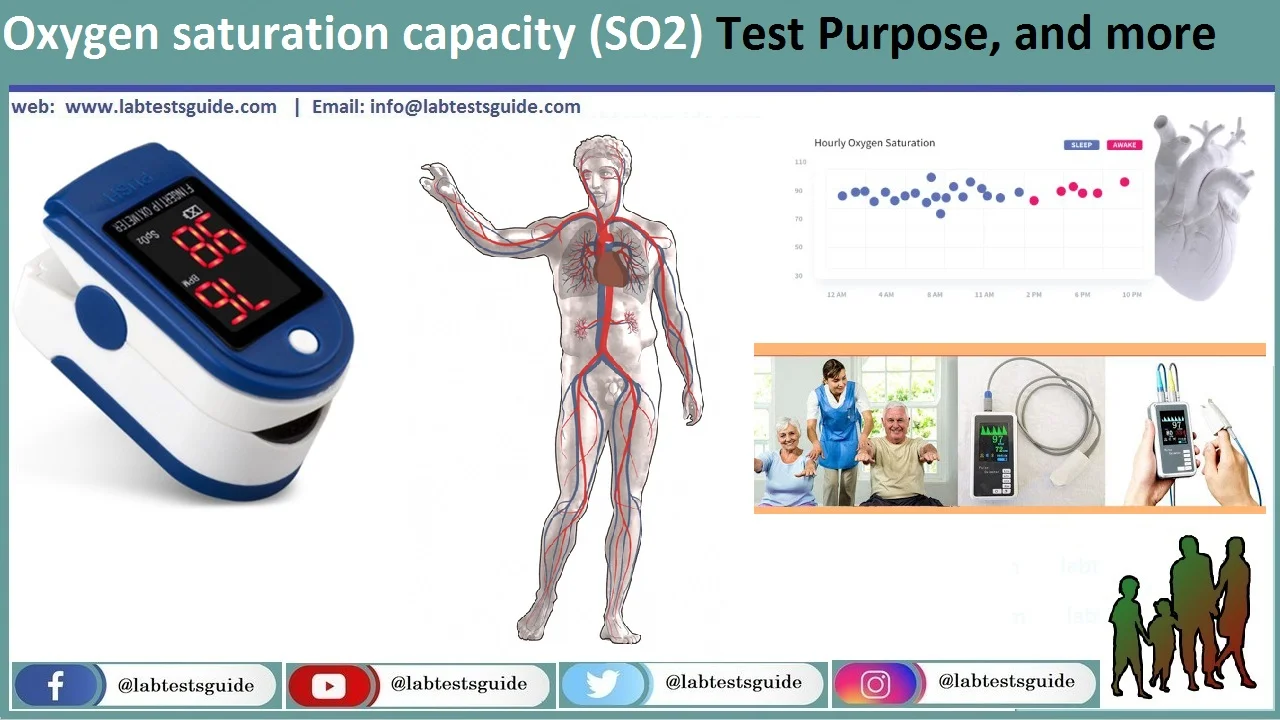
Oxygen saturation is the percent of hemoglobin present as oxyhemoglobin; it is measured directly with oximetry. Oxygen capacity is the maximal amount of oxygen…
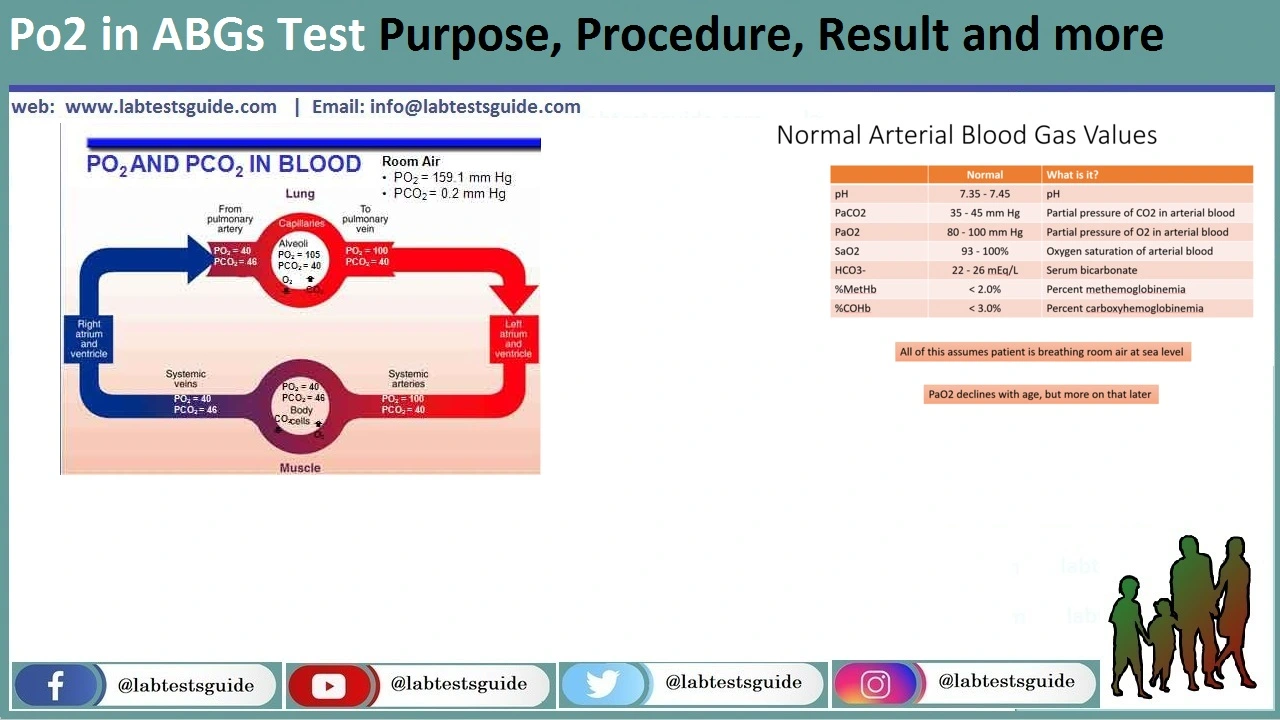
PO2 (partial pressure of oxygen) reflects the amount of oxygen gas dissolved in the blood. It primarily measures the effectiveness of the lungs in…
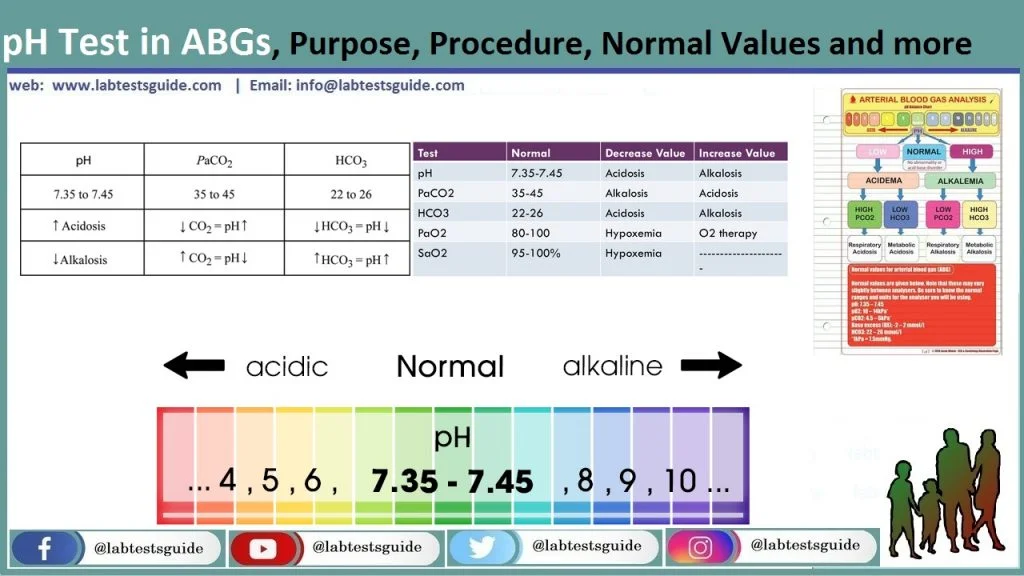
The pH tells you if your patient is acidotic or alkalotic. Normal values for pH range from 7.35 - 7.45. It is a measurement…
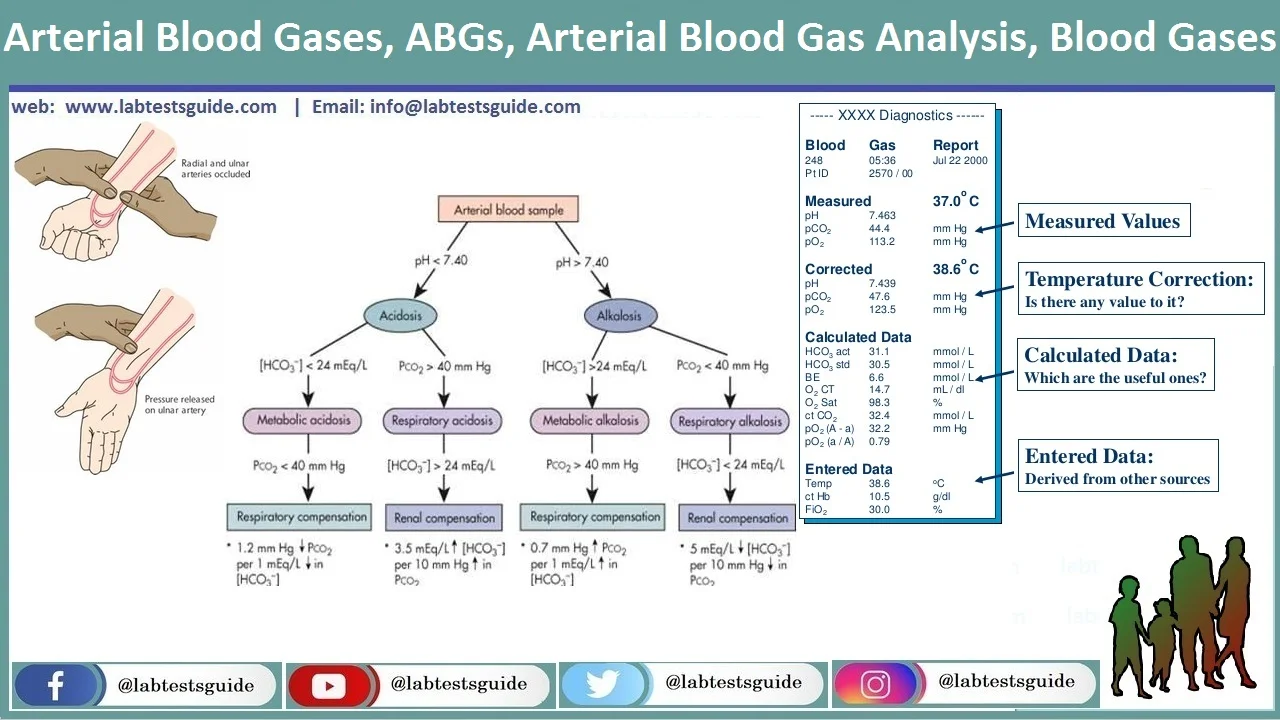
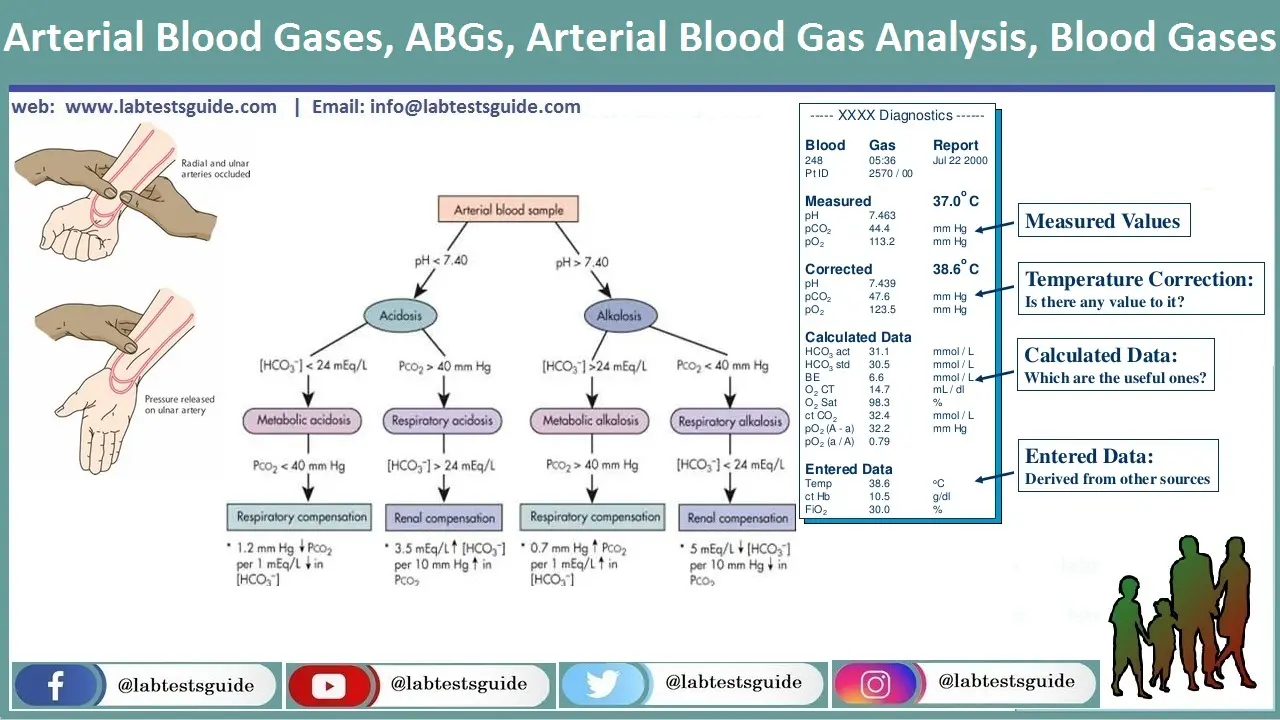
An arterial blood gas test measures the amount of blood gases, such as oxygen and carbon dioxide. An ABG test requires a small volume…
An arterial blood gas test measures the amount of blood gases, such as oxygen and carbon dioxide. An ABG test requires a small volume…
An arterial blood gas test measures the amount of blood gases, such as oxygen and carbon dioxide. An ABG test requires a small volume…
An arterial blood gas test measures the amount of blood gases, such as oxygen and carbon dioxide. An ABG test requires a small volume…
Get fresh content from Lab Tests Guide