

Amniotic Fluid Analysis Test – Purpose, Procedure, Normal Range, Interpretation and Report Formate
Amniotic fluid analysis, also called amniocentesis, is a prenatal diagnostic test in which a doctor uses ultrasound to guide a needle through the mother’s abdomen to collect a small sample of amniotic fluid, containing fetal cells and chemicals, for laboratory analysis to diagnose genetic disorders (such as Down syndrome, cystic fibrosis), infections, and other birth defects before birth.

Amniotic Fluid Analysis Test Quick Facts:
- Sample type: Amniotic fluid
- Tube type: Sterile plain container / sterile syringe (no anticoagulant)
- Minimum volume: 5–20 mL (depends on tests ordered)
- Fasting requirement: Not required
- Turnaround time: 24 hours to several days (test-dependent)
- Method used: Microscopy, biochemical assays, immunoassays, molecular tests, cytogenetics
- Normal range (short summary): Test-specific (e.g., L/S ratio ≥ 2.0 indicates lung maturity)
- Common clinical uses: Fetal lung maturity, genetic testing, infection detection, hemolytic disease assessment
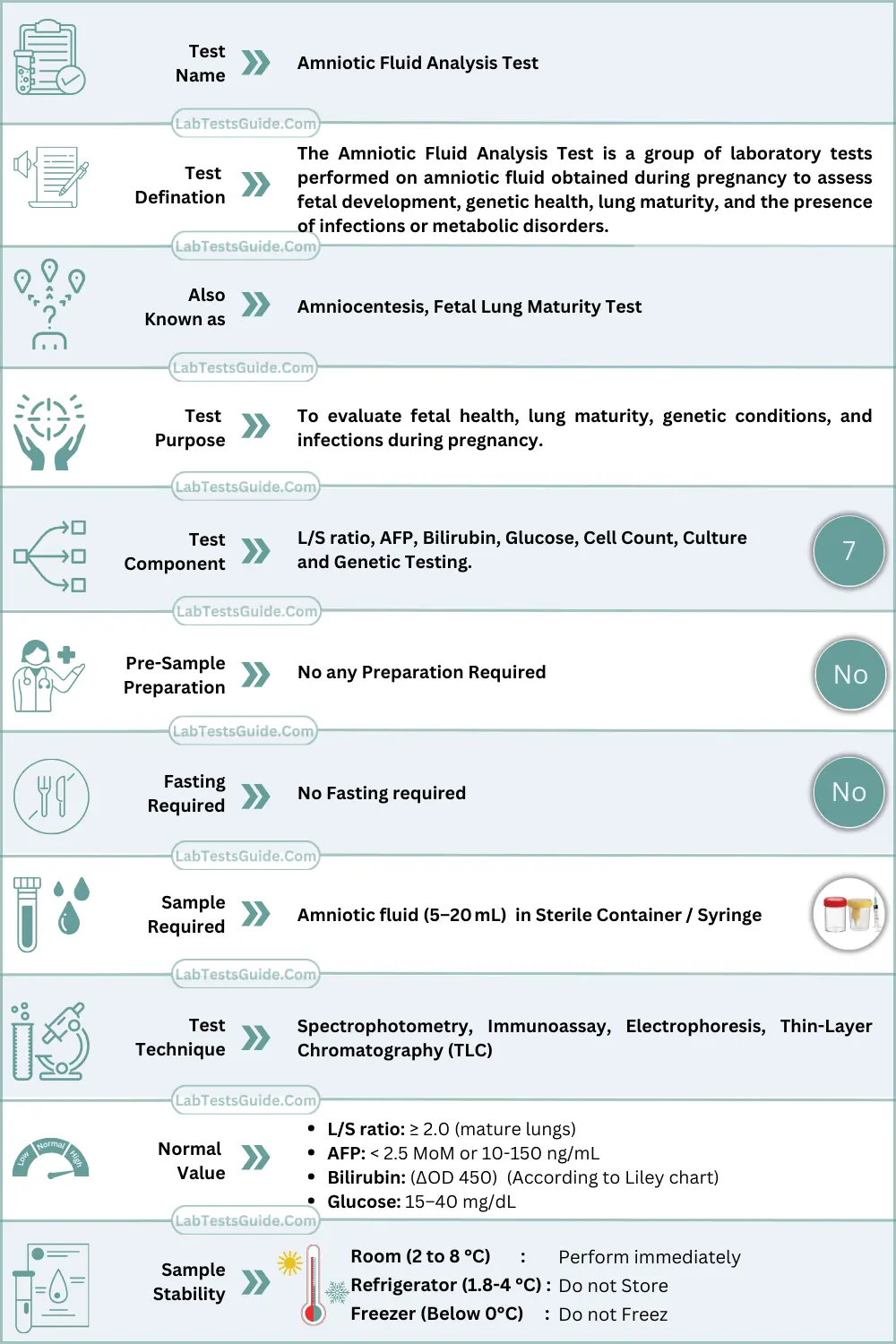
What is Amniotic Fluid Analysis Test ?
The Amniotic Fluid Analysis Test is a group of laboratory tests performed on amniotic fluid obtained during pregnancy to assess fetal development, genetic health, lung maturity, and the presence of infections or metabolic disorders.
Why is Amniotic Fluid Analysis Test Done ? (Indications)
For Patients / General Use
- Evaluation of fetal health during high-risk pregnancy
- Assessment of fetal lung maturity before preterm delivery
- Detection of genetic or chromosomal disorders
- Investigation of intra-uterine infections
- Assessment of Rh incompatibility
For Doctors / Clinical Use
- Prenatal diagnosis of chromosomal abnormalities (e.g., Down syndrome)
- Evaluation of fetal lung maturity (L/S ratio, phosphatidylglycerol)
- Detection of neural tube defects (AFP levels)
- Diagnosis of intra-amniotic infection
- Management of hemolytic disease of the fetus
How the Amniotic Fluid Analysis Test Works (Principle / Methodology)
Amniotic fluid is analyzed using multiple laboratory techniques depending on clinical indication. Biochemical methods measure substances such as lecithin, sphingomyelin, AFP, bilirubin, and glucose. Microscopy is used for fetal lung maturity tests (foam stability). Immunoassays and ELISA detect proteins and hormones, while cytogenetic and molecular methods (karyotyping, FISH, PCR) evaluate chromosomal and genetic abnormalities.
Amniotic Fluid Analysis Test Specimen Requirements & Collection
- Specimen type: Amniotic fluid
- Tube type: Sterile container or syringe
- Volume: 5–20 mL
- Patient preparation: No fasting; informed consent required
- Collection steps:
- Performed by amniocentesis under ultrasound guidance
- Strict aseptic technique
- Fluid collected directly into sterile container
- Transport & storage:
- Transport immediately to laboratory
- Store at 2–8 °C if delay <24 hours
- Protect from light for bilirubin analysis
Amniotic Fluid Analysis Test Reference Ranges
| Parameter / Population | Reference Range | Units |
|---|---|---|
| Lecithin/Sphingomyelin Ratio | ≥ 2.0 (mature lungs) | Ratio |
| Alpha-fetoprotein (AFP) | 0.5-2.5 MoM or 10-150 ng/mL | MoM |
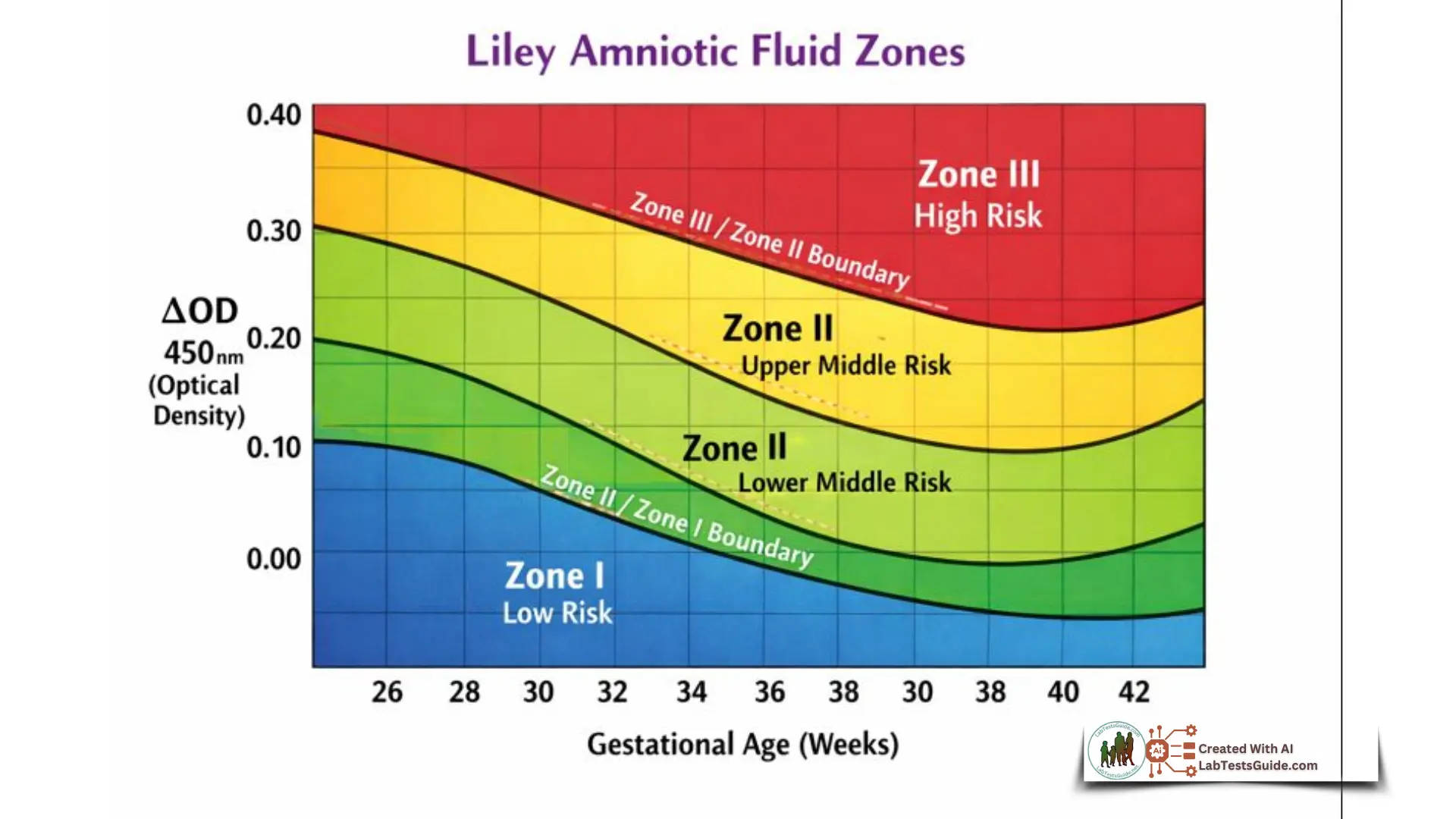
| Bilirubin (ΔOD 450) | Zone-specific (Liley chart) | Absorbance |
| Glucose | 15–40 | mg/dL |
Reference Ranges vary by laboratory, gestational age, and methodology.
Amniotic Fluid Analysis Test Interpretation of Results
High Levels (Causes & Clinical Significance)
Causes
- Elevated AFP: Neural tube defects, abdominal wall defects
- High bilirubin: Fetal hemolysis, Rh incompatibility
- Increased inflammatory markers: Intra-amniotic infection
Differential Diagnoses
- Spina bifida
- Hemolytic disease of fetus
- Chorioamnionitis
Clinical Relevance
- Guides prenatal counseling and pregnancy management
Low Levels (Causes & Clinical Significance)
Causes
- Low L/S ratio: Immature fetal lungs
- Low glucose: Infection
Differential Diagnoses
- Risk of neonatal respiratory distress syndrome
- Intra-uterine infection
Clinical Relevance
- Influences timing of delivery and steroid therapy
Amniotic Fluid Analysis Test Interfering Factors / Pre-Analytical Errors
- Blood contamination during collection
- Exposure to light (bilirubin degradation)
- Delayed processing
- Improper storage temperature
- Maternal medications
- Gestational age variability
Amniotic Fluid Analysis Test Critical Values / PANIC Values
- L/S ratio < 1.5: High risk for neonatal respiratory distress
- ΔOD 450 in high-risk zone: Severe fetal hemolysis
Follow institution policy for urgent reporting.
📥 Download Amniotic Fluid Analysis Test Lab Report Format
Get the demo report format for Amniotic Fluid Analysis in your preferred format. These templates are fully editable and professional.
How to Download ?
| File Description | Format |
|---|---|
Amniotic Fluid Analysis Test Report Format (Image) | .PNG ⬇️ |
Amniotic Fluid Analysis Test Report Format (MS Word) | .DOCX ⬇️ |
Amniotic Fluid Analysis Test Report Format (MS Excel) | .XLSX ⬇️ |
Amniotic Fluid Analysis Test Report Format (PDF) | .PDF ⬇️ |
🧠 AI-Powered Test Result Analysis:
Understand your Amniotic Fluid Analysis Test Results
AI-powered Lab Test Results Meaning tool 🤖
Amniotic Fluid Analysis Test Nursing / Phlebotomy Notes
- Sterile plain container
- Correct patient identification
- Label with gestational age
- Immediate transport to lab
- Use aseptic precautions
Lab Student Key Points
- Amniotic fluid testing is indication-specific
- L/S ratio is key for lung maturity
- AFP is critical for neural tube defect screening
- Sample handling is crucial
What is this test?
It checks the baby’s health by analyzing the fluid around the baby during pregnancy.
Why is it done?
To assess fetal lung maturity, genetic problems, infections, or anemia.
How is the sample taken?
By amniocentesis using a needle under ultrasound guidance.
Is fasting needed?
No fasting is required.
Is it safe?
Yes, when done by an experienced doctor, with minimal risk.
What can it detect?
Lung immaturity, birth defects, infections, and chromosomal disorders.
When are results available?
Usually within 1–3 days, depending on the test.
