

Biochemical Tests in Microbiology
Complete Guide of IMViC Series, Enzyme Tests, Automated Systems etc. for Identification & Diagnosis — From Students & Lab Professionals to Clinicians & Patients
For Students
Master principles, pathways, IMViC series, and exam-ready interpretation with step-by-step guides.
For Clinicians
Rapid decision support, case-based correlations, and antimicrobial therapy guidance.
For Lab Professionals
QC protocols, ATCC controls, troubleshooting, automation (VITEK, API, MALDI-TOF).
For Patients
Understand how infections like UTI, sepsis, and food poisoning are identified.

📑 Complete Navigation — Jump to Any Section
1. Why Biochemical Tests? The Core Principle
Biochemical tests assess the metabolic capabilities of a microorganism, creating a unique “metabolic fingerprint”. While Gram staining gives initial clues, only biochemical profiles can definitively identify species like Escherichia coli vs. Pseudomonas aeruginosa. The core principle is enzymatic activity: a specific substrate is provided; if the microbe produces the corresponding enzyme, the substrate is broken down, leading to a detectable change—color shift, gas production, or precipitate.
2. General Requirements & Quality Control
- Pure culture: Single isolated colony essential.
- Fresh culture: 18–24 hours old. Older cultures yield false negatives.
- Inoculation standards: Sterile loop/needle; 0.5 McFarland turbidity.
- Controls (ATCC): E. coli ATCC 25922, S. aureus ATCC 25923, P. aeruginosa ATCC 27853.
- Incubation: 35–37°C, ambient air or CO₂ for fastidious organisms.
3. Carbohydrate Fermentation Tests (Complete Series)
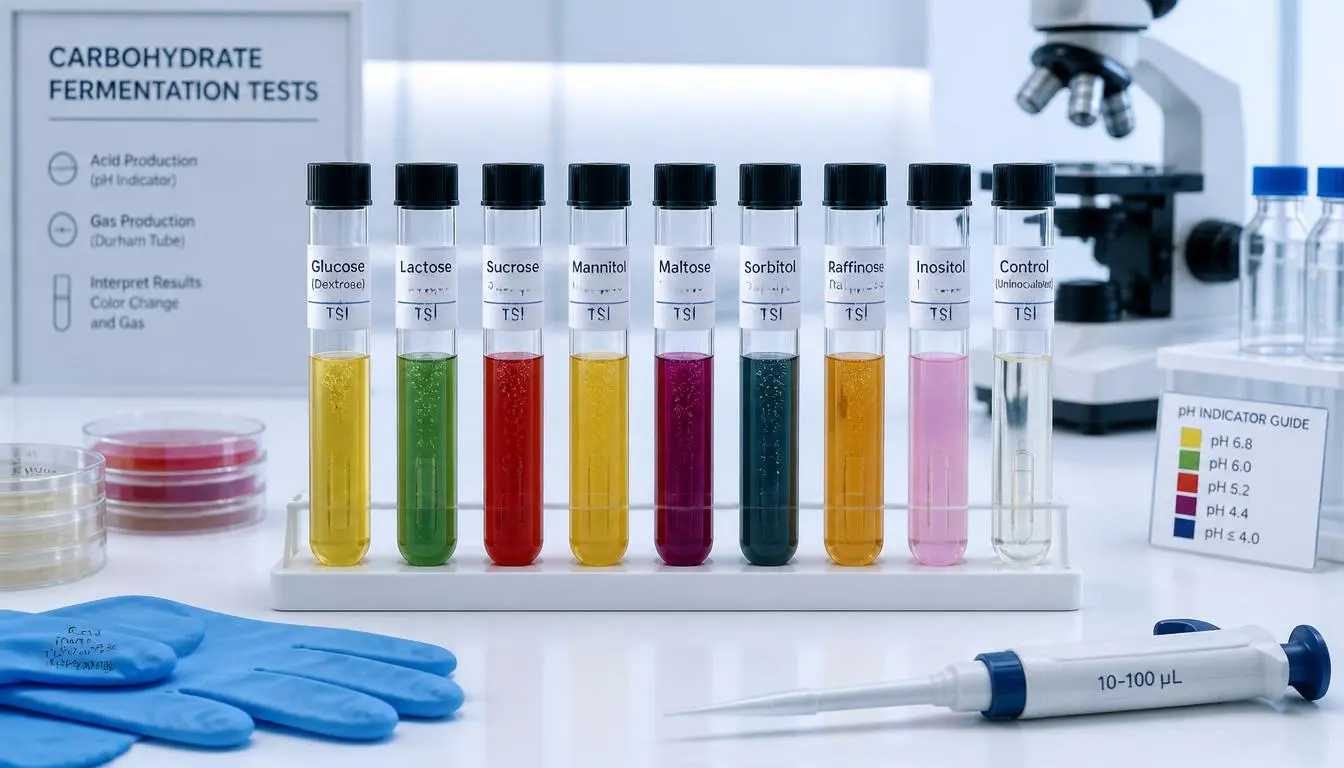
These tests determine a bacterium’s ability to ferment specific carbohydrates, producing acid (lowering pH) and sometimes gas. They are fundamental for differentiating Enterobacteriaceae and other Gram-negative rods.
🍬 Glucose Fermentation
Detects acid/gas from glucose. Durham tube traps gas. Yellow = acid.
Full Article →🥛 Lactose Fermentation
Differentiates lactose fermenters (E. coli, Klebsiella) from non-fermenters (Salmonella, Shigella).
Full Article →🍬 Mannitol Fermentation
Key for staphylococci identification. S. aureus mannitol+ (yellow).
Full Article →🧪 Triple Sugar Iron (TSI)
Multi-parameter: glucose, lactose, sucrose, H₂S. K/A, A/A, K/K, black precipitate.
TSI Guide →🔬 Kligler Iron Agar (KIA)
Similar to TSI but without sucrose. Tests glucose/lactose fermentation and H₂S.
KIA Guide →4. The IMViC Series: Gold Standard for Enterobacteriaceae
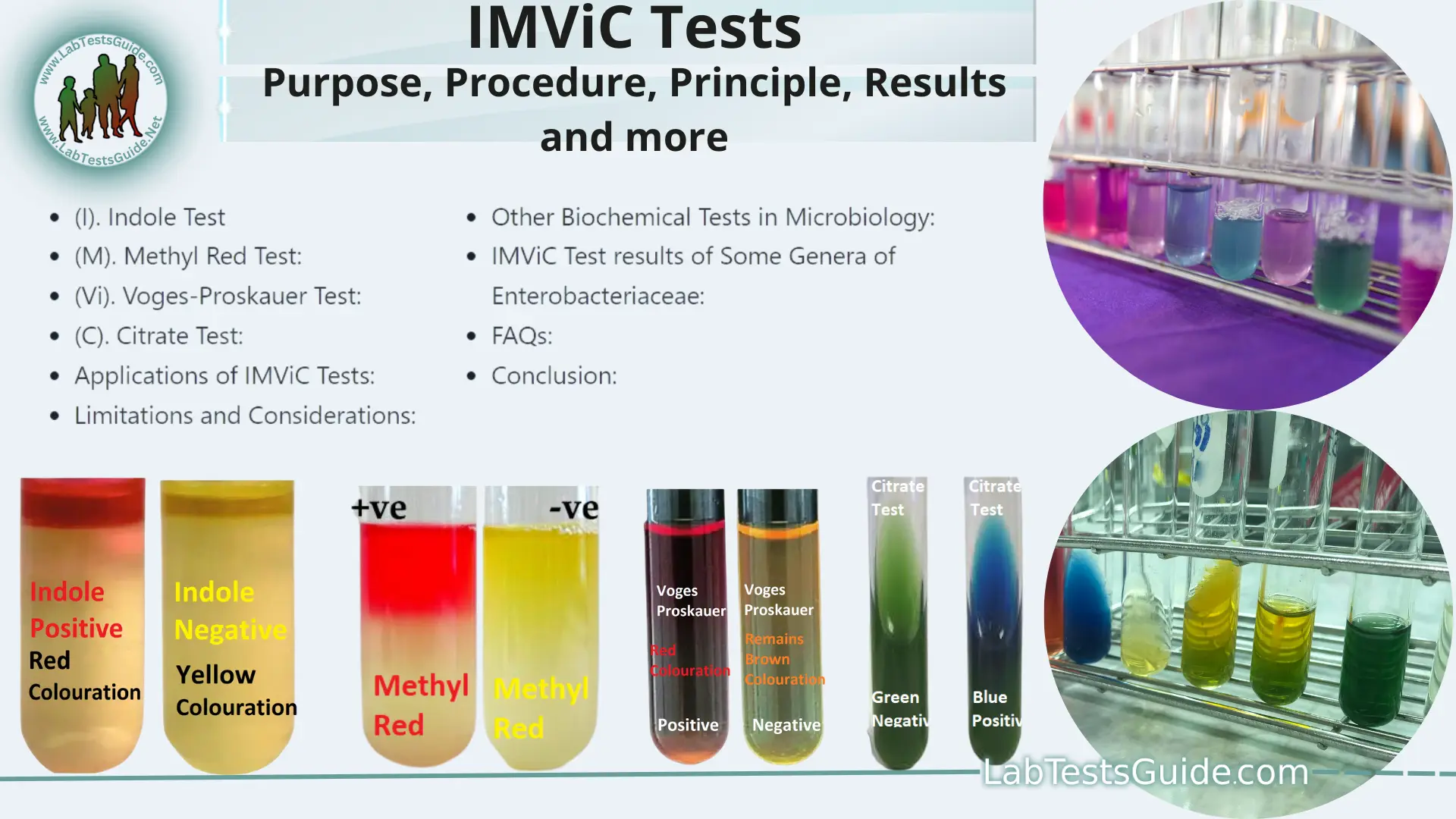
The IMViC pattern (Indole, Methyl Red, Voges-Proskauer, Citrate) is the historic standard for identifying Gram-negative enteric rods. This series is essential for differentiating E. coli, Klebsiella, Enterobacter, and other enteric pathogens.
5. Protein & Amino Acid Metabolism Tests
6. Enzyme Detection Tests (Key Diagnostics)
7. Respiratory, Sulfur & Gas Production Tests
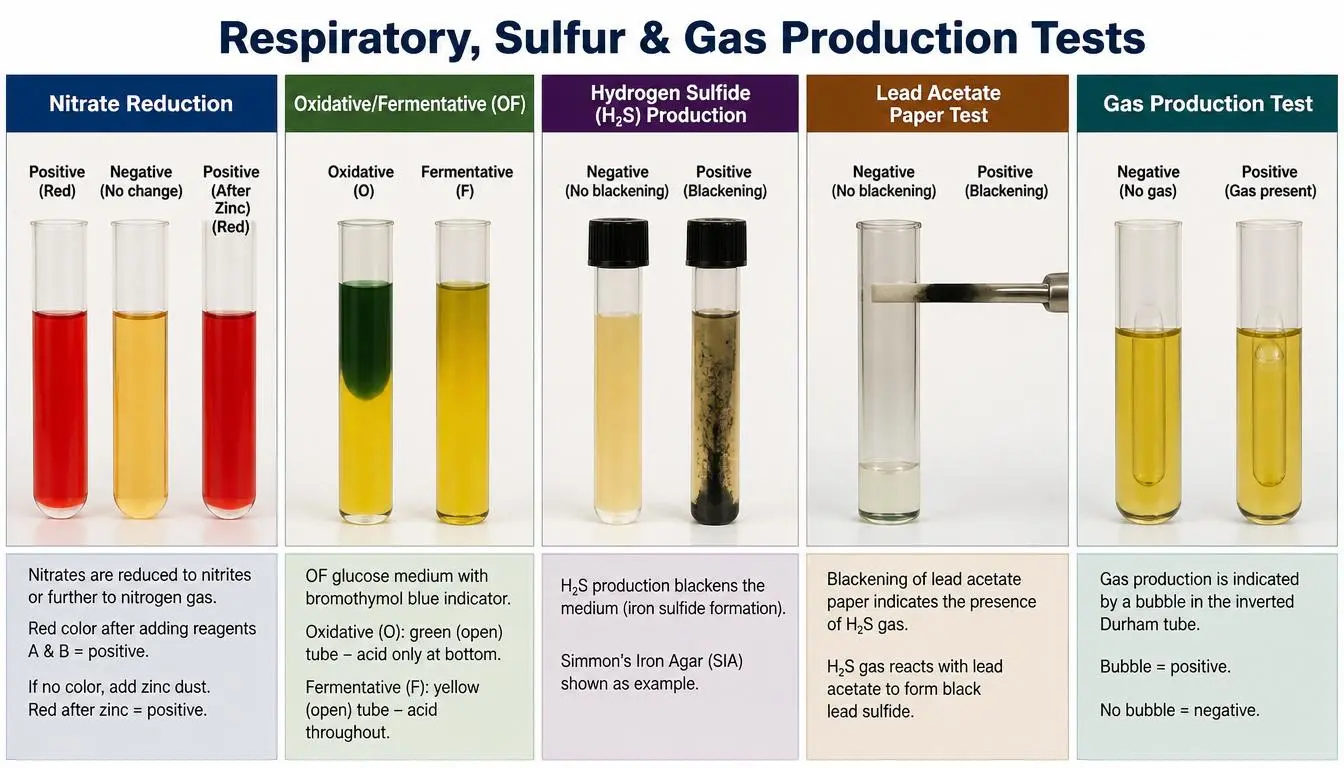
🧪 Nitrate Reduction
Red after reagents A+B = nitrite positive. Zinc dust confirms complete reduction to N₂ gas.
Nitrate →💨 Oxidative/Fermentative (OF)
Hugh-Leifson: both tubes yellow = fermentative; open yellow = oxidative (Pseudomonas).
OF Test →⚫ Hydrogen Sulfide (H₂S) Production
Black precipitate in TSI, SIM, or LIA media. Salmonella and Proteus positive.
H₂S →💨 Gas Production Test
Bubbles in Durham tube during fermentation. E. coli gas+; Shigella gas–.
Gas Test →8. Specialized & Differential Media Tests
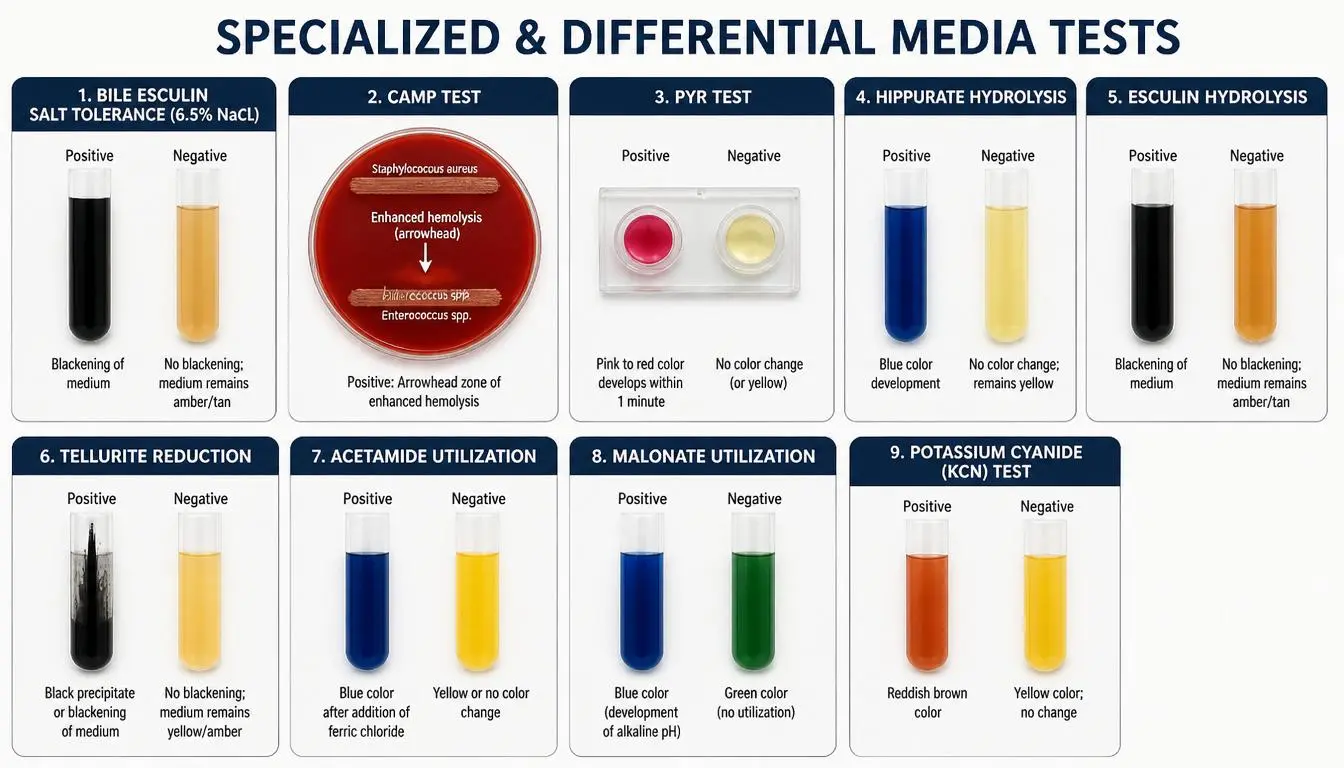
🧂 Salt Tolerance (6.5% NaCl)
Turbidity = growth; enterococci positive, non-enterococci streptococci negative.
Salt Tolerance →9. Automated & Commercial Systems (API, VITEK, MALDI-TOF)
📟 API 20E System
20 microtubes → 7-digit profile number matched to database. Standardized, 18–24h.
Learn API →🦠 API Staph / API 20NE / API Coryne
Specialized panels for Staphylococcus, non-enteric GNR, and Corynebacterium.
API Panels →📊 MicroScan Panels
Microdilution panels for ID and AST of Gram-positives and Gram-negatives.
MicroScan →⚡ MALDI-TOF MS
Protein fingerprinting in minutes. Essential for low-resource settings and phenotypic validation.
MALDI-TOF guide →10. Interpretation Flowcharts for Common Pathogens
11. Clinical Case Studies (Real-World Correlations)
12. Quality Control & Common Errors
| Test | Positive Control (ATCC) | Negative Control (ATCC) | Common Error |
|---|---|---|---|
| Catalase | S. aureus 25923 | S. pyogenes 19615 | Nickel loop (false +); use wooden/plastic loop |
| Oxidase | P. aeruginosa 27853 | E. coli 25922 | Delayed reading >60 sec gives false + |
| Indole | E. coli 25922 | K. pneumoniae 13883 | Expired Kovac’s reagent |
| Coagulase | S. aureus 25923 | S. epidermidis 12228 | Old plasma; clot retraction |
| Urease | P. mirabilis 12453 | E. coli 25922 | Reading too late (rapid Proteus may revert) |
| ONPG | E. coli 25922 | P. aeruginosa 27853 | Insufficient incubation |
13. Conclusion & Future Directions
Biochemical tests remain the cornerstone of microbial identification, even with molecular advances. MALDI-TOF MS and genomic sequencing offer speed, but biochemical profiles confirm phenotype and are indispensable for low-resource settings, teaching, and phenotypic validation of novel isolates.
14. Complete Master List of All Biochemical Tests (75+ Tests)
Below is the comprehensive, categorized list of all biochemical tests covered in this guide — from carbohydrate fermentation to automated systems. Each test is linked to its dedicated Article page.
🍬 Carbohydrate Fermentation Tests
🧪 IMViC Series & Differential Tests
🧬 Enzyme Detection Tests
🧫 Amino Acid Utilization Tests
⚫ Sulfur & Gas Production Tests
🦠 Specialized Identification Tests
🔬 Clinical & Organic Chemistry Tests
🤖 Automated & Modern Biochemical Identification Systems
FAQs (Frequently Asked Questions ):
What is a biochemical test?
A biochemical test is a laboratory test used to determine the metabolic capabilities of microorganisms, typically bacteria.
Why are biochemical tests important in microbiology?
Biochemical tests are important in microbiology because they help to identify and differentiate between different species of bacteria, which is critical for accurate diagnosis and treatment of infectious diseases.
How are biochemical tests performed?
Biochemical tests are performed by inoculating a bacterial culture onto a medium containing a specific substrate, and then observing for a reaction or change in the medium that indicates the presence of a specific enzyme or metabolic pathway.
What are some common biochemical tests used in microbiology?
Common biochemical tests used in microbiology include the catalase test, oxidase test, coagulase test, indole test, urease test, and nitrate reduction test, among others.
How do you interpret the results of a biochemical test?
Interpreting the results of a biochemical test involves comparing the reaction of the test organism to that of known reference strains, or to established criteria for a particular species.
What is the purpose of the catalase test?
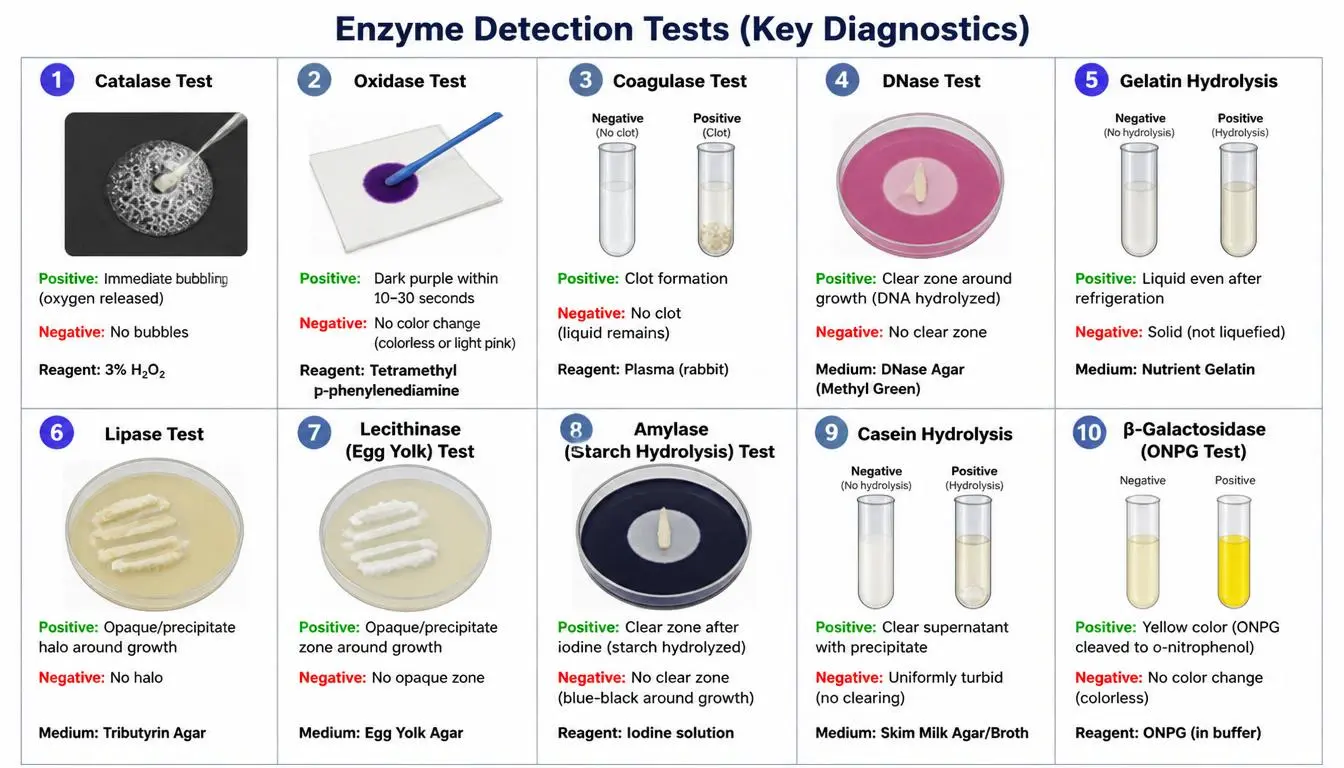
The catalase test is used to detect the presence of the enzyme catalase, which breaks down hydrogen peroxide into water and oxygen. This test is commonly used to differentiate between different species of bacteria, particularly those in the genera Staphylococcus and Streptococcus.
What is the purpose of the oxidase test?
The oxidase test is used to detect the presence of the enzyme cytochrome c oxidase, which is involved in cellular respiration. This test is commonly used to differentiate between different species of bacteria, particularly those in the family Enterobacteriaceae.
What is the purpose of the coagulase test?
The coagulase test is used to detect the presence of the enzyme coagulase, which causes blood plasma to clot. This test is commonly used to differentiate between different species of bacteria, particularly those in the genus Staphylococcus.
What is the purpose of the indole test?
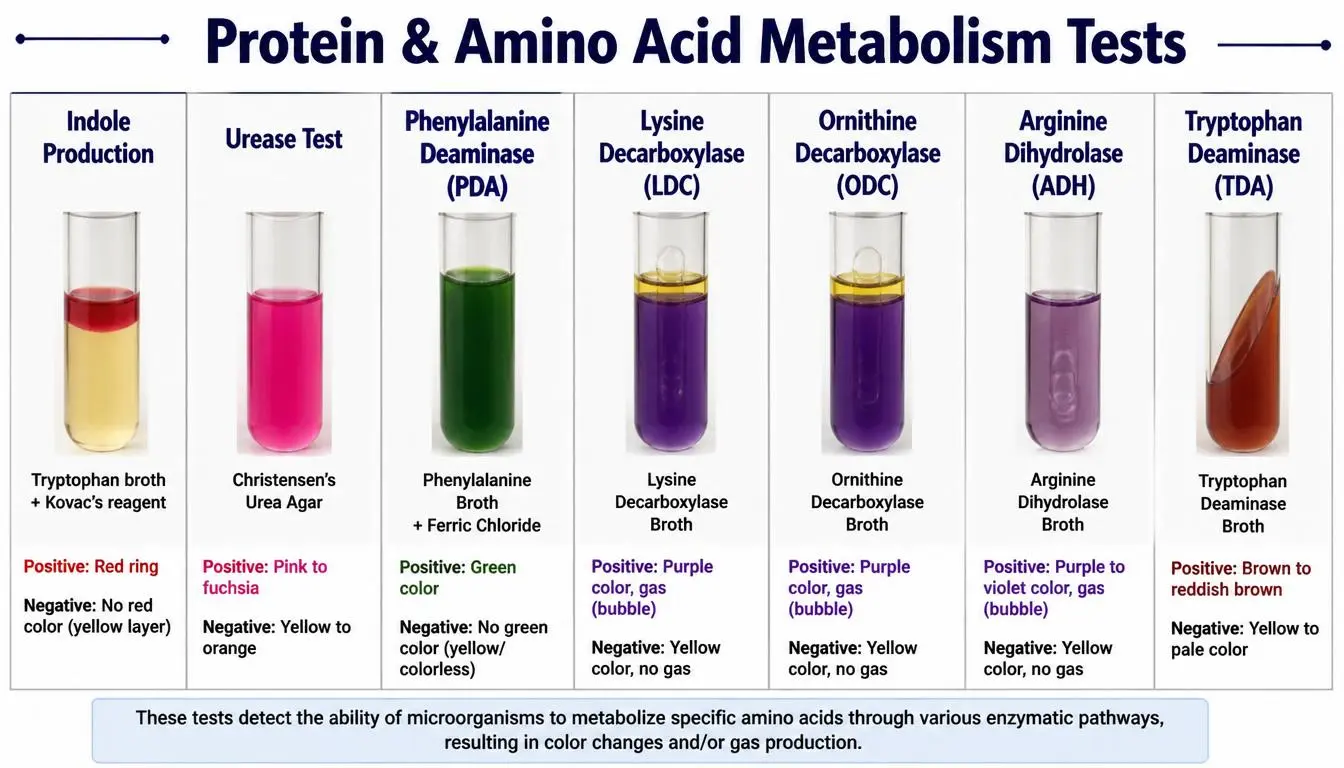
The indole test is used to detect the presence of the enzyme tryptophanase, which breaks down tryptophan into indole, pyruvic acid, and ammonia. This test is commonly used to differentiate between different species of bacteria, particularly those in the family Enterobacteriaceae.
What is the purpose of the urease test?
The urease test is used to detect the presence of the enzyme urease, which hydrolyzes urea into ammonia and carbon dioxide. This test is commonly used to differentiate between different species of bacteria, particularly those in the genera Proteus and Klebsiella.
What is the purpose of the nitrate reduction test?
The nitrate reduction test is used to detect the ability of bacteria to reduce nitrate to nitrite or nitrogen gas. This test is commonly used to differentiate between different species of bacteria, particularly those in the family Enterobacteriaceae.
What is the purpose of the methyl red test?
The methyl red test is used to detect the presence of mixed-acid fermentation, which produces a large amount of acid from glucose. This test is commonly used to differentiate between different species of bacteria, particularly those in the family Enterobacteriaceae.
What is the purpose of the Simmons citrate agar test?
The Simmons citrate agar test is used to detect the ability of bacteria to utilize citrate as a sole carbon source. This test is commonly used to differentiate between different species of bacteria, particularly those in the family Enterobacteriaceae.
How are biochemical tests performed?
Biochemical tests are performed by inoculating a bacterial culture onto a specific type of medium and observing for a particular reaction or change in the medium.
What types of biochemical tests are commonly used in microbiology?
Common biochemical tests used in microbiology include the catalase test, oxidase test, coagulase test, indole test, urease test, and many others.
Why is the catalase test important?
The catalase test is important because it helps to differentiate between bacteria that produce catalase and those that do not, allowing for accurate identification of bacterial species.
What is the oxidase test used for?
The oxidase test is used to detect the presence of cytochrome c oxidase in bacteria, which can be used to differentiate between different species of bacteria.
What is the coagulase test used for?
The coagulase test is used to differentiate between Staphylococcus aureus, which produces coagulase, and other species of Staphylococcus that do not.
What is the indole test used for?
The indole test is used to detect the presence of tryptophanase in bacteria, which can be used to differentiate between different species of bacteria.
What is the urease test used for?
The urease test is used to detect the presence of the enzyme urease in bacteria, which can be used to differentiate between different species of bacteria.
What is the triple sugar iron (TSI) test used for?
The TSI test is used to determine the ability of bacteria to ferment different sugars and to produce gas and/or hydrogen sulfide.
What is the motility test used for?
The motility test is used to determine the ability of bacteria to move, which can be used to differentiate between different species of bacteria.
What is the Voges-Proskauer test used for?
The Voges-Proskauer test is used to detect the presence of acetoin in bacteria, which can be used to differentiate between different species of bacteria.
What is the citrate test used for?
The citrate test is used to determine the ability of bacteria to utilize citrate as a carbon source.
What is the DNase test used for?
The DNase test is used to detect the presence of the enzyme DNase in bacteria, which can be used to differentiate between different species of bacteria.
What is the gelatin hydrolysis test used for?
The gelatin hydrolysis test is used to detect the ability of bacteria to produce the enzyme gelatinase, which hydrolyzes gelatin.
What is the acid-fast staining test used for?
The acid-fast staining test is used to identify acid-fast bacteria, which have a waxy coating on their cell walls that prevents them from being easily stained with traditional Gram staining methods.
References:
- “Common Biochemical Tests.” Microbiology Online. http://microbiologyonline.org/resources/medical-microbiology/biochemical-tests
- “Biochemical Tests for Identification of Bacteria.” LabCE. https://www.labce.com/spg76887_biochemical_tests_for_identification_of_bacteria.aspx
- “Biochemical Tests.” Austin Community College. https://www.austincc.edu/microbugz/biochemical_tests.php
- “Biochemical Tests for the Identification of Bacteria.” Todar’s Online Textbook of Bacteriology. http://textbookofbacteriology.net/identification.html
- “Biochemical Tests in Microbiology.” Medical Microbiology. https://microbiologyinfo.com/biochemical-tests-in-microbiology/
- “Biochemical Tests for Bacteria.” News Medical Life Sciences. https://www.news-medical.net/life-sciences/Biochemical-Tests-for-Bacteria.aspx
- “Biochemical Tests for Identification of Bacteria.” Microbe Notes. https://microbenotes.com/biochemical-tests-for-identification-of-bacteria/
- “Biochemical Tests for the Identification of Bacteria.” Microbiology and Immunology Online. http://www.microbiologybook.org/mob/biochem-test.htm
- “Biochemical Tests for the Identification of Bacteria.” Labtestsonline. https://labtestsonline.org/tests/biochemical-tests-for-the-identification-of-bacteria
- “Biochemical Tests for Bacterial Identification.” ScienceDirect. https://www.sciencedirect.com/topics/immunology-and-microbiology/biochemical-test

One Comment