

Navigating the National Disability Insurance Scheme (NDIS) can feel overwhelming, especially if you are new to the system. With multiple services, providers, funding categories, and rules, many participants and families find it difficult to know where to start. This is where an NDIS Support Coordinator plays a crucial role.
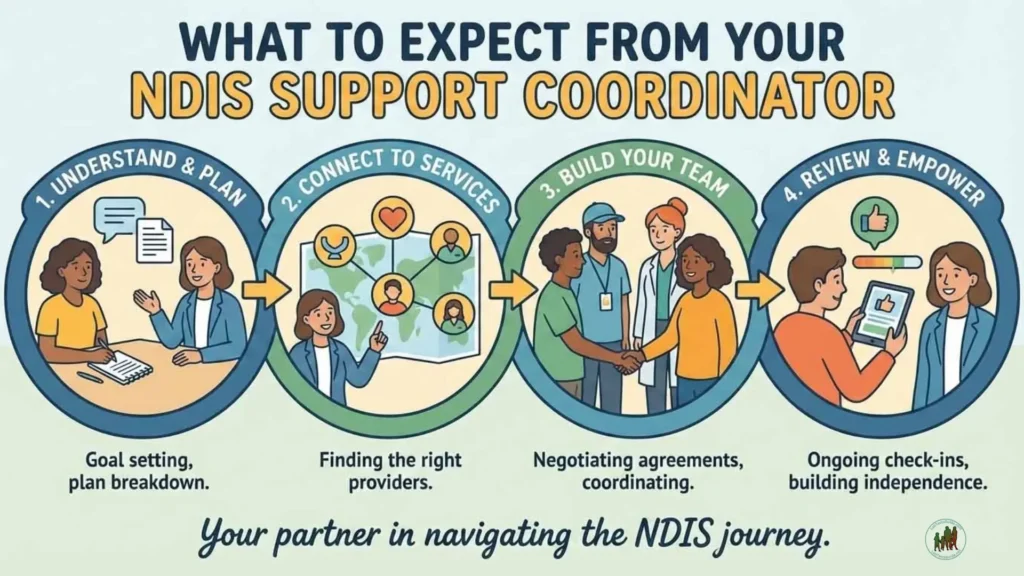
A Support Coordinator helps you understand your NDIS plan, connect with the right services, and use your funding in a way that supports your goals. This article explains what you can realistically expect from your NDIS Support Coordinator and how they support you at every stage of your journey.
Understanding the Role of an NDIS Support Coordinator
An NDIS Support Coordinator is a professional funded through your NDIS plan to help you manage and implement your supports. Their main role is to make your plan work for you in real life, not just on paper.
They do not replace your support workers or service providers. Instead, they act as a guide, problem solver, and point of contact who helps coordinate everything together.
Support Coordination is especially helpful if:
- You have a complex NDIS plan
- You use multiple service providers
- You are transitioning to the NDIS
- You need help building independence and confidence
Explaining Your NDIS Plan Clearly
One of the first things your Support Coordinator will do is help you understand your NDIS plan in plain language.
They will explain:
- What funding you have and where it can be used
- The difference between Core, Capacity Building, and Capital supports
- Which supports are flexible and which are fixed
- Your responsibilities as a participant
This ensures you know your rights, limits, and opportunities before you begin using your funding.
Helping You Set and Achieve Goals
NDIS plans are built around personal goals. A good Support Coordinator helps you turn those goals into practical steps.
They will work with you to:
- Identify short-term and long-term goals
- Match supports to each goal
- Create realistic action plans
- Track progress over time
This could include goals related to daily living, employment, social participation, health, or independence.
Connecting You with the Right Service Providers
One of the most important expectations from a Support Coordinator is help with finding the right providers.
They assist by:
- Recommending suitable NDIS-registered or non-registered providers
- Explaining service agreements before you sign
- Helping you compare quality, pricing, and availability
- Ensuring services align with your needs and values
This saves time, reduces stress, and helps you avoid unsuitable or unreliable services.
Coordinating Multiple Supports Effectively
Many participants receive support from several providers at the same time. Without coordination, this can lead to confusion, overlap, or gaps in care.
Your Support Coordinator helps by:
- Making sure services work together smoothly
- Communicating with providers when needed
- Preventing duplication of supports
- Ensuring continuity of care
This coordination creates a more stable and consistent support experience.
Supporting Choice and Control
The NDIS is built on choice and control. Your Support Coordinator should always respect your preferences and decisions.
You can expect them to:
- Listen to what matters to you
- Support your choices, not make decisions for you
- Encourage independence and confidence
- Provide information so you can decide freely
A good coordinator empowers you rather than taking control away from you.
Helping You Manage Challenges and Changes
NDIS plans and personal circumstances can change. A Support Coordinator helps you adapt when things do not go as planned.
They can assist with:
- Addressing service issues or breakdowns
- Managing provider changes
- Responding to unexpected needs
- Supporting plan reviews and reassessments
They also help you communicate effectively with the NDIA when changes are required.
Building Your Capacity Over Time
Support Coordination is not only about organising services. It is also about building your skills and confidence.
Over time, your Support Coordinator may help you:
- Learn how to manage your own supports
- Understand budgets and service agreements
- Build confidence in decision-making
- Reduce reliance on coordination if appropriate
This focus on capacity building supports long-term independence.
Advocating for Your Needs
When challenges arise, a Support Coordinator can act as an advocate. While they are not legal representatives, they help ensure your voice is heard.
This includes:
- Communicating concerns to providers
- Supporting you during meetings
- Helping resolve conflicts professionally
- Ensuring services meet NDIS standards
Their advocacy helps protect your rights and wellbeing.
Maintaining Clear and Ongoing Communication
You should expect regular and clear communication from your Support Coordinator.
This includes:
- Updates on progress
- Clear explanations of actions taken
- Availability when issues arise
- Respectful and timely responses
Good communication builds trust and ensures you feel supported throughout your NDIS journey.
Choosing the Right Support Coordination Provider
Not all Support Coordinators are the same. Choosing a provider that understands your needs and values is essential.
A quality provider will:
- Offer participant-centred support
- Be transparent and reliable
- Have experience with diverse NDIS needs
- Focus on empowerment and outcomes
Many participants choose experienced providers like We Empower Disability Services because of their strong commitment to personalised, ethical, and participant-focused NDIS support.
Final Thoughts
An NDIS Support Coordinator plays a vital role in helping you make the most of your NDIS plan. From understanding your funding to coordinating services, advocating for your needs, and building your confidence, their support can make a meaningful difference.
When done well, Support Coordination reduces stress, improves outcomes, and helps you move closer to the life you want to live. Knowing what to expect allows you to work more effectively with your coordinator and get the best possible value from your NDIS supports.
