
If your upper abdomen is already fairly flat but the area below the belly button still looks loose, creased, or “pouched,” a mini abdominoplasty (often called a partial tummy tuck) can be a smart, targeted solution. This procedure focuses on the lower abdomen only—helping improve contour, tighten mild lower muscle laxity, and remove excess skin without the extensive reshaping involved in a full tummy tuck.
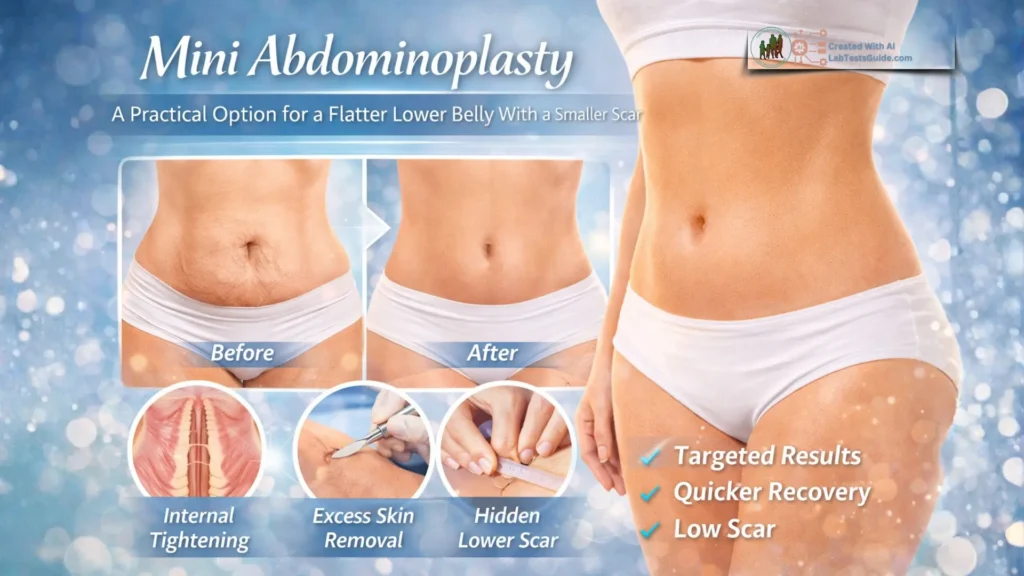
At Liv Hospital, surgeons typically approach mini abdominoplasty as a precision body-contouring procedure for the “lower-belly-only” problem—especially common after pregnancy, weight fluctuations, or prior abdominal surgery.
What a Mini Abdominoplasty Actually Fixes (and What It Doesn’t)
A mini abdominoplasty is designed for a specific zone: from the pubic area up to the belly button. It helps when the main concern is:
- Loose lower-abdominal skin that doesn’t retract
- A small bulge caused by mild lower muscle separation or laxity
- A lower “shelf” or fold that can appear above a C-section scar
- Stretch marks and skin texture issues only if they are on the skin being removed
It’s equally important to know the limitations:
- It won’t correct significant laxity above the belly button if that’s the main issue
- It won’t remove visceral (deep internal) fat that causes a firm, rounded abdomen
- It’s not a weight-loss procedure—best results happen when you’re near your stable goal weight
Mini vs Full Tummy Tuck: The Difference Is the Belly Button and the Upper Abdomen
Many people choose a mini abdominoplasty because it’s less extensive than a full tummy tuck.
A mini abdominoplasty generally means:
- A shorter, lower scar (usually hidden by underwear/swimwear)
- The belly button typically stays in place (no new opening made)
- Less dissection and a more focused recovery
A full tummy tuck is more suitable when:
- Loose skin extends above the belly button
- There’s meaningful muscle separation across the whole midline
- You need wider contour correction from upper to lower abdomen
If you want the exact service page for reference, the clinic’s overview is on PLASTIC SURGERY Mini Abdominoplasty.How the Procedure Works: Tight Foundation + Smooth Redraping
A good way to understand mini abdominoplasty is to think in two layers:
1) Internal tightening (when needed)
If the lower abdominal wall has mild separation or looseness, the surgeon may tighten the lower muscle/fascial layer to create a firmer base. This is what helps reduce the “pooch” look that doesn’t respond to workouts.
2) Skin removal and redraping
Next, the surgeon removes only the excess skin that can be safely pulled down without distorting the belly button or causing too much tension. The remaining skin is redraped to look smooth—often improving lower creasing and the “fold-over” effect.
In some cases, liposuction is added for better contour transitions, but the key advantage of a mini abdominoplasty is that it directly treats skin laxity, not just fat.
Who Usually Gets the Best Results?
Mini abdominoplasty outcomes are strongest when the “problem” is truly localized to the lower abdomen. Typical good candidates include:
- Post-pregnancy patients with a mild lower pouch and skin looseness
- People at a stable weight with stubborn lower-abdominal skin
- Those with a lower scar already (like a C-section scar) who want that area refined
- Individuals with good upper-abdominal tone and minimal laxity above the belly button
If the belly protrusion is firm and round from the inside (visceral fat), surgeons usually emphasize that lifestyle and weight management have more impact than surgery for that specific issue.
Recovery: What People Commonly Experience
Recovery varies by individual and whether muscle tightening or liposuction is added, but mini abdominoplasty is generally associated with:
- Less downtime than a full tummy tuck
- Temporary swelling and tightness in the lower abdomen
- A gradual improvement in contour as swelling resolves
Following post-op guidance matters—especially compression use, walking early (as advised), and protecting the incision as it heals.
A Natural-Looking Goal: “Better Lower Abdomen” Not an Overdone Look
A mini abdominoplasty is often chosen by people who don’t want dramatic changes—they want the lower abdomen to match the rest of their body. The best outcomes look like a fitter version of you: smoother lower belly, cleaner waist transition, and a scar placed low and discreet.
And once the surgical healing phase is complete, maintaining results becomes much easier when daily habits support your core and skin health—sleep, hydration, gentle movement, and nutrition—which is why some people also like the lifestyle support content on live and feel for long-term wellness routines.