Pregnancy changes the body in ways that are often misunderstood. Many people assume that once weight returns to normal, everything should “bounce back.” But postpartum anatomy is more complex than that. Skin stretches beyond its elastic limit, connective tissue softens, muscles can separate, and fat distribution may shift permanently. Even highly active women may find that certain changes do not respond to exercise or healthy eating.
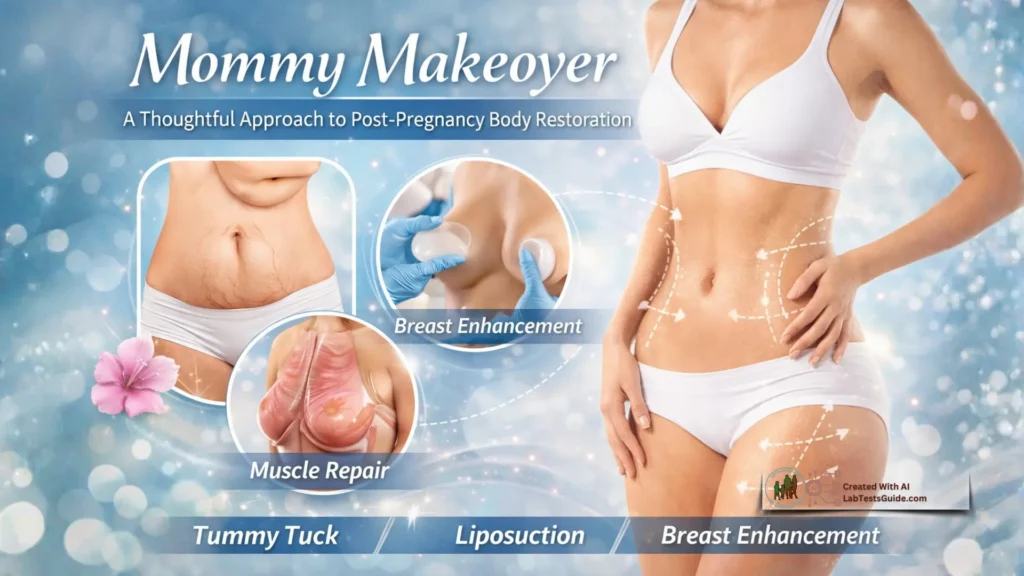
This is where the concept of a Mommy Makeover becomes relevant—not as a trend, but as a structured medical approach to restoring form, balance, and function after pregnancy.
At Liv Hospital, postpartum restoration is typically treated as a personalized plan rather than a one-size-fits-all operation. The focus is not on changing identity, but on helping the body recover its structural harmony after the physical demands of pregnancy and breastfeeding.
Why Postpartum Changes Are Often “Resistant” to Lifestyle Efforts
A key reason many mothers feel frustrated is that postpartum concerns are not always about fat or fitness. In reality, several changes occur at a deeper level:
Skin laxity is structural, not metabolic
If skin fibers (collagen and elastin) are stretched too far, the skin may not retract fully—especially around the lower abdomen.
Muscle separation can create a persistent bulge
A condition called diastasis recti can cause the abdominal wall to lose stability. Even with strong muscles, the midline may remain widened, allowing the belly to protrude.
Breast volume changes are not “fat gain”
Breasts may enlarge during pregnancy and breastfeeding, then deflate afterward. This often leads to:
- loss of upper fullness
- sagging
- asymmetry
Fat distribution may shift
Some women notice new fat deposits in:
- flanks (“love handles”)
- back
- lower abdomen
These may be stubborn despite consistent training.
What a Mommy Makeover Actually Means (And What It Doesn’t)
A Mommy Makeover is not a single surgery. It’s a combination of procedures chosen based on the individual’s anatomy and goals. It is also not meant for weight loss.
Instead, it’s closer to a “reconstruction-style” plan that targets the most common postpartum areas:
- abdomen
- breasts
- waistline and flanks
- skin excess
The idea is to restore the body’s contour as a connected whole, rather than treating each concern separately over multiple years.
This is why PLASTIC SURGERY Mommy Makeover is often described as a comprehensive restoration procedure: it addresses multiple systems affected by pregnancy (skin, fascia, muscle, and volume).
The Core of the Mommy Makeover: The AbdomenWhy the abdomen becomes the “center” of the makeover
For many women, the abdomen is the area that changes most visibly and functionally after pregnancy. A tummy tuck (abdominoplasty) may be recommended when there is:
- loose, hanging skin
- stretch marks concentrated in the lower abdomen
- muscle separation causing a bulge
- persistent skin folds
A common misconception is that a tummy tuck is simply “skin removal.” In reality, it often includes tightening the inner fascial layer that supports the abdominal wall—this is what helps restore a flatter contour and a stronger core foundation.
The Breast Component: Lift, Volume, or Both
Postpartum breast changes are typically related to the “inflate and deflate” cycle. The breast skin stretches, and the internal tissue may lose firmness. Depending on the person, restoration may involve:
Breast lift (mastopexy)
Often chosen when the main concern is:
- sagging
- nipple position dropping
- stretched breast skin
Augmentation (implants or fat transfer)
Often chosen when the main concern is:
- loss of fullness
- “empty” look at the top of the breast
- reduced breast size
Lift + augmentation
Used when both sagging and volume loss are present.
The key is proportion: the breast result should look natural with the waist and hip structure, not overly emphasized.
Liposuction: Not for Weight Loss, But for Shape
In a Mommy Makeover plan, liposuction is usually used to refine transition zones such as:
- waistline
- flanks
- lower back
- bra line
This is important because body contouring is not only about making one area smaller—it’s about improving the “flow” between body regions. A flatter abdomen looks better when the waist is more defined, and the torso appears more balanced from all angles.
Why Planning Matters More Than People Realize
A Mommy Makeover is often discussed casually online, but medically it requires careful planning. Surgeons evaluate:
- skin elasticity and thickness
- amount of muscle separation
- fat distribution (subcutaneous vs visceral)
- scar placement based on clothing lines
- safety considerations for combined procedures
Good planning reduces the risk of:
- uneven contours
- unnatural tightness
- poor scar positioning
- prolonged swelling
Timing: When Is the Right Time to Consider It?
Many surgeons recommend waiting until:
- weight is stable for several months
- breastfeeding has stopped
- the body has recovered hormonally
- future pregnancies are not planned soon
This is because pregnancy after surgery can reverse muscle tightening and stretch skin again.
A Balanced Mindset: The Most Important Part of Postpartum Restoration
One of the most overlooked aspects of postpartum body change is the psychological weight. Many women don’t necessarily want a “perfect” body—they want to feel like their body belongs to them again. That sense of comfort can come from:
- improved fit in clothing
- better posture and core stability
- less discomfort from skin folds
- restored confidence in social settings
A Mommy Makeover is not about erasing motherhood—it is about supporting recovery after the physical intensity of it.
And for those focusing on post-surgery lifestyle habits (sleep, stress reduction, nutrition, movement routines), wellness platforms like live and feel can be a helpful resource when approached as part of a long-term self-care routine rather than a quick fix.