

Are you aware of your jaw clicking when chewing or yawning? Do you have a constant pain in your jaw, tension in your temples, or headaches that appear without any prior notice? Perhaps your jaw is tight at times or even freezes, and it becomes hard to eat or talk comfortably. These symptoms are frequent and largely ignored, but they may be indicative of a more severe condition, which is temporomandibular joint disorder or TMJ disorder.
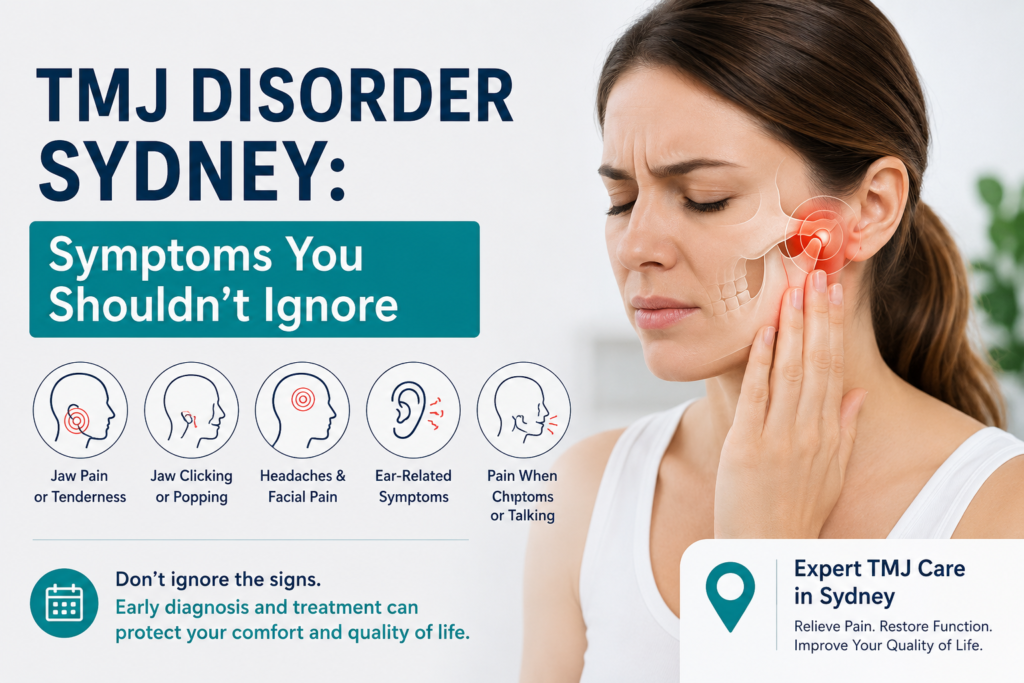
Many people dismiss these warning signs as stress, tiredness, or minor jaw strain. But when they persist, they can interfere with everyday life, affect your sleep, and even lead to long-term complications if left untreated. If you are in Sydney and experiencing any of these symptoms, it is important to understand what they mean and when it is time to consult a TMJ specialist in Sydney.
What Is the Temporomandibular Joint?
These are the two hinge-shaped joints that join the lower jaw with the skull that are in front of each ear – the temporomandibular joints. They are among the most complicated and commonly used joints of the body. It enables you to open and close your mouth, move horizontally, speak, yawn, chew, laugh and even swallow.
TMJ disorders are caused by the failure of these joints to function well or the muscles surrounding them. It causes pain, stiffness, restricted movement, and other symptoms. Although the noises in the jaw may seem harmless occasionally, the symptoms should not be overlooked when persistent or painful.
Common TMJ Disorder Symptoms to Watch For
Symptoms vary from person to person, but there are several key signs that frequently appear together.
Jaw Clicking or Popping
Jaw clicking or popping is one of the most noticeable early signs of a TMJ problem. You might hear a click, pop, or grating sound when opening or closing your mouth, chewing, or talking.
Other joint sounds are not harmful in themselves, but when they are combined with pain or restricted movement, it is more likely that it is a TMJ disorder. Dentists in clinical practice seek audible or palpable clicking with a combination of other symptoms to indicate underlying joint or disc displacement.
Jaw Pain or Tenderness
Jaw pain or tenderness is often the first symptom people notice. A persistent ache around the jaw joint, muscles, or in front of the ears that worsens when chewing or yawning is a common sign. Pain can also radiate into the temples, neck, or shoulders. Some people feel a dull ache; others, sharp pain. Either way, if it keeps coming back or gets worse over a few weeks, you should get it checked.
Limited Jaw Movement or Locking
Limited jaw movement or locking is one of the more upsetting signs of TMJ problems. It is simply stiff or difficult to move sometimes. This usually happens when the cartilage in the joint slips out of place and stops the jaw from moving smoothly.
Facial Pain and Headaches
TMJ disorder problems can also cause headaches or facial pain. Because the jaw muscles and nerves connect to the head and neck, TMJ issues can lead to tension headaches, migraines or soreness around the temples and cheeks. Sometimes it even feels like an earache, even though your ear is fine.
Jaw Clicking with Pain
Clicking with pain or limited movement is a strong sign of TMJ disorder. A click alone is not always serious, but it comes with other symptoms. So you should pay attention to it.
Ear-Related Symptoms
Pain, fullness, or ringing in the ears without hearing loss can be linked to TMJ issues. The joint is close to the ear, so problems there can feel like an ear infection or sinus trouble.
Pain When Chewing or Talking
If your jaw feels sore when you chew, yawn, or talk for a while, it is a sign that the joint or muscles are under strain.
Why You Shouldn’t Ignore These Symptoms
Several TMJ symptoms can resolve on their own in a few weeks. Some occasional clicking or a slight soreness following dental work or trauma does not seem to be a problem. But when the symptoms continue, develop, or affect everyday life, it is possible to have severe problems, including:
- Chronic jaw pain
- Restricted jaw movement or function
- Worsening bite alignment and increased tooth wear
- Muscle tension and headaches
- Sleep disruption
- Difficulty eating and speaking comfortably
- Increased emotional stress and reduced quality of life
- Altered tooth alignment affects overall oral health and posture.
Common Causes of TMJ Disorders
Knowing what can cause TMJ problems can help you notice symptoms sooner. They can happen for one or more of these reasons:
- Teeth grinding or clenching (Bruxism), often at night
- Stress and jaw tension that overload the muscles and joints
- Misaligned bite or crooked teeth
- Trauma or injury to the jaw or face
- Arthritis or joint inflammation
- Poor posture
- Developmental differences in jaw structure
They may happen both separately and in combination, which strains the joint and muscles and causes dysfunction.
When Should You See a TMJ Specialist
It is a symptom of consulting an experienced TMJ practitioner if there is persistent jaw clicking and pain, locking, frequent headaches, or stiffness. Proper diagnosis includes an extensive history and physical examination, palpation of the muscles and joints, listening to the sounds of the joints and imaging when necessary.
Dentists trained in TMJ disorders can assess your bite, movement, and symptoms to create a treatment plan suited to your needs. In Sydney, The Paddington Dental Surgery specialists trained in TMJ care, including oral medicine dentists, orofacial pain experts, and TMJ-trained clinicians are best placed to interpret symptoms and guide management. This is exactly what you will find when you consult our TMJ specialist.
How TMJ Disorders Are Treated
TMJ treatment is not one-size-fits-all. Depending on the severity and symptoms, approaches usually include conservative, dental, and advanced care.
Conservative care
You can rest your jaw, do light stretches, de-stress, eat soft food and not eat hard or chewy food. It can also be differentiated by using heat/cold packs, strengthening your posture, and relaxing your jaw muscles.
Dental treatments
Dentists can fit bite splints or night guards to stop grinding, fix bite problems with braces or other dental work, and adjust your teeth to balance your bite.
Advanced care
In some cases, muscle-relaxing injections like Botox may help. Your jaw and neck can also be treated through physiotherapy. Medications may be used to reduce pain and swelling. In severe cases one has to resort to dental surgery especially when the joint is damaged.
Most people get better with a mix of simple care and dental treatment.
Recommended TMJ Disorder Lab Tests
TMJ disorder is diagnosed primarily through physical exams and imaging rather than direct lab work. However, doctors use specific blood tests and scans to rule out underlying conditions like arthritis, infections, or connective tissue diseases.
Under the advice of the TMJ therapy specialist, the recommended diagnostic tests are as follows:
- Complete Blood Count (CBC): Checks white blood cell levels to look for active infections.
- ESR and CRP: Measures general inflammation markers in the body.
- RF and Anti-CCP: Screens for rheumatoid arthritis.
- Antinuclear Antibody (ANA): Evaluates for autoimmune disorders like lupus.
- Uric Acid: Tests for gout affecting the jaw joint.
- MRI Scan: Provides clear views of soft tissues, tracking joint inflammation and the position of the TMJ articular disc.
- CBCT Scan: Captures detailed, 3D images of bone to look for structural changes or arthritic wear.
If you need to book these tests locally, you can check providers like Australian Clinical Labs, Laverty Pathology or SydPath or review evaluation guidelines on the Lab Tests Guide. For an accurate diagnostic plan, consult an orofacial pain dentist, a rheumatologist, or an oral and maxillofacial surgeon.
Take Action Today!
Your jaw is important, and problems with it are your body’s way of saying something’s wrong. If your jaw clicks, hurts, locks, or causes headaches or ear discomfort, do not ignore it. It can be a TMJ disorder. If these issues keep coming back, make everyday life harder, or mess with your sleep, see our TMJ specialist Sydney. Immediate attention can make eating, talking, and laughing comfortable every day.
