

Quick Overview
Travel Nurse is a licensed nurse who works through temporary clinical assignments at hospitals, clinics, and other healthcare facilities. This comprehensive guide explains Travel Nurse responsibilities, qualifications, licensing,…
- CategoryNursing Careers
- Read time10 min
- UpdatedSep 2026

Table of Contents
Travel Nurse
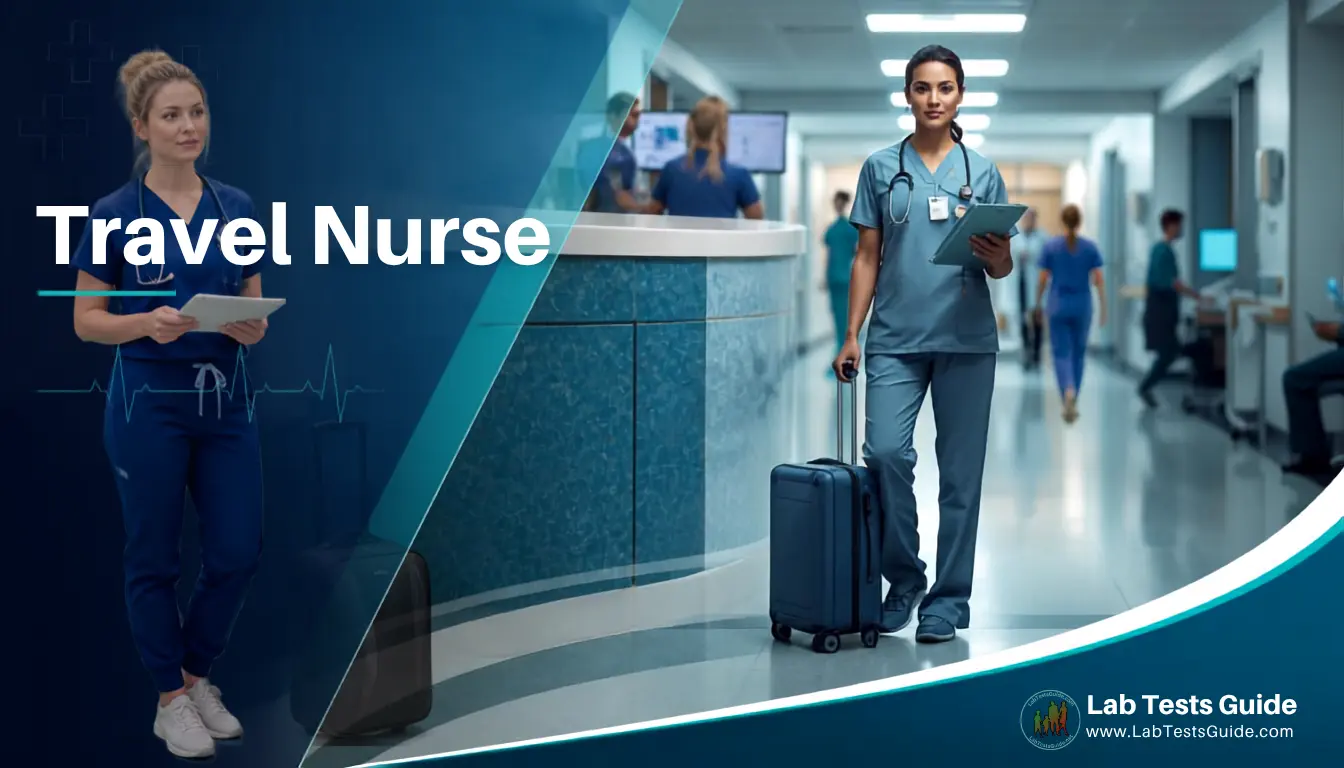
What Is a Travel Nurse?
A Travel Nurse is a licensed nurse who accepts temporary clinical assignments at healthcare facilities, often to address staffing needs or provide nursing services for a defined period. Travel Nurses may work in hospitals, clinics, specialty facilities, and other healthcare environments across different geographic locations.
Travel Nurse is generally not a separate nursing license or protected universal credential. Travel Nurses work under the nursing license and credentials required by the jurisdiction where they practice. Requirements, assignment conditions, scope of practice, compensation, housing, benefits, and licensing rules vary by jurisdiction, employer, facility, specialty, and contract.
Travel Nursing offers opportunities for diverse clinical experiences, professional growth, and geographic flexibility.
What Does a Travel Nurse Do?
Direct patient care
Providing comprehensive nursing care.
Patient assessment
Performing health assessments.
Care planning
Contributing to care plans.
Monitoring patient status
Observing and evaluating patient condition.
Medication administration
Administering medications within scope.
Documentation
Accurate clinical charting.
Patient education
Educating patients and families.
Care coordination
Coordinating patient care.
Communication
Communicating with healthcare team.
Specimen collection
Collecting laboratory specimens.
Lab result communication
Communicating laboratory results.
Infection prevention
Following infection control practices.
Patient safety
Promoting safe patient care.
Shift handoff
Safe handoff communication.
Discharge support
Supporting patient discharge.
Exact responsibilities depend on specialty, assignment, and facility.
How Travel Nursing Works
Travel Nurse Eligibility and Qualifications
- Appropriate nursing license – Valid license in the jurisdiction of practice.
- Required education – Nursing education as required.
- Clinical experience – Direct patient care experience.
- Specialty experience – Experience in the assignment specialty.
- Current professional credentials – BLS, ACLS, PALS, or other required certifications.
- Immunization/health screening – Facility requirements.
- Background checks – Criminal background screening.
- Competency verification – Clinical competence validation.
- Facility-specific requirements – Additional assignment requirements.
Requirements differ by assignment and jurisdiction.
Travel Nurse Licensing
- Nursing licensure – Required license for practice.
- State/provincial requirements – Jurisdictional licensing rules.
- Multistate licensing – Where applicable.
- License verification – Verification of credentials.
- Temporary licensing – Assignment-specific licensing pathways.
- Employer credentialing – Facility-specific credentialing.
- Scope-of-practice requirements – Following local scope rules.
One license does not automatically permit practice everywhere. Licensing rules vary by jurisdiction.
Travel Nurse Specialties
Medical-Surgical
General inpatient care.
Intensive Care Unit (ICU)
Critical care.
Emergency Department (ED)
Emergency care.
Operating Room (OR)
Surgical care.
Labor and Delivery
Obstetric care.
Pediatrics
Children’s healthcare.
Oncology
Cancer care.
Telemetry
Cardiac monitoring.
Step-Down/Progressive Care
Intermediate care.
Home Health
Community-based care.
Assignment availability and requirements vary by specialty and location.
Travel Nurse and Laboratory Testing
Travel Nurses interact with laboratory testing through:
- Patient identification – Verifying patient identity.
- Specimen collection – Collecting specimens as assigned.
- Correct specimen containers – Using appropriate materials.
- Labeling – Accurate specimen labeling.
- Collection timing – Appropriate timing of collection.
- Specimen transport – Proper transport to laboratory.
- Point-of-care testing – Bedside testing where authorized.
- Recognizing compromised specimens – Identifying quality issues.
- Communicating laboratory results – Sharing findings with team.
- Critical-result notification – Timely communication of critical results.
- Documentation – Recording laboratory-related care.
- Following facility-specific procedures – Adhering to local policies.
- Preventing pre-analytical errors – Reducing errors before analysis.
Common Laboratory Tests Travel Nurses Encounter
| Laboratory Test | General Purpose | Nursing Considerations |
|---|---|---|
| CBC | Blood cells, hemoglobin, platelets | Specimen handling, result communication |
| BMP | Electrolytes, renal markers, glucose | Timely collection, result review |
| CMP | Metabolic and liver markers | Proper labeling, transport |
| Blood Glucose | Blood sugar | Point-of-care testing, documentation |
| PT/INR | Coagulation | Specimen handling, result communication |
| aPTT | Coagulation pathway | Proper collection, timely transport |
| ABG | Oxygenation, ventilation, acid-base | Proper handling, immediate processing |
| Urinalysis | Urinary findings | Specimen collection, labeling |
| Lactate | Tissue hypoperfusion marker | Timely processing, result communication |
| Troponin | Cardiac injury marker | Result monitoring, timely communication |
| Blood Culture | Microorganisms in blood | Aseptic technique, contamination prevention |
Test selection and interpretation depend on clinical context. Travel Nurses must follow host facility policies.
Travel Nurse and Specimen Quality
Travel Nurses can help prevent specimen-related errors through:
- Correct patient identification – Using two identifiers.
- Proper collection technique – Following facility protocols.
- Correct container/tube – Using appropriate materials.
- Correct specimen volume – Adequate sample quantity.
- Accurate labeling – Complete and accurate labeling.
- Appropriate timing – Collecting at the right time.
- Proper storage and transport – Maintaining specimen integrity.
- Avoiding contamination – Preventing specimen contamination.
- Recognizing hemolysis – Identifying compromised specimens.
- Following facility policies – Adhering to local protocols.
- Communicating with laboratory staff – Effective collaboration.
Travel Nurse and Patient Safety
Patient identification
Correct patient verification.
Infection prevention
Following infection control.
Medication safety
Safe medication practices.
Fall prevention
Risk identification.
Clinical handoffs
Safe handoff communication.
Documentation
Accurate clinical records.
Equipment safety
Using equipment properly.
Monitoring
Continuous patient monitoring.
Escalation
Escalating concerning changes.
Emergency preparedness
Ready for emergencies.
Familiarization
Learning local policies.
Orientation for Travel Nurses
- EHR systems – Learning facility documentation.
- Unit layout – Locating supplies and equipment.
- Emergency procedures – Codes and emergency response.
- Medication systems – Pyxis/Omnicell and medication administration.
- Laboratory procedures – Specimen collection and transport.
- Equipment – Using facility-specific equipment.
- Staffing structure – Team and reporting relationships.
- Communication systems – Phones, call bells, messaging.
- Documentation requirements – Charting and record-keeping.
- Local policies – Unit and hospital policies.
- Escalation pathways – How to escalate concerns.
Travel Nurse Communication
Travel Nurses communicate with:
SBAR (Situation, Background, Assessment, Recommendation) is a common structured communication framework.
Travel Nurse Contracts
- Assignment location – City, state, facility.
- Assignment duration – Length of contract (e.g., 8-13 weeks).
- Shift – Day, night, rotating.
- Scheduled hours – Hours per week.
- Specialty – Clinical specialty assigned.
- Start date – Assignment start.
- End date – Assignment end.
- Compensation structure – Base pay, differentials.
- Housing arrangements – Agency or stipend.
- Benefits – Health insurance, 401(k), etc.
- Travel reimbursement – Mileage or stipends.
- Cancellation terms – Cancellation policies.
- Extension options – Renewal possibilities.
- Credentialing requirements – Required documents.
Contract terms vary substantially. Always review contracts carefully.
Travel Nurse Agencies
- Assignment matching – Connecting nurses with facilities.
- Credentialing – Verifying licenses and credentials.
- Contract administration – Managing contracts.
- Communication with facilities – Liaison between parties.
- Payroll – Processing compensation.
- Benefits – Offering benefits where applicable.
- Travel assistance – Help with logistics.
Some nurses work through agencies while others may use direct-hire or facility-specific temporary arrangements.
Travel Nurse Housing and Relocation
- Temporary housing – Short-term accommodations.
- Employer/agency housing – Agency-provided options.
- Housing stipends – Allowances for housing.
- Commute – Distance to facility.
- Location – Neighborhood and amenities.
- Assignment duration – Length of stay.
- Utilities – Included or separate.
- Furnishings – Furnished vs unfurnished.
- Safety – Neighborhood safety.
- Transportation – Access to transportation.
Travel Nurse Compensation
- Base pay – Hourly or weekly rate.
- Overtime – Overtime pay where applicable.
- Housing arrangements – Provided housing or stipends.
- Travel reimbursement – Mileage or travel stipends.
- Benefits – Health, dental, vision, retirement.
- Bonuses – Sign-on or completion bonuses.
- Shift differentials – Extra pay for nights/weekends.
- Contract-specific incentives – Assignment-specific perks.
Travel Nurse Benefits
- Professional flexibility – Choose assignments.
- Exposure to different healthcare systems – Diverse clinical environments.
- Specialty experience – Work in various specialties.
- Networking – Build professional connections.
- Geographic mobility – Travel to different locations.
- Professional growth – Develop clinical skills.
- Temporary work arrangements – Flexible employment.
- Exposure to different clinical environments – Varied experiences.
Challenges of Travel Nursing
- Frequent relocation
- Adapting to new facilities
- Different EHR systems
- Different policies and procedures
- Short orientation periods
- Changing teams
- Housing logistics
- Licensing requirements
- Contract uncertainty
- Maintaining personal routines
- Separation from established support networks
Travel Nurse vs Staff Nurse
| Feature | Travel Nurse | Staff Nurse |
|---|---|---|
| Employment Arrangement | Temporary contract | Permanent employee |
| Assignment Duration | Weeks to months | Ongoing |
| Facility Continuity | Changes frequently | Same facility |
| Orientation | Short (days to weeks) | Extended (weeks to months) |
| Scheduling | Contract-defined | Facility-defined |
| Relocation | Frequent | Stable |
| Compensation | Contract-based | Salary/hourly |
| Familiarity | Must adapt quickly | Knows facility systems |
| Career Flexibility | High | Limited to local |
Essential Travel Nurse Skills
Travel Nurse Career Pathway
Actual pathways vary. Many travel assignments require prior clinical experience.
Travel Nursing for New Nurses
Many travel assignments require prior clinical experience. Considerations include:
- Clinical independence – Working with minimal supervision.
- Familiarity with patient-care workflows – Understanding clinical processes.
- Specialty competency – Competence in the assignment area.
- Adaptability – Adjusting to new environments.
- Facility orientation limitations – Short orientation periods.
Not all travel agencies require the same amount of experience.
Common Travel Nurse Abbreviations
| Abbreviation | Meaning |
|---|---|
| RN | Registered Nurse |
| LPN | Licensed Practical Nurse |
| LVN | Licensed Vocational Nurse |
| BSN | Bachelor of Science in Nursing |
| MSN | Master of Science in Nursing |
| APRN | Advanced Practice Registered Nurse |
| ICU | Intensive Care Unit |
| ED | Emergency Department |
| OR | Operating Room |
| EHR | Electronic Health Record |
| SBAR | Situation, Background, Assessment, Recommendation |
| PPE | Personal Protective Equipment |
| PT | Prothrombin Time |
| INR | International Normalized Ratio |
| aPTT | Activated Partial Thromboplastin Time |
| ABG | Arterial Blood Gas |
Abbreviations may have multiple meanings depending on context.
Frequently Asked Questions
What is a Travel Nurse?
A Travel Nurse is a licensed nurse who accepts temporary clinical assignments at healthcare facilities in different locations.
Is Travel Nurse a separate nursing license?
No, Travel Nurse is an employment/work-arrangement role, not a separate nursing license.
What does a Travel Nurse do?
Travel Nurses provide direct patient care, assess patients, administer medications, document, educate patients, and coordinate care at temporary assignments.
How does travel nursing work?
Nurses apply for temporary assignments, complete credentialing, relocate, complete orientation, and begin their contract at the host facility.
What qualifications do Travel Nurses need?
A nursing license, required education, clinical experience, and facility-required certifications.
How much nursing experience is needed for travel nursing?
Many assignments require prior clinical experience. Requirements vary by agency and assignment.
Can new nurses become Travel Nurses?
Many travel assignments require prior clinical experience. Some agencies may accept new nurses for certain assignments.
Do Travel Nurses need an RN license?
Travel Nurses must hold the appropriate license for the jurisdiction where they practice.
Can an LPN/LVN work as a Travel Nurse?
Yes, some travel assignments are available for LPNs and LVNs.
What specialties are available for Travel Nurses?
Medical-Surgical, ICU, ED, OR, Labor and Delivery, Pediatrics, Oncology, and many others.
How long is a typical travel nursing assignment?
Usually 8 to 13 weeks, but assignments can vary.
Do Travel Nurses receive hospital orientation?
Yes, Travel Nurses receive orientation at each new facility, though it may be shorter than for permanent staff.
Do Travel Nurses collect laboratory specimens?
Yes, Travel Nurses may collect specimens as part of patient care, following facility policies.
How do Travel Nurses handle laboratory testing at a new facility?
They learn and follow the host facility’s policies, specimen collection procedures, and result communication processes.
What is the difference between a Travel Nurse and Staff Nurse?
Travel Nurses work temporary contracts at different facilities; Staff Nurses are permanent employees at one facility.
What is the difference between a Travel Nurse and an Agency Nurse?
Travel Nurses typically relocate for assignments, while Agency Nurses may work locally on a per-diem or temporary basis.
How do Travel Nurse contracts work?
Contracts specify location, duration, shift, hours, compensation, housing, and other terms.
Do Travel Nurses receive housing?
Some agencies provide housing or offer housing stipends. Terms vary by contract.
What are the benefits of travel nursing?
Flexibility, diverse experience, professional growth, networking, and geographic mobility.
What are the challenges of travel nursing?
Frequent relocation, adapting to new facilities, changing teams, and contract uncertainty.
Can internationally educated nurses become Travel Nurses?
Yes, they must meet jurisdictional licensing, credential evaluation, and work authorization requirements.
How can an RN become a Travel Nurse?
Through gaining clinical experience, obtaining required licenses/certifications, and applying to travel nursing agencies.
Key Takeaways
- Travel Nurses provide nursing care through temporary assignments.
- They must meet applicable licensing and credentialing requirements.
- Travel Nurses adapt quickly to different facilities and clinical environments.
- They follow host-facility policies and procedures.
- Travel Nurses support patient safety and quality care.
- They may collect specimens and interact extensively with laboratory services.
- Travel Nurses need strong communication and adaptability skills.
- Travel Nursing offers diverse professional and clinical experience.
Related LabTestsGuide Topics
The information provided on this page is for educational purposes only and does not constitute medical or legal advice. Always consult the appropriate regulatory body for specific licensing and scope of practice requirements.
Related
Nurse Manager
A Nurse Manager provides leadership and operational oversight for nursing teams, helping coordinate staffing, patient safety, quality improvement, staff development, resources, and clinical workflows.…

Nurse Educator
A Nurse Educator prepares and develops nurses through classroom teaching, clinical instruction, simulation, skills training, competency assessment, and evidence-based practice. Learn about Nurse Educator…
Discussion 0