

Nurse Practitioner (NP)
What Is a Nurse Practitioner?
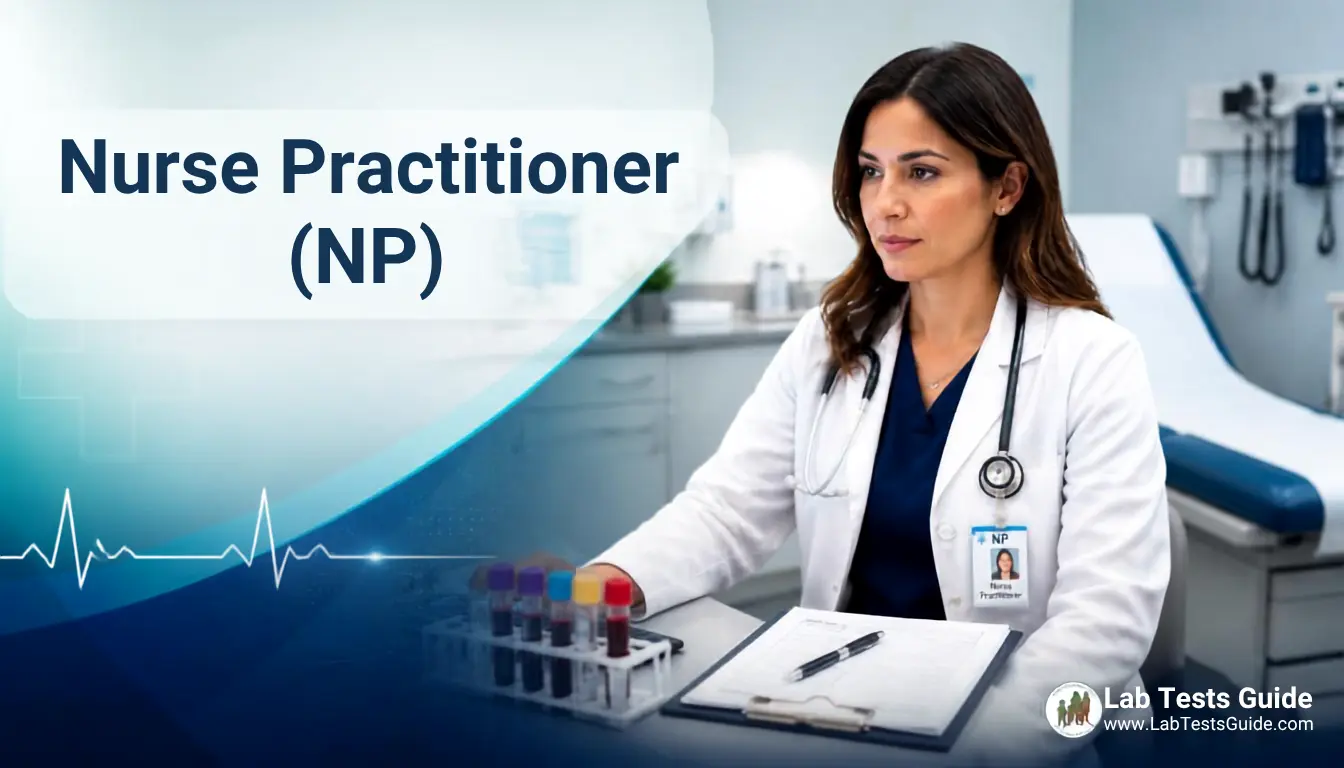
A Nurse Practitioner (NP) is an advanced practice registered nurse who has completed graduate-level education and clinical training in a specialty area. NPs are prepared to provide comprehensive healthcare services, including:
- Taking patient histories and performing physical examinations
- Diagnosing and treating acute and chronic conditions (where authorized)
- Ordering and interpreting diagnostic tests, including laboratory tests
- Prescribing medications and therapies (where authorized)
- Providing health promotion and disease prevention education
- Managing patient care and coordinating with other healthcare professionals
NPs combine the nursing perspective with advanced clinical expertise to deliver patient-centered, holistic care. The exact scope of practice, including diagnostic and prescribing authority, varies by jurisdiction.
Always follow applicable laws, regulations, and institutional policies regarding NP scope of practice.
What Does a Nurse Practitioner Do?
Taking histories
Comprehensive medical and health histories.
Physical examinations
Complete and focused physical exams.
Assessing patients
Clinical assessment and evaluation.
Developing differential diagnoses
Where within scope of practice.
Diagnosing conditions
Where authorized by jurisdiction.
Ordering laboratory tests
Where authorized by jurisdiction.
Ordering diagnostic studies
Imaging and other studies where authorized.
Interpreting clinical information
Reviewing and analyzing data.
Developing treatment plans
Comprehensive care planning.
Prescribing medications
Where authorized by jurisdiction.
Managing chronic diseases
Ongoing disease management.
Providing preventive care
Health promotion and screening.
Patient education
Health education and counseling.
Coordinating referrals
Connecting patients with specialists.
Monitoring treatment response
Ongoing evaluation and follow-up.
Documenting patient care
Accurate clinical documentation.
Activities marked “where authorized” depend on jurisdiction, specialty, and applicable regulations.
Nurse Practitioner Scope of Practice
The scope of practice for a Nurse Practitioner defines the procedures, actions, and processes that an NP is authorized to perform. Scope is determined by:
- State/jurisdictional regulations – Nursing practice acts define legal authority.
- Nursing practice acts – State nursing boards establish NP regulations.
- NP licensure – Advanced practice licensure or recognition.
- Specialty certification – National certification in a specialty area.
- Prescriptive authority – Authorization to prescribe medications.
- Diagnostic authority – Authority to make diagnoses.
- Ordering authority – Authority to order tests and studies.
- Practice independence – Full, reduced, or restricted practice authority.
- Collaboration requirements – Where collaboration is required by law.
- Employer and institutional policies – Facility-specific scope restrictions.
NP vs APRN
APRN is the broader category; NP is one type of APRN.
Every NP is generally considered an APRN, but not every APRN is an NP. The NP role focuses on direct patient care, diagnosis, and treatment management, while other APRN roles have different clinical focuses.
NP vs RN
| Feature | Nurse Practitioner | Registered Nurse |
|---|---|---|
| Abbreviation | NP | RN |
| Professional Level | Advanced practice nursing | Registered nursing |
| Education | Advanced nursing education | Approved RN education |
| Assessment | Advanced assessment | Nursing assessment |
| Diagnosis | May diagnose where authorized | Generally not an independent diagnosing role |
| Treatment | May manage treatment where authorized | Provides nursing care and implements authorized plans |
| Prescribing | May prescribe where authorized | Generally not an independent prescribing role |
| Laboratory Testing | May order/review tests where authorized | May collect/monitor tests within role and policy |
| Practice Authority | Jurisdiction-dependent | Jurisdiction-dependent |
Actual responsibilities depend on jurisdiction, specialty and employer policies.
NP vs Physician
| Feature | Nurse Practitioner | Physician |
|---|---|---|
| Educational Pathway | Nursing education + advanced nursing degree | Medical school + residency |
| Professional Training | Nursing and advanced clinical training | Medical and specialty training |
| Clinical Role | Advanced nursing practice | Medical diagnosis and treatment |
| Nursing Foundation | Strong nursing foundation | No nursing foundation |
| Diagnostic Responsibilities | May diagnose where authorized | Full diagnostic authority |
| Treatment Management | May manage treatment where authorized | Full treatment authority |
| Prescribing | May prescribe where authorized | Full prescribing authority |
| Laboratory Testing | May order and review tests where authorized | Full test ordering and interpretation |
| Practice Authority | Varies by jurisdiction | Generally full practice authority |
NPs and physicians are distinct healthcare professionals who may provide overlapping services while following different educational and regulatory pathways. Both are essential to the healthcare team.
NP Education & Training
NP education commonly includes advanced coursework in:
- Advanced health assessment – Comprehensive physical and health assessment.
- Advanced pathophysiology – Complex disease processes.
- Pharmacology – Advanced pharmacotherapeutics.
- Clinical diagnosis – Diagnostic reasoning and differential diagnosis.
- Health promotion – Preventive care and wellness.
- Disease management – Acute and chronic condition management.
- Specialty-specific clinical practice – Focused clinical training in the NP’s chosen specialty.
Exact requirements vary by program and jurisdiction.
NP Certification
- Specialty certification – National certification in the NP’s clinical specialty.
- National certification organizations – Examples: ANCC, AANP, PNCB, NCC.
- Role-specific credentials – FNP-BC, ACNP-BC, PMHNP-BC, etc.
- Certification maintenance – Renewal typically requires CE and practice hours.
- Continuing education – Required for certification and license renewal.
- Relationship to licensure – Certification is often required for NP licensure/recognition.
Certification requirements and credentialing pathways vary by specialty and jurisdiction.
NP Specialties
Family Nurse Practitioner (FNP)
Primary and family-focused care across a broad patient population, from pediatrics to geriatrics.
Adult-Gerontology NP
Care for adult and older adult populations in primary or acute care settings.
Acute Care NP (ACNP)
Care for patients with complex, acute or critical illnesses in hospital settings.
Pediatric NP (PNP)
Healthcare for infants, children and adolescents in primary or acute care.
Psychiatric-Mental Health NP (PMHNP)
Mental and behavioral healthcare across the lifespan.
Neonatal NP (NNP)
Advanced care for newborns and critically ill neonates.
Women’s Health NP (WHNP)
Women’s health across appropriate life stages, including reproductive health.
Exact specialty titles and credentialing requirements can vary by jurisdiction.
Common NP Work Settings
Primary care clinics
Comprehensive primary healthcare.
Family practices
Care across the lifespan.
Specialty clinics
Cardiology, endocrinology, oncology, etc.
Hospitals
Inpatient, acute, and specialty hospital care.
Emergency departments
Acute and emergency care.
Urgent care
Same-day acute care services.
Intensive care units
Critical care and complex patient management.
Community health centers
Community-based primary care.
Women’s health clinics
Reproductive and gynecological care.
Pediatric practices
Care for children and adolescents.
Mental health services
Psychiatric and behavioral health.
Long-term care
Care for older adults in residential settings.
Academic/educational settings
Teaching and research.
Nurse Practitioners and Laboratory Tests
NPs may interact with laboratory medicine by:
- Selecting appropriate tests – Choosing the right test for the clinical presentation (where authorized).
- Ordering laboratory tests – Placing orders for diagnostic testing (where authorized).
- Reviewing laboratory results – Analyzing test results as part of patient care.
- Interpreting results within clinical context – Correlating lab findings with history, exam, and other data.
- Monitoring chronic diseases – Using lab data to track disease progression.
- Monitoring medication effects – Assessing therapeutic response and adverse effects.
- Evaluating treatment response – Determining effectiveness of interventions.
- Ordering follow-up testing – When appropriate and authorized.
- Communicating results to patients – Explaining findings and implications.
- Coordinating care – Collaborating with laboratory professionals and other clinicians.
Patient Assessment → Clinical Question → Laboratory Test → Specimen Collection → Laboratory Analysis → Result → Clinical Interpretation → Treatment / Follow-Up
Test-ordering authority depends on jurisdiction, NP role, clinical setting and applicable regulations.
Common Laboratory Tests NPs May Order or Review
| Test | Common Clinical Purpose |
|---|---|
| CBC | Evaluates blood cell counts |
| CMP | Evaluates metabolic, kidney and liver-related markers |
| BMP | Evaluates glucose, electrolytes and kidney-related markers |
| HbA1c | Assesses longer-term blood glucose control |
| Lipid Panel | Evaluates cholesterol and triglycerides |
| TSH | Helps evaluate thyroid function |
| Free T4 | Assesses thyroid hormone status |
| PT/INR | Evaluates aspects of blood coagulation |
| aPTT | Evaluates part of the coagulation pathway |
| Urinalysis | Evaluates urine characteristics and abnormalities |
| Urine Culture | Helps identify urinary pathogens |
| Blood Culture | Helps detect microorganisms in blood |
| Troponin | Helps evaluate myocardial injury |
| CRP | Marker associated with inflammation |
| ESR | Nonspecific inflammatory marker |
| Creatinine | Helps assess kidney function |
| eGFR | Estimates kidney filtration |
| Liver Enzymes | Helps evaluate liver injury/function |
Test-ordering authority depends on jurisdiction, NP role, clinical setting and applicable regulations.
NP Clinical Assessment
NPs perform comprehensive assessments using a combination of:
- Patient history – Chief complaint and history of present illness.
- Review of systems – Systematic evaluation of organ systems.
- Medication history – Current medications, prescriptions, and OTC drugs.
- Allergies – Medication, environmental, and food allergies.
- Vital signs – Temperature, pulse, respiration, blood pressure, SpO₂, pain.
- Physical examination – Comprehensive or focused physical assessment.
- Laboratory results – Current and previous lab values.
- Diagnostic imaging – X-rays, CT scans, MRI, ultrasound, etc.
- Risk factors – Genetic, environmental, and lifestyle risk factors.
- Family history – Hereditary and familial conditions.
- Social history – Living situation, support system, occupation, etc.
All of these pieces contribute to clinical decision-making, differential diagnosis, and treatment planning.
NP Diagnosis & Treatment
NPs may, where authorized:
- Identify health problems – Recognize and define clinical issues.
- Establish diagnoses – Formal diagnosis of conditions.
- Develop treatment plans – Comprehensive management strategies.
- Prescribe medications – Pharmacologic therapy where authorized.
- Order laboratory testing – Diagnostic and monitoring testing.
- Order imaging – Diagnostic imaging studies.
- Provide counseling – Patient education and health promotion.
- Manage chronic disease – Ongoing disease management.
- Provide follow-up care – Monitoring and reevaluation.
- Refer patients to specialists – Coordinating specialty care.
Legal authority to perform these activities varies by jurisdiction.
NP Medication Management
Medication reconciliation
Reviewing and verifying medication lists.
Medication selection
Choosing appropriate therapies (where authorized).
Prescription management
Writing and managing prescriptions (where authorized).
Drug interaction considerations
Assessing potential interactions.
Adverse effect monitoring
Identifying and managing side effects.
Treatment response
Evaluating effectiveness of therapies.
Laboratory monitoring
Ordering labs for medication safety and efficacy.
Patient education
Teaching about medications.
Medication adherence
Supporting patient compliance.
Prescribing authority varies by jurisdiction and NP role.
NP and Medical Laboratory Professionals
NPs collaborate with laboratory professionals to ensure accurate diagnostic information. The relationship includes:
Workflow: Clinical Question → Test Ordered → Specimen Collected → Laboratory Analysis → Result Reported → NP Reviews Result → Clinical Action
Teamwork and accurate communication are essential for patient safety.
Important NP Abbreviations
| Abbreviation | Meaning |
|---|---|
| NP | Nurse Practitioner |
| APRN | Advanced Practice Registered Nurse |
| FNP | Family Nurse Practitioner |
| ACNP | Acute Care Nurse Practitioner |
| AGNP | Adult-Gerontology Nurse Practitioner |
| PNP | Pediatric Nurse Practitioner |
| PMHNP | Psychiatric-Mental Health Nurse Practitioner |
| NNP | Neonatal Nurse Practitioner |
| WHNP | Women’s Health Nurse Practitioner |
| CNS | Clinical Nurse Specialist |
| CRNA | Certified Registered Nurse Anesthetist |
| CNM | Certified Nurse-Midwife |
| RN | Registered Nurse |
| LPN | Licensed Practical Nurse |
| LVN | Licensed Vocational Nurse |
| DNP | Doctor of Nursing Practice |
| MSN | Master of Science in Nursing |
NP Patient Care Responsibilities
Health assessment
Comprehensive patient evaluation.
Preventive care
Health promotion and disease prevention.
Disease screening
Risk assessment and early detection.
Chronic disease management
Ongoing condition management.
Acute illness management
Treatment of acute conditions.
Patient education
Health education and counseling.
Medication management
Pharmacologic therapy.
Laboratory monitoring
Test ordering and review.
Follow-up care
Ongoing monitoring and reevaluation.
Care coordination
Coordinating healthcare services.
Referral
Connecting patients with specialists.
Health promotion
Wellness and lifestyle guidance.
Documentation
Accurate clinical records.
NP Patient Safety
Patient Identification
Correctly identify patients before testing, treatment and medication administration.
Laboratory Safety
Ensure appropriate testing, specimen identification and result follow-up.
Medication Safety
Review medications, allergies, interactions and appropriate monitoring.
Clinical Communication
Communicate important results and changes in patient condition.
Follow-Up
Ensure abnormal or clinically important results receive appropriate follow-up.
Documentation
Maintain complete and accurate clinical records.
NP Career Pathway
The exact pathway depends on the country, jurisdiction, specialty and educational program.
Why Laboratory Knowledge Matters for Nurse Practitioners
NPs may encounter laboratory information throughout patient care, including:
- Screening – Routine and risk-based screening tests.
- Diagnosis – Supporting diagnostic decision-making.
- Chronic disease monitoring – Tracking disease progression and treatment response.
- Medication monitoring – Safety and efficacy monitoring.
- Infection evaluation – Identifying infectious pathogens.
- Kidney function assessment – Renal health evaluation.
- Liver function assessment – Hepatic health evaluation.
- Hematology evaluation – Blood cell and clotting evaluation.
- Endocrine testing – Hormonal and metabolic evaluation.
- Cardiovascular risk assessment – Lipid and cardiac marker evaluation.
Laboratory results are clinical data and must be interpreted in context. NPs use laboratory information alongside patient history, symptoms, physical findings, and other clinical data to make informed decisions.
Frequently Asked Questions
What does NP stand for?
NP stands for Nurse Practitioner.
What is a Nurse Practitioner?
A Nurse Practitioner is an advanced practice registered nurse who provides comprehensive healthcare services, including assessment, diagnosis, and treatment within their scope of practice.
What does a Nurse Practitioner do?
NPs assess patients, diagnose conditions, order and interpret tests, prescribe medications (where authorized), and manage patient care.
Is a Nurse Practitioner an APRN?
Yes, NPs are one of the four APRN roles. APRN is the broader category that includes NPs, CNSs, CRNAs, and CNMs.
What is the difference between an NP and an RN?
NPs have advanced education and may diagnose, prescribe, and manage treatment, while RNs provide nursing care within their registered nursing scope.
What is the difference between an NP and a physician?
NPs follow a nursing model with advanced clinical training, while physicians follow a medical model with residency training. Both provide diagnosis and treatment within their scopes.
What education is required to become an NP?
NPs must complete a graduate-level nursing program (MSN, DNP, or PhD) with specialty clinical training.
What are the different types of Nurse Practitioners?
FNP, ACNP, AGNP, PNP, PMHNP, NNP, WHNP, and other specialty NPs.
Can Nurse Practitioners diagnose patients?
Yes, NPs may diagnose conditions where authorized by their jurisdiction and scope of practice.
Can Nurse Practitioners prescribe medications?
Many NPs have prescriptive authority, but this varies by jurisdiction and state regulations.
Can Nurse Practitioners order laboratory tests?
Yes, NPs may order laboratory tests where authorized by their jurisdiction and scope of practice.
Can Nurse Practitioners interpret laboratory results?
Yes, NPs may interpret laboratory results as part of clinical decision-making within their scope of practice.
What laboratory tests do NPs commonly order or review?
CBC, CMP, BMP, HbA1c, lipid panel, TSH, PT/INR, aPTT, urinalysis, cultures, troponin, CRP, ESR, creatinine, eGFR, and liver enzymes.
What is an FNP?
FNP stands for Family Nurse Practitioner, providing primary care across the lifespan.
What is an ACNP?
ACNP stands for Acute Care Nurse Practitioner, providing care for acutely ill patients.
What is a PMHNP?
PMHNP stands for Psychiatric-Mental Health Nurse Practitioner, providing mental healthcare.
Can an RN become a Nurse Practitioner?
Yes, RNs can pursue graduate education and clinical training to become NPs.
Is an NP the same as an APRN?
No, APRN is the broader category. All NPs are APRNs, but not all APRNs are NPs.
Does NP scope of practice vary by state?
Yes, NP scope of practice varies by jurisdiction, including diagnostic, prescribing, and practice authority.
Can an NP practice independently?
Practice authority varies by jurisdiction. Some states allow full independent practice, while others require collaboration or supervision.
Key Takeaways
- NP stands for Nurse Practitioner, an advanced practice registered nurse.
- Nurse Practitioners are one type of APRN.
- NPs receive advanced nursing education and specialty clinical preparation.
- NPs may assess, diagnose and manage patients where authorized.
- Some NPs may prescribe medications and order diagnostic tests depending on jurisdiction.
- Laboratory testing is an important part of NP clinical practice.
- NPs review and interpret laboratory results in the context of patient care.
- NPs collaborate with laboratory professionals and other healthcare professionals.
- NP scope of practice varies according to jurisdiction, specialty and applicable regulations.
- NPs provide holistic, patient-centered care across diverse clinical settings.
Related LabTestsGuide Topics
The information provided on this page is for educational purposes only and does not constitute medical or legal advice. Always consult the appropriate regulatory body for specific licensing and scope of practice requirements.
