

NIH Stroke Scale (NIHSS) Calculator
The NIH Stroke Scale (NIHSS) is a systematic, 15-item quantitative tool designed to measure the neurologic deficits caused by a stroke. It evaluates consciousness, vision, motor strength, ataxia, sensation, language, and dysarthria. It is widely used to evaluate acute stroke severity, determine appropriate treatments (such as tPA / thrombolysis), and predict patient outcomes.
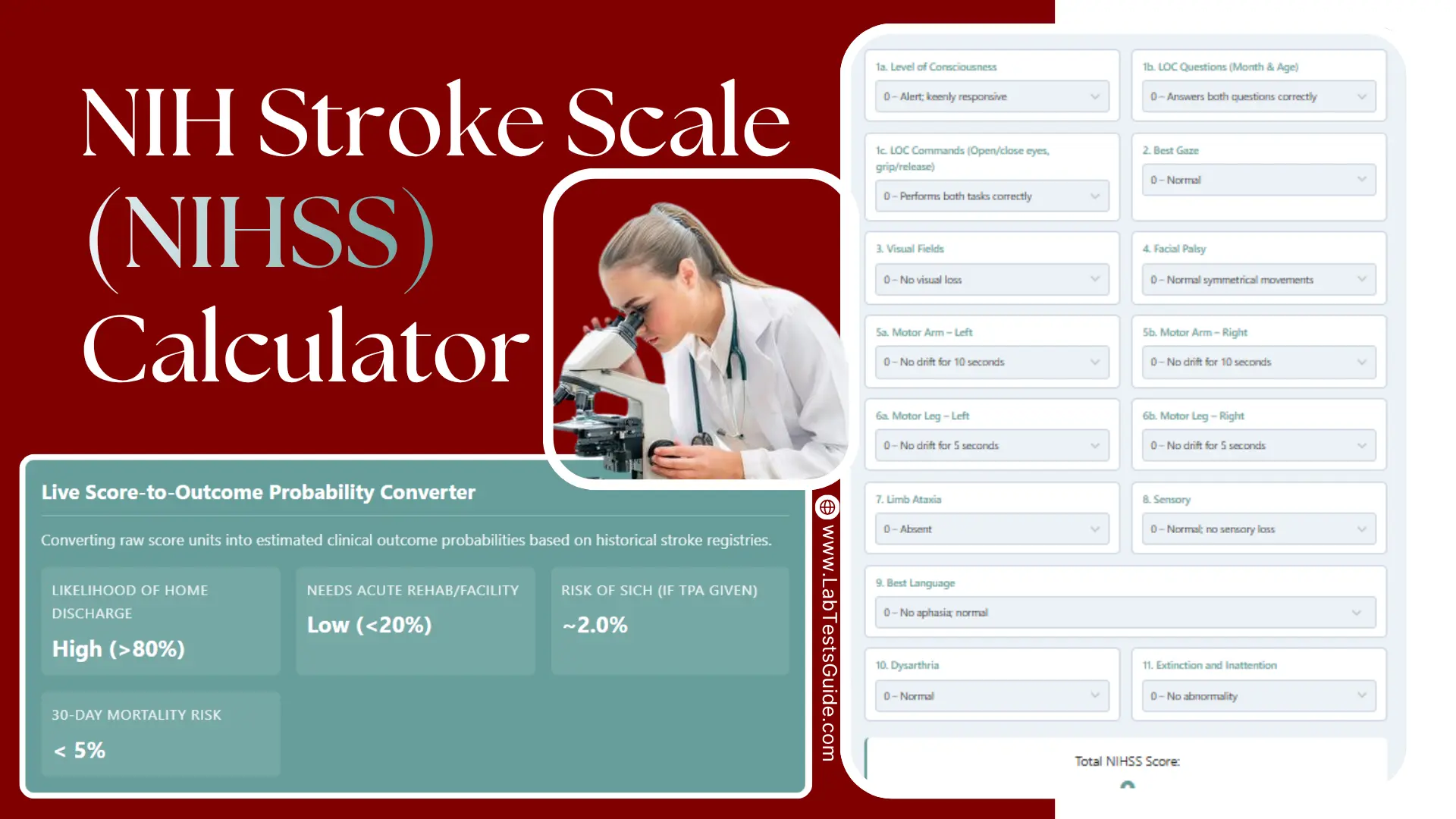
Use our interactive calculator below. As you select the neurological findings, the tool automatically calculates the score and utilizes a Live Outcome Probability Converter to translate the raw score into 5 distinct clinical outcome percentages.
Live Score-to-Outcome Probability Converter
Converting raw score units into estimated clinical outcome probabilities based on historical stroke registries.
How to Use the Calculator
- Assess the Patient: Administer the neurologic exam exactly in the order listed. Do not go back and change scores based on subsequent testing.
- Input Findings: Use the 15 dropdown menus to select the most accurate description of the patient’s current neurologic status.
- Instant Scoring: As you select values, the total NIHSS score (ranging from 0 to 42) calculates instantly. No “Calculate” button is needed.
How to Use the Live Probability Converter
Unlike metabolic calculators that convert units like mg/dL, a neurologic scale relies on converting abstract numbers into clinical realities. Our teal Live Score-to-Outcome Probability Converter at the bottom of the calculator transforms the raw 0-42 score into 4 distinct clinical percentages:
- Home Discharge & Rehab Needs: Estimates the probability of where the patient will be dispositioned based on studies by Adams et al.
- Risk of sICH: Converts the score into the estimated percentage risk of symptomatic Intracranial Hemorrhage if the patient receives thrombolytics.
- 30-Day Mortality: Gives a prognostic percentage of survival based on the initial severity scale.
Formulas Used in This Calculator
The NIHSS utilizes a simple additive formula. The score is the sum of all 15 individually graded items.
Total NIHSS Score = Σ (Items 1a through 11)
Note on “UN” (Untestable): If an item is truly untestable (e.g., limb amputation, joint fusion, or intubation), it scores a 0 to prevent artificially inflating the stroke severity.
Calculation Example (Mathematics)
Let’s look at a mathematical example of a patient presenting with a moderate stroke.
Step-by-Step Math:
1a. LOC Alert = 0
4. Facial Palsy (Partial) = 2
5b. Motor Arm Right (Falls to bed) = 3
6b. Motor Leg Right (Drift) = 1
9. Best Language (Mild aphasia) = 1
10. Dysarthria (Moderate) = 1
All other items are normal = 0
Formula: 0 + 2 + 3 + 1 + 1 + 1 + 0 = 8
Result: Score of 8 (Moderate Stroke)
Clinical Interpretation Guidelines
The total score categorizes the clinical severity of the stroke, which guides triage and treatment decisions.
| NIHSS Score | Stroke Severity | General Implications |
|---|---|---|
| 0 | No Stroke Symptoms | Normal neurologic exam. |
| 1 – 4 | Minor Stroke | Often discharged home. May or may not be treated with tPA depending on disabling features. |
| 5 – 15 | Moderate Stroke | High likelihood of acute rehabilitation need. Standard candidates for reperfusion therapy. |
| 16 – 20 | Moderate to Severe Stroke | High risk of complications. Likely requires nursing facility post-discharge. |
| 21 – 42 | Severe Stroke | High mortality risk. Severe dependency if survival occurs. Careful consideration of bleeding risks with tPA. |
Disclaimer: This NIHSS calculator is intended for educational and informational purposes only. It should not replace professional clinical judgment. Only certified personnel should administer the NIH Stroke Scale for clinical decision-making.
