
How to Spot and Tackle Common Winter Viruses: Cold, Flu, COVID-19, RSV & More
As we enter the peak of winter respiratory season, understanding the differences between common cold, flu, COVID-19 and RSV and knowing when to test, treat, or call a doctor can help protect you and your loved ones.
Learn how to identify symptoms of winter viruses like cold, flu, COVID-19 and RSV, and discover expert tips on prevention, testing, treatment and when to seek medical care.
How to Spot and Tackle Common Winter Viruses: Cold, Flu, COVID-19, RSV & More
As the cold-weather months settle in, many of us will inevitably face sniffles, coughs, or congestion but not all colds are created equal. With multiple viruses circulating at the same time, it can be difficult to know whether you have a simple cold, the flu, COVID-19, Respiratory Syncytial Virus (RSV), or another seasonal infection. Below, we break down what to watch out for, how to care for yourself, and when to seek medical attention.
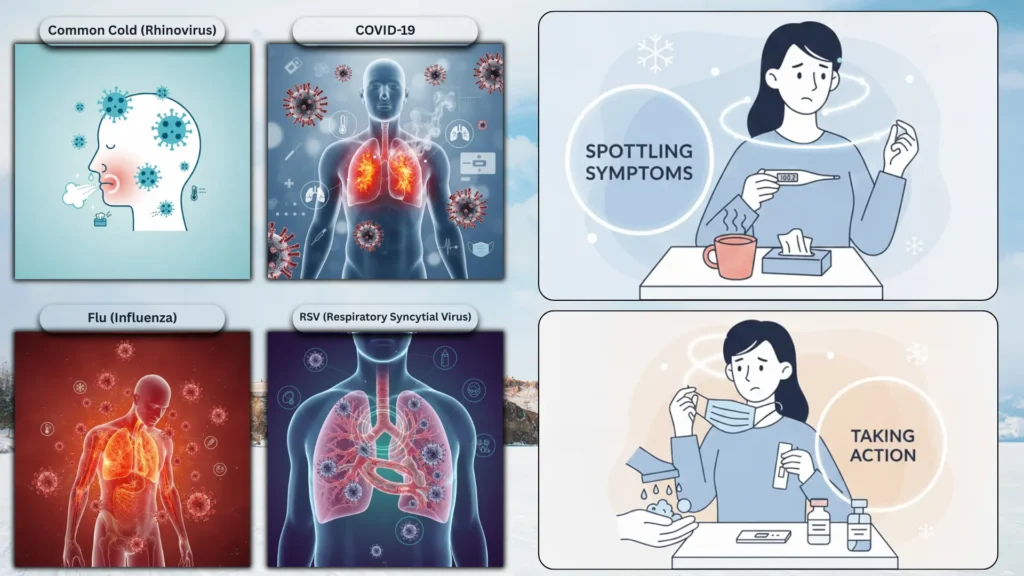
Common Winter Viruses And How They Differ
The Common Cold
- The typical cold is generally mild. Common symptoms include a stuffy or runny nose, sneezing, mild cough or sore throat. According to experts (similar to what pharmacist-in-charge Eric D’Agostino described), these symptoms might be annoying, but usually remain manageable without serious complications.
- For symptom relief, over-the-counter remedies can help: decongestants (like pseudoephedrine or phenylephrine), nasal saline sprays, and expectorants can ease congestion and discomfort.
Flu (Influenza)
- Flu tends to hit harder than a cold. Symptoms often include sudden onset of fever or chills, cough, sore throat, muscle or body aches, headaches and fatigue much more pronounced than a typical cold.
- Flu can lead to serious illness, especially in vulnerable populations such as the elderly, pregnant women, and those with chronic conditions.
COVID-19
- COVID-19 has significant overlap in symptoms with both flu and cold fever, cough, sore throat, fatigue, shortness of breath, and sometimes loss of taste or smell.
- Because symptoms alone often don’t clearly distinguish COVID-19 from flu or a cold, testing remains the only reliable way to know for sure.
RSV (Respiratory Syncytial Virus) and Other Winter Viruses
- RSV commonly causes mild, cold-like symptoms in older children and adults. However, in infants and older adults, it can escalate to serious lower respiratory illness including bronchiolitis or pneumonia.
- Typical RSV infection may bring fever, cough, wheezing, difficulty breathing, and sometimes rapid breathing or severe congestion.
- Other seasonal viruses such as human metapneumovirus (hMPV), parainfluenza, or adenoviruses can also circulate in winter, often causing symptoms similar to a cold.
What You Can Do: Prevention, Testing & Treatment
Vaccination is still your best defense
- Vaccines are available for flu, COVID-19 (updated boosters), and for RSV in eligible populations (infants, older adults, pregnant women).
- According to public-health guidance, staying up to date with immunizations greatly reduces risk of severe illness, hospitalization and death.
- You can receive more than one vaccine at the same visit (for example, flu + COVID-19 + RSV) depending on your eligibility.
Hygiene and behavior matter
- Regular hand-washing (or sanitizing with alcohol-based sanitizer), covering your mouth/nose when coughing or sneezing, and cleaning frequently touched surfaces are simple yet effective ways to reduce spread.
- If you’re feeling sick especially with fever, persistent cough or breathing difficulty stay home, avoid close contact with others, and wear a mask if you must be around people.
Testing and treatment when needed
- Because symptoms overlap, testing is often necessary to know whether you have flu, COVID-19, or another virus. Many pharmacies now offer rapid or combination antigen tests for flu and COVID-19. This helps guide appropriate treatment.
- If you test positive for flu or COVID-19, antiviral medications (e.g., for flu) may help reduce severity but only if started early.
- For common colds and mild viral illnesses, focus remains on rest, hydration, symptom relief (decongestants, nasal sprays), and monitoring.
Extra caution for high-risk groups
- Infants, older adults (especially 65+), people with chronic conditions or weakened immunity these groups tend to be at higher risk for complications from flu, RSV, and COVID-19.
- For babies and pregnant women, RSV immunization (or in some cases maternal RSV vaccination) can offer protection.
What to Do If You Start Feeling Sick
- Rest at home, stay hydrated, and manage mild symptoms with over-the-counter remedies (for congestion, cough, etc.).
- If symptoms worsen high fever, breathing difficulty, persistent cough, wheezing, bluish skin, or any severe sign seek medical care immediately.
- Try to get tested to confirm whether it’s flu, COVID-19, RSV or other virus this can help you, your doctor decide on treatment.
- Inform close contacts and limit contact with people at high risk until you recover. Consider wearing a mask indoors or in shared spaces.
References
- Pharmacist shares how to identify, treat common winter viruses – 10WAJAR – (Accessed on Dec 04, 2025)
- Protect Your Health This Respiratory Virus Season – Ohio – (Accessed on Dec 04, 2025)
- Health officials offer cold and flu prevention tips as seasonal illnesses increase – Wtap – (Accessed on Dec 04, 2025)
- Your guide to the weirdest winter virus season we’ve ever had – Vox – (Accessed on Dec 04, 2025)
