

Also Known As: 24-Hour Urine Protein, Urine Total Protein, Urine Protein to Creatinine Ratio, UPCR
Test Panel: Urine Protein, Spot Urine Protein, Urine Creatinine, Urine Albumin, Urine Protein to Creatinine Ratio, Microalbuminuria,
Why To Get Tested:
- The presence of protein in urine is an indicator of renal diseases.
- This may be done to evaluate the edema.
Required Sample:
- Collect a random sample of urine to rule out the presence of protein.
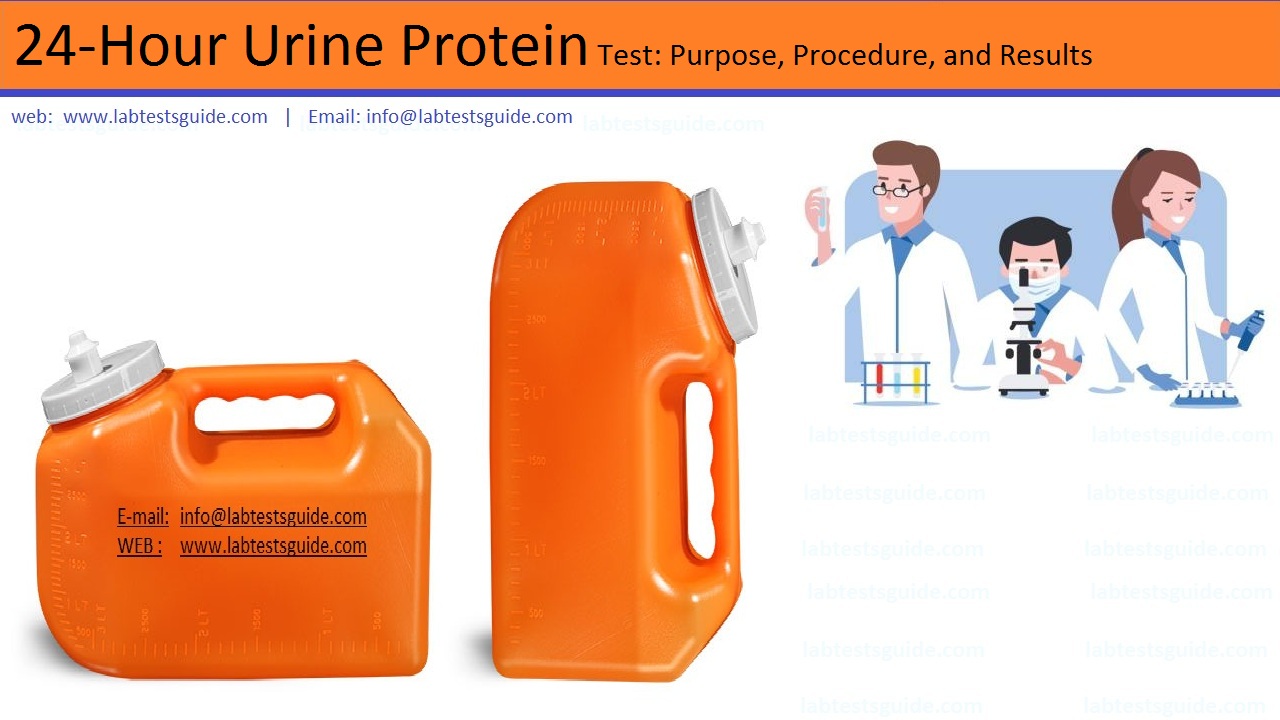
- 24 hours urine is collected in a sterile container.
- Discard the first sample then collect all other samples for 24 hours.
- Add the last sample in the container.
- Add a few ml of HCL into the container.
- Also, refrigerate the sample during collection.
- Centrifuge and adjust to pH 7.0.
- Analyze a fresh sample.
Precautions for Sample
- Avoid dehydration due to the lake of fluid intake.
- Avoid the contamination of urine from the vaginal secretions.
- Not adequate collection during urinary tract infections (UTI).
- Use of contrast media in radiology within the last three days.
- Avoid strenuous exercise.
- Avoid emotional stress.
Normal Ranges:
- 1 to 14 mg/dL
- At rest = 50 to 80 mg/day
- After intense excercise = <250 mg/day
Lab Diagnosis
- Usually, 24 hours urine sample is needed.
- Urine protein assays are sensitive to all types of proteins like albumin, globulins, and Bence-Jones protein.
- Most of the assay can detect a minimum of 3 mg/dL of protein in the urine.
- Urine dipstick is most commonly used. This is most sensitive to albumin.
- The dipstick can detect albumin when it is about 18 mg/dL
Increased proteinuria is seen in:
- Glomerular diseases :
- Acute and chronic glomerulonephritis.
- Nephrotic syndrome.
- Polycystic kidney
- Amyloidosis.
- Autoimmune diseases like SLE.
- Diabetes mellitus.
- Malignant hypertension.
- Decreased tubular reabsorption :
- Acute and chronic pyelonephritis.
- Renal tubular diseases.
- Wilson’s disease.
- Fanconi’s syndrome.
- Interstitial nephritis.
- Cystinosis.
- Other causes are :
- Congestive heart failure.
- Multiple Myeloma.
- Malignant Lymphoma.
- Waldenstrom’s macroglobulinemia.
- Trauma and stress.
- Acute infections like septicemia.
- Toxemia of pregnancy.
- Hyperthyroidism.
- Poisoning from phosphorus, gold, mercury, lead, and phenol.
- Drugs like opiates and etc.
- Hypertension.
- Postural proteinuria.
