

Women Can Now Self-Test for the Cervical Cancer Virus New Guidance from American Cancer Society
The American Cancer Society (ACS) now recommends self-collected HPV tests as a valid screening method for many women a major change that could improve screening access and help reduce cervical cancer rates.
The American Cancer Society’s updated 2025 cervical cancer guidelines now endorse self-collection of vaginal samples for HPV testing in women aged 25–65. The shift may improve screening compliance, expand access, and cut cervical cancer risk.
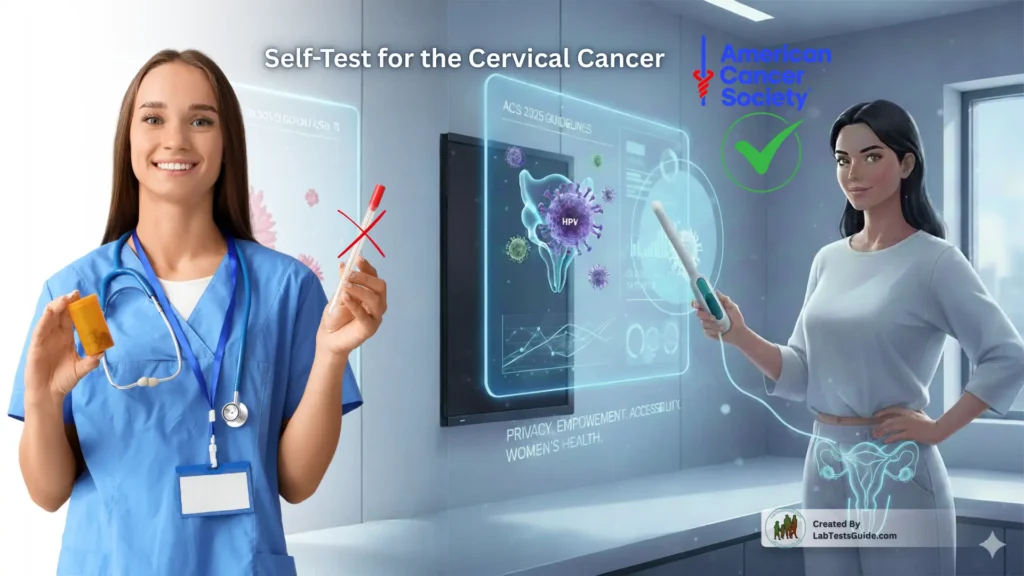
In a significant update aimed at expanding access to cervical cancer screening, the American Cancer Society (ACS) has officially endorsed self-collection of vaginal samples for HPV (human papillomavirus) testing. The new guideline published December 4, 2025 in CA: A Cancer Journal for Clinicians recommends that average-risk individuals with a cervix aged 25 to 65 may self-test, rather than only relying on clinician-collected samples.
Why This Matters
Persistent infection with certain high-risk strains of HPV a virus typically passed through sexual contact is the main cause of nearly all cases of cervical cancer. For decades, cervical cancer screening has relied on in-clinic Pap smears or HPV tests collected by a clinician, which requires a speculum exam.
Now, thanks to advances in screening technology and regulatory approval of at-home self-collection kits, this paradigm is shifting. According to ACS, self-collection can be done privately either at home or in a clinic and then mailed to a lab for analysis.
One example is an at-home vaginal sample device from Teal Health, which was recently approved by the U.S. Food and Drug Administration (FDA).
What the New Guidelines Recommend
- Screening should begin at age 25 for average-risk individuals with a cervix and continue to age 65.
- If using self-collected HPV testing and the result is negative, retesting is recommended every 3 years.
- For clinician-collected HPV samples, the interval remains every 5 years.
- The guidelines also include updated “exit criteria” patients with a cervix who have had regular negative results and no history of significant precancer may safely stop screening around age 65.
The ACS emphasizes that clinician-collected samples remain the preferred method due to slightly higher accuracy, but self-collection is now deemed a valid and easier alternative, particularly for individuals who face barriers to clinic-based care.
Evidence Supports Self-Sampling
Decades of research have evaluated self-collected HPV testing. A 2025 review of 56 paired clinical accuracy studies found that when PCR-based assays are used, the sensitivity of self-collected vaginal samples is comparable to clinician-collected cervical specimens.
Another recent study demonstrated a self-sampling method using a novel tampon-based device achieved diagnostic accuracy on par with clinician-collected samples.
Moreover, self-sampling appears highly acceptable to women: in one survey, while many initially doubted its reliability, over 95% of participants expressed a positive attitude toward self-collection after using the kit.
Public-health experts note that self-collection could significantly increase screening uptake especially in populations where access, cultural sensitivity, or personal comfort make traditional screening less feasible.
What This Means for Women Worldwide Including in Pakistan
Although the new ACS recommendations apply specifically to the U.S., the shift toward validated self-collection methods has global implications. In countries where access to gynecological services is limited by geography, cost, or social norms including many areas in Asia and Africa self-sampling could dramatically expand screening coverage.
For women in Pakistan and other low- and middle-income countries, self-collection may offer privacy, convenience, and overcome cultural or logistical barriers to traditional screening. However, it will only deliver benefits if accessible, affordable, and coupled with follow-up care for positive results.
Health authorities in these regions should consider pilot programs and public-education campaigns to raise awareness. Integration with existing health systems including trained labs and follow-up services is key for self-collection to translate into reduced cervical cancer incidence.
Continuing Importance of HPV Vaccination and Follow-up
While self-sampling is a strong step forward, it doesn’t replace the need for preventive measures like vaccination. The Centers for Disease Control and Prevention (CDC) notes that vaccination against HPV can prevent more than 90% of cancers caused by the virus.
Also, if a self-test returns a positive result, the individual must follow up with a clinician for further evaluation such as a physical exam, a clinician-collected sample, or more advanced diagnostics.
What to Do Next
- Women aged 25–65 with a cervix and no high-risk history should consider asking their healthcare provider about self-collected HPV testing.
- Ensure the self-collection kit is approved by the appropriate regulatory body.
- Follow instructions carefully avoid menstrual period, use no vaginal products 24–48 hours before sampling, and collect sample per guidelines.
- Negative results should prompt repeat testing per recommended interval. Positive results must lead to clinician follow-up.
- Continue or consider HPV vaccination if eligible, and discuss with a health professional.
References
- Women can self-test for cervical cancer virus: Guidance – The Hill – (Accessed on Dec 05, 2025)
- A single shot of HPV vaccine may be enough to fight cervical cancer, study finds – AOL – (Accessed on Dec 05, 2025)
- American Cancer Society Endorses Pap Smear Alternative – The new York Time – (Accessed on Dec 05, 2025)
- Cervical cancer screening guidelines just changed. Here’s what it means. – The Washington Post – (Accessed on Dec 05, 2025)
