What a High ESR Blood Test Actually Says About Your Body’s Hidden Inflammation:
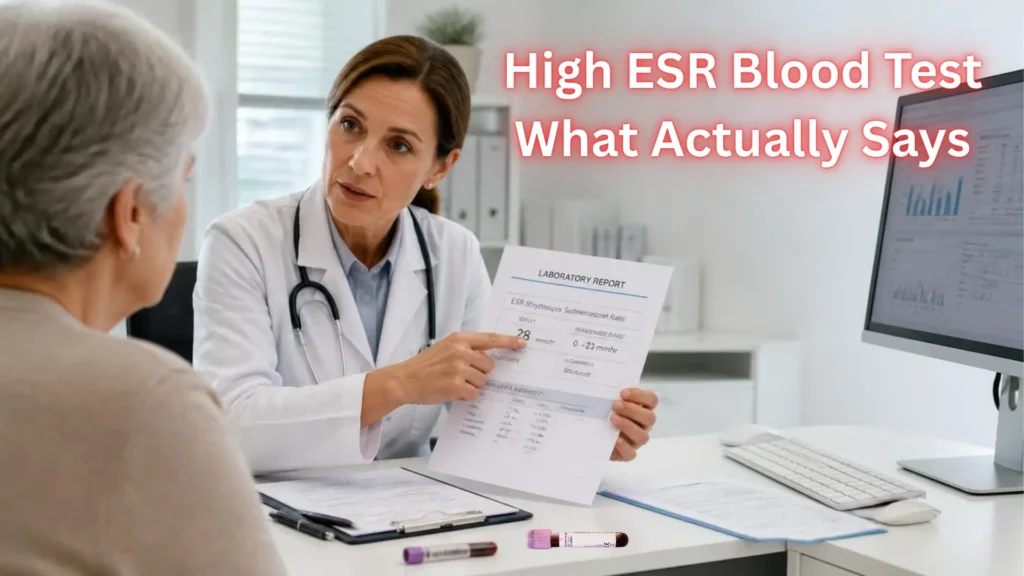
Have you ever felt extremely tired, had persistent joint pain, or had a fever that doesn’t go away? These symptoms can have many causes, but they could also be a sign of inflammation somewhere in the body. A simple blood test that doctors often use to check for this is the Erythrocyte Sedimentation Rate (ESR) test.
ESR Blood Test at a Glance
Everything you need to know about the Erythrocyte Sedimentation Rate test in 60 seconds
Think of the ESR test as a smoke alarm. It can’t pinpoint the exact cause of the problem, but it can indicate that inflammation may be present and help your doctor decide if further testing or investigation is needed.
Why Do Doctors Order It?
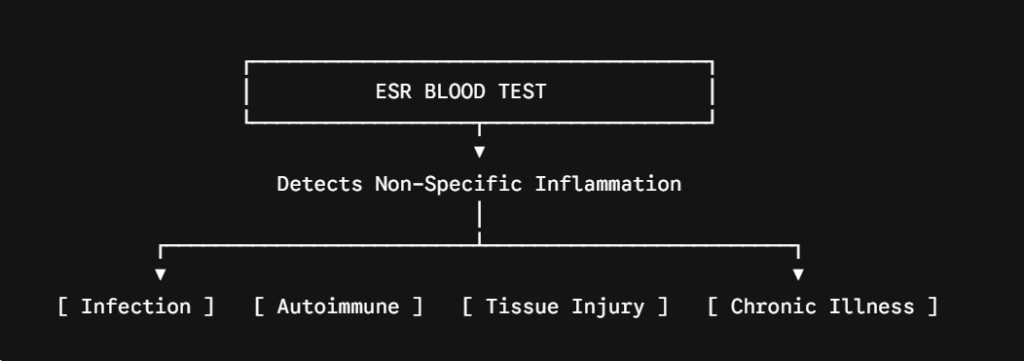
When your immune system goes to battle—whether it’s fighting a hidden infection, dealing with an autoimmune flare-up, or responding to tissue damage—the proteins dissolved in your blood shift dramatically. Doctors use the ESR test to detect this underlying chaos, monitor chronic illnesses, and track whether your treatments are actually working.
Inflammation vs. Infection: What’s the Difference?
It is incredibly easy to confuse these two terms, but they represent different processes in the body:
- Infection: This happens when an outside invader—such as a virus, bacterium, or fungus—enters your body and begins to multiply.
- Inflammation: This is your immune system’s defense mechanism against threats like infections, physical injuries, or toxins.
An ESR test picks up on the inflammation caused by these processes, but it cannot tell the difference between them on its own.
The Diagnostic Catch
Crucial Medical Note: The ESR test is entirely non-specific. This means that while a high result loudly proclaims “there is inflammation somewhere in the body,” it cannot pinpoint the exact location or name the specific disease. Because of this, an ESR test alone can never be used to diagnose a condition. It must always be interpreted alongside your current symptoms, a physical exam, and other targeted lab tests.
What is an ESR Test?
ESR stands for Erythrocyte Sedimentation Rate, though healthcare professionals frequently call it a “sed rate.”
- Erythrocytes are your red blood cells.
- Sedimentation is the physical process of particles settling to the bottom of a liquid.
- Rate is the speed at which this happens over a set timeframe (typically one hour).
How the Test Works (The Westergren Method)
The gold standard for performing this test is the Westergren method. A phlebotomist draws your blood into a specialized, tall, thin vertical tube and leaves it completely undisturbed for exactly one hour. Gravity naturally pulls the red blood cells downward. The laboratory specialist then measures how many millimeters ($mm$) of clear liquid plasma are left at the top of the tube. The final result is reported in millimeters per hour ($mm/hr$).
The Science of Settling Faster
Under normal, healthy circumstances, red blood cells carry a slight negative electrical charge. This causes them to repel one another, keeping them suspended and making them settle very slowly.
However, when your body fights active inflammation, your liver floods your bloodstream with heavy proteins, such as fibrinogen and immunoglobulins. These sticky proteins attach to your red blood cells, neutralizing their negative charge. As a result, the cells clump together into heavy stacks called rouleaux. Because these clumps weigh significantly more than individual cells, they sink to the bottom of the tube much faster, driving your ESR reading upward.
Why is an ESR Test Done?
Because an ESR test is a general marker, doctors rarely look at it in a vacuum. Instead, they use it alongside your clinical symptoms to assist with:
- Diagnosing and Detecting Illnesses: The ESR is particularly effective at uncovering hidden conditions that cause systemic inflammation. It is commonly ordered for:
- Autoimmune Diseases: Such as Rheumatoid Arthritis (RA) (which attacks the joints) and Lupus (Systemic Lupus Erythematosus).
- Polymyalgia Rheumatica (PMR) & Giant Cell Arteritis: Conditions common in older adults that cause severe muscle pain or dangerous inflammation of the arteries in the head (temporal arteritis).
- Chronic Infections: Deep-seated infections like bone infections (osteomyelitis) or tuberculosis.
- Organ-Specific Inflammation: Such as chronic kidney disease and inflammatory bowel disease (IBD).
- Monitoring Disease Progress: If you live with a chronic inflammatory condition, your doctor will order serial ESR tests over months or years. A rising ESR can warn of an oncoming disease flare-up, while a dropping level signals that your medication is successfully bringing the inflammation under control.
ESR Normal Range
The normal range for an ESR is not a one-size-fits-all number. It naturally varies based on your biological sex, age, and lifestyle factors.
The following reference table outlines the generally accepted normal ranges using the Westergren method:
| Category | Normal ESR Range (mm/hr) |
| Adult Males (under 50) | 0 to 15 $mm/hr$ |
| Adult Males (over 50) | 0 to 20 $mm/hr$ |
| Adult Females (under 50) | 0 to 20 $mm/hr$ |
| Adult Females (over 50) | 0 to 30 $mm/hr$ |
| Children (Post-infancy) | 0 to 10 $mm/hr$ |
| Newborns | 0 to 2 $mm/hr$ |
Note on Laboratory Variation: Every medical lab uses slightly different equipment and calibration criteria. Always review the specific “reference interval” printed directly on your lab report, rather than relying solely on generic charts online.
What Does High ESR Mean?
An elevated ESR indicates that your body is dealing with an active inflammatory response. Depending on how high the numbers climb, doctors split the causes into distinct diagnostic categories:
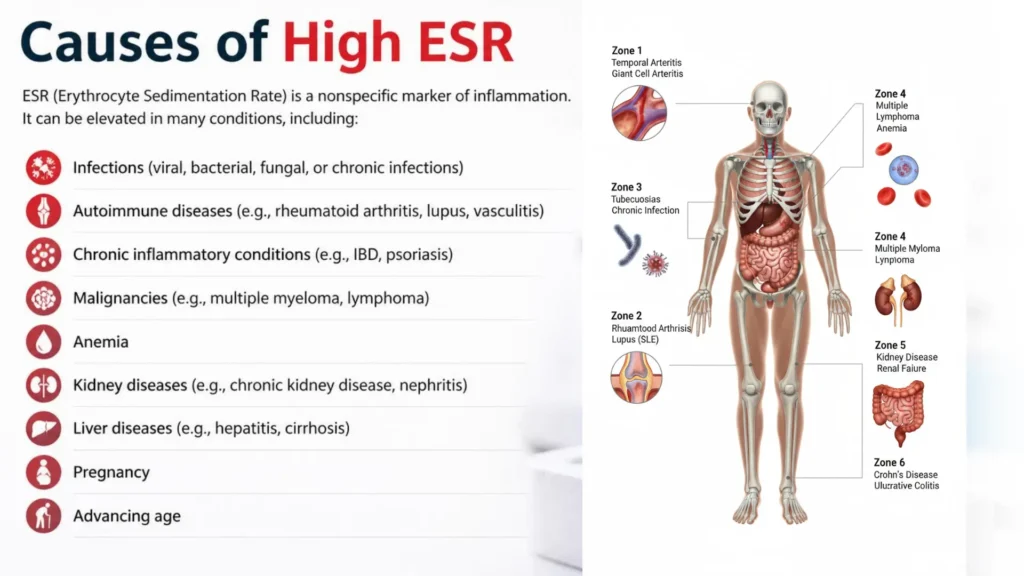
Common Causes of Elevated ESR
- Active Infections: Widespread or deep-seated bacterial, viral, or fungal infections.
- Autoimmune Flare-ups: Periods of high activity in conditions like rheumatoid arthritis, lupus, or vasculitis.
- Certain Cancers: Some malignancies, particularly multiple myeloma (a plasma cell cancer) or lymphoma, alter blood chemistry by flooding it with abnormal proteins, which drives ESR very high.
- Chronic Kidney Disease: Advanced kidney issues alter systemic protein levels, causing red blood cells to settle quickly.
- Anemia: Having fewer red blood cells reduces natural crowding inside the tube, allowing the existing cells to fall through the plasma faster.
Non-Inflammatory Factors That Raise ESR
Your ESR can rise for reasons completely unrelated to an inflammatory illness:
- Pregnancy & Menstruation: Normal hormonal shifts and blood changes naturally elevate ESR temporarily.
- Older Age: ESR values slowly creep upward as we age due to normal, physiological changes in plasma.
What About Extremely High Levels? An ESR reading that spikes over 100 mm/hr is highly significant. It acts as an urgent clinical red flag, pointing doctors toward specific conditions like active bone/heart infections, giant cell arteritis, polymyalgia rheumatica, or blood-related cancers.
Symptoms Associated with High ESR
It is a common misconception that a high ESR level makes you feel sick. An elevated ESR itself does not cause any symptoms. Instead, any physical symptoms you feel are caused directly by the underlying disease driving the inflammation.
If your ESR is elevated, you might experience common inflammatory symptoms such as:
- Unexplained, persistent low-grade fever or night sweats
- General body pain, joint stiffness, or severe muscle aches (especially in the morning)
- Chronic fatigue, weakness, or a general feeling of being unwell (malaise)
- Unintended, rapid weight loss or sudden loss of appetite
- Severe headaches or jaw pain (associated with temporal arteritis)
What Does Low ESR Mean?
While patients usually worry about high numbers, an abnormally low ESR level (close to 0 mm/hr) is also an important clinical finding. A low level means your red cells are settling much slower than average, which typically points to blood thickness or shape anomalies:
- Polycythemia: An abnormally high count of red blood cells thickens the blood, creating a “traffic jam” that prevents the cells from sinking.
- Sickle Cell Disease: The abnormal, crescent shape of sickle cells prevents them from stacking into the smooth rouleaux formations required to sink quickly.
- Congestive Heart Failure (CHF): Alterations in blood circulation and plasma protein balances can pull ESR down to unusually low numbers.
- Leukocytosis: An extremely high white blood cell count can physically crowd the test tube and slow down the sedimentation rate.
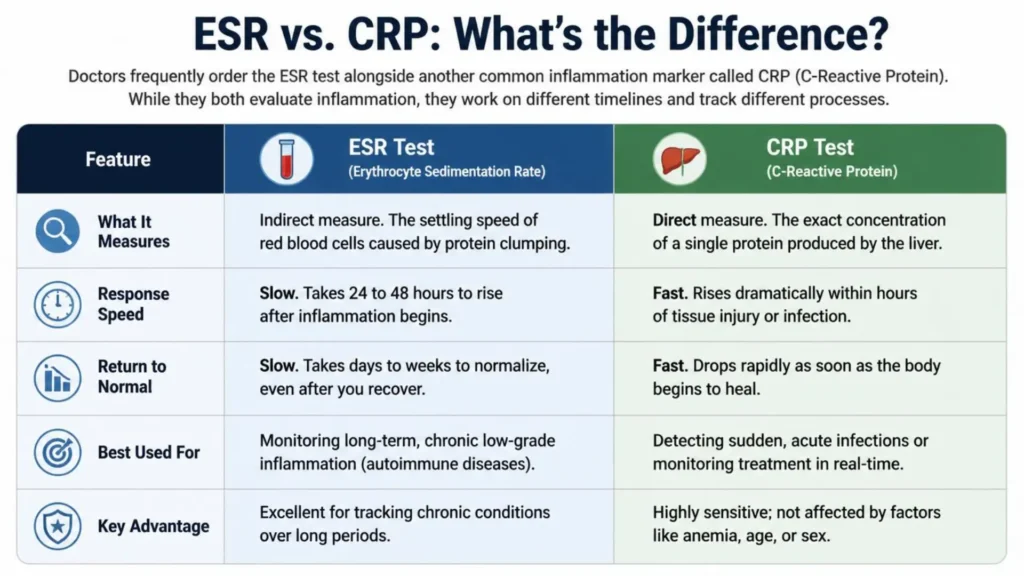
ESR vs. CRP: What’s the Difference?
Doctors frequently order the ESR test alongside another common inflammation market called CRP (C-Reactive Protein). While they both evaluate inflammation, they work on different timelines and track different processes.
| Feature | ESR Test (Erythrocyte Sedimentation Rate) | CRP Test (C-Reactive Protein) |
| What It Measures | Indirect measure. The settling speed of red blood cells caused by protein clumping. | Direct measure. The exact concentration of a single protein produced by the liver. |
| Response Speed | Slow. Takes 24 to 48 hours to rise after inflammation begins. | Fast. Rises dramatically within hours of tissue injury or infection. |
| Return to Normal | Slow. Takes days to weeks to normalize, even after you recover. | Fast. Drops rapidly as soon as the body begins to heal. |
| Best Used For | Monitoring long-term, chronic low-grade inflammation (autoimmune diseases). | Detecting sudden, acute infections or monitoring treatment in real-time. |
| Key Advantage | Excellent for tracking chronic conditions over long periods. | Highly sensitive; not affected by factors like anemia, age, or sex. |
Why Order Both?
Ordering both tests gives your healthcare provider a complete timeline. A high CRP combined with a normal ESR suggests a brand-new, acute problem. Conversely, a high ESR paired with a settling CRP shows that an illness is chronic, stable, or moving toward recovery.
What Tests Are Ordered with ESR?
Because an ESR result leaves many unanswered questions, doctors use a panel of complementary tests to find the root cause of inflammation.
To learn more about how these complementary labs work, explore our detailed guides:
- C-Reactive Protein (CRP) Test: Understand this fast-acting inflammation tracker.
- Understanding High CRP Levels: What to do when your acute inflammation marker spikes.
- Complete Blood Count (CBC): Check for anemia, active infections, or high white blood cell counts.
- Antinuclear Antibody (ANA) Test: The foundational screening tool for autoimmune diseases like Lupus.
- Rheumatoid Factor (RF): A targeted blood test to help confirm or rule out Rheumatoid Arthritis.
- Ferritin Lab Test: Evaluates your body’s iron stores, which can shift dramatically during chronic inflammation.
- Procalcitonin Test: Used by medical teams to quickly differentiate severe bacterial infections from general inflammation.
How to Prepare for the Test
An ESR blood test requires virtually zero advanced preparation.
- Fasting: You do not need to fast before this test. You can eat and drink normally unless your doctor has ordered other tests simultaneously that require fasting.
- Medication Disclosure: Tell your healthcare provider about all medications, vitamins, or supplements you take, as certain prescriptions can subtly influence your results.
Risks of the Test
An ESR test carries almost no medical risk. It is a standard, low-risk blood draw. You might feel a brief pinch when the needle enters your vein, and a small bruise or mild soreness may form at the site, which usually clears up in a day or two.
Frequently Asked Questions (FAQs)
Can stress increase ESR?
Stress itself does not directly cause a high ESR. However, if chronic emotional or physical stress contributes to or worsens an underlying condition (like an autoimmune flare-up), it can have an indirect effect on your inflammation levels.
Is ESR a cancer test?
No. An ESR test cannot diagnose cancer. While certain cancers (like lymphoma or multiple myeloma) cause exceptionally high ESR levels due to abnormal proteins, many non-cancerous conditions cause the exact same spike. It is simply one piece of a much larger diagnostic puzzle.
What ESR level is dangerous?
There is no single “dangerous” ESR number because the test measures inflammation rather than a toxic substance. However, an ESR value exceeding 100 $mm/hr$ is highly significant and alerts doctors to look closely for serious underlying conditions, such as systemic vasculitis, severe infections, or bone marrow disorders.
Can ESR be normal even if an inflammatory disease exists?
Yes. A normal ESR does not completely rule out disease. Some people with active lupus or certain cancers can have a completely normal ESR, particularly during periods of low disease activity. If your doctor strongly suspects a condition based on your physical symptoms, they will rely on other diagnostic markers.
How long does ESR remain elevated?
Because it takes your liver and red blood cells a long time to clear out old inflammatory proteins, an ESR level can remain elevated for several weeks or even months after an infection or flare-up has completely resolved.
Key Takeaways
- It’s an Inflammation Radar: The ESR test detects the presence of active inflammation inside your body, acting as a “smoke alarm” without identifying the exact source.
- Context Matters: A high ESR value is not a definitive diagnosis. It must always be evaluated alongside your specific symptoms, medical history, and supporting lab results.
- A Tracking Tool: ESR is highly effective for monitoring long-term chronic diseases, helping your doctor see if your treatment plan is successfully cooling down internal inflammation over time.
Disclaimer: The information provided in this article is for educational purposes only and should not replace professional medical advice, diagnosis, or treatment. Always consult with your doctor regarding lab results.
References:
- ESR Test: Normal Range, Symptoms, and Causes of High Levels | MaxAtHome – (Accessed on June 30, 2026)
- ESR Test Overview and Interpretation – Apollo – (Accessed on June 30, 2026)
- ESR: MedlinePlus Medical Encyclopedia – MedlinePlus – (Accessed on June 30, 2026)
- Erythrocyte Sedimentation Rate (ESR) Test: Purpose, Normal Range and Test Results – CareHospitals – (Accessed on June 30, 2026)
- ESR | HE – MLSACP – (Accessed on June 30, 2026)
- Determination of Sedimentation Rate – tpub.com – (Accessed on June 30, 2026)
- Acute phase proteins in the monitoring of inflammatory disorders – PubMed – (Accessed on June 30, 2026)
- Erythrocyte Sedimentation Rate (ESR): MedlinePlus Medical Test – (Accessed on June 30, 2026)
- High Erythrocyte Sedimentation Rate (ESR): Unraveling Causes, Symptoms, and Significance – OrangeHealth – (Accessed on June 30, 2026)
- Erythrocyte Sedimentation Rate – University of Rochester – (Accessed on June 30, 2026)