
Article

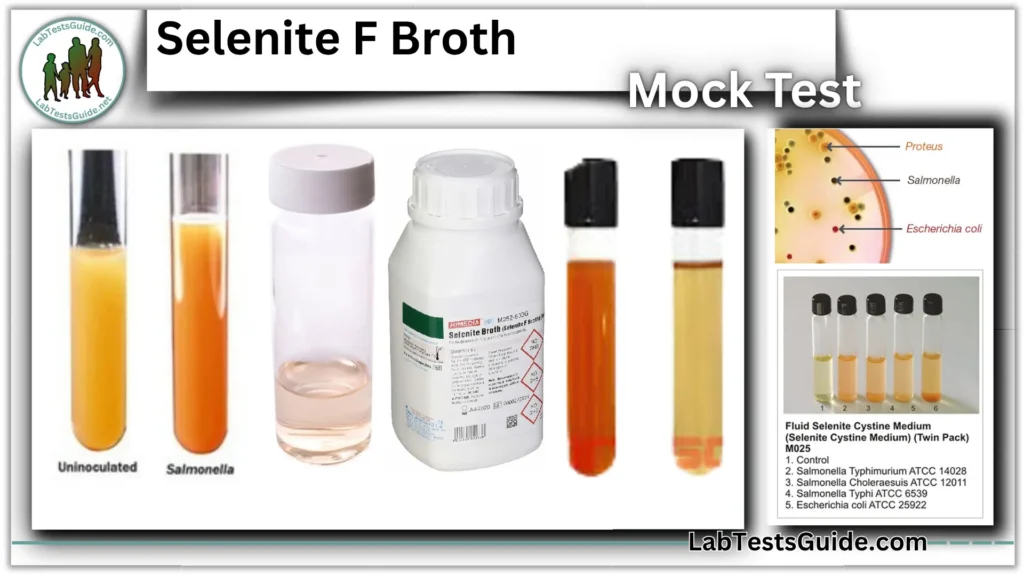
Selenite F Broth FAQs and MCQs Mock Test

Editorial StaffUpdated 1 min read

Quick Overview

Selenite F Broth MCQs: 30 questions on Salmonella enrichment. Master formulation, protocols & safety for clinical/food microbiology exams. Answer key included!

  • CategoryMCQs
  • Read time1 min
  • UpdatedJan 2026
Selenite F Broth FAQs and MCQs Mock Test
Table of Contents

Ace your Selenite F Broth protocols with this 30-MCQ mock test! Covering composition, incubation, subculturing, and safety practices, this resource is essential for clinical microbiologists, food safety labs, and public health trainees. Includes detailed answer explanations, timed test strategies, and ISO/CLSI alignment. Perfect prep for ASCP, AMT exams, and lab competency audits.

How to Use This Mock Test :

1. Timed Simulation: Complete in 40 minutes.
2. Focus Areas:
– Sodium selenite as an inhibitory agent
– Incubation conditions (time/temperature)
– Subculturing techniques to solid media (e.g., XLD Agar)
– Safety handling (selenium toxicity)
3. Scoring: >24/30 = proficiency; review incorrect answers.

0%
0 votes, 0 avg
3

Report a question

You cannot submit an empty report. Please add some details.

Microbiology Department

Selenite F Broth FAQs and MCQs Mock Test

Selenite F Broth MCQs Mock Test

Master Selenite F Broth with 50 FAQs & 30 MCQs! Learn selective enrichment principles for Salmonella/Shigella, safety handling (selenium toxicity), incubation protocols, and subculture techniques. Essential for clinical labs, food testing (ISO 6579), and microbiology exams.

Read Full Article: Selenite F Broth FAQs and MCQs

1 / 30

Category: Clinical Laboratory

The recommended depth of broth in tubes is:

2 / 30

Category: Clinical Laboratory

The inhibitory effect of selenite diminishes after:

3 / 30

Category: Clinical Laboratory

Lactose in Selenite Broth serves to:

4 / 30

Category: Clinical Laboratory

On MacConkey Agar, Salmonella appears as:

5 / 30

Category: Clinical Laboratory

Sodium selenite is hazardous because it is:

6 / 30

Category: Clinical Laboratory

Why should Selenite Broth NOT be autoclaved?

7 / 30

Category: Clinical Laboratory

Which ingredient maintains pH in Selenite Broth?

8 / 30

Category: Clinical Laboratory

If coliforms overgrow in Selenite Broth, the likely cause is:

9 / 30

Category: Clinical Laboratory

Selenite Broth should NOT be used as the sole medium because:

10 / 30

Category: Clinical Laboratory

For urine samples, Selenite Broth should be:

11 / 30

Category: Clinical Laboratory

Quality control for Selenite Broth includes testing with:

12 / 30

Category: Clinical Laboratory

Optimal incubation time for Selenite Broth is:

13 / 30

Category: Clinical Laboratory

What should you do if a red precipitate forms in the broth?

14 / 30

Category: Clinical Laboratory

Selenite F Broth is NOT recommended for:

15 / 30

Category: Clinical Laboratory

Dehydrated Selenite Broth powder should be stored:

16 / 30

Category: Clinical Laboratory

How is Selenite Broth sterilized?

17 / 30

Category: Clinical Laboratory

What is the final pH of Selenite F Broth?

18 / 30

Category: Clinical Laboratory

How much stool sample should be added to Selenite Broth?

19 / 30

Category: Clinical Laboratory

What indicates microbial growth in Selenite Broth?

20 / 30

Category: Clinical Laboratory

After incubation, subculture should be done on:

21 / 30

Category: Clinical Laboratory

Which organization recommends Selenite Broth for food testing?

22 / 30

Category: Clinical Laboratory

Which bacteria are naturally resistant to selenite?

23 / 30

Category: Clinical Laboratory

Which supplement may improve Salmonella recovery?

24 / 30

Category: Clinical Laboratory

Selenite Broth can preserve Vibrio cholerae for:

25 / 30

Category: Clinical Laboratory

What is the primary purpose of Selenite F Broth?

26 / 30

Category: Clinical Laboratory

Selenite Broth must be stored at:

27 / 30

Category: Clinical Laboratory

The “F” in Selenite F Broth stands for:

28 / 30

Category: Clinical Laboratory

Who developed Selenite Broth?

29 / 30

Category: Clinical Laboratory

Which component makes Selenite Broth selective?

30 / 30

Category: Clinical Laboratory

Sodium selenite primarily inhibits:

If you want to download Certificates then Please Put your Name and Correct Email

Your score is

The average score is 21%

0%

Key Topics Covered

Composition: Peptone, lactose, sodium selenite.
Mechanism: Selenite disrupts cellular respiration in non-target bacteria.
Protocols: 1:10 sample-to-broth ratio, 37°C incubation, subculture to selective agars.
Limitations: Not for *Shigella*; short shelf-life; toxic to lab personnel.
Applications: Stool cultures, food testing (ISO 6579), outbreak investigations.

Pro Tip:
Always pair Selenite F Broth with a secondary selective agar (e.g., Hektoen or SS Agar) for optimal *Salmonella* recovery. Handle under fume hoods due to selenium volatility!

📚 This article may have been prepared using trusted medical literature, clinical guidelines, textbooks, and peer-reviewed sources.
View Possible References Used →

Discussion 0

Join the discussion

Join our community

Get fresh content from Lab Tests Guide