

Recent data from Centers for Disease Control and Prevention (CDC) show a sharp rise in norovirus infections in the U.S. as the holiday season approaches — nearly 14% of tests came back positive in mid-November. Experts warn that with the colder weather and increased indoor gatherings, norovirus may spread rapidly.
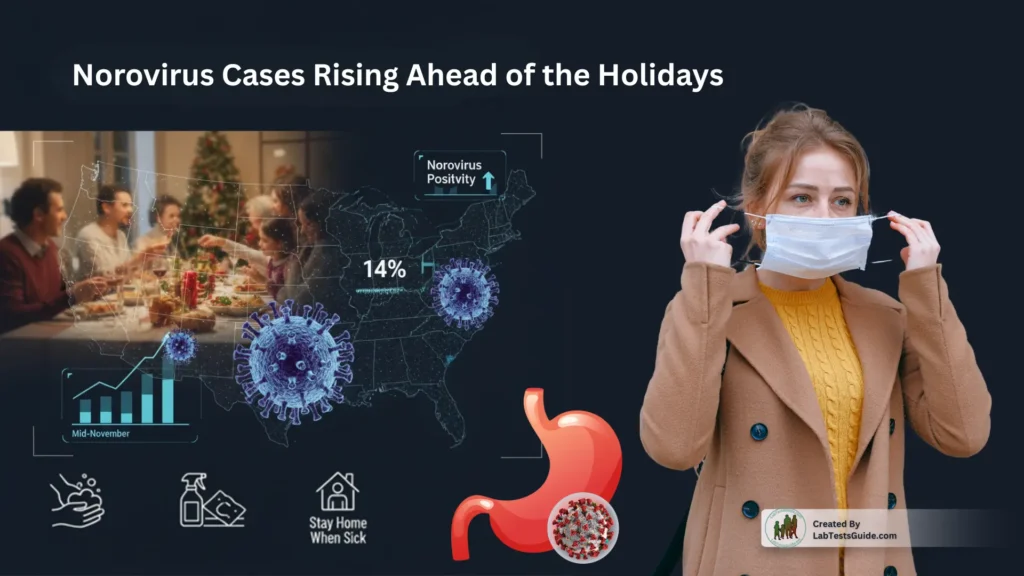
nearly 14% of norovirus tests returned positive — more than double the roughly 7% positivity rate logged about three months earlier.
Given over 2,700 tests conducted during that week, this corresponds to roughly 380 new diagnosed cases of norovirus.
Although test–positivity fluctuates depending on how many people are tested, the upward trend underscores growing concern among public-health officials.
What Is Norovirus and Why It Matters
Norovirus — often dubbed the “stomach bug” or “winter vomiting disease” — is the leading cause of acute gastroenteritis in the United States.
It spreads easily via contaminated food or water, infected surfaces, or direct contact with a sick person — including vomit or stool. Just a tiny number of viral particles (as few as 10) may be enough to infect someone.
Symptoms typically strike suddenly within 12–48 hours after exposure and include:
- Vomiting and watery diarrhea
- Nausea, stomach cramps
- Sometimes fever, headache or body aches
Most recover within 1–3 days — but during that time, they can remain contagious. Importantly, people may still spread the virus even after symptoms subside.
In the U.S. alone, norovirus causes millions of illnesses annually and is responsible for thousands of hospitalizations and even hundreds of deaths — largely among the elderly, young children, and those with weak immune systems.
Why Cases Are Climbing Now
- Seasonal factors: As winter approaches, people spend more time indoors, often in close proximity — ideal conditions for the virus to spread.
- Holiday gatherings: Shared meals, large family get-togethers, parties, buffets — all create opportunities for contaminated food, utensils, or surfaces to transmit the virus.
- High contagiousness: Because only a few viral particles are needed to infect a person, norovirus can spread rapidly in households, schools, restaurants, cruise ships, and care facilities.
How to Protect Yourself and Your Loved Ones
Prevention hinges largely on good hygiene and safe food practices.
- Wash hands thoroughly with soap and water for at least 20 seconds — especially after using the toilet, changing diapers, before eating or preparing food. Alcohol-based hand sanitizers are not sufficient on their own.
- Avoid preparing or handling food for others while sick, and continue to do so at least 48 hours after symptoms end.
- Clean and disinfect contaminated surfaces — including kitchen counters, doorknobs, bathrooms, utensils — diligently.
- Wash fruits and vegetables well; cook shellfish (like oysters) thoroughly. Raw or undercooked shellfish has historically been linked to many norovirus outbreaks.
- Isolate if sick — avoid crowded gatherings, stay home from work, school, or social events until at least 48 hours after recovery.
What This Means Ahead of Holidays
With the holiday season approaching — a time of family dinners, travel, parties, shared meals — the current uptick in norovirus cases is a red flag. Increased indoor gatherings, shared food and utensils, and vulnerable populations (young children, elderly, immunocompromised) amplify the risk.
For anyone organizing or attending holiday events: take extra precautions. Prioritize hand hygiene, clean surfaces, be cautious with shared food, and ensure safe food preparation — especially if shellfish or raw produce are involved.
Given the high contagion potential and ability to spread even before or after symptoms, norovirus outbreaks can spread quickly in communities. Awareness and preventive action now can make a big difference.
References
- Norovirus cases rise ahead of holiday season, CDC data shows – CBC – (Accessed on Nov 27, 2025)
- Cases of infectious norovirus are rising across the US this holiday season – AOL-(Accessed on Nov 27, 2025)
- Norovirus outbreaks: ‘Stomach bug’ cases rising in parts of the US, the CDC says – NbcchiCago – (Accessed on Nov 27, 2025)
