

New Study Warns: Giving Kids a Smartphone Before Age 12 May Harm Their Health
A major new study links early smartphone ownership in children to increased risks of depression, obesity, and poor sleep prompting experts to urge parents to carefully reconsider when to give their kids a phone.
A large 2025 study of over 10,000 adolescents finds that owning a smartphone by age 12 is associated with higher odds of depression, obesity, and insufficient sleep. Discover expert recommendations to protect your child’s health.
Smartphones and Kids: What Research Is Saying
A ground-breaking new study, published in the journal Pediatrics by researchers at Children’s Hospital of Philadelphia (CHOP), along with colleagues from University of California, Berkeley and Columbia University, shows that children who own a smartphone by age 12 particularly those who get one at a younger age are significantly more likely to face health issues such as depression, obesity, and insufficient sleep.
Specifically, smartphone ownership at age 12 was linked to:
- Higher odds of depression for early-adopters, compared with peers without smartphones.
- Greater risk of obesity and insufficient sleep risks increased the younger the child was when they first got a phone.
- For children who didn’t have a phone by age 12 but obtained one by 13, researchers found elevated mental-health and sleep-related problems one year later, compared with those who still didn’t have a phone.
Importantly, the researchers adjusted for many relevant factors including ownership of other devices like tablets or smartwatches, socioeconomic background, puberty stage, and parental monitoring indicating the association is specific to smartphone ownership.
Why These Findings Matter
Previous research often lumped together “screen time” in general (TV, tablets, computers, phones). But this new study isolates smartphone ownership signifying personal, portable, always-available access as a distinct risk factor. Experts say this is important because smartphones give children access to endless content, social media, and unsupervised online interaction.
Moreover, a separate 2025 meta-analysis examining mobile device use in children under 12 found that early and frequent use of mobile devices is associated with psychosocial difficulties.
Additionally, studies from different parts of the world highlight how smartphone use especially at night can disrupt sleep patterns, which in turn affects a child’s physical performance, cognitive functioning, and overall health.
Given the global trend of rising smartphone ownership, including among children well below teen age, the findings suggest that many families may unintentionally be putting their children’s physical and mental wellbeing at risk.
What Parents Should Know: Real-World Concerns
Take the case of a parent described by journalists: after buying her 13-year-old son an iPad, she noticed his screen use often replaced outdoor play, sports, or even sleeping. As she considered giving him a smartphone to stay in touch when he goes out, she found herself stuck between wanting safety and fearing addiction. The new research confirms those worries may not be just parental anxiety but grounded in real health risks. (As per research lead Ran Barzilay.)
Experts suggest parents consider alternatives like simpler devices (e.g., flip phones), devices with limited functions, or supervised modes of communication rather than giving a full-featured smartphone too early.
They also emphasize the importance of encouraging physical activity, structured hobbies (sports, clubs, community activities), and social interaction outside screens to offset the risks of screen-centered lifestyle.
How to Give Kids a Phone Without Sacrificing Their Health
Based on the new data and expert advice, here are some practical recommendations for parents who are thinking about giving a child a smartphone:
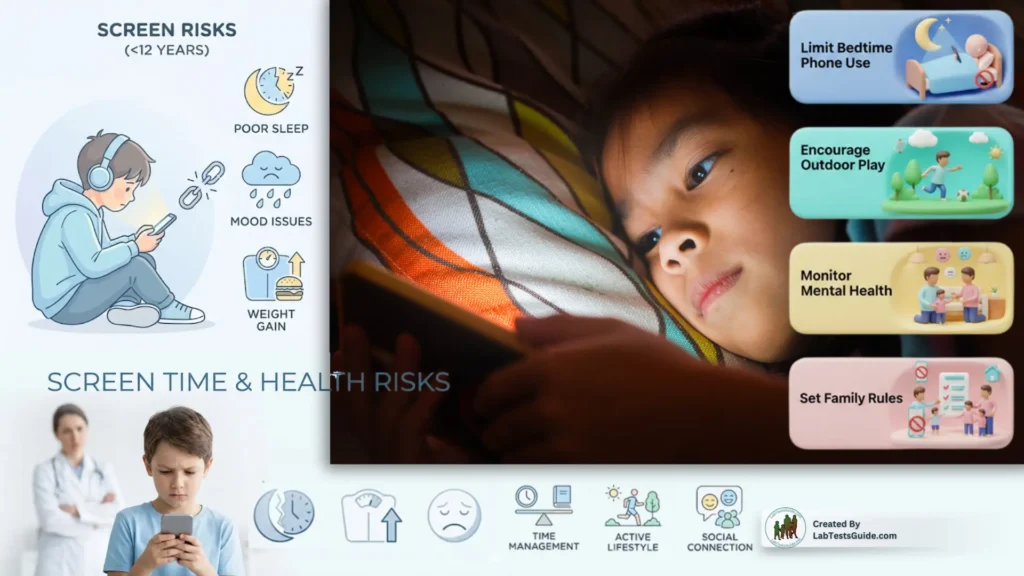
- Wait if possible: delaying first smartphone ownership beyond age 12 may reduce the risk of adverse physical and psychological outcomes.
- Set clear family rules: limit phone use during meals, bedtime, and homework, and designate device-free zones (e.g., bedrooms, dining tables).
- Encourage physical and social activities: enroll your kids in sports, clubs, outdoor play anything that keeps them moving and interacting offline.
- Monitor mental health: talk openly with your kids about what they see online, encourage healthy social media use, and watch for signs of poor sleep, mood changes, or withdrawal.
- Reconsider necessity vs convenience: often, simpler communication devices (basic phones, landlines, supervised devices) can provide safety and connectivity with fewer risks.
Conclusion
Smartphones are more than just tools of convenience or entertainment for many children, especially those under 12, they may pose real risks to physical and mental health. The new large-scale study published in Pediatrics reinforces what many parents have long suspected: that early and unsupervised access to smartphones can contribute to depression, obesity, and inadequate sleep.
Reference
- Smartphones could be putting your kids at risk – CNN – (Accessed on Dec 02, 2025)
- Giving your kid a smartphone before the age of 12 can lead to massive health problems, study finds – Independent – (Accessed on Dec 02, 2025)
- Giving your kid a smartphone before the age of 12 can lead to massive health problems, study finds – AOL– (Accessed on Dec 02, 2025)
- A Smartphone Before Age 12 Could Carry Health Risks, Study Says – New York Time – (Accessed on Dec 02, 2025)
