

A mole can be a harmless beauty mark—or it can be a spot that constantly draws attention, gets irritated, or raises concern because it has changed over time. That’s why mole removal today is not treated as a “simple skin procedure” anymore. Modern plastic surgery looks at mole removal as a balance between medical accuracy, cosmetic precision, and long-term skin health.
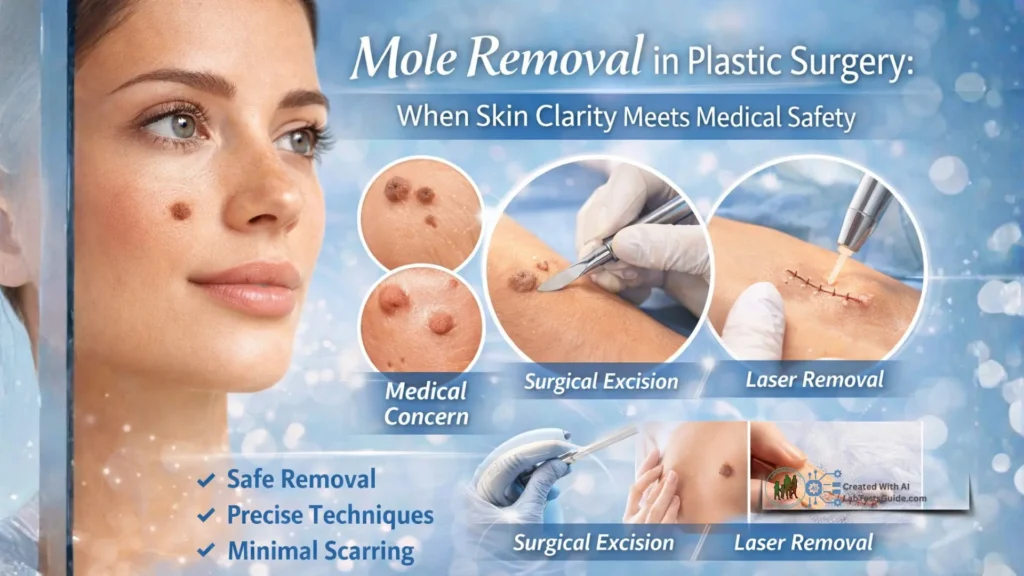
At Liv Hospital, mole removal is approached with the mindset that every lesion deserves the right technique—because the best result isn’t only about removing the mole, it’s about doing it safely while keeping the skin’s texture and appearance as natural as possible.
Why People Choose Mole Removal (It’s Not Always Cosmetic)
Many people assume mole removal is only done for appearance, but in real clinical practice, there are multiple valid reasons:
1) Medical evaluation and risk prevention
Some moles may look suspicious or start changing in:
- size
- shape
- color
- border
- texture
- bleeding/itching
In such cases, removal is not just an aesthetic decision—it’s part of responsible health screening.
2) Repeated irritation
Moles that sit on high-friction areas often become uncomfortable, such as:
- neckline (collars, chains)
- underarms
- bra line
- beard area (shaving cuts)
- waistline
3) Aesthetic balance
Facial moles or raised moles can pull focus away from facial harmony, especially when they are:
- prominent
- unevenly colored
- textured
- positioned in a high-attention area (nose, upper lip, chin)
The First Step: Proper Assessment Before Removal
Before any procedure, the most important part is determining what the mole actually is.
A raised mole behaves differently than a flat pigmented lesion. Some spots that people call “moles” may actually be:
- skin tags
- seborrheic keratosis (“stuck-on” lesion)
- warts
- vascular lesions
That’s why clinical assessment matters—because the wrong removal method can increase scarring or recurrence, and in rare cases, delay diagnosis of something serious.
Mole Removal Methods: Choosing the Right Technique Matters
The technique used is usually selected based on:
- mole depth
- location (face vs body)
- suspicion level
- scar visibility concerns
- whether biopsy is needed
1) Shave removal (for raised, benign-looking moles)
This method removes the protruding part of the mole so the skin surface becomes smooth again.
It is often chosen when:
- the mole is raised
- the lesion looks non-suspicious
- the goal is minimal downtime and no stitches
Best for: cosmetic smoothing and quick healing
Note: may have a higher chance of recurrence if the root remains deep.
2) Surgical excision (for deep, flat, or suspicious moles)
This is the most reliable technique when:
- the mole is deep in the skin
- the lesion has irregular features
- complete removal is required
- biopsy is needed
Plastic-surgery excision focuses heavily on scar quality. Incisions are typically planned along natural skin tension lines to produce a thin linear scar instead of a wide mark.
Best for: complete removal + medical certainty
Most important advantage: tissue can be sent for histopathology
3) Laser or radiofrequency removal (selected cosmetic cases)
Energy-based removal can be useful for very superficial benign lesions where biopsy is not needed. It may offer:
- minimal bleeding
- precise surface resurfacing
- less “cut” appearance
However, because this technique can destroy tissue, it is generally reserved for cases where the lesion is confidently benign.
Best for: superficial cosmetic removal under proper selection
What Makes a “Good” Mole Removal Result?
People usually judge results based on one question:
“Does my skin look normal again?”
A successful mole removal outcome typically includes:
- smooth skin surface
- no obvious indentation or bump
- minimal pigment changes
- scar placed in a less visible direction
- balanced healing (not thick, not raised)
This is where plastic surgery technique makes a difference—because even a small mole on the face requires precision planning.
Healing & Scar Care: The Part Most People Ignore
Even the best procedure can look disappointing if healing is not supported properly. Scar appearance depends on:
- tension on the wound
- sun exposure
- skin type
- aftercare routine
Common post-removal recommendations include:
- keeping the area clean and moisturized
- avoiding picking scabs
- using sunscreen daily (very important for pigmentation control)
- silicone gel/sheets if advised
The goal is not “no scar” (that’s unrealistic), but a scar that becomes so subtle it blends into the skin.
When You Should Not Delay Mole Removal
You should seek medical evaluation if a mole shows:
- asymmetry
- irregular borders
- multiple colors
- rapid growth
- bleeding/crusting
- persistent itching
Even if it turns out to be harmless, early evaluation gives peace of mind and supports better cosmetic planning.
Final Thoughts: Clear Skin, Safer Choices, Better Confidence
Mole removal is one of those procedures where small details matter—especially on the face or in highly visible areas. When done with the right method, it can improve both appearance and health reassurance, which is why it remains one of the most common minor procedures in plastic surgery.
For readers who want to support long-term skin quality after cosmetic procedures—through hydration, nutrition, and recovery-friendly habits—wellness resources like live and feel can be a helpful addition in the bigger picture of skin confidence.