

Quick Overview
Use the MCH Calculator to determine the average hemoglobin per red blood cell. Learn its formula, purpose, normal range, and how to interpret results.
- CategoryHematology
- Read time1 min
- UpdatedJul 2025

Table of Contents
The Mean Corpuscular Hemoglobin (MCH) Calculator measures the average amount of hemoglobin in a single red blood cell. It helps diagnose different types of anemia and other blood-related disorders.
Mean Corpuscular Hemoglobin (MCH) is a measure of the average weight of hemoglobin in one red blood cell, expressed in picograms (pg).
Purpose
- Helps diagnose anemia types (microcytic, normocytic, macrocytic).
- Assesses overall red blood cell health.
- Used alongside other blood indices (MCV, MCHC) for comprehensive analysis.
Formula:
MCH (pg) = Hemoglobin (g/dL) RBC Count (x10⁶/µL) x 10
How to Use the MCH Calculator:
- Enter Hemoglobin (Hb) level in g/dL.
- Input Red Blood Cell (RBC) count in million/µL.
- Click Calculate to get MCH value in picograms (pg).
Example Calculation
If Hemoglobin = 15 g/dL and RBC count = 5 million/µL:
MCH (pg) = 13.5 (g/dL) 4.5 (x10⁶/µL) x 10 = 30.0 pg
🧮 MCH Calculator (Mean Corpuscular Hemoglobin)
📐 Formula:
MCH (pg) =
Hemoglobin (g/dL)
RBC Count (x10⁶/µL)
x 10
Hemoglobin in g/dL, RBC Count in millions/µL
Normal MCH Value
- Adults & Children: 27 – 31 pg/cell
- Newborns: Slightly higher (up to 34 pg/cell)
Excluded Conditions
- High MCH (>31 pg): Macrocytic anemia (B12/folate deficiency).
- Low MCH (<27 pg): Microcytic anemia (iron deficiency, thalassemia).
Use our MCH Calculator for quick and accurate results!
Related

What a High ESR Blood Test Actually Says About Your Body’s Hidden Inflammation
Wondering what your ESR level means? Learn about the ESR blood test, normal ranges by age and gender, causes of high and low levels,…
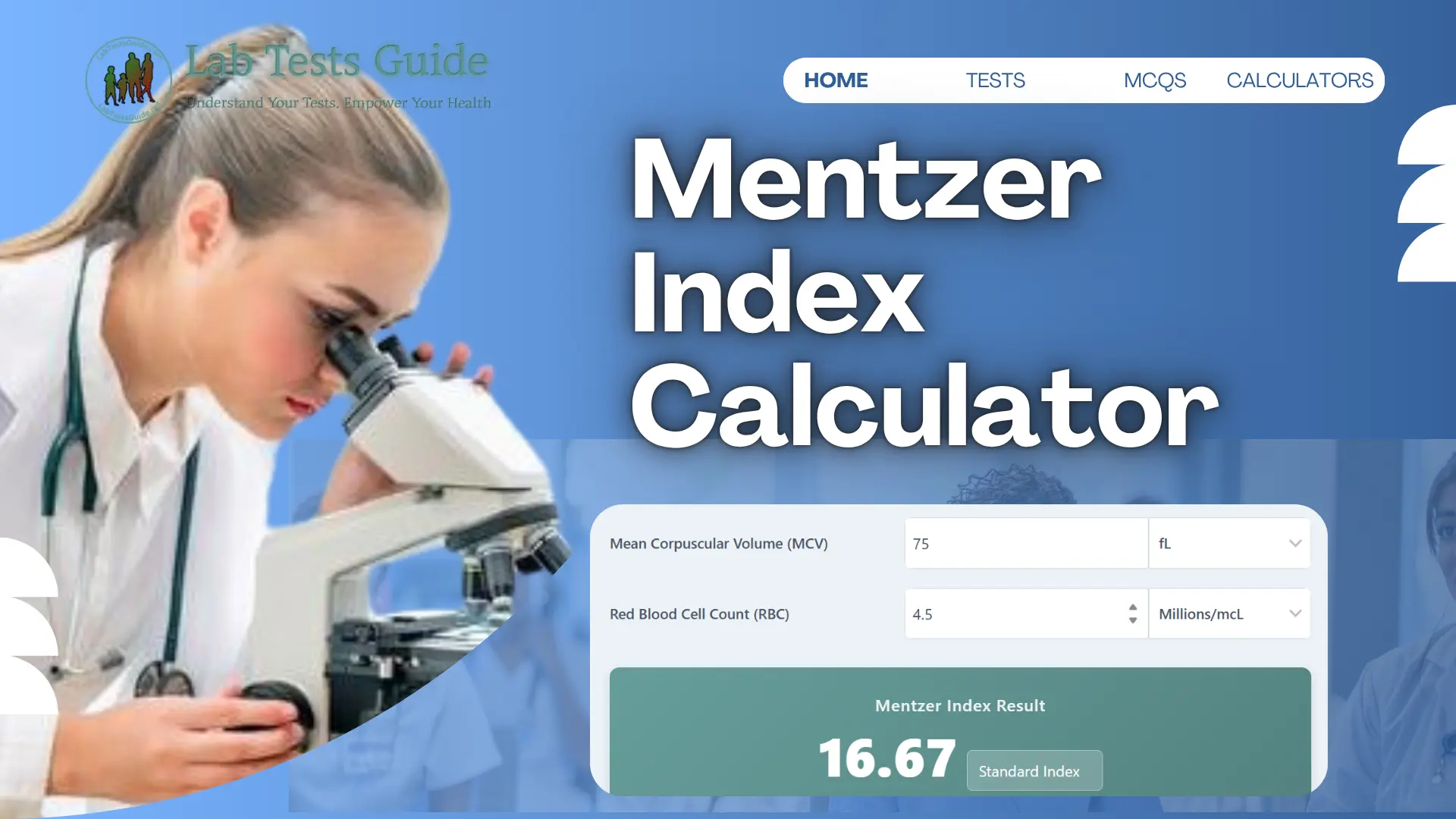
Mentzer Index Calculator
Calculate the Mentzer Index instantly with our free clinical calculator. Input MCV and RBC with live unit conversions to differentiate Iron Deficiency Anemia from…
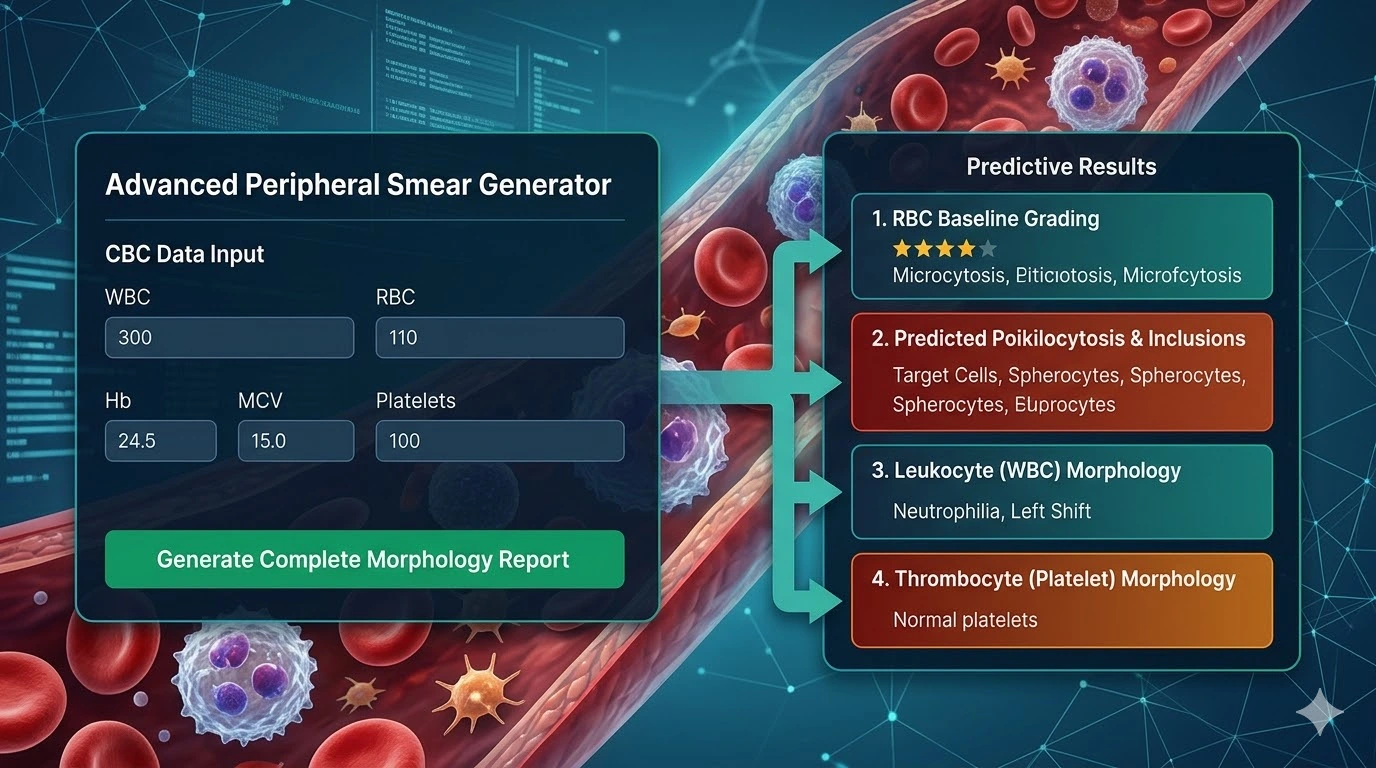
Advanced CBC to Peripheral Blood Smear Predictor Tool
Generate a complete peripheral blood smear morphology report from CBC results. This free predictive tool calculates RBC poikilocytosis, WBC, and platelet shapes.
Discussion 0