
Deafness (Hearing Loss)
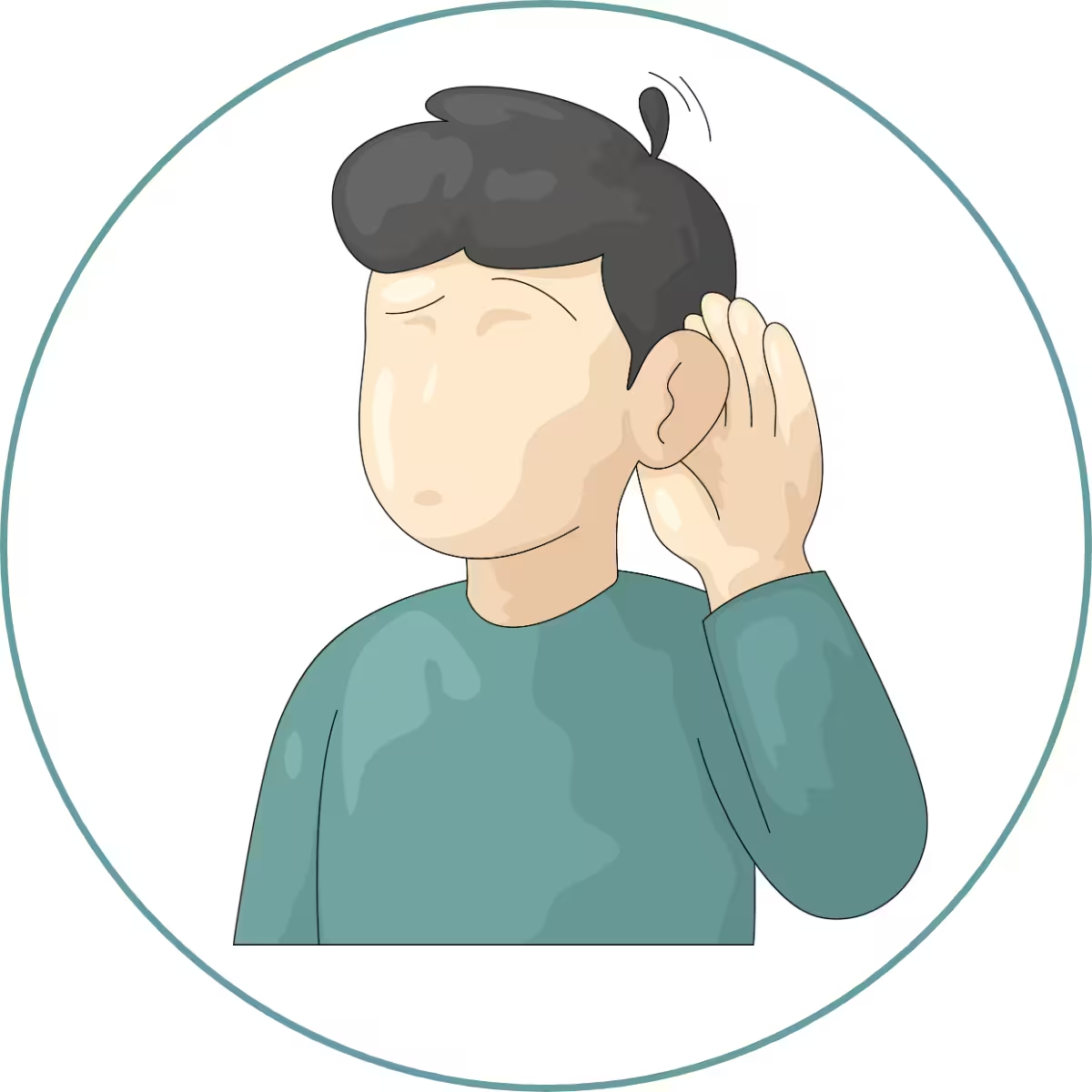
Deafness, also known as hearing loss, is a partial or complete inability to hear sounds in one or both ears. It may develop gradually or suddenly and can result from ear infections, loud noise exposure, or age-related changes.
🚨 Seek Immediate Medical Attention
Sudden hearing loss may be serious if you have:
- Sudden loss of hearing in one or both ears.
- Hearing loss with severe dizziness or vertigo.
- Ear pain with discharge or fever.
- Hearing loss after head injury.
📞 Consult an ENT Specialist
You should see a doctor if:
- Hearing gradually worsens over time.
- You frequently ask others to repeat themselves.
- You need higher volume on TV or phone.
- You have ringing in ears (tinnitus).
Common Symptoms & Causes
| Type of Hearing Loss | Possible Cause |
|---|---|
| Sudden hearing loss | Viral infection or nerve damage |
| Gradual hearing loss | Age-related (Presbycusis) |
| One ear hearing loss | Earwax blockage or infection |
| Hearing loss with pain | Otitis Media |
| Hearing loss with dizziness | Ménière’s Disease |
Causes by Category
Earwax blockage: Prevents sound conduction.
Ear infection: Fluid buildup in middle ear.
Perforated eardrum: Damage to tympanic membrane.
Noise-induced damage: Harm to inner ear hair cells.
Aging (Presbycusis): Gradual nerve degeneration.
Ménière’s Disease: Inner ear fluid imbalance.
Head injury: Can damage auditory nerves.
Ototoxic drugs: Certain medications affect hearing.
Infections: Viral or bacterial inner ear damage.
Diagnostic Procedures
Audiometry Test
Measures hearing ability across different sound frequencies.
Tuning Fork Tests
Distinguishes conductive vs sensorineural hearing loss.
Otoscopy
Visual examination of the ear canal and eardrum.
MRI Brain
Checks for nerve or brain-related causes of hearing loss.