

Tattoos have transitioned from counterculture symbols to a mainstream form of self-expression. Today, millions of people use their bodies as canvases to tell personal stories, commemorate milestones, or showcase artistic preferences. As the demand for unique body art grows, many individuals seek out https://www.mironenkotattoo.com to reflect their unique identities, yet this artistic journey must be balanced with a rigorous understanding of skin health and clinical safety.
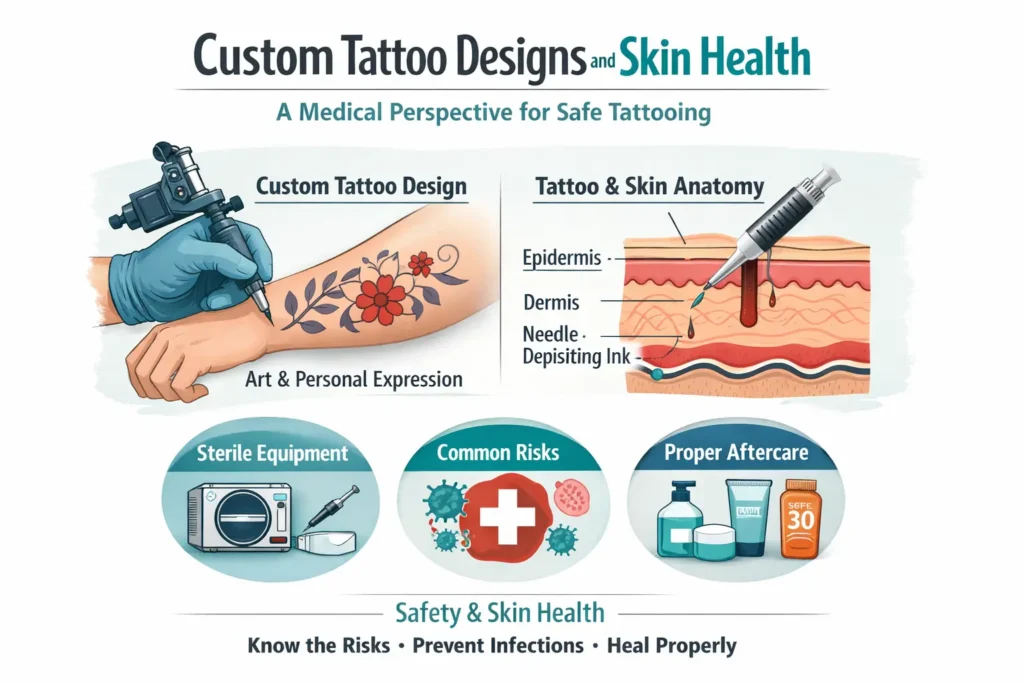
From a medical and laboratory perspective, a tattoo is more than just art; it is a percutaneous procedure that involves the deliberate introduction of foreign pigments into the dermal layer. Understanding the biological implications is essential for both the enthusiast and the healthcare professional.
What Are Custom Tattoo Designs?
Custom tattoo designs are original pieces created specifically for an individual client, often through a collaborative process between the artist and the recipient. Unlike “flash” tattoos—which are pre-drawn, standardized images—custom pieces are tailored to the client’s anatomy, skin tone, and personal narrative. While this allows for greater artistic freedom, it also requires a deeper understanding of how specific ink types and placements affect the skin’s integrity.
Skin Anatomy and Tattoo Ink Deposition
To understand tattoo longevity and safety, one must look at skin histology. The skin consists of three primary layers: the epidermis (outer), the dermis (middle), and the hypodermis (deepest).
Tattooing involves a needle penetrating the epidermis and delivering ink into the dermis. The dermis is stable; unlike the epidermis, which sheds every 2–4 weeks, the cells in the dermis stay relatively stationary. When ink is deposited, the body’s immune system responds. Macrophages (white blood cells) attempt to “eat” the ink particles. However, because many pigment particles are too large, they remain trapped in the fibroblasts, creating a permanent visual design.
Importance of Choosing a Professional Tattoo Artist
A professional tattoo artist acts as a technician who understands skin resistance and depth. If the ink is placed too shallow, it will fade as the epidermis regenerates. If it is placed too deep (into the hypodermis), the ink can “blow out,” leading to a blurred, distorted image. A professional ensures that the mechanical process respects the biological boundaries of the skin.
Medical Risks of Tattooing
While generally safe when performed correctly, tattooing carries inherent medical risks that laboratory professionals and clinicians often monitor:
| Risk Category | Examples | Prevention |
|---|---|---|
| Infections | Staphylococcus aureus, Hepatitis B/C, HIV | Sterile needles, single-use pigments |
| Allergies | Red ink sensitivity (mercury/cobalt salts) | Patch testing for sensitive skin |
| Granulomas | Small knots/bumps around the ink | High-quality, non-toxic pigments |
| Keloids | Overgrowth of scar tissue | Avoiding areas prone to scarring |
Sterilization and Hygiene Standards
The hygiene protocols in a reputable tattoo studio should mirror those found in a clinical laboratory or minor surgical suite.
- The Autoclave: Used to sterilize reusable equipment via high-pressure saturated steam.
- PPE: Artists must wear medical-grade gloves and change them frequently to prevent cross-contamination.
- Surface Disinfection: Workspaces must be treated with EPA-registered tuberculocidal disinfectants.
Recommended Medical Tests Before Getting a Tattoo
For those with underlying health concerns, certain laboratory tests or consultations are advisable:
- Coagulation Profile: For individuals on blood thinners or with hemophilia.
- Skin Patch Test: To check for allergic reactions to specific metal-based pigments.
- Immune Status Check: Individuals with compromised immune systems should consult a physician, as their risk of infection and slow healing is significantly higher.
Tattoo Aftercare: Medical Guidelines
The healing phase is a critical window for preventing secondary bacterial infections. Medical-grade aftercare focuses on maintaining the skin barrier:
- Keep it clean: Wash with fragrance-free, antimicrobial soap.
- Moisturize: Use a thin layer of breathable ointment (avoid heavy petroleum which can clog pores).
- UV Protection: Once healed, use SPF 30+ to prevent pigment degradation caused by UV-induced phagocytosis.
When to Seek Medical Attention
Patients should be advised to see a doctor if they experience:
- Fever or chills following the procedure.
- Excessive redness, warmth, or “red streaks” radiating from the tattoo site.
- Purulent drainage (pus) or persistent swelling.
Conclusion
The intersection of custom tattoo designs and medical science highlights the importance of safety in artistic expression. By understanding skin anatomy and adhering to strict sterilization protocols—much like those used in clinical labs—the risks associated with body art can be minimized. Whether you are a medical professional or a client, prioritizing skin health ensures that a custom tattoo remains a beautiful, lifelong addition rather than a medical complication.
