

Antigen vs Antibody
The human immune system is a highly complex defense network. At the core of this network is the dynamic relationship between antigens and antibodies. Understanding how these microscopic molecules interact is the foundation of immunology, vaccination, and infectious disease treatment.
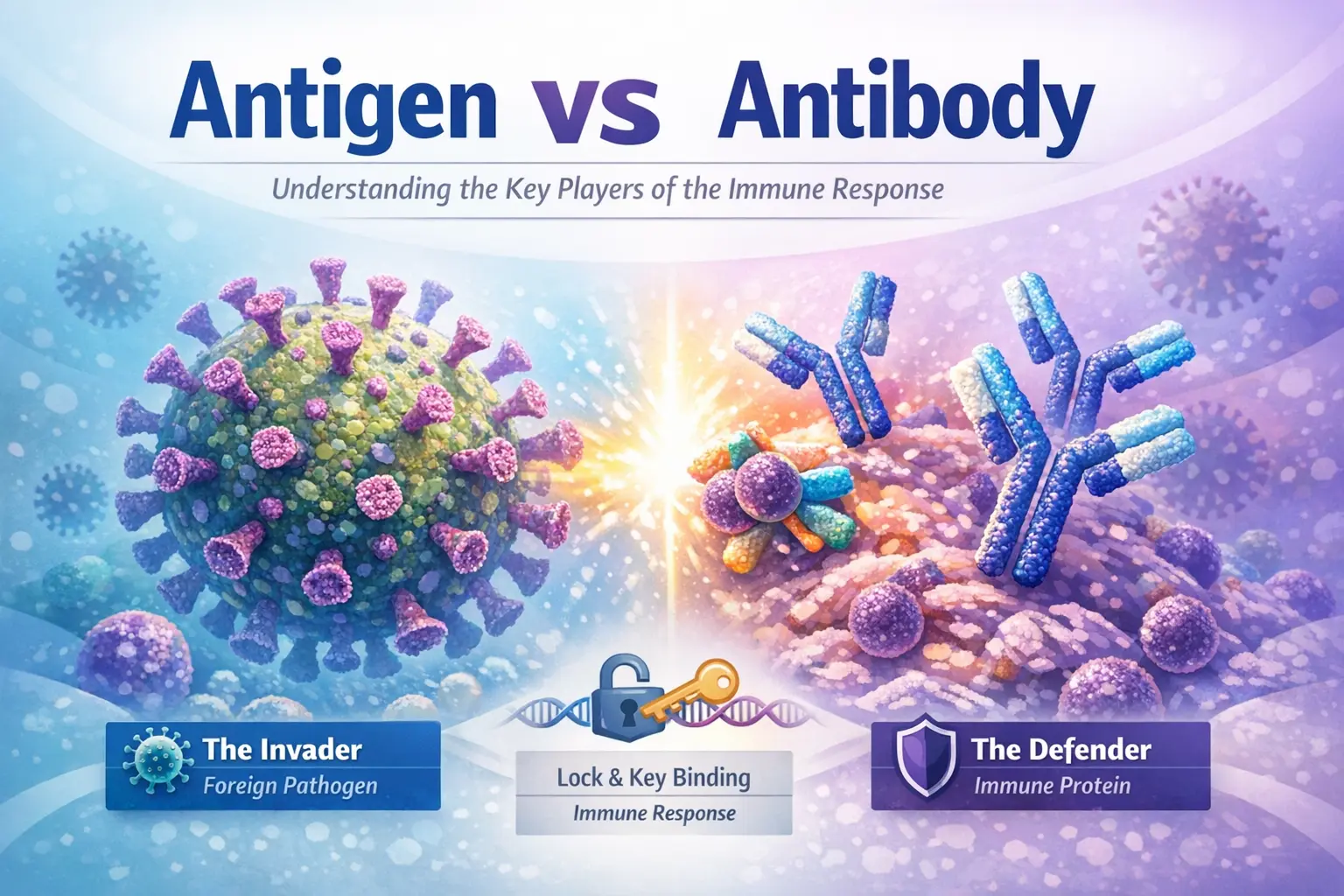
The Invader (Antigen)
A foreign substance that triggers the body’s immune response.
The Defender (Antibody)
A specialized Y-shaped protein created to neutralize specific antigens.
The Interaction
They bind together like a lock and key, signaling the immune system to attack.
Introduction
Every minute of every day, our bodies are exposed to thousands of microscopic threats, including bacteria, viruses, fungi, and toxins. To survive, the human body has developed an adaptive immune system capable of identifying and eliminating these specific invaders.
The Core Mechanism: The relationship between antigens and antibodies forms the basis of adaptive immunity. Think of an antigen as an intruder’s unique fingerprint, and the antibody as the precisely forged handcuff designed to capture only that specific intruder.
Distinguishing between these two components is vital for understanding how vaccines work, how allergic reactions occur, and how blood transfusions are safely matched.
What is an Antigen?
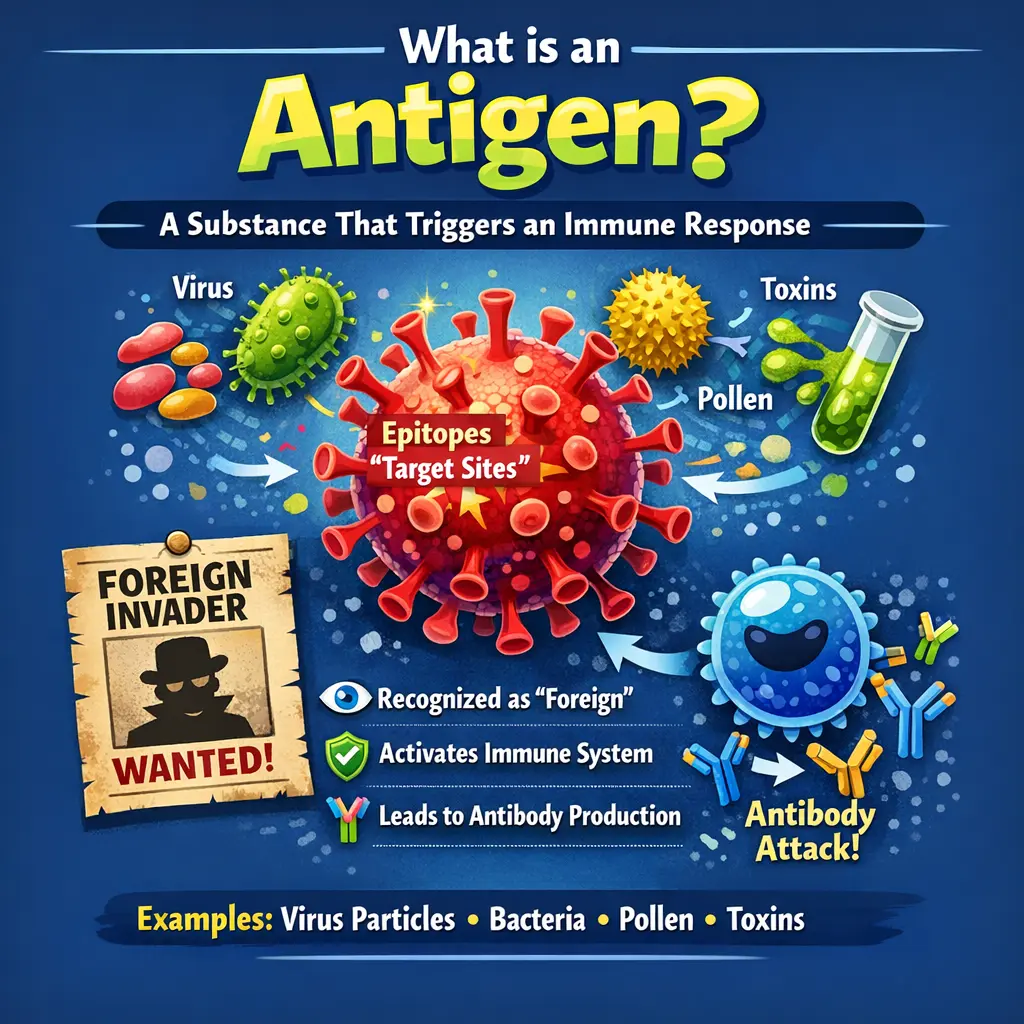
Definition: An antigen (short for Antibody Generator) is any molecule or substance that the immune system recognizes as foreign, prompting it to produce antibodies to fight it.
- Key Features: Antigens have specific regions on their surface called Epitopes (antigenic determinants). This is the exact part of the antigen where the immune system attaches.
- Structure / Composition: They are typically complex proteins, polysaccharides, lipids, or nucleic acids. They can be parts of a virus (like the spike protein of SARS-CoV-2), bacterial cell walls, pollen, or even venom.
- Types of Antigens:
• Exogenous: Enter the body from the outside (inhalation, ingestion, injection).
• Endogenous: Generated within cells (e.g., viral proteins produced by an infected cell).
• Autoantigens: Normal body tissues that a malfunctioning immune system mistakenly attacks (leading to autoimmune diseases).
What is an Antibody?
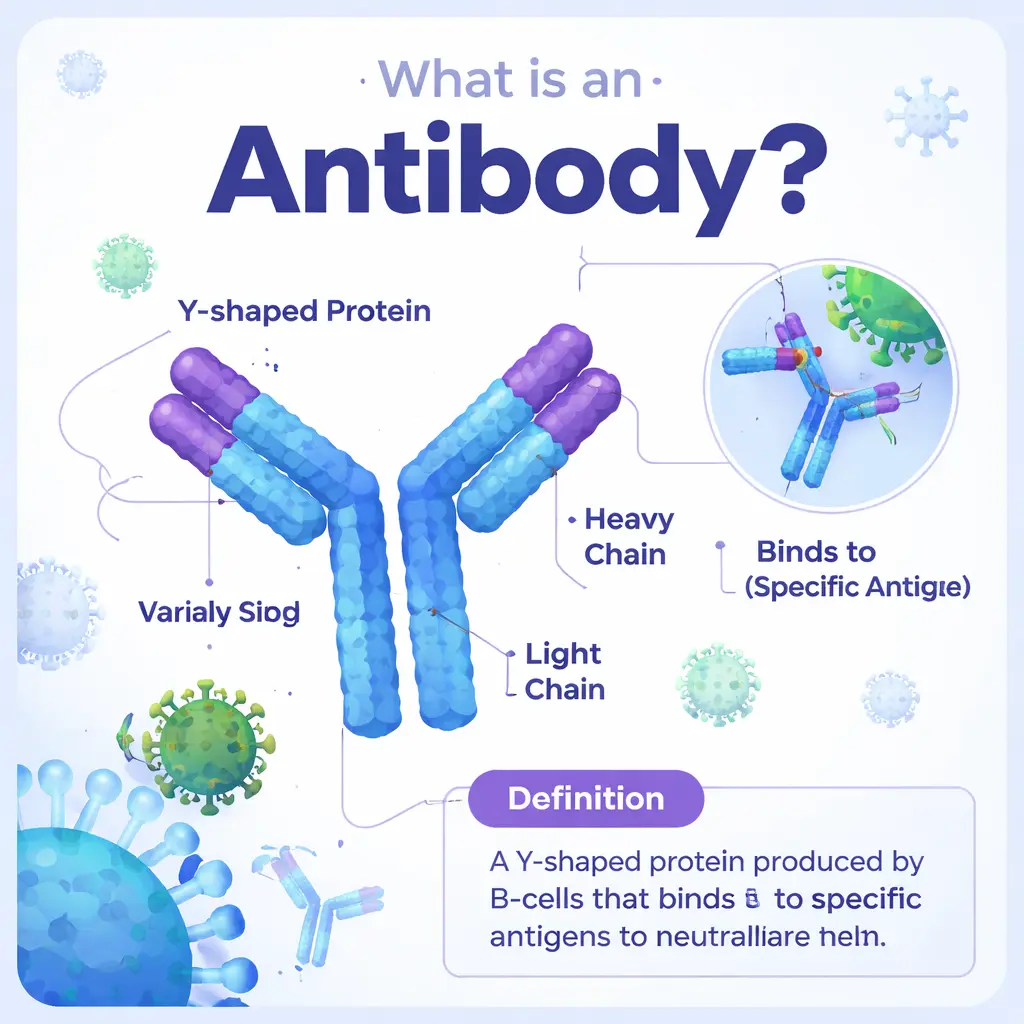
Definition: An antibody, also known as an Immunoglobulin (Ig), is a large, Y-shaped glycoprotein produced by B-cells (specifically plasma cells) in response to the presence of a specific antigen.
- Key Features: Each antibody is highly specific. The tips of the “Y” contain highly variable regions called Paratopes, which act as the “lock” for the antigen’s “key.”
- Structure / Composition: Antibodies consist of four polypeptide chains: two identical heavy chains and two identical light chains, held together by disulfide bonds.
- Types of Antibodies (GAMED):
• IgG: Most abundant; provides long-term immunity.
• IgA: Found in mucosal areas, saliva, and tears.
• IgM: The first antibody produced in response to a new infection.
• IgE: Associated with allergic reactions and parasitic infections.
• IgD: Functions primarily as a receptor on naive B-cells.
Key Differences: Antigen vs Antibody
Below is a comprehensive structural and functional comparison of antigens and antibodies.
| Feature | Antigen (Ag) | Antibody (Ab / Immunoglobulin) |
|---|---|---|
| 1. Definition | Substance that triggers an immune response. | Protein produced to neutralize antigens. |
| 2. Nature of Origin | Usually external (bacteria, virus, pollen, toxins). | Strictly internal (produced by the host’s body). |
| 3. Biochemical Composition | Proteins, polysaccharides, lipids, or nucleic acids. | Strictly glycoproteins. |
| 4. Cellular Origin | Pathogens, environmental factors, mutated cells. | Synthesized strictly by Plasma cells (B-lymphocytes). |
| 5. Interaction Site | Epitope (The part that sticks out to be grabbed). | Paratope (The binding site at the tips of the Y). |
| 6. Primary Function | To cause disease or trigger an immune reaction. | To protect the body, neutralize, or destroy the threat. |
| 7. Structure Shape | Highly variable; no standard shape. | Always a standardized Y-shape. |
| 8. Medical Use (Prophylaxis) | Used as the active ingredient in Vaccines. | Used in Antisera or monoclonal therapies. |
| 9. Types / Classifications | Exogenous, Endogenous, Autoantigens, Alloantigens. | IgG, IgA, IgM, IgE, IgD. |
| 10. Lifespan in Body | Usually temporary (until destroyed by immunity). | Can last months, years, or a lifetime (memory). |
| 11. Harm vs Benefit | Generally harmful (unless in a vaccine). | Highly beneficial (unless in autoimmune diseases). |
| 12. Analogy | The “Lock” (or the Invader’s fingerprint). | The “Key” (or the targeted Handcuffs). |
Similarities Between Antigens and Antibodies
Though they sit on opposite sides of the immune battlefield, they share a few critical biological characteristics:
- 1. High Specificity: The relationship is incredibly specific. One type of antibody will only bind to its matching antigen, much like puzzle pieces.
- 2. Interdependence: Antibodies cannot be created in the body naturally without the prior presence of an antigen to stimulate their production.
- 3. Non-Covalent Binding: When an antibody binds to an antigen, they connect via non-covalent bonds (hydrogen bonds, electrostatic forces, Van der Waals forces), allowing for reversible but incredibly strong attachment.
- 4. Central to Diagnostics: Both are heavily utilized in modern laboratory diagnostics (e.g., ELISA tests, Rapid Antigen Tests for COVID-19, pregnancy tests).
- 5. Protein Involvement: While antigens can be carbohydrates or lipids, the vast majority of strong, highly reactive antigens are proteins—just as all antibodies are proteins.
Medical Roles: Strengths & Vulnerabilities
The Role of Antigens
👍 Clinical Benefits:
- Crucial for creating vaccines (introducing a harmless antigen teaches the body to fight the real disease).
- Used in allergy testing to identify specific patient triggers.
👎 Clinical Drawbacks:
- Pathogenic antigens cause widespread cellular damage and infectious diseases.
- Can trigger massive, life-threatening allergic reactions (anaphylaxis) when the body overreacts to harmless antigens (like peanuts).
The Role of Antibodies
👍 Clinical Benefits:
- Provide immediate, targeted destruction of invading pathogens.
- Monoclonal antibodies can be engineered in labs to target specific cancers, autoimmune diseases, or severe viral infections.
👎 Clinical Drawbacks:
- Autoantibodies can mistakenly attack the body’s own healthy tissue (e.g., Rheumatoid Arthritis, Lupus).
- Maternal antibodies can sometimes attack fetal blood cells (e.g., Rh incompatibility).
Clinical & Diagnostic Significance
- Blood Typing: The A, B, AB, and O blood groups are determined by the presence of specific antigens on the surface of red blood cells. Transfusing the wrong blood introduces foreign antigens, causing the patient’s antibodies to violently attack the new blood.
- Rapid Testing: In diseases like Strep Throat, Flu, or COVID-19, “Antigen tests” look for the physical pieces of the virus currently in your body. “Antibody tests” look to see if your immune system fought the virus off weeks or months ago.
- Immunotherapy: Medical science now creates lab-made “monoclonal antibodies” designed to bind to cancer cell antigens, flagging the tumor so the patient’s immune system can destroy it.
Diagnostic Testing: Antigen vs Antibody
How doctors use these components to figure out what is happening in a patient’s body:
🦠 Performing an Antigen Test:
Done when a doctor suspects an active, current infection. By swabbing the throat or nose, they are searching for the physical presence of the pathogen (the antigen).
Result: Positive means you are currently sick and contagious.
🛡️ Performing an Antibody Test (Serology):
Done to check for past infections or vaccine immunity. By drawing blood, they look for the defensive proteins your body created.
Result: Positive usually means you have recovered from the illness or have successfully responded to a vaccine and possess immunity.
Summary Table (Quick Revision)
Short and exam-focused for rapid memorization.
| Point | Antigen | Antibody |
|---|---|---|
| Basic Concept | The Invader / Target | The Defender / Weapon |
| Produced By | External pathogens / Environment | B-cells (Plasma cells) of the immune system |
| Binding Site Name | Epitope | Paratope |
| Used in Diagnostics to show: | Active, ongoing infection | Past infection or immune protection |
Frequently Asked Questions (FAQs)
Are antigens the same thing as pathogens?
What is an autoantigen?
How long do antibodies stay in the body?
Do antibiotics kill antigens?
Conclusion
The lock-and-key interaction between an antigen and an antibody is a masterpiece of biological engineering. Recognizing an antigen as the foreign trigger and an antibody as the customized defensive response is the key to understanding human immunity.
💡 Key Takeaway: Antigens are the molecular “red flags” that warn the body of an invasion, while antibodies are the highly specific guided missiles produced by the immune system to hunt down and neutralize those exact flags. Harnessing this relationship allows modern medicine to create life-saving vaccines, precise diagnostic tests, and revolutionary targeted therapies.
