

HDL vs LDL Cholesterol
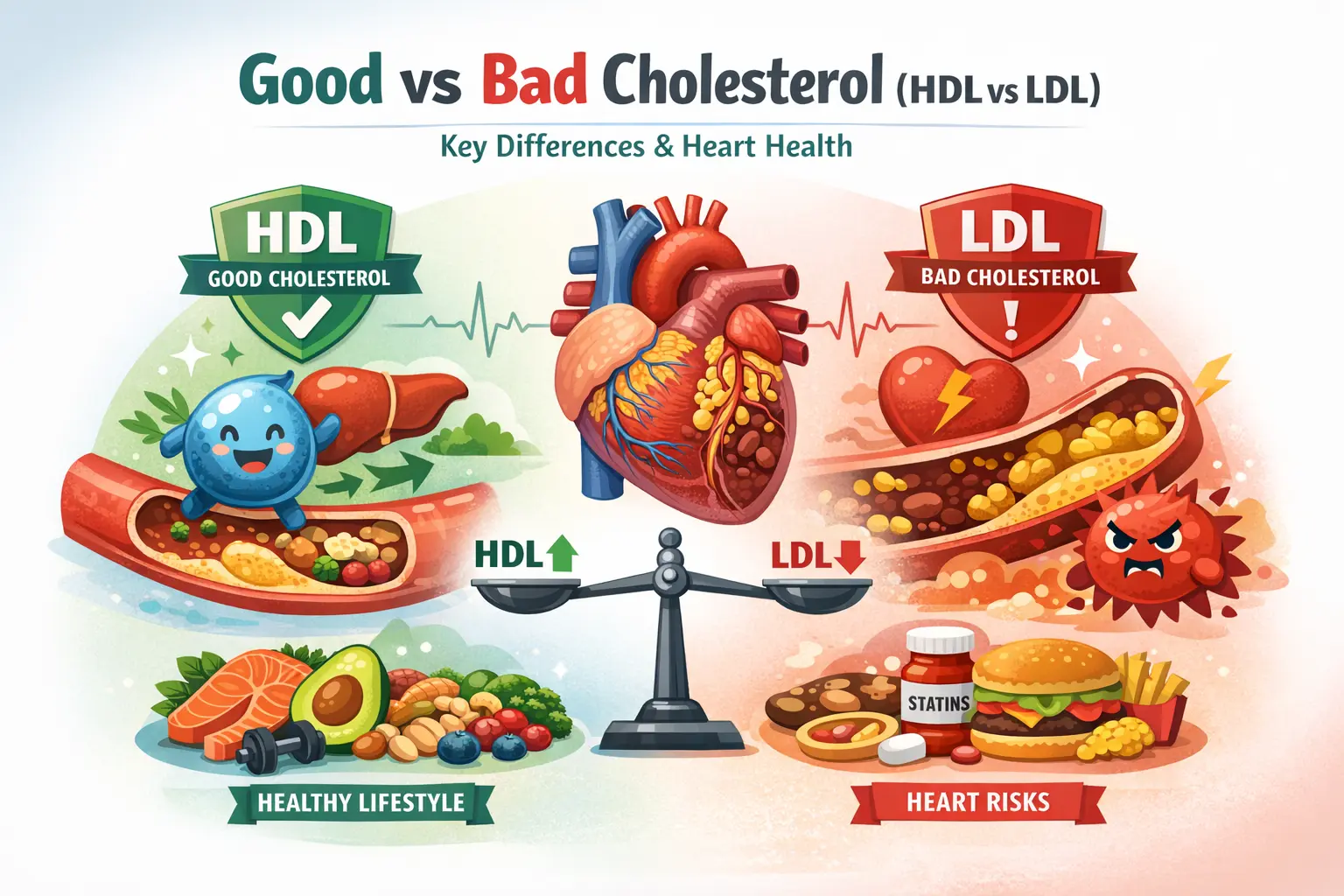
Cholesterol isn’t entirely a villain; it is a vital structural component of our cells. However, how it is transported through our bloodstream dictates our risk for heart disease. Understand the ultimate battle between “Good” and “Bad” cholesterol and how to protect your cardiovascular health.
HDL (Good)
Acts as a vacuum, carrying cholesterol away from arteries back to the liver.
LDL (Bad)
Deposits cholesterol into artery walls, leading to hazardous plaque buildup.
Heart Impact
High HDL protects the heart, while high LDL significantly increases stroke and attack risks.
Introduction
Cholesterol is a waxy, fat-like substance found in all the cells in your body. Your body needs cholesterol to make hormones, vitamin D, and substances that help you digest foods. Because fat and water don’t mix, cholesterol cannot travel through your bloodstream alone; it must be carried by protein “vehicles” called Lipoproteins.
The Core Concept: The two main types of lipoproteins are High-Density Lipoprotein (HDL) and Low-Density Lipoprotein (LDL). The ratio and absolute numbers of these two lipoproteins are the leading indicators of cardiovascular health.
These values are routinely evaluated in clinical labs using a blood test known as a Lipid Panel. Understanding these metrics helps patients make informed diet, lifestyle, and medication decisions.
What is HDL (Good Cholesterol)?
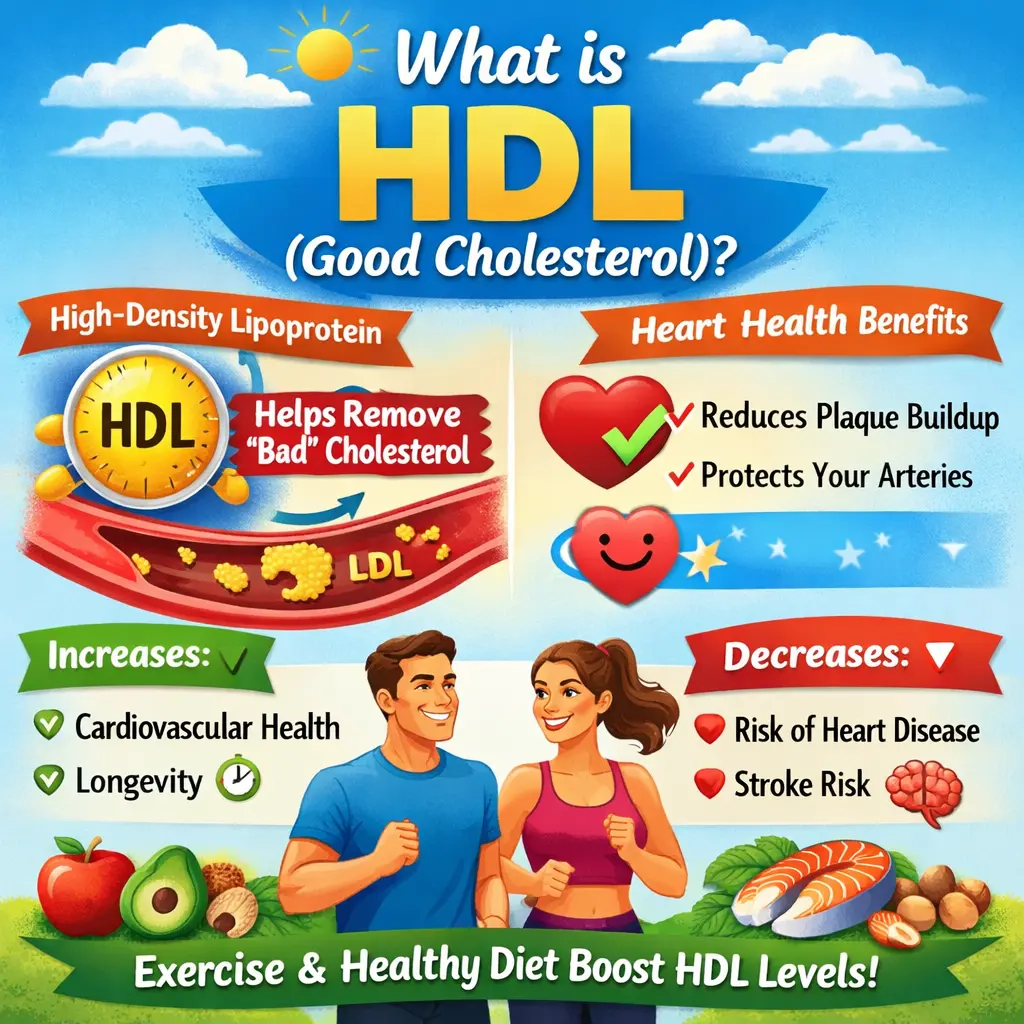
Definition: HDL stands for High-Density Lipoprotein. It is famously dubbed the “Good Cholesterol” because a healthy level may protect against heart attacks and strokes.
- Structure / Composition: HDL particles are dense. They contain the highest proportion of proteins compared to cholesterol and fat (hence “high-density”).
- Function / Role: HDL acts like a molecular street sweeper. It scavenges excess cholesterol from the bloodstream, tissues, and arterial walls, and transports it directly back to the liver to be broken down and excreted from the body.
- Optimal Levels: For men, an HDL of 40 mg/dL or higher is desired. For women, 50 mg/dL or higher. An HDL over 60 mg/dL is considered highly protective against heart disease.
What is LDL (Bad Cholesterol)?
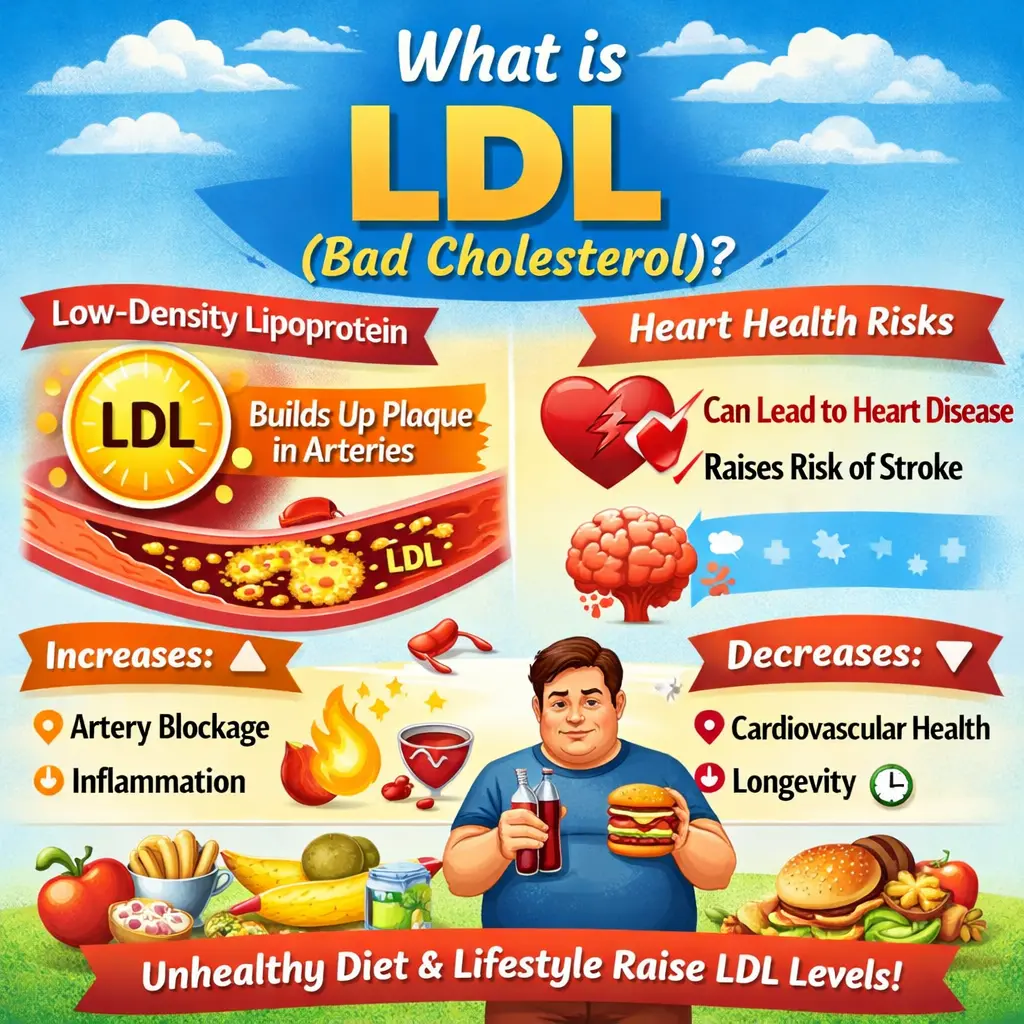
Definition: LDL stands for Low-Density Lipoprotein. It is referred to as “Bad Cholesterol” because elevated levels lead to a dangerous buildup of cholesterol in your arteries.
- Structure / Composition: LDL particles are less dense, meaning they contain a much higher ratio of fat and cholesterol compared to protein.
- Function / Role: LDL’s primary biological job is to deliver necessary cholesterol to various cells around the body. However, when there is too much LDL in the blood, it gets trapped in the walls of blood vessels. Over time, it oxidizes and forms hard plaque (atherosclerosis).
- Optimal Levels: An LDL level of less than 100 mg/dL is optimal for most people. For individuals with existing heart disease, doctors often aim for an LDL below 70 mg/dL.
Key Differences: HDL vs LDL
Below is a clear, medical comparison summarizing how these two lipoproteins behave in the human body.
| Feature | HDL (Good Cholesterol) | LDL (Bad Cholesterol) |
|---|---|---|
| Full Name | High-Density Lipoprotein | Low-Density Lipoprotein |
| Primary Role | Removes excess cholesterol from the blood | Delivers cholesterol to cells across the body |
| Destination | Carries cholesterol to the liver | Carries cholesterol away from the liver |
| Protein-to-Fat Ratio | High protein, low fat (High Density) | Low protein, high fat (Low Density) |
| Plaque Formation | Prevents and reduces plaque buildup | Primary cause of plaque buildup (Atherosclerosis) |
| Health Goal | We want these levels to be HIGH (↑) | We want these levels to be LOW (↓) |
| Optimal Clinical Level | > 60 mg/dL (Highly protective) | < 100 mg/dL (Optimal for most) |
| Particle Size | Smallest and most dense lipoproteins | Larger, fluffier, but prone to oxidation |
| Heart Disease Risk | Inversely related (High HDL = Low Risk) | Directly related (High LDL = High Risk) |
| How to Improve | Aerobic exercise, healthy fats (Omega-3), quit smoking | Reduce saturated/trans fats, increase fiber, statins |
Similarities Between Both Lipoproteins
While they have opposite impacts on cardiovascular health, HDL and LDL share important biological foundations:
- Chemical Core: Both are lipid-protein complexes designed to transport the exact same molecule—cholesterol—through the water-based bloodstream.
- Origin: Both are predominantly synthesized and regulated by the liver.
- Essential for Life: Despite its bad reputation, you cannot live without LDL. Both are required to deliver and manage the cholesterol needed for cell membrane integrity and hormone synthesis.
- Modifiable: The levels of both HDL and LDL are heavily influenced by a combination of genetics, diet, body weight, and exercise.
Health Impacts: Good vs Bad Actions
HDL (Good Cholesterol)
👍 Positive Health Impacts:
- Acts as an antioxidant and anti-inflammatory agent in the bloodstream.
- Actively promotes “Reverse Cholesterol Transport,” shrinking existing artery plaque.
⚠️ When Levels Are Too Low:
- An HDL below 40 mg/dL removes the body’s natural defense mechanism against artery blockages.
LDL (Bad Cholesterol)
👍 Vital Functions (When Normal):
- Crucial for carrying cholesterol to tissues to build cells, produce bile acids, and synthesize sex hormones (testosterone/estrogen).
⚠️ When Levels Are Too High:
- Infiltrates artery walls, oxidizes, and triggers an immune response. This creates fatty streaks and eventual blockages, risking fatal heart attacks and strokes.
Clinical Significance & How to Improve
Doctors track these numbers through a Lipid Panel. If your ratio of LDL to HDL is out of balance, immediate lifestyle or medical intervention is required.
🟢 How to Increase HDL (The Good):
Engage in rigorous aerobic exercise (running, cycling), quit smoking, consume monounsaturated fats (olive oil, avocados), and moderate alcohol intake.
🔴 How to Lower LDL (The Bad):
Dramatically reduce saturated fats (red meat, full-fat dairy) and eliminate trans fats. Increase soluble fiber (oats, beans), lose excess weight, and if prescribed, adhere to medications like Statins.
Summary Table (Quick Revision)
Short and exam-focused for rapid health literacy.
| Point | HDL (Good) | LDL (Bad) |
|---|---|---|
| Core Action | Clears cholesterol from arteries to liver. | Dumps cholesterol into blood and arteries. |
| Health Objective | Keep it High (> 60 mg/dL). | Keep it Low (< 100 mg/dL). |
| Dietary Fix | Omega-3s, Olive Oil, Nuts. | Reduce butter, cheese, fried foods. |
| Cardiovascular Risk | Protects against heart attacks. | Primary driver of heart attacks. |
Frequently Asked Questions (FAQs)
What is a normal Total Cholesterol level?
Can I have high LDL but still be healthy if my HDL is also high?
Are eggs bad for my cholesterol?
Why do some skinny people have high LDL cholesterol?
Conclusion
In summary, managing the delicate balance between HDL (Good Cholesterol) and LDL (Bad Cholesterol) is one of the most effective ways to ensure long-term cardiovascular health. While both lipoproteins are essential for transporting cholesterol through the body, their final destinations dictate your health outcomes.
💡 Key Takeaway: Think of HDL as the garbage trucks cleaning up your bloodstream, and LDL as the dump trucks dropping off debris. By modifying your diet, increasing exercise, and consulting your doctor for a routine lipid panel, you can lower the bad, boost the good, and keep your arteries clear for decades to come.
