
AMH Hormone Test – Normal Range, Purpose, Results & Fertility Insights
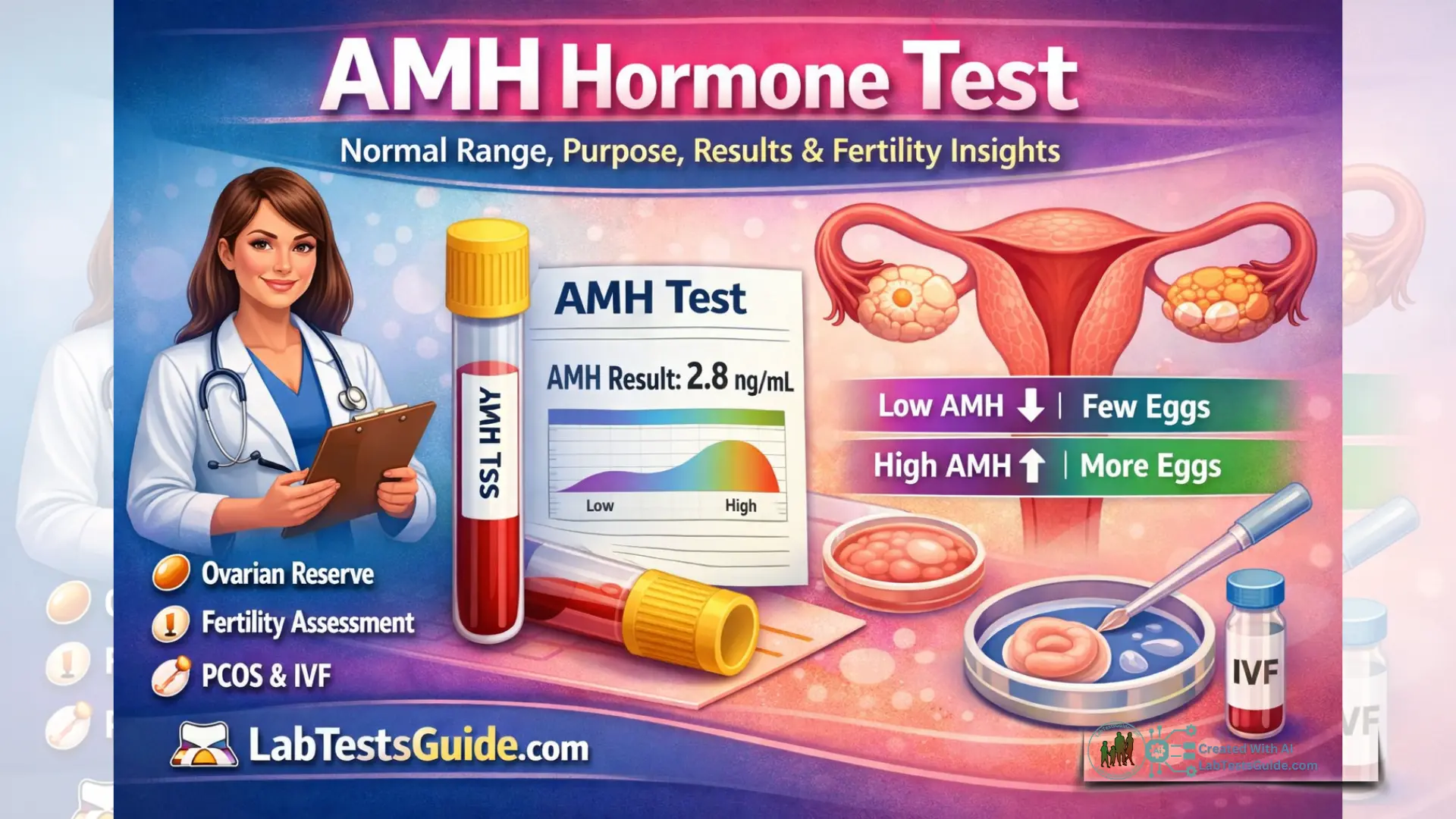
The anti-Müllerian hormone (AMH) test is a simple blood test that measures AMH levels, primarily to assess a woman’s ovarian reserve (number of eggs). This test helps doctors guide fertility treatments like IVF, determine the timing of menopause, or diagnose conditions like PCOS, as AMH reflects the number of small follicles developing in the ovaries. Unlike other fertility tests, it is convenient because it can be done at any time.

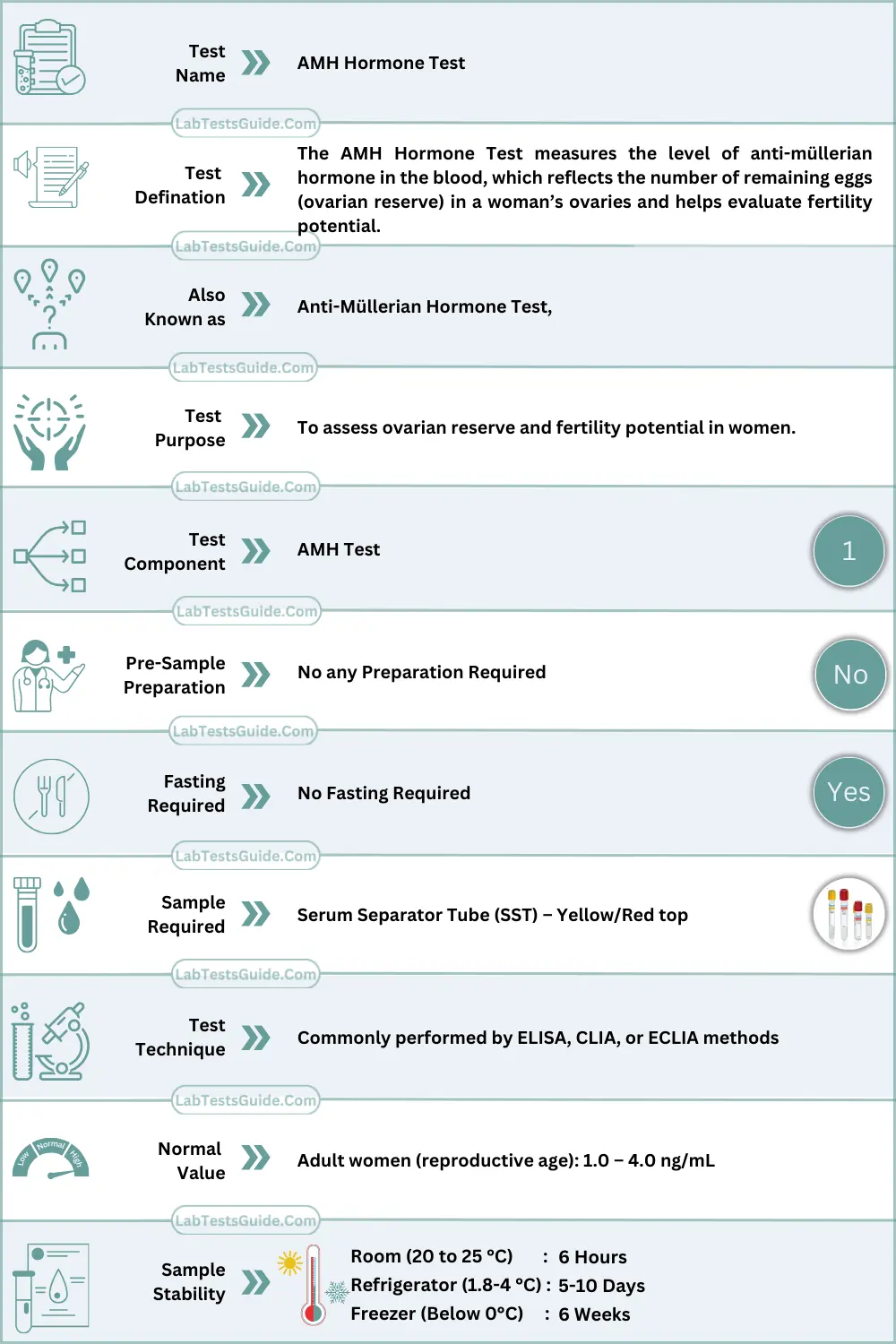
AMH Hormone Test Quick Facts:

What is AMH Hormone Test ?
The AMH Hormone Test measures the level of anti-müllerian hormone in the blood, which reflects the number of remaining eggs (ovarian reserve) in a woman’s ovaries and helps evaluate fertility potential.
Why is AMH Hormone Test Done ?
For Patients / General Use
- Difficulty getting pregnant
- Fertility planning or delayed childbearing
- Irregular or absent menstrual cycles
- Suspected early menopause
- Monitoring fertility before cancer treatment
For Doctors / Clinical Use
- Assessment of ovarian reserve
- Predicting response to ovarian stimulation in IVF
- Evaluation of polycystic ovary syndrome (PCOS)
- Diagnosis of premature ovarian insufficiency
- Monitoring ovarian function after surgery or chemotherapy
How the AMH Hormone Test Works (Principle / Methodology)
AMH is secreted by granulosa cells of ovarian follicles. The test uses immunoassay techniques (such as ELISA, CLIA, or ECLIA) where antibodies specifically bind to AMH, allowing its concentration to be measured accurately in serum.
AMH Hormone Test Specimen Requirements & Collection
| Requirement | Details |
|---|---|
| Specimen type | Serum |
| Tube type | SST (Yellow/Gold top) |
| Volume | 1–2 mL serum |
| Patient preparation | No fasting required; test can be done any day of cycle |
| Collection steps | Standard venipuncture using aseptic technique |
| Transport & storage | Refrigerate at 2–8 °C; analyze within 48 hours or freeze if delayed |
AMH Hormone Test Reference Ranges
| Population | Reference Range | Units |
|---|---|---|
| Adult women (reproductive age) | 1.0 – 4.0 | ng/mL |
| Low ovarian reserve | < 1.0 | ng/mL |
| High (often PCOS) | > 4.0 | ng/mL |
| Postmenopausal women | Very low / undetectable | ng/mL |
Note: Reference ranges vary by laboratory, method, and population.
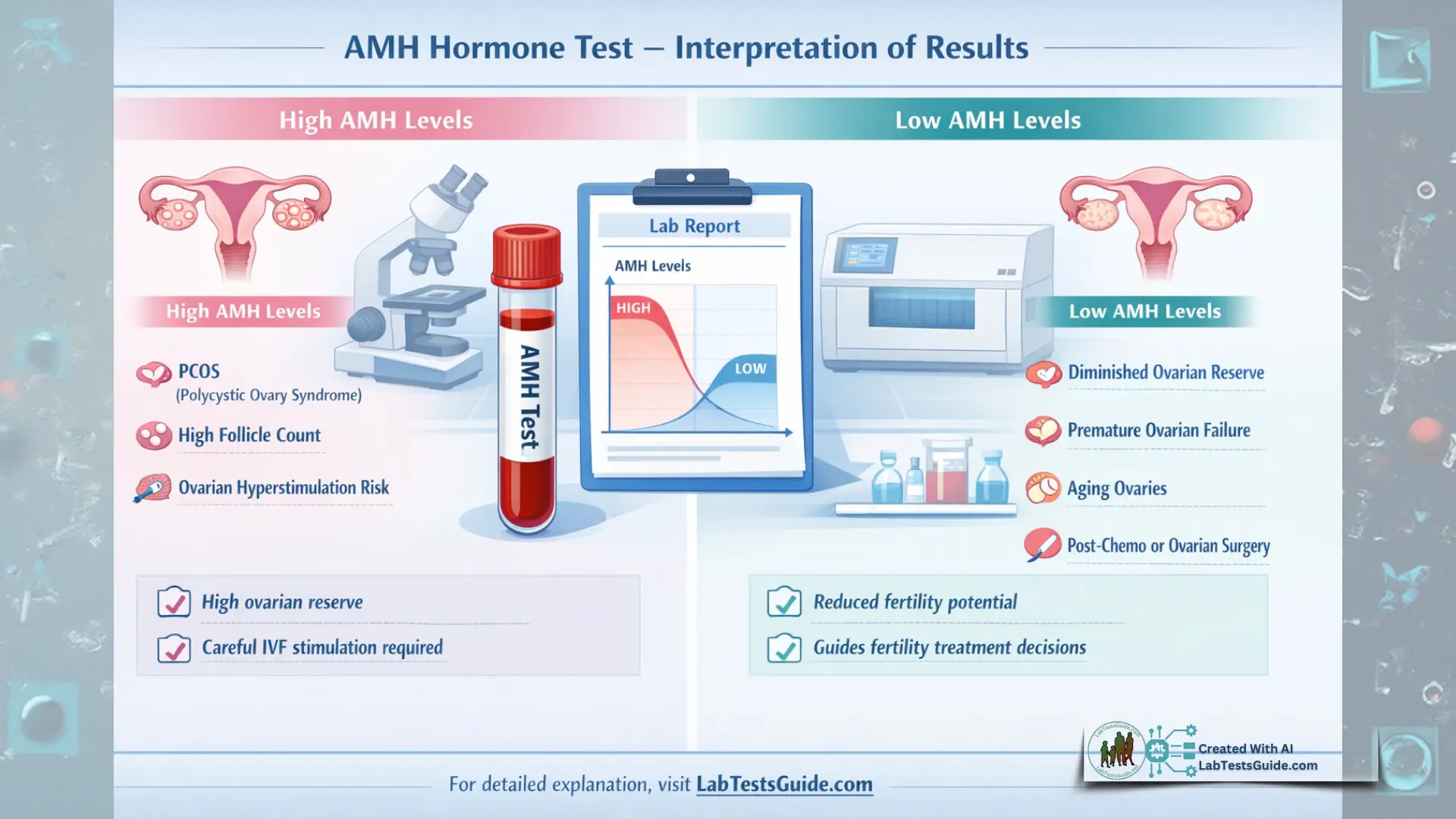
AMH Hormone Test Interpretation of Results:

High Levels (Causes & Clinical Significance)
Causes
- Polycystic ovary syndrome (PCOS)
- High follicle count
- Ovarian hyperstimulation risk
Differential Diagnoses
- PCOS
- Ovarian granulosa cell tumors (rare)
Clinical Relevance
- Indicates high ovarian reserve
- May require careful IVF stimulation protocols
Low Levels (Causes & Clinical Significance)
Causes
- Diminished ovarian reserve
- Premature ovarian failure
- Aging ovaries
- Post-chemotherapy or ovarian surgery
Differential Diagnoses
- Early menopause
- Ovarian insufficiency
Clinical Relevance
- Reduced fertility potential
- Helps guide fertility treatment decisions
AMH Hormone Test Interfering Factors / Pre-Analytical Errors
- Hemolysis: May interfere with assay accuracy
- Lipemia: Can affect immunoassay readings
- Icterus: Possible analytical interference
- Medications: Hormonal treatments may alter levels
- Sample handling: Delayed processing reduces stability
- Biological variation: Age-related decline is normal
AMH Hormone Test Critical Values / PANIC Values
- No established panic values for AMH
- Extremely high or undetectable levels should be clinically reviewed
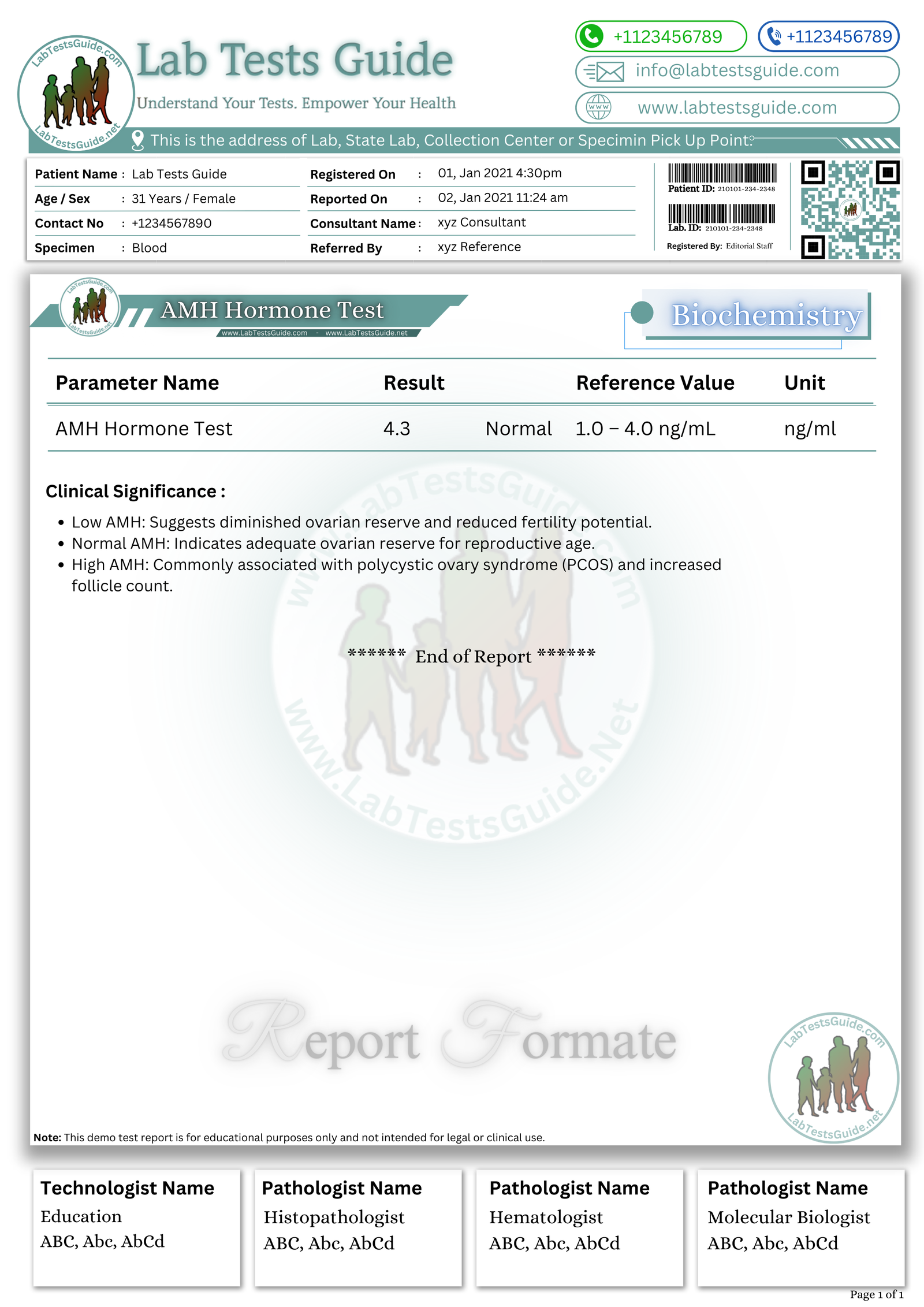
AMH Hormone Test Sample Lab Report:
Nursing / Phlebotomy Notes
- Use Yellow/Gold top (SST) tube
- Proper patient identification and labeling
- Gentle inversion after collection
- Refrigerate if transport is delayed
- Follow universal precautions
Lab Student Key Points
- AMH is cycle-independent
- Best marker of ovarian reserve
- Immunoassay-based testing
- Declines naturally with age
Do I need fasting for AMH test?
No, fasting is not required.
Can AMH be tested any day of cycle?
Yes, it is cycle-independent.
Does low AMH mean I cannot get pregnant?
No, it only reflects ovarian reserve, not pregnancy certainty.
Is AMH useful after menopause?
Levels are usually very low and less clinically useful.
Can AMH predict menopause timing?
It provides an estimate but not an exact prediction.
Does birth control affect AMH?
Usually minimal effect.
⚠️ Disclaimer:
The content on LabTestsGuide.com is for informational and educational purposes only. We do not guarantee the accuracy, completeness, or timeliness of the information provided. Always consult qualified healthcare professionals for medical advice, diagnosis, or treatment. LabTestsGuide.com is not liable for any decisions made based on the information on this site.