

ADHD Diagnoses Are on the Rise Here’s What’s Driving the Surge
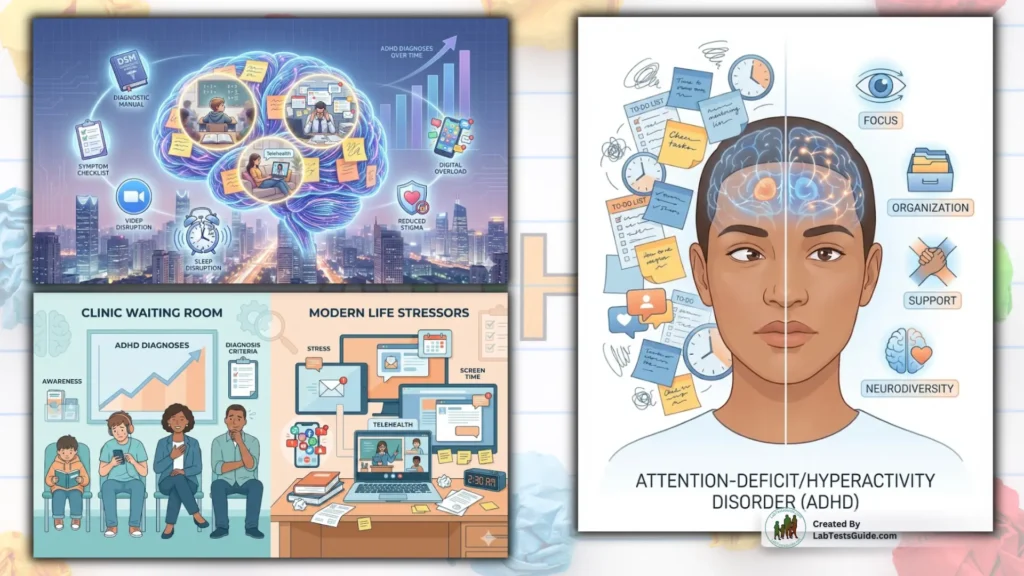
The global surge in ADHD diagnoses isn’t just due to more people having the condition improved awareness, changing diagnostic practices, societal shifts, and increased stress from modern life all play major roles.
ADHD Diagnoses Are on the Rise — Here’s What’s Driving the Surge
In recent years, many countries have seen record-high numbers of diagnoses of Attention‑Deficit/Hyperactivity Disorder (ADHD) among children, teenagers, and adults. In the United States, for example, a 2022 survey found that more than 11 % of children had received an ADHD diagnosis at some point a steep increase from the roughly 8 % reported in 2003.
But what’s behind this surge? According to experts, the rise doesn’t necessarily mean that many more people have developed ADHD recently. Rather, a complex combination of improved detection, societal changes, and shifting diagnostic practices has amplified the number of diagnoses.
What’s Changing in Diagnosis and Detection
• Expanded criteria and evolving diagnostic practices
- The definitions and guidelines psychiatrists use to diagnose ADHD have broadened over time. For instance, the publication of DSM‑5 in 2013 slightly relaxed diagnostic criteria making it easier for both children and adults to meet them.
- More clinicians today are also diagnosing ADHD in people who might previously have been overlooked for example, adults and females whose symptoms present differently than the stereotypical hyperactive child.
- In addition, it is now more common practice for clinicians to assign multiple diagnoses (e.g., ADHD along with other neurodevelopmental or mental-health conditions) rather than limit a patient to a single “primary” diagnosis.
• Greater awareness, reduced stigma, and more access to assessment
- Growing public awareness about ADHD among parents, educators, and health professionals — means more people are recognizing symptoms and seeking evaluations.
- The stigma around ADHD and other mental-health conditions has decreased, making it more acceptable to seek diagnosis and support.
- Increased access to mental-health care and assessment services including broader availability of specialists and telehealth has made it easier for people who previously lacked access to get evaluated.
• Growing demands on attention, self-organization, and performance
Modern society with its fast pace, digital distractions, and high expectations places greater demands on attention, organization, and self-regulation skills. For many individuals who may have always had mild attention difficulties, these heightened demands make such difficulties more obvious and disruptive, prompting evaluations.
In school settings, for example, shifts toward project-based work, self-guided learning, and digital instruction may make it harder for children with even subtle attention or executive-function issues to keep up.
• Environmental stressors, lifestyle changes, and mental-health challenges
There is growing recognition of how environmental and lifestyle factors such as screen time, sleep disruption, increased stress, and poorer mental health may make attention and focus problems more prominent.
Furthermore, the global disruptions related to the COVID‑19 pandemic including remote schooling, social isolation, and increased anxiety and depression appear to have contributed to a rise in ADHD diagnoses, both new and previously undiagnosed.
Why Some Experts Warn of Overdiagnosis And Others Say Many Were Undiagnosed
While many professionals celebrate increased diagnosis and greater access to support, some warn that the surge may reflect overdiagnosis rather than a genuine increase in ADHD prevalence.
- When diagnostic criteria are applied broadly or interpreted more liberally individuals with mild or borderline symptoms may receive a formal diagnosis, even if they would not meet stricter clinical standards.
- Pressure from parents, schools, or social expectations to label attention or behavioral difficulties may lead to unnecessary diagnoses, especially when a formal diagnosis is perceived as a way to access academic accommodations, medication, or support.
On the other hand, some researchers and clinicians argue that many people especially adults and females — were historically underdiagnosed. The rise in diagnoses may therefore represent a long-overdue correction rather than an epidemic.
What It Means — And What to Do
The rising numbers of ADHD diagnoses carry important implications for individuals, healthcare providers, educators, and policymakers:
- Diagnosis should consider impairment, not just symptoms. Experts emphasise that for a diagnosis of ADHD to be clinically meaningful, symptoms must cause noticeable impairment such as struggling at school/work, challenges in daily functioning, or social difficulties not just occasional inattention or restlessness.
- Support systems must evolve. As more individuals receive diagnoses, schools, workplaces, and mental-health services must adapt offering not just medication, but behavioural support, accommodations, and training to understand neurodiversity.
- Awareness must be balanced with caution. While greater awareness and destigmatisation are positive, there is also a need for careful, evidence-based assessments to avoid overdiagnosis and ensure that treatment (when provided) truly benefits the individual.
- More research is needed. To understand how environmental, societal, and lifestyle changes influence ADHD symptoms and to develop better diagnostic tools ongoing research is crucial.
References
- ADHD diagnoses are growing. What’s going on? – Nature – (Accessed on Dec 1, 2025)
- What’s Driving the Rise in ADHD Diagnosis Among Children and Adults? – Art sand sciences – (Accessed on Dec 1, 2025)
- ADHD Diagnoses Keep Rising Higher. This Is Why It’s Happening. – Science alert – (Accessed on Dec 1, 2025)
- Greater awareness behind ADHD surge, study suggests – BBC – (Accessed on Dec 1, 2025)
