

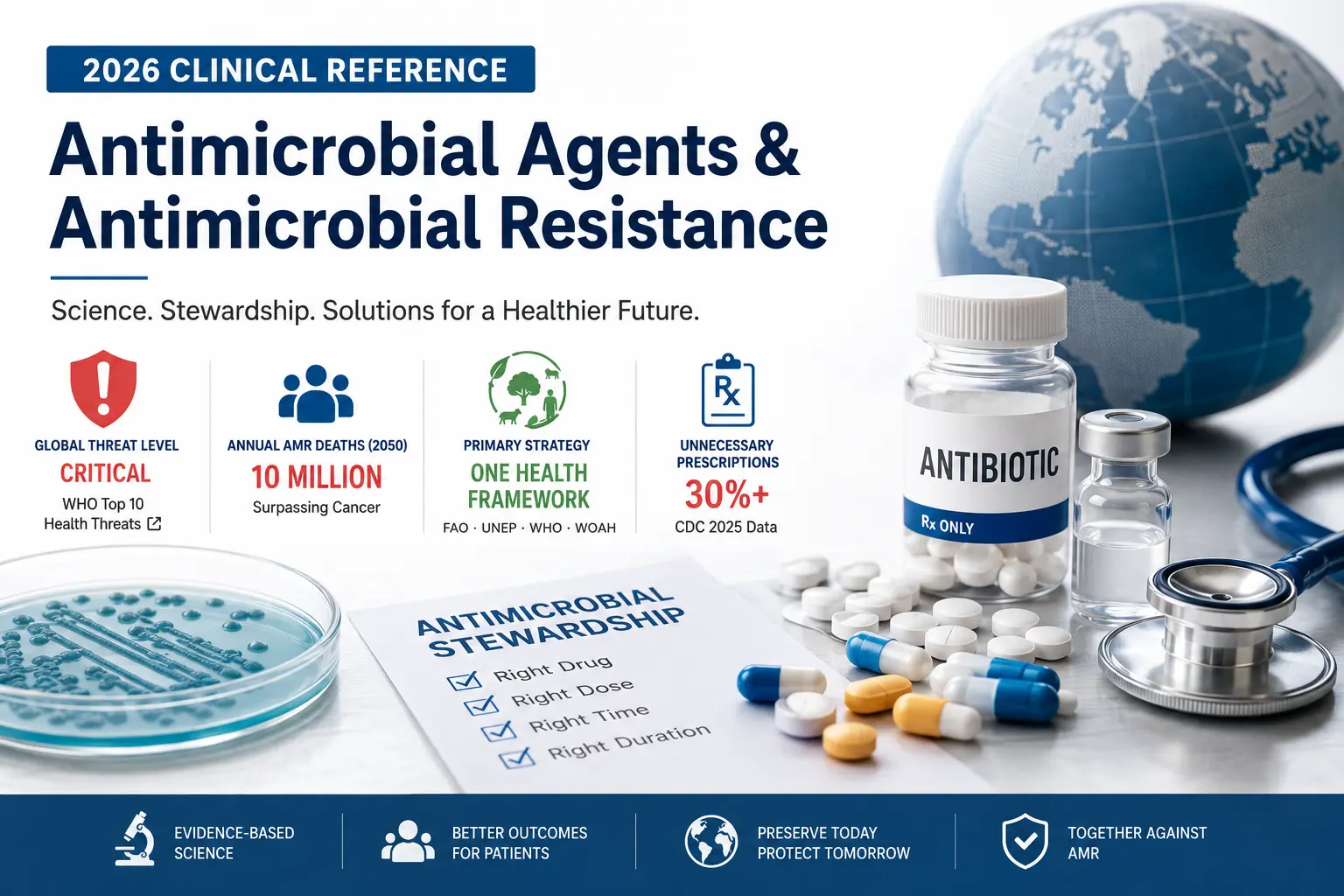
Antimicrobial Agents & Antimicrobial Resistance
A comprehensive clinical and educational resource covering mechanisms of action, WHO 2024-2026 priority pathogens, historical breakthroughs, AI-driven drug discovery, and global stewardship guidelines.
Foundations & History
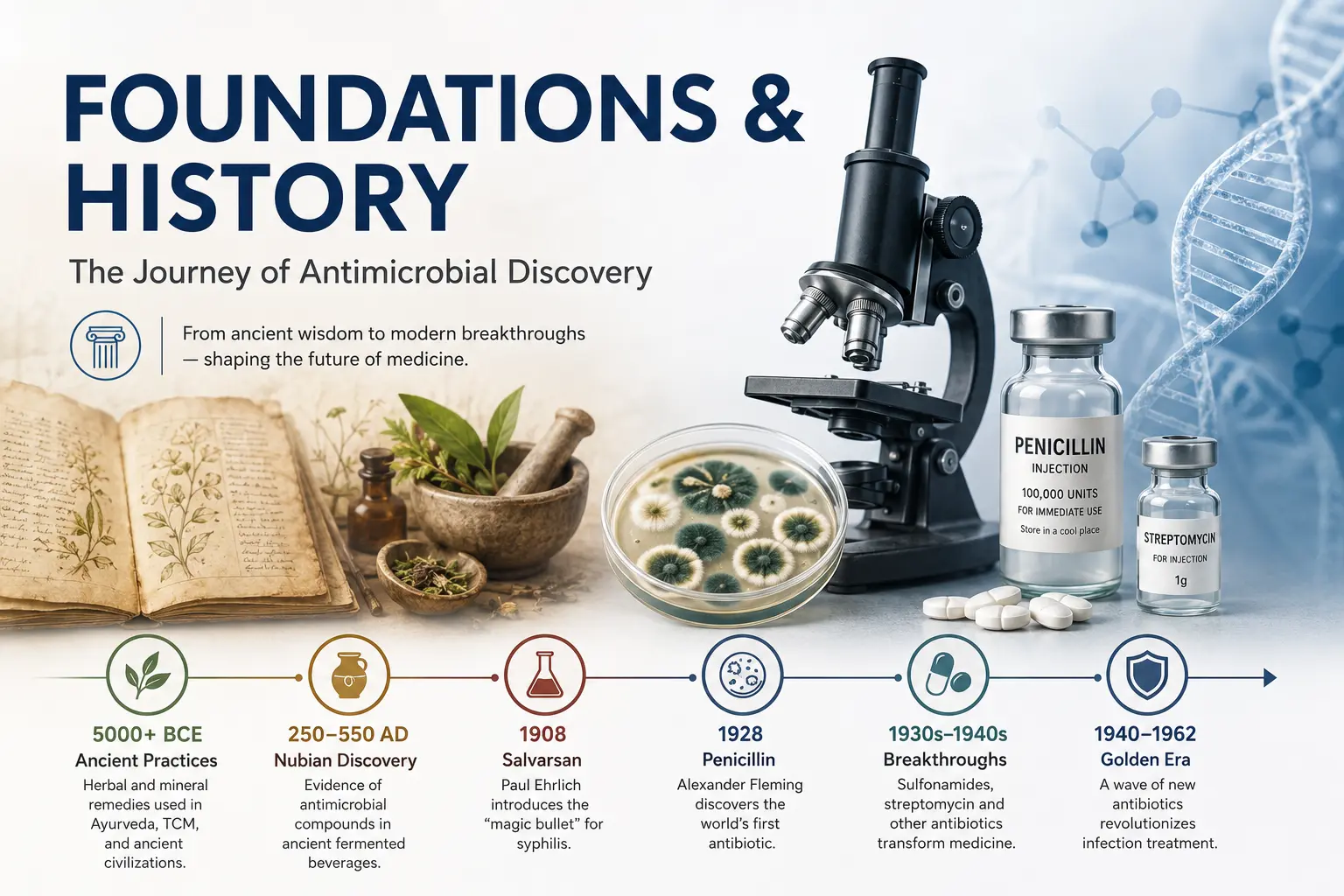
📌 What Are Antimicrobial Agents?
Antimicrobial agents kill or inhibit microorganisms — Bacteria , Viruses , Funji , and Parasites . Antibiotics specifically target bacteria.
The term “antibiosis” was introduced by Paul Vuillemin in 1889. Bactericidal agents kill bacteria directly (Penicillins, Aminoglycosides). Bacteriostatic agents inhibit growth (Tetracyclines, Macrolides).
🧼 Disinfectants, Antiseptics & Oligodynamic Effect
Disinfectants: Non-living surfaces (Ethanol, Bleach)
Antiseptics: Living tissue (Iodine, Chlorhexidine)
Sterilization: Destroys all life forms including spores
Oligodynamic effect: Metals (Silver, Copper, Mercury) exhibit antimicrobial effects at low concentrations. Used since 2600 BC by Egyptians.
🏺 Ancient Antimicrobial Practices
🔬 Modern Discovery Era
Pharmacology & Classification
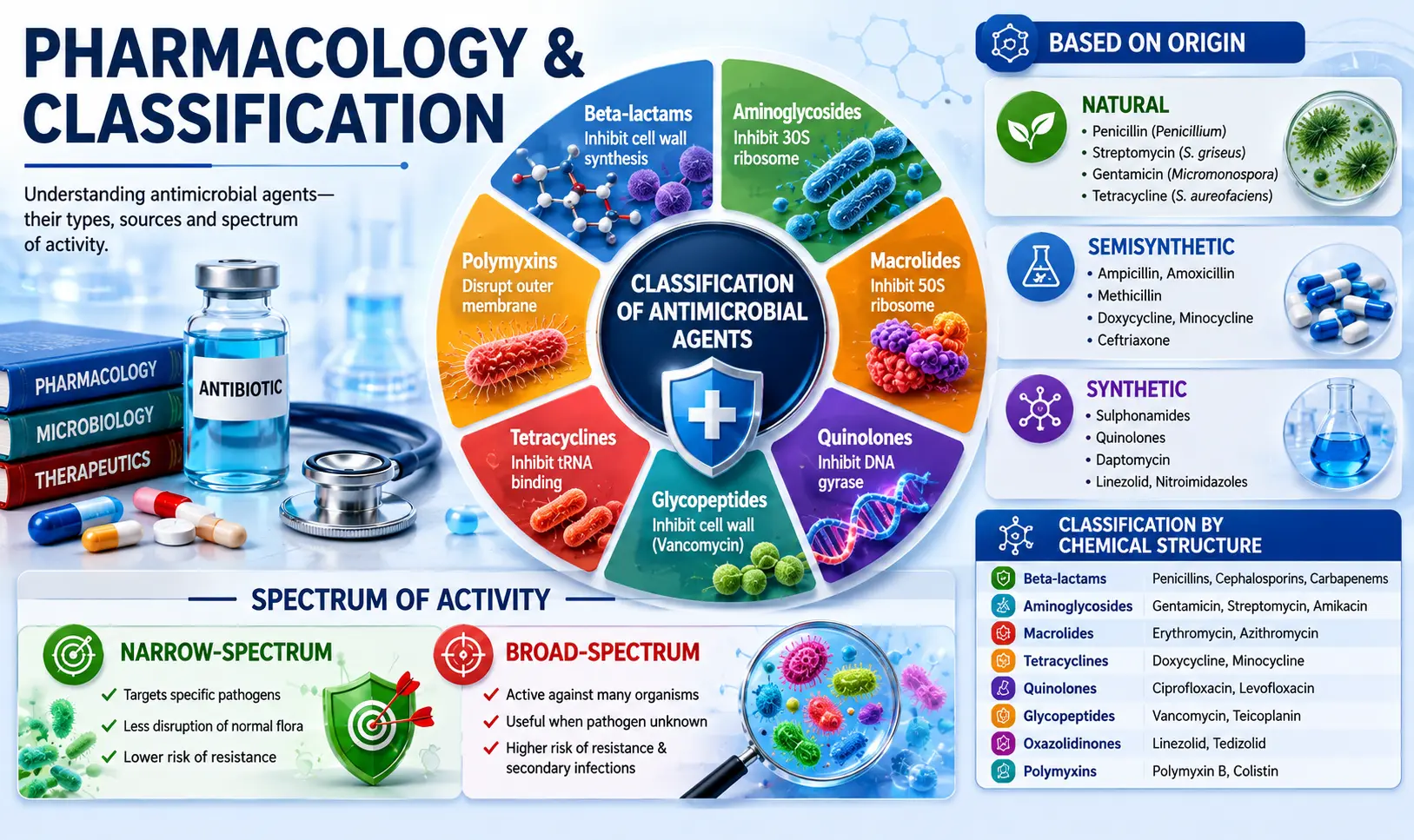
📌 Based on Origin
- Natural: Penicillin (Penicillium), Streptomycin (S. griseus), Gentamicin (Micromonospora), Tetracycline (S. aureofaciens)
- Semisynthetic: Ampicillin, Amoxicillin, Methicillin, Doxycycline, Minocycline, Ceftriaxone
- Synthetic: Sulphonamides, Quinolones, Daptomycin, Linezolid, Nitroimidazoles
📌 Spectrum of Activity
Narrow-Spectrum: Vancomycin (Gram+), Isoniazid (M. tuberculosis), Acyclovir (Herpesvirus). Advantages: Less microbiota disruption, lower resistance risk.
Broad-Spectrum: Tetracycline, Fluoroquinolones, Azoles. Advantages: Useful when pathogen unknown. Disadvantages: Disrupts normal flora, secondary infections.
📌 Classification by Chemical Structure
| Class | Mechanism | Examples | Target |
|---|---|---|---|
| Beta-lactams | Inhibit cell wall synthesis (bind PBPs) | Penicillins, Cephalosporins, Carbapenems | Mainly Gram +Ve Gram+ |
| Aminoglycosides | Bind 30S ribosome → mRNA misreading | Gentamicin, Streptomycin, Amikacin | Aerobic Gram -Ve |
| Macrolides | Bind 50S ribosome → block translocation | Erythromycin, Azithromycin | Atypical Gram +Ve |
| Tetracyclines | Bind 30S ribosome → block tRNA binding | Doxycycline, Minocycline | Broad-spectrum |
| Quinolones/FQ | Inhibit DNA gyrase & Topo IV | Ciprofloxacin, Levofloxacin | Mainly Gram -Ve |
| Glycopeptides | Bind D-Ala-D-Ala → block cell wall | Vancomycin, Teicoplanin | Gram +Ve (MRSA) |
| Oxazolidinones | Bind 50S → prevent initiation complex | Linezolid, Tedizolid | Gram +Ve (MRSA, VRE) |
| Polymyxins | Bind LPS → disrupt outer membrane | Polymyxin B, Colistin | Gram -Ve (MDR) |
Detailed Mechanisms of Action
🔹 Inhibition of Cell Wall Synthesis
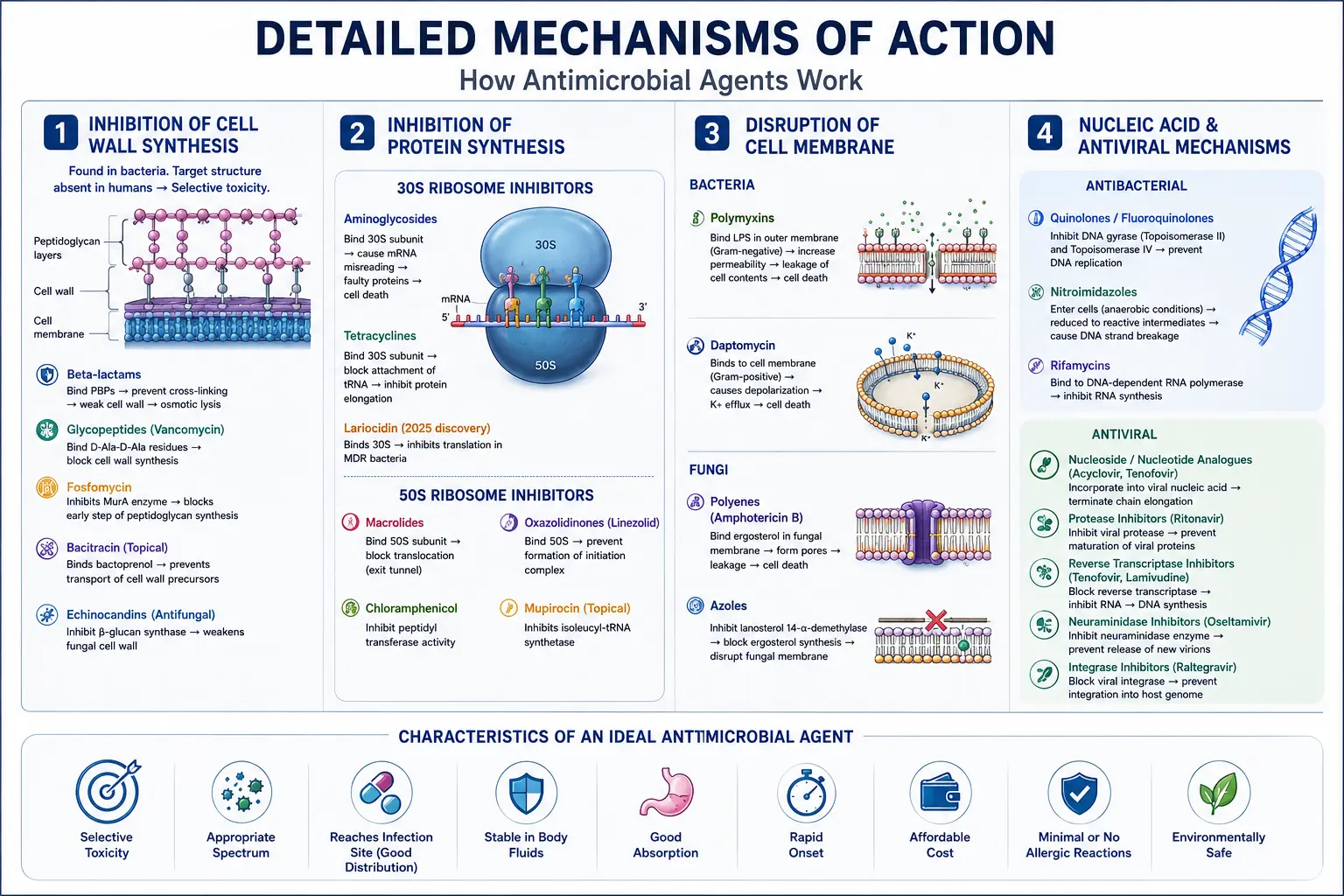
Bacterial cell walls contain peptidoglycan — unique structure absent in humans. More effective against Gram-positive bacteria.
- Beta-lactams: Bind PBPs → prevent cross-linking → osmotic lysis
- Glycopeptides (Vancomycin): Bind D-Ala-D-Ala residues
- Fosfomycin: Inhibits MurA enzyme → early peptidoglycan block
- Bacitracin: Binds bactoprenol (topical)
- Echinocandins: Antifungal — inhibit β-glucan synthase
🔹 Inhibition of Protein Synthesis
30S Ribosome Inhibitors: Aminoglycosides (mRNA misreading), Tetracyclines (block tRNA binding), Lariocidin (2025 discovery)
50S Ribosome Inhibitors: Macrolides (block exit tunnel), Chloramphenicol (peptidyl transferase), Oxazolidinones (initiation complex), Mupirocin (topical)
🔹 Disruption of Cell Membrane
- Polymyxins: Bind LPS → permeability → cell death (Gram-negative)
- Daptomycin: Depolarization → K⁺ efflux (Gram-positive)
- Polyenes (Amphotericin B): Bind ergosterol → pore formation (fungi)
- Azoles: Inhibit ergosterol synthesis
🔹 Nucleic Acid & Antiviral Mechanisms
DNA/RNA Inhibitors: Quinolones (DNA gyrase), Nitroimidazoles (DNA damage), Rifamycins (RNA polymerase)
Antiviral: Nucleoside analogues (Acyclovir), Protease inhibitors (Ritonavir), Reverse transcriptase inhibitors (Tenofovir), Neuraminidase inhibitors (Oseltamivir), Integrase inhibitors (Raltegravir)
The Rising Threat of Antimicrobial Resistance (AMR)
WHO Categorization of Drug-Resistant Bacteria (2024-2026 Update)
Mechanisms of Antimicrobial Resistance (Deep Dive)
🧬 Genetic & Horizontal Transfer
- Genetic Mutations: Spontaneous changes under selective pressure
- Conjugation: Direct cell-to-cell via pilus (plasmids)
- Transformation: Uptake of free DNA from environment
- Transduction: Transfer via bacteriophages
⚗️ Biochemical Mechanisms
- Enzyme Degradation: Beta-lactamases (NDM-1, KPC), AMEs
- Efflux Pumps: ABC, MATE, SMR, MFS, RND families
- Target Modification: Altered PBPs (MRSA), methylated ribosomes
- Biofilm Formation: EPS matrix → 1000x more resistant
One Health Approach: Causes & Spread of AMR
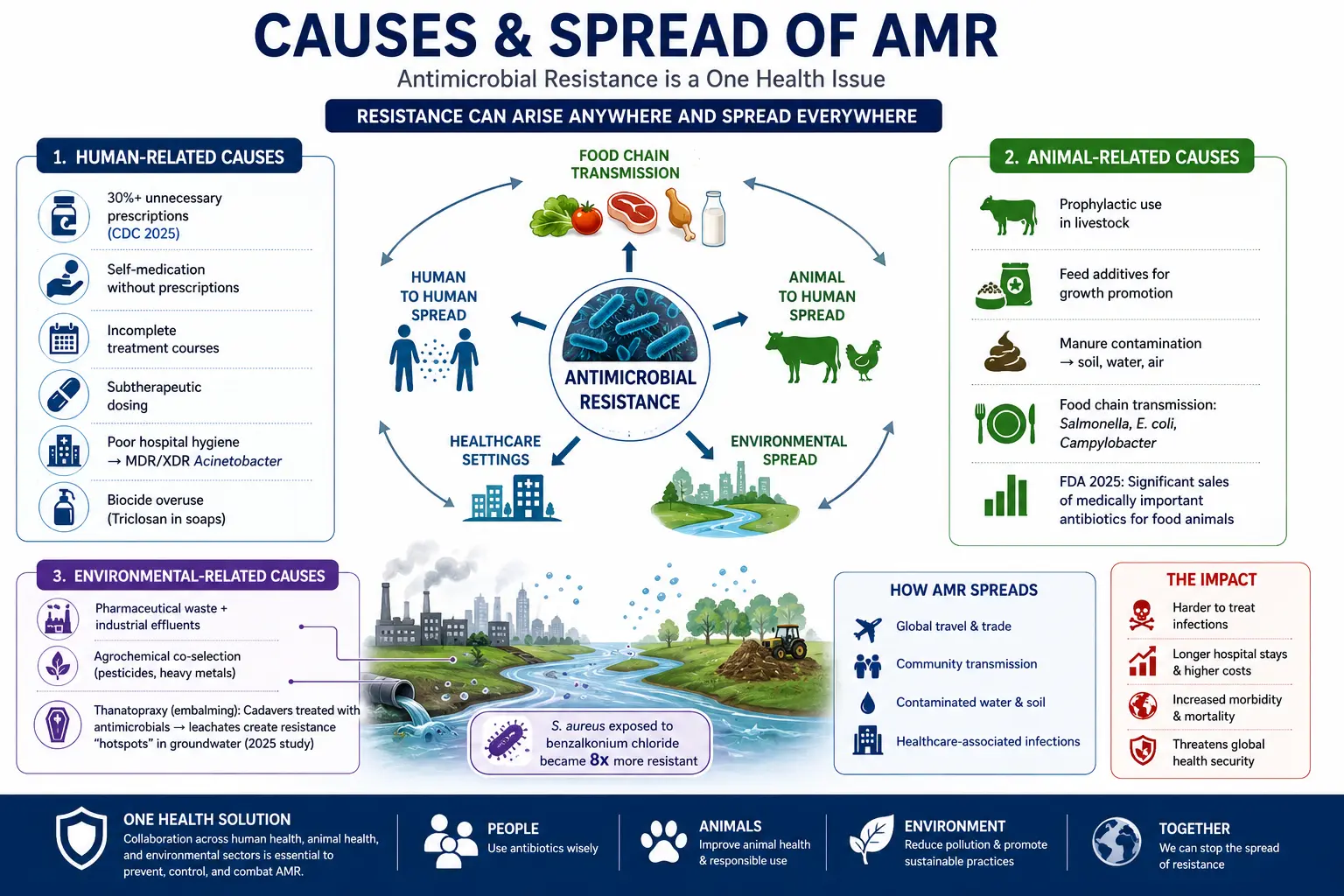
🏥 Human-Related Causes
- 30%+ unnecessary prescriptions (CDC 2025)
- Self-medication without prescriptions
- Incomplete treatment courses
- Subtherapeutic dosing
- Poor hospital hygiene → MDR/XDR Acinetobacter
- Biocide overuse (Triclosan in soaps)
🐄 Animal-Related Causes
- Prophylactic use in livestock
- Feed additives for growth promotion
- Manure contamination → soil, water, air
- Food chain transmission: Salmonella, E. coli, Campylobacter
- FDA 2025: Significant sales of medically important antibiotics for food animals
🌎 Environmental-Related Causes
- Pharmaceutical waste + industrial effluents
- Agrochemical co-selection (pesticides, heavy metals)
- Thanatopraxy (embalming): Cadavers treated with antimicrobials → leachates create resistance “hotspots” in groundwater (2025 study)
- S. aureus exposed to benzalkonium chloride became 8x more resistant
Modern Solutions & Future Therapies (2026)
🌿 Natural Antimicrobial Agents
- Plant compounds: Allicin (garlic MRSA), Berberine (MDR reversal), Thymol, EGCG
- AMPs: Defensins, Cathelicidins, Magainins, Nisin, Pediocin
- Phage therapy: OMKO1 phage targets P. aeruginosa efflux pumps
- Teixobactin: Blocks lipid I/II → MRSA
- Berkeleylactone A: From Berkeley Pit extremophile → MRSA + Candida
🤖 AI-Driven Drug Discovery
Generative AI (dsAMPGAN) now designs novel antimicrobial peptides in days. Machine learning screens millions of compounds virtually.
✂️ CRISPR-Cas9 & Nanotechnology
- CRISPR antimicrobials: Destroy resistance genes (blaNDM-1), resensitize bacteria
- Nanoparticles: Silver, zinc oxide, copper oxide — physical membrane disruption
- Aptamers: Targeted delivery + rapid diagnostics
🔬 Novel Synergistic Therapies
Trans-Cinnamaldehyde (2026 study): Cinnamon derivative reverses MRSA resistance by inhibiting mecA gene, disrupts biofilms, increases Amikacin potency 16-fold.
Next-Generation Targets (2026): 28 feasible targets in preclinical pipelines: bacterial stress pathways, virulence regulators, riboswitches.
Clinical Practice & Antimicrobial Stewardship (ASP)
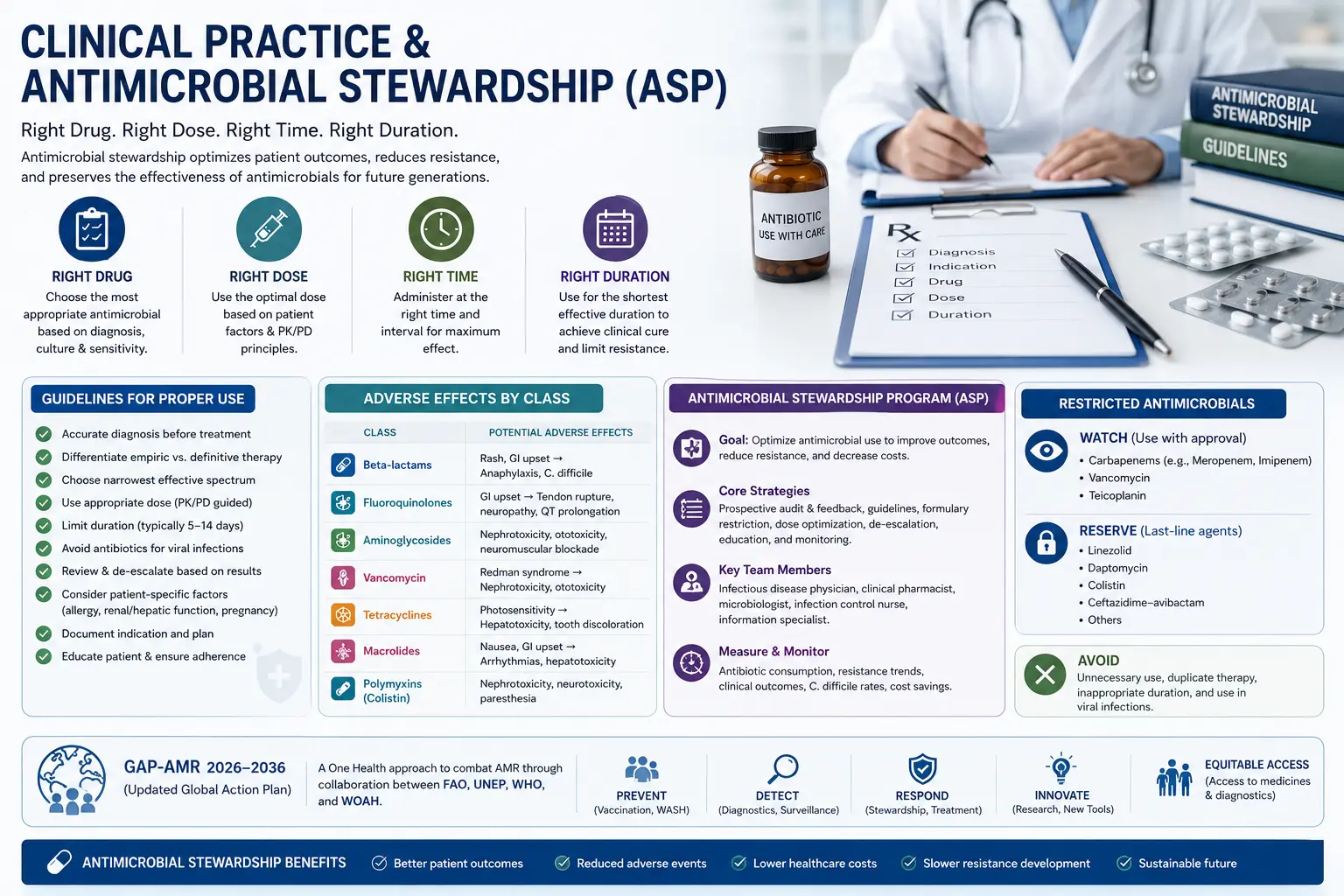
Guidelines for Proper Use
- ✅ Accurate diagnosis before treatment
- ✅ Differentiate empiric vs definitive therapy
- ✅ Choose narrowest effective spectrum
- ✅ Limit duration (5-14 days typically)
- ✅ Consider PK/PD principles
- ✅ Avoid antibiotics for viral infections
- ✅ Safe in pregnancy: Amoxicillin, Erythromycin, Cephalosporins
Adverse Effects by Class
- Beta-lactams: Rash, GI upset → Anaphylaxis, C. difficile
- Fluoroquinolones: GI upset → Tendon rupture, neuropathy
- Vancomycin: Redman syndrome → Nephrotoxicity, ototoxicity
- Tetracyclines: Photosensitivity → Hepatotoxicity
- Macrolides: Nausea → Arrhythmias, hepatotoxicity
Antimicrobial Stewardship Program (ASP)
History: Introduced by McGowan & Gerding (1996). Goal: “Right drug, right dose, right time, right duration.”
Restricted Antimicrobials: WATCH: Carbapenems, Vancomycin, Teicoplanin. RESERVE: Linezolid, Daptomycin, Colistin, Ceftazidime-avibactam.
💊 Antimicrobial Drug Combinations
- Synergism: Beta-lactam + Aminoglycoside (effect > sum)
- Antagonism: Tetracycline + Penicillin (effect < sum)
- Additive: Sulfamethoxazole + Trimethoprim (Cotrimoxazole)
- Indifference: Linezolid + ε-vinifera against MRSA
Disadvantages: Increased toxicity, drug interactions, non-compliance risk, multi-drug resistance, higher costs.
Frequently Asked Questions (FAQs)
📚 References: WHO Bacterial Priority Pathogens List 2024-2026 ↗️ | CDC Antibiotic Use and Resistance Data 2025 ↗️| Fleming A. (1928) ↗️| Ehrlich P. (1908) ↗️| Domagk G. (1939) ↗️| Gupta, R. et al. (2021). Bacterial Cell Wall Biosynthesis and Inhibitors. Springer ↗️| Oliveira, M. et al. (2024). Microorganisms, 12(9), 1920 | Dai L, Wu Z, et al. (2024). PNAS, 121(51) | GAP-AMR 2026-2036 | Bharati Vidyapeeth ASP 2025-2026 | FDA Summary Report on Antimicrobials Sold for Food-Producing Animals 2025.↗️
📌 Conclusion: Antimicrobial agents revolutionized medicine, but resistance now threatens to reverse this progress. From ancient Ayurvedic herbs to AI-discovered Halicin, the fight continues. Success requires stewardship, innovation ( CRISPR, phage therapy, AI), and global cooperation under the One Health framework. Every prescription, every completed course, every infection prevention measure matters.
