

Corrected QT Interval (QTc) Calculator
The QT interval represents the electrical depolarization and repolarization of the ventricles on an Electrocardiogram (ECG). Because the QT interval naturally shortens as heart rate increases, it must be mathematically “corrected” (QTc) to accurately assess a patient’s risk for ventricular arrhythmias, such as Torsades de Pointes. Use our interactive, multi-formula clinical calculator below.
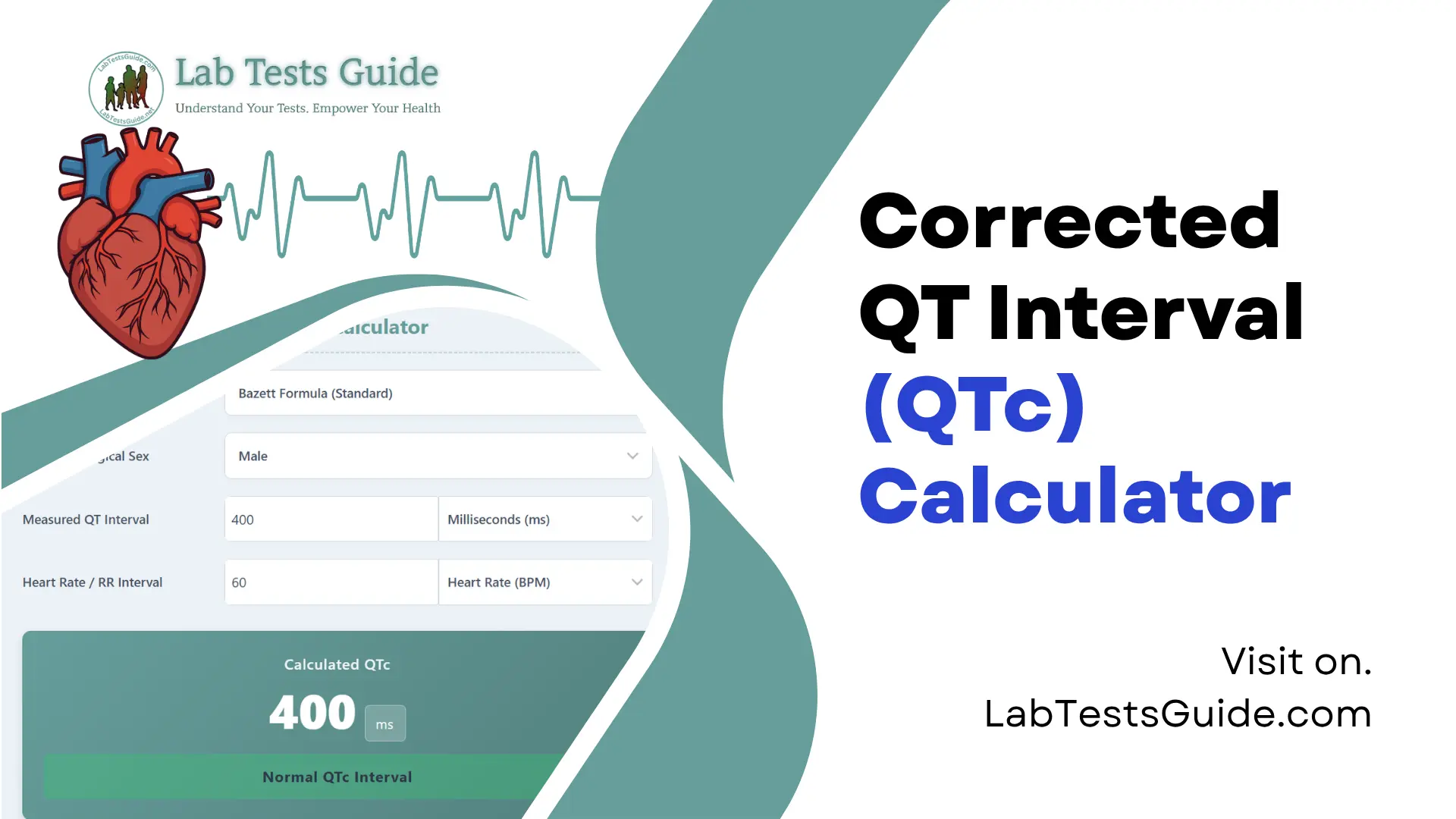
Live QTc Calculator
Formulas Used in This Calculator
Because the QT interval is highly dependent on heart rate, researchers have developed multiple mathematical models to normalize it. This calculator utilizes the four most prominent formulas globally:
Fridericia: QTc = QT / ∛RR
Framingham: QTc = QT + 0.154 × (1 – RR)
Hodges: QTc = QT + 1.05 × (HR – 60)
*In these formulas, QT is typically measured in seconds (or milliseconds, adjusted), RR is the interval between R-waves in seconds, and HR is Heart Rate in beats per minute.
How to Use the Calculator & Live Unit Converter
1. Inputting Your Data
Select your preferred correction formula. Enter the biological sex of the patient (this is required for accurate clinical interpretation, as normal ranges differ by sex). Then, input the measured QT interval from the ECG, followed by the patient’s Heart Rate.
2. Using the Live Unit Converter
ECG machines and calipers output data in different formats. Our robust live unit converter allows you to input data exactly as you read it, avoiding manual math errors. We support over 9 input/output combinations:
- QT Inputs: Switch between Milliseconds (ms) or Seconds (sec).
- Heart Rate Inputs: Don’t have the BPM? No problem. Use the dropdown to input standard BPM, direct RR Intervals (in ms or sec), or simply count the Large (5mm) or Small (1mm) boxes between R-waves on the ECG paper.
- Outputs: Toggle your final corrected reading between milliseconds and seconds.
Step-by-Step Mathematical Example
Want to calculate the QTc manually using the industry-standard Bazett’s Formula? Here is a practical clinical example:
Clinical Scenario:
A male patient has an ECG showing a QT interval of 380 ms (0.38 seconds) and a heart rate of 85 BPM.
Step 1: Convert HR to RR Interval in Seconds
RR = 60 ÷ HR
RR = 60 ÷ 85 = 0.706 seconds
Step 2: Apply Bazett’s Formula
Formula: QTc = QT (ms) ÷ √RR (sec)
Math: 380 ÷ √(0.706)
Math: 380 ÷ 0.840 = 452 ms
Interpretation: For a male, 452 ms is considered borderline/prolonged.
Clinical Interpretation of QTc
The interpretation of the QTc interval is critical when prescribing medications that can prolong repolarization (such as certain antibiotics, antipsychotics, and antiarrhythmics). Normal thresholds differ between biological sexes:
- Adult Males: Normal is generally < 440 ms. Borderline is 440–469 ms. Prolonged is ≥ 470 ms.
- Adult Females: Normal is generally < 460 ms. Borderline is 460–479 ms. Prolonged is ≥ 480 ms.
- Dangerous Range (Both Sexes): A QTc > 500 ms is widely considered clinically dangerous, significantly increasing the risk of Torsades de Pointes (TdP) and sudden cardiac death.
Note on Formulas: While Bazett’s is the most widely used formula, it tends to overcorrect at high heart rates (tachycardia) and undercorrect at low heart rates (bradycardia). In patients with HR > 90 BPM or < 50 BPM, the Fridericia or Framingham formulas are generally recommended by cardiologists.