
Anti-tTG IgG Test Purpose, Procedure, Principle, Result Interpretation, Report Formate and Clinical Signification
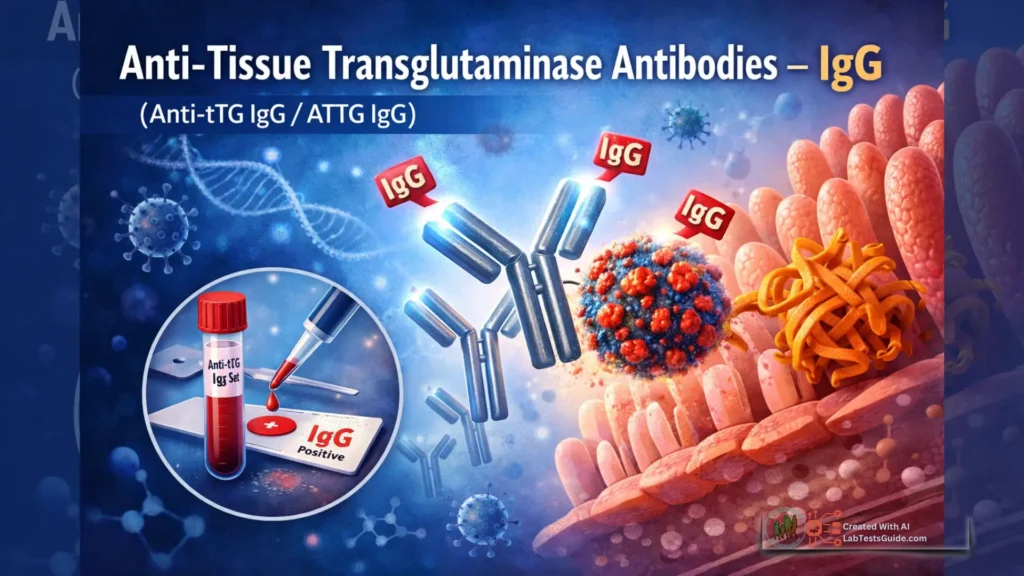
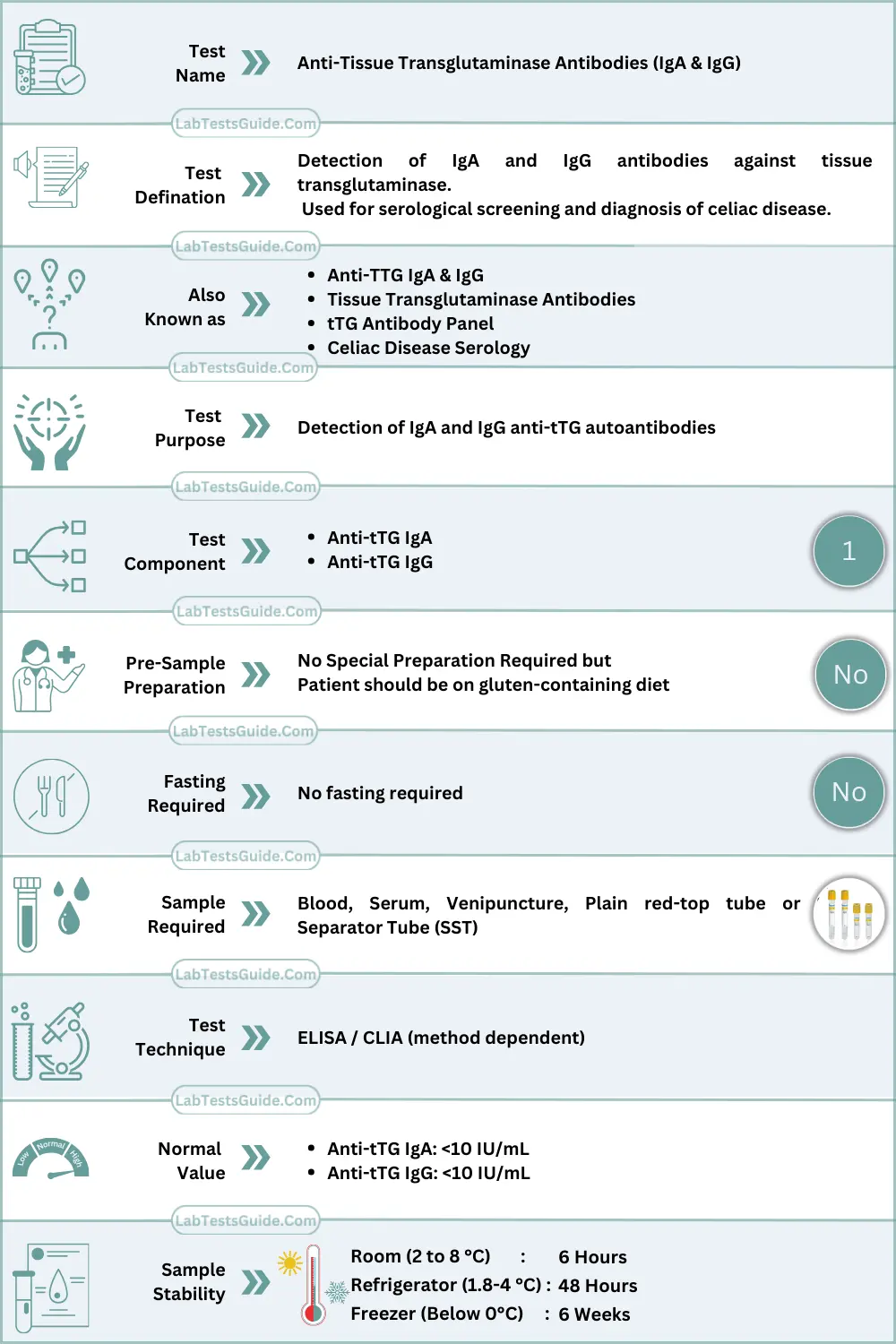
Anti-tTG IgG is an immunoassay-based serological test used to detect IgG class autoantibodies directed against tissue transglutaminase (tTG). It is primarily utilized in the diagnosis and monitoring of celiac disease, especially in patients with selective IgA deficiency or equivocal IgA results.
Anti TTG Test Types:
- Anti-TTG IgA Test:
- This test measures IgA (immunoglobulin A) antibodies against tissue transglutaminase.
- IgA antibodies are commonly used because they are found in the mucous membranes of the gastrointestinal tract, which is where celiac disease primarily affects.
- It is the primary form of the Anti-TTG antibody test and is considered highly specific for celiac disease diagnosis.
- Results are typically reported in units such as U/mL (units per milliliter) or IU/mL (international units per milliliter).
- Anti-TTG IgG Test:
- In some cases, individuals with celiac disease may have IgA deficiency, which can lead to false-negative results on the Anti-TTG IgA test.
- In such cases, the Anti-TTG IgG test is used to detect IgG antibodies against tissue transglutaminase.
- This test is often used as an alternative when IgA deficiency is suspected or confirmed.
- Results are also reported in units such as U/mL or IU/mL.
Principle of the Test
The Anti-tTG IgG assay is based on an antigen-antibody immunological reaction.
ELISA Principle
- Microtiter wells are coated with recombinant human tissue transglutaminase (tTG).
- Patient serum is added; anti-tTG IgG antibodies, if present, bind to immobilized antigen.
- After washing, enzyme-labeled anti-human IgG conjugate is added.
- A chromogenic substrate (e.g., TMB) is added.
- Color intensity is proportional to antibody concentration.
- Absorbance is measured at 450 nm (reference 620–630 nm).
Method Type:
- Enzyme-Linked Immunosorbent Assay (ELISA)
- Chemiluminescent Immunoassay (CLIA)
- Fluorescent Immunoassay (FIA)
Clinical Significance (Technical)
Elevated Anti-tTG IgG
- Indicates immune-mediated response to gluten exposure
- Seen in:
- Celiac disease with IgA deficiency
- Refractory or untreated celiac disease
- Non-responsive sprue
Low or Negative Anti-tTG IgG
- Suggests:
- Absence of celiac-associated IgG autoimmunity
- Effective gluten-free dietary control
- Early disease with low antibody titers
Biochemical Mechanism:
tTG catalyzes deamidation of gluten peptides → enhanced binding to HLA-DQ2/DQ8 → IgG autoantibody production.
Specimen Requirements
| Parameter | Requirement |
|---|---|
| Specimen type | Serum (preferred) |
| Acceptable specimen | Lithium heparin plasma (method-dependent) |
| Tube color | Red / Yellow (SST) |
| Minimum volume | 0.5 mL serum |
| Anticoagulants | Not recommended (EDTA, fluoride rejected) |
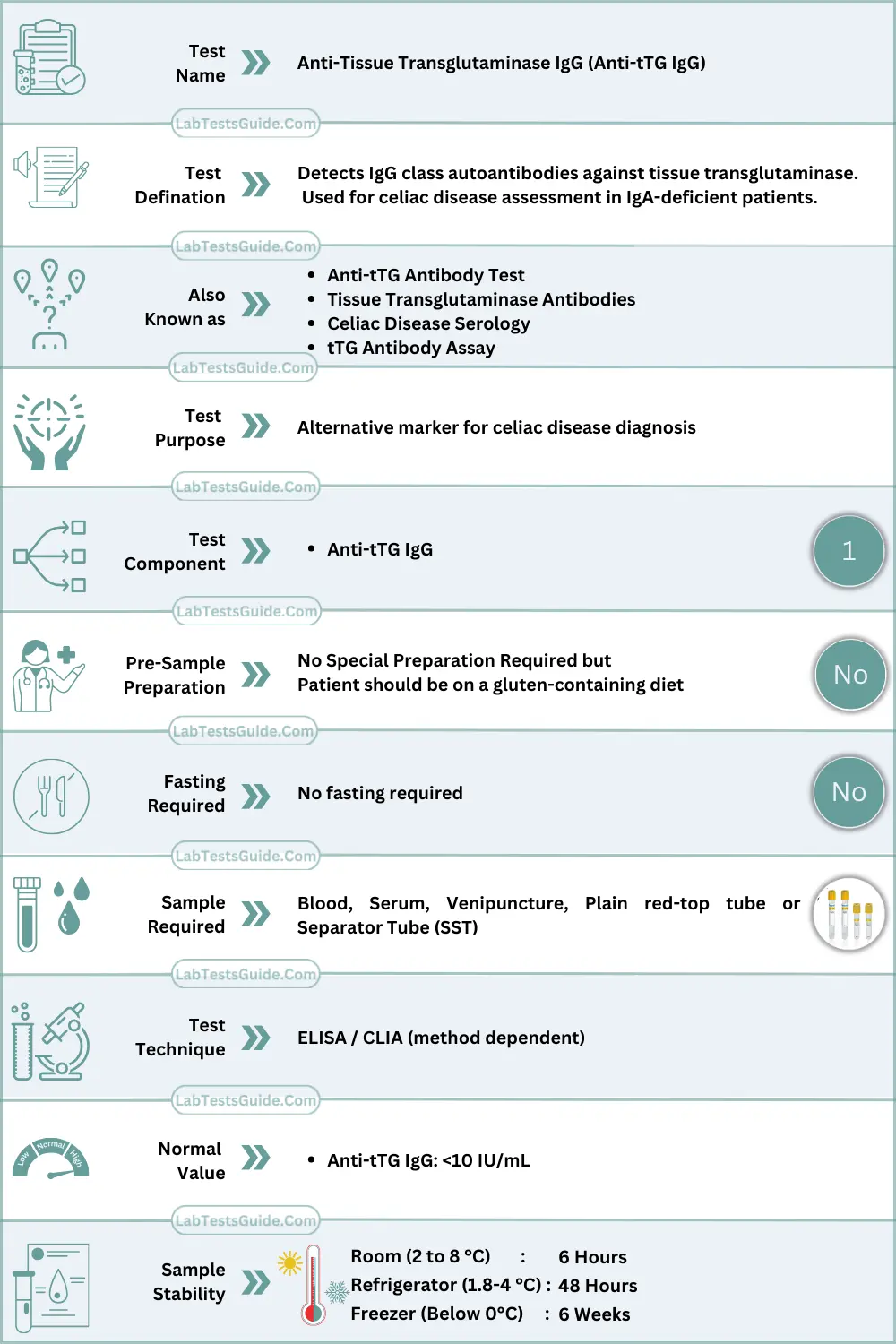
| Stability | 7 days at 2–8 °C |
| Long-term storage | −20 °C (≤3 months) |
| Transport | Cold chain (2–8 °C) |
| Rejection criteria | Hemolysis, lipemia, icterus, microbial contamination, delayed separation (>2 hrs) |
Patient Preparation (Technical)
- Fasting: Not required
- Timing: No diurnal variation
- Dietary status: Gluten consumption required for diagnostic accuracy
- Drug interference: Immunosuppressants may reduce titers
- Special condition: Mandatory in suspected IgA deficiency
Reagents & Materials Required
Reagents
- tTG-coated microtiter plate
- IgG-specific enzyme conjugate
- Substrate (TMB)
- Stop solution (1N H₂SO₄)
- Wash buffer
Calibrators
- Multi-level IgG calibrators (IU/mL)
Controls
- Negative control
- Low positive control
- High positive control
Equipment
- ELISA reader (450 nm)
- Automated immunoassay analyzer (if applicable)
- Centrifuge
- Micropipettes & tips
- Incubator (37 °C)
Reagent Storage
- 2–8 °C
- Do not freeze conjugates
- Protect substrate from light
Test Procedure (Step-by-Step)
A. Manual ELISA Method
- Bring reagents and samples to room temperature
- Add 100 µL calibrators, controls, and samples to wells
- Incubate for 30 min at 37 °C
- Wash wells 3–5 times
- Add 100 µL IgG conjugate
- Incubate 30 min at 37 °C
- Wash thoroughly
- Add 100 µL substrate
- Incubate 10–15 min in dark
- Add 100 µL stop solution
- Read absorbance at 450 nm
B. Automated Method
- Load reagents and samples
- Perform calibration as per analyzer protocol
- System automatically performs incubation, washing, and detection
- Results expressed in IU/mL
Calculation Formula
Manual ELISA
IgG (IU/mL)=Calibrator ODSample OD×Calibrator Value
Example:
Sample OD = 0.85
Calibrator OD = 0.50
Calibrator = 10 IU/mL
Result = 17.0 IU/mL
Reference Ranges
| Population | Result |
|---|---|
| Adults (M/F) | < 10 IU/mL (Negative) |
| Children | < 10 IU/mL |
| Pregnancy | Same as adult |
| Borderline | 10–12 IU/mL |
| Positive | > 12 IU/mL |
Note: Reference ranges must be validated by each laboratory.
Interpretation (Technical / Professional)
High Levels
- Active autoimmune response to tTG
- Celiac disease with IgA deficiency
- Poor dietary compliance
- Correlate with:
- Anti-tTG IgA
- EMA antibodies
- Total serum IgA
Low Levels
- Absence of IgG-mediated response
- Treated celiac disease
- Early or latent disease
Interfering Factors / Sources of Error
- Hemolysis → false elevation
- Lipemia → optical interference
- Icterus (bilirubin >20 mg/dL)
- Immunosuppressive therapy
- Improper washing
- EDTA plasma
- Temperature deviations
- Instrument optical drift
Quality Control Requirements
- QC Levels: Negative, Low positive, High positive
- Frequency: Daily or per batch
- Rules: Westgard 1₃s, 2₂s, R₄s
- Charts: Mandatory Levey–Jennings
- Corrective actions: Recalibrate, repeat run, replace reagents
Calibration Requirements
- Frequency: With new lot / weekly
- Multi-level calibration
- Linearity: Up to 100 IU/mL (method-dependent)
- Recalibration triggers:
- QC failure
- Reagent change
- Instrument maintenance
Instrument Maintenance Notes
- Daily: Probe wash, lamp check
- Weekly: Optical alignment, wash system cleaning
- Monthly: Deep cleaning, calibration verification
🧠 AI-Powered Test Result Analysis:
Understand your Anti-Tissue Transglutaminase Antibodies – IgG (Anti-tTG IgG / ATTG IgG) Test Results
AI-powered Lab Test Results Meaning tool 🤖
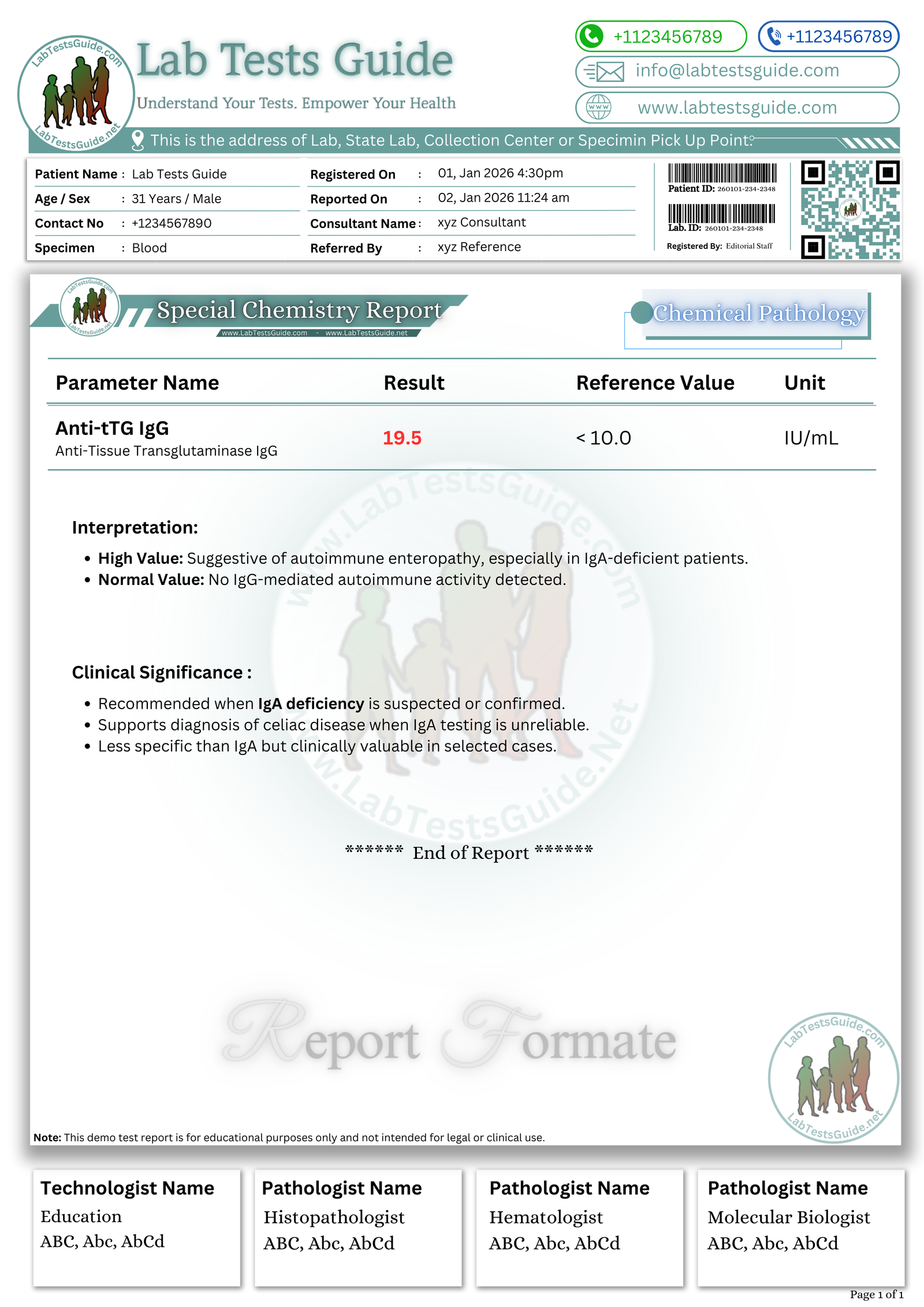
📥 Download Anti TTG IgG Test Report Format
Get the demo report format for Anti TTG IgG Test in your preferred format. These templates are fully editable and professional.
How to Download ?
| File Description | Format |
|---|---|
Anti-tTG IgG Test Report Format (Image) | .PNG ⬇️ |
Anti-tTG IgG Test Report Format (MS Word) | .DOCX ⬇️ |
Anti-tTG IgG Test Format (MS Excel) | .XLSX ⬇️ |
Anti-tTG IgG Test Format (PDF) | .PDF ⬇️ |
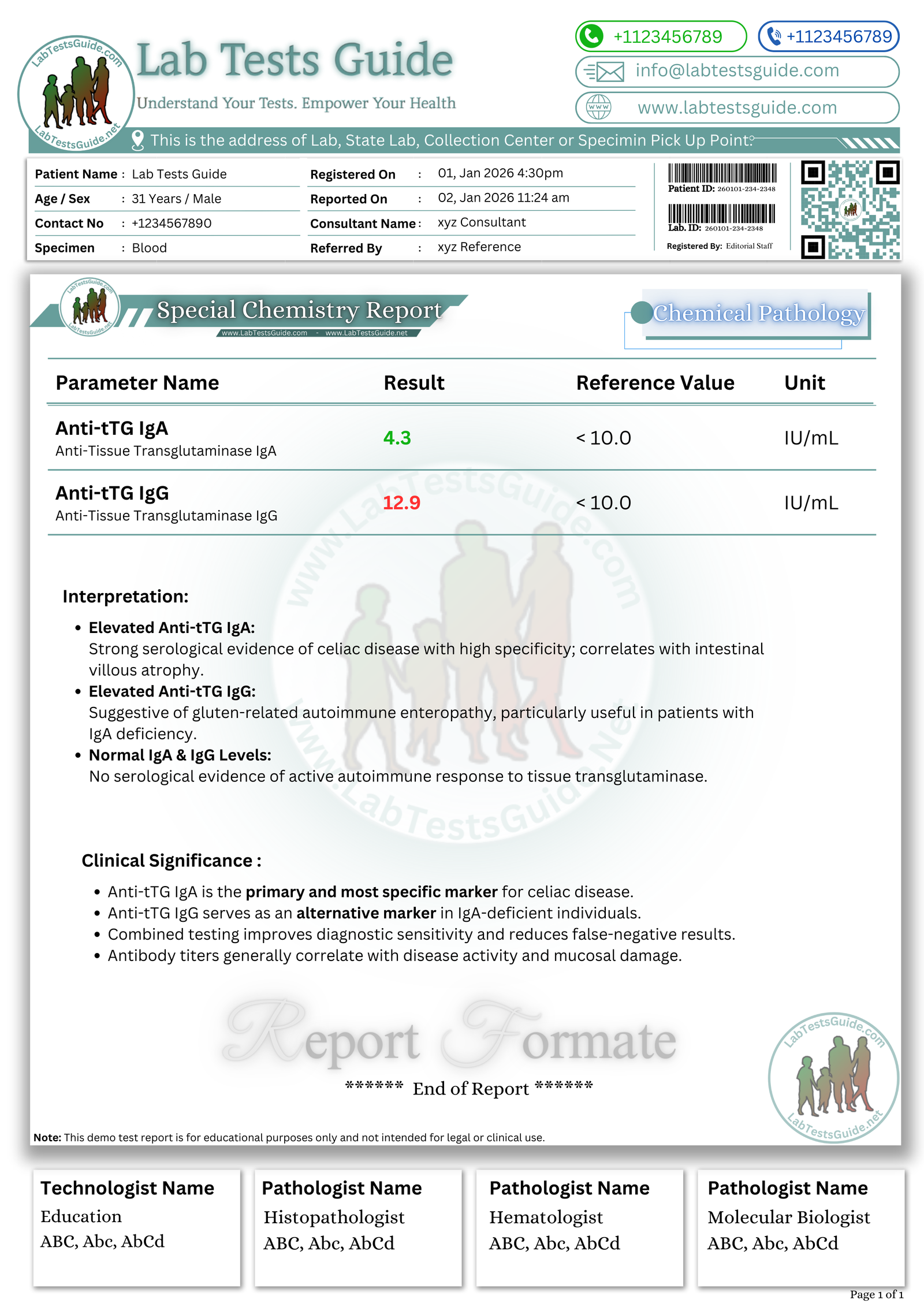
Anti-tTG IgG & IgA Test Report Format (Image) | .PNG ⬇️ |
Anti-tTG IgG & IgA Test Report Format (MS Word) | .DOCX ⬇️ |
Anti-tTG IgG & IgA Test Format (MS Excel) | .XLSX ⬇️ |
Anti-tTG IgG & IgA Test Format (PDF) | .PDF ⬇️ |
Critical (Panic) Values
- No universally defined panic values
- Extremely high titers (>100 IU/mL) should be urgently reviewed
Follow institutional policy for notification.
Troubleshooting Guide
| Issue | Cause | Solution |
|---|---|---|
| Low absorbance | Expired conjugate | Replace reagent |
| High blank | Inadequate washing | Increase wash cycles |
| Drift | Temperature fluctuation | Stabilize environment |
| QC out | Calibration error | Recalibrate |
| Clotted sample | Poor centrifugation | Recollect specimen |
Safety Precautions
- Wear gloves, lab coat, eye protection
- Treat specimens as biohazard
- Dispose waste per biomedical regulations
- Avoid reagent skin contact
- Follow analyzer safety SOP
Test Limitations
- Cross-reactivity with other autoimmune antibodies
- Reduced sensitivity in early disease
- False negatives with gluten-free diet
- Method-dependent cut-offs
- Not a standalone diagnostic test
Notes for Lab Students
- Anti-tTG IgG is essential in IgA deficiency
- Always correlate with total IgA
- Follow strict QC rules
- Understand ELISA immunology clearly
FAQs:
Which antibody class is used when IgA deficiency is suspected?
IgG
Target antigen in Anti-tTG assay?
Tissue transglutaminase
Detection wavelength in ELISA?
450 nm
Main clinical use of Anti-tTG IgG?
Celiac disease in IgA-deficient patients
Preferred specimen?
Serum
References (Technical)
- CLSI I/LA23-A2 – Immunologic Testing Guidelines
- WHO Manual of Autoimmune Diagnostics
- IFCC Committee on Autoimmunity
- Manufacturer ELISA Kit Inserts
- Rubio-Tapia et al., Gastroenterology, Peer-reviewed literature